Business Tips

7 Things Every HVAC Business Should Automate (2026) | CloseCrew

Automating HVAC processes creates a more efficient, scalable business. This guide covers 7 key areas to automate including timesheets, marketing, dispatching, and billing, plus the 8th automation that makes all the others profitable.

9 min readPublished September 3, 2026

Automating HVAC business processes means setting up software to handle manual tasks. Billing. Timesheets. Reporting. Marketing. Dispatching. Each one standardized. Each one running without constant oversight.

Automation creates a more efficient, streamlined business. Standards built into every process. Easier to run. Easier to scale. More attractive to investors.

As one home service expert puts it: look at how franchises achieve scalability. Everything runs the same way. Systems and checks around every aspect. That's how they create repeatable success.

This guide covers 7 key areas where HVAC software eliminates manual work. So you can focus on growing your business instead of running it.

Part of the Business Tips section in the HVAC Business Blog.
1. Technician timesheets

Manual timesheets are inaccurate. Techs forget to clock in. They round up hours. Drive time gets mixed with wrench time. Payroll becomes guesswork.

Automated timesheets let techs clock in and out from their phones. Real-time tracking records every hour. The data feeds directly into payroll and reporting.

What automation handles:

  • Real-time clock-in and clock-out from mobile

  • Automatic adjustment when a tech forgets to clock out

  • Drive time, vendor runs, and wrench time categorized separately

  • Customizable overtime and performance pay rules

  • Data synced to payroll automatically

When timesheets sync with GPS tracking, you see exactly where techs spend their time. Which jobs take longest. Where drive time eats billable hours. This data feeds accurate job costing.

One plumbing and heating company used fleet GPS alongside timesheet data. One technician claimed a deer caused a rollover. The footage showed otherwise. GPS and video don't lie. The data also helps price jobs accurately. When you know real costs, you know how to set real prices.

For protecting your HVAC profit margins with accurate job costing, see our margins guide.

2. Job forms and digital documents

Paper forms create problems. Techs forget them at the office. Customers can't read handwriting. Forms get lost between the van and the filing cabinet.

Automated job forms give techs digital templates on their phones. Proposals. Contracts. Warranties. Safety checklists. Inspection reports.

What automation handles:

  • Forms pop up automatically at the right point in the job cycle

  • Customers sign digitally on the tech's phone or tablet

  • Completed forms attach to the job record automatically

  • No driving back to the office for forgotten paperwork

  • All documents stored in the cloud and searchable

Every form is filled, signed, and filed without manual effort. Office staff access everything instantly. Nothing gets lost.

3. Automatic alerts and notifications

Information needs to reach the right person at the right time. Manual processes depend on someone remembering. Automation ensures it happens.

Alerts you should automate:

Abandoned call alerts. When a customer hangs up before connecting, your call center manager gets notified. Investigate immediately. Staff up if it happens often.

Canceled job alerts. When a customer cancels, the right person gets notified based on job type. The team acts fast to try saving the customer.

Estimate viewed alerts. When a customer opens your estimate, your follow-up team knows it's time to call. Strike while interest is hot.

Review alerts. Five-star review? Celebrate and share it. One-star review? Reach out immediately. Fast response to negative reviews often reverses the situation.

Customer reminders. Automated texts 24 hours before the appointment reduce no-shows. Dispatch notifications with GPS tracking let customers know exactly when the tech arrives.

Maintenance agreement reminders. Automated texts when it's time for a scheduled service. "It's been 6 months since your last maintenance. Don't forget to use your agreement."

These reminders drive 5-star reviews. Customers love knowing exactly when to expect the tech. GPS notifications, tech photos, and arrival updates build trust automatically.

For managing your HVAC scheduling alongside automated alerts, see our scheduling guide.

4. HVAC marketing automation

Manual marketing is time-consuming. Building email lists. Printing mailers. Tracking campaign results across spreadsheets. Marketing automation streamlines all of it.

Email automation. Build hyper-targeted audiences based on customer data. Unsold estimates. Aging equipment. Expiring memberships. Lapsed customers. Each segment gets a different message.

One HVAC company uses marketing automation to target membership renewals. They send different emails to current members and non-members. The response rates improved significantly because the messaging matched the audience.

Direct mail automation. Choose audience segments. Upload images. Print and send flyers directly from your platform. No trip to the post office. No manual tracking.

Campaign tracking. Every campaign ties back to revenue data. You see which campaigns attract preferred customers. Which generate high-ticket jobs. Which waste money.

Set up your campaigns once. The system sends them at the right time to the right people. Updates dynamically as your customer data changes. Set it and let it work.

For your full HVAC marketing strategy including digital and traditional channels, see our marketing guide.

5. Automated reports

Waiting for end-of-month reports to make decisions is too slow. Automated reporting gives you real-time data whenever you need it.

Reports to automate:

  • Revenue by tech, by service type, by time period

  • Customer satisfaction scores

  • Tech conversion rates (estimates presented vs sold)

  • CSR booking rates

  • Lead source performance

  • Outstanding invoices and aging receivables

Technician scorecards update automatically. Each tech sees their revenue, customer satisfaction, and conversion data. Transparency motivates performance.

CSR scorecards track booking rates, call recordings, and lead conversion. Supervisors identify coaching opportunities fast.

Scheduled delivery. Set reports to send automatically. Weekly revenue reports to the owner. Daily performance reports to dispatchers. Monthly trend reports to the management team.

When everyone sees their numbers in real time, performance improves across the board.

6. Dispatching

Manual dispatching means dispatchers juggling phone calls, whiteboards, and spreadsheets. They guess which tech is closest. They hope the tech has the right skills. They lose time coordinating.

Automated dispatching uses AI and historical data to match the best tech to every job. Skills. Location. Schedule. Drive time. All factored in automatically.

What automation handles:

  • AI assigns techs to jobs based on skills and proximity

  • Dispatchers search by skill set, schedule, and zone instantly

  • GPS shows real-time tech locations

  • Route optimization reduces drive time between jobs

  • Schedule changes update tech mobile apps in real time

One company's call center director found that automation didn't replace dispatchers. It made them more effective. They stopped guessing and started confirming. Focus shifted from logistics to quality. Right tech. Right call. Right setup.

For your HVAC dispatch apps comparison, see our dispatch guide.

7. Billing and invoicing

Paper invoices delay payment. Handwritten totals create errors. Mailed invoices take days. Manual follow-up on unpaid invoices takes hours.

Automated billing creates invoices from job data. Sends them digitally. Lets customers pay online. Tracks everything automatically.

What automation handles:

  • Invoice generated from completed job data automatically

  • Customers pay online by credit, debit, or check

  • Recurring payments for maintenance agreements set up once

  • Invoices and statements sent automatically

  • Outstanding payments visible at a glance

  • Customer lifetime value calculated automatically

Fast billing means faster cash flow. Digital payment options mean fewer outstanding invoices. Automatic recurring billing for maintenance agreements means predictable monthly revenue.

The 8th thing to automate (the most important one)

Every automation above makes your HVAC business more efficient. Timesheets are accurate. Forms are digital. Alerts fire on time. Marketing runs itself. Reports are instant. Dispatching is optimized. Billing is fast.

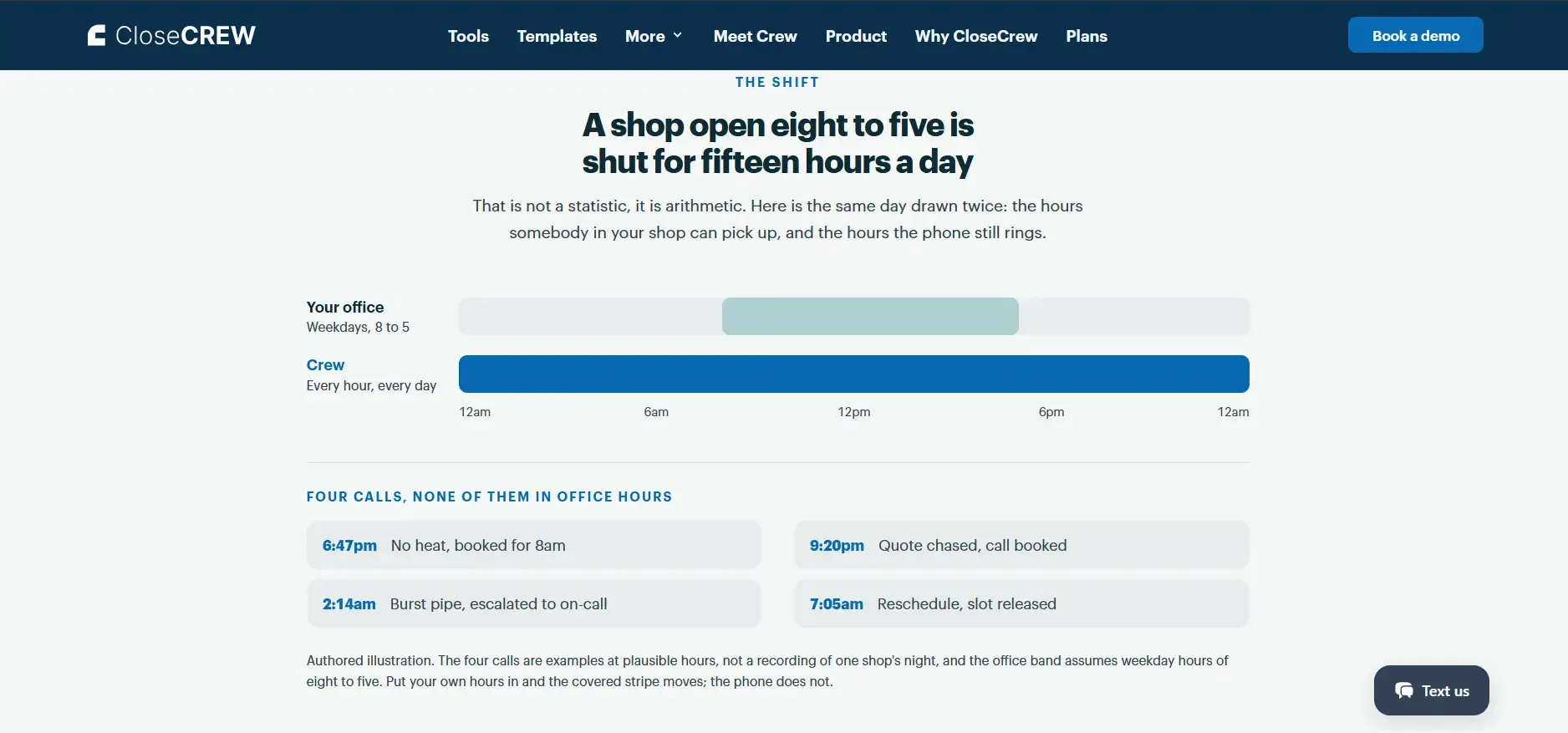
But none of it matters if the phone doesn't get answered.

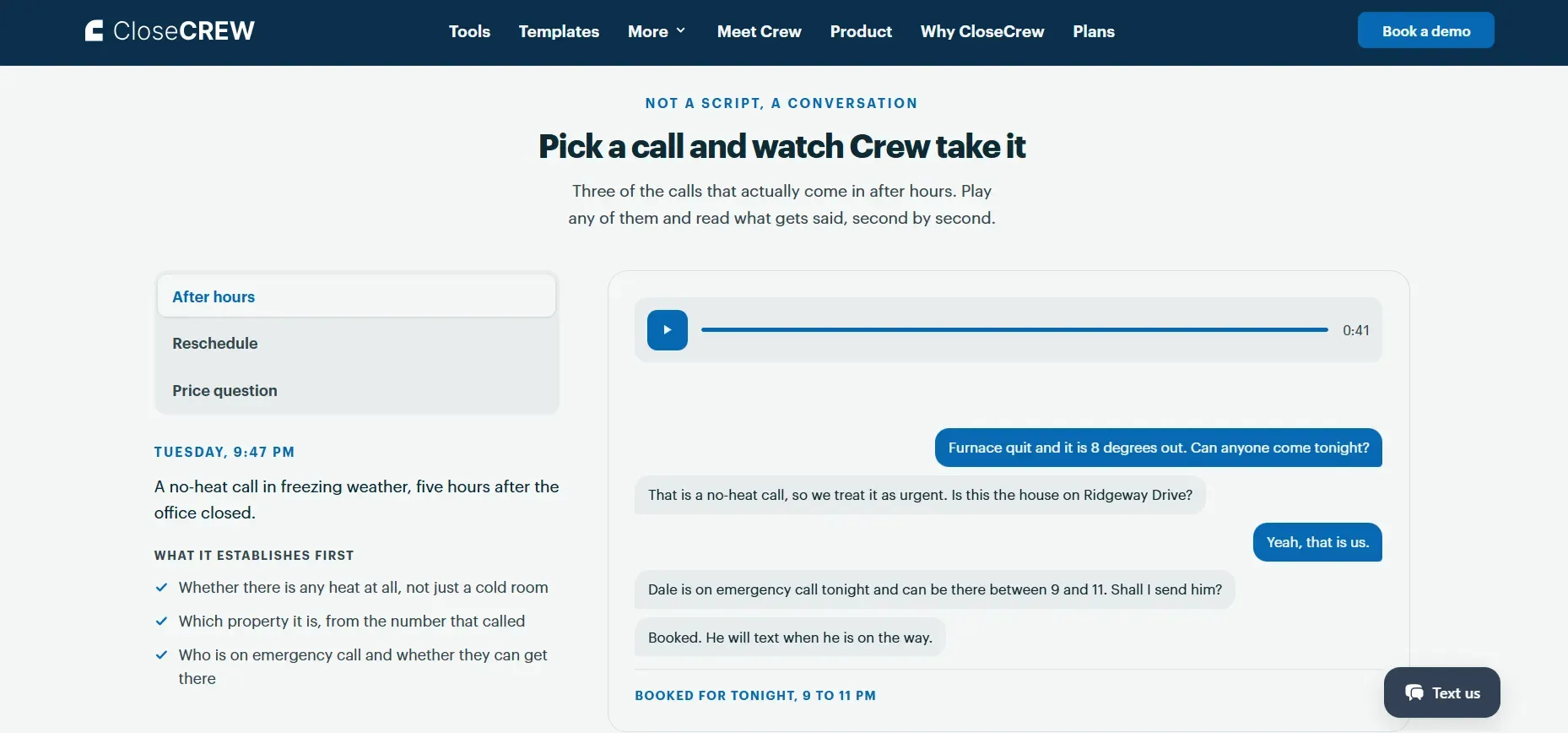
A homeowner's AC fails at 8 PM. They call your number. Your office automated everything except call answering. Voicemail. They call the next HVAC company.

shift.webp

Your automated dispatch board had an open slot. Your automated marketing generated the awareness. Your automated pricebook had the estimate ready. Nobody answered the phone.

Crew, CloseCrew's AI Employee, is the automation that makes all the other automations profitable. He answers every call 24/7. Qualifies the HVAC issue. Books the appointment. Sends confirmation. The job enters your automated dispatch. Your tech's automated timesheet starts. The automated invoice generates. The automated review request sends.

crew.webp

Full cycle. Fully automated. From phone call to five-star review.

Arctic Air saw 30% more revenue in one year. Premier Heating converted 3x more leads with response under 1 minute. Air Design added 13 extra appointments in 30 days.

Every automation in this guide makes your business better. Crew makes them all productive.

Benefits of automating HVAC processes

Efficiency. CSRs and techs have information at their fingertips. No searching. No waiting. No calling the office.

Higher margins. Efficient teams complete more jobs per day. More jobs with the same overhead means higher profit.

Standardized processes. Automation creates repeatable systems. Opening a second location becomes realistic. Scaling doesn't mean losing quality.

Data-driven decisions. Automated reporting feeds real numbers into your growth strategy. No guessing.

Better communication. Notifications ensure the right info reaches the right person at the right time. Team and customers stay informed.

Customer expectations met. Today's customers expect online booking. Tech tracking. Digital payments. Automation delivers what they expect.

Automation priority by business stage

Not every shop should automate everything at once. Prioritize based on where you are.

Solo plumber or 1-2 techs. Start with call answering (Crew), basic invoicing, and review automation. These three generate the fastest ROI.

3-10 techs. Add automated dispatching, timesheets, and customer alerts. These reduce the coordination overhead that slows growing teams.

10+ techs. Add marketing automation, advanced reporting, and fleet tracking. At this size, data-driven decisions separate growing shops from stalling ones.

Multi-location. Automate everything. Standard processes across locations are how franchises scale. Every location runs the same systems.

The key: automate the biggest bottleneck first. For most HVAC shops, that bottleneck is unanswered calls. Start there.

For HVAC field management systems that connect all automations, see our FSM guide.

For understanding HVAC codes and standards alongside your automated compliance workflows, see our codes guide.

Automate everything. Especially the phone.

Automation transforms HVAC businesses from reactive to proactive. Standard processes replace chaos. Real-time data replaces guesswork. Faster billing replaces slow cash flow. Smarter dispatching replaces wasted drive time.

But every automated process generates value only when jobs are on the board. And jobs get on the board when someone answers the phone.

CloseCrew automates the entire cycle. Crew answers. The job books. The tech dispatches. The invoice generates. The review sends. One connected system from first ring to five-star review. No gaps. No manual steps. No missed revenue.

Frequently asked questions

Which HVAC process should I automate first?

Call answering. Every other automation depends on booked jobs. If calls go to voicemail, no other automation matters. Start with Crew. Then automate dispatching. Then timesheets and billing.

No. Automation makes employees more effective. Dispatchers focus on quality instead of logistics. CSRs focus on customer experience instead of paperwork. Techs focus on the job instead of admin.

All-in-one platforms range from $200-$500/month for small shops. Enterprise solutions scale higher. ROI typically shows within 30-60 days. Faster billing. Fewer missed calls. More jobs per tech.

Yes. Small businesses benefit most. They have fewer people handling more tasks. Automation eliminates the bottlenecks that prevent small shops from growing.

Automating processes but not measuring results. Every automation should tie to a metric. Timesheet automation should reduce payroll errors. Marketing automation should track revenue per campaign. If you can't measure the improvement, you can't optimize it.

Related tools

Run the numbers before you update your price book or field software.

Free HVAC Templates

Invoices, estimates, maintenance agreements, and flat-rate pricing sheets for heating and cooling contractors.

Browse HVAC templates

Contractor Blog

Cross-trade guides on hiring, marketing, and operations for every home services business.

View all guides

Meet Larry

AI receptionist built for HVAC — answers calls, books jobs, and follows up on leads 24/7.

See Larry for HVAC

Related articles

business-tips

15 HVAC Advertising Tips to Attract More Customers | HVAC Ads

Most HVAC companies struggle with advertising because their focus is on service delivery. This guide covers 15 proven tips that generate leads and drive profitability, from website optimization and Google Ads to referral programs and the strategy that makes all 15 tips actually convert into booked revenue.

Read guide

Never miss an HVAC service call again. Let Larry, your AI receptionist, book jobs while your crew is in the field.

We will run your numbers on the call and tell you if the maths does not work for a shop your size. That happens, and it is a cheaper conversation than finding out three months in.

Get a demo
7 Things Every HVAC Business Should Automate (2026) | CloseCrew