Business Tips

7 Best HVAC Field Service Dispatch Apps to Boost Profitability

HVAC businesses lose time and customers when scheduling, dispatch, and job management live in separate systems. In this guide, we compare seven field service dispatch apps for HVAC contractors and explain where each one fits.

10 min readPublished August 24, 2026

HVAC business owners still running scheduling and dispatch off a patchwork of spreadsheets and whiteboards are quietly damaging customer relationships in a few predictable ways:

Field service dispatch software exists specifically to fix this. The catch is that apps built solely for scheduling and dispatch often don't integrate cleanly with the rest of what an HVAC business runs on, estimates, work orders, invoicing, which recreates some of the same inefficiency the dispatch software was supposed to eliminate in the first place.

The strongest field service dispatch apps are genuinely all-in-one field service management (FSM) platforms that fold scheduling and dispatch into the rest of the workflow, so you gain real efficiency, not just a nicer-looking calendar. Good FSM software should help you:

Here are seven of the strongest field service dispatch apps HVAC contractors are actually using in 2026, along with where each one genuinely fits.

[[blog-banner:grow-revenue]]

Part of the Business Tips section in the HVAC Business Blog.
  • A poor customer experience, like putting a caller on hold while a CSR hunts for a technician's availability, then repeating the whole process because the proposed time slot didn't work.

  • Weak job management, misjudging how long a job will actually take, or sending a technician who doesn't have the right skills or equipment for what's waiting on-site.

  • Slowdowns and errors, because dispatch isn't connected to the rest of the workflow: invoicing, estimating, and job costing all end up as separate, disconnected steps.

  • Keep customer information centralized instead of scattered across systems.

  • Assign the right technician, with the right skills, to the right job, consistently.

  • Optimize routing so techs arrive on-site and on time.

  • Keep field technicians agile with mobile access to job details and customer history.

  • Give customers real-time updates on job progress without a phone call.

  • Track performance metrics from real data, not gut feel.

  • Connect dispatch to the rest of the business, invoicing, payroll, and reporting included.

1. ServiceTitan

servicetitan.webp

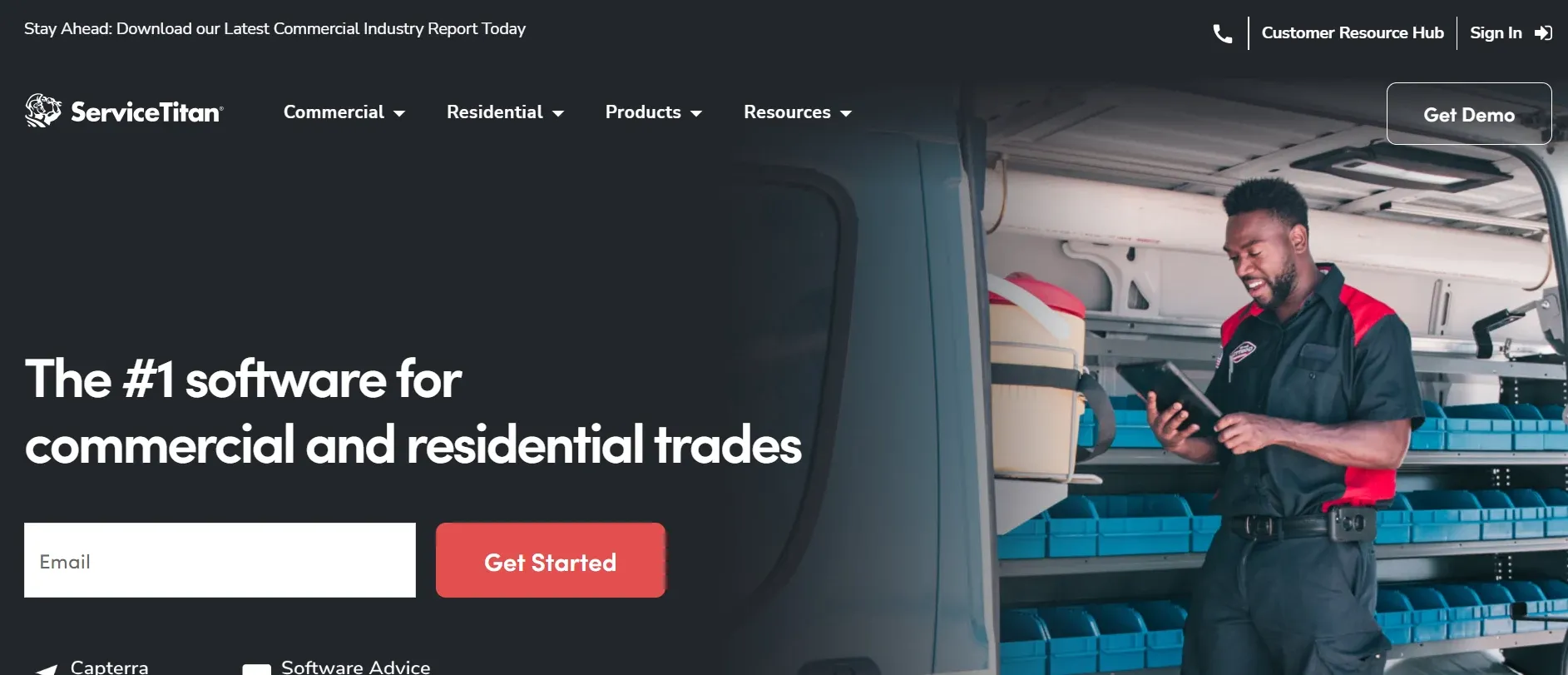
ServiceTitan remains the enterprise benchmark for HVAC field service management, combining scheduling, dispatch, call booking, and job management into one deep cloud-based platform. It's purpose-built for trades businesses, HVAC, plumbing, and electrical alike, and offers real depth: a drag-and-drop dispatch board, GPS technician tracking, adjustable capacity planning that lets you shape scheduling rules around business priorities (reducing maintenance slots during a busy holiday week, for instance), and an add-on, Dispatch Pro, that uses a matching algorithm to suggest the best technician for each job.

Best for: established HVAC operations with the technician count and back-office structure to make full use of an enterprise-grade platform, typically 20 or more techs.

Worth knowing: pricing isn't published and is negotiated per business, and the platform's depth comes with real onboarding complexity. Smaller shops often end up paying for far more platform than they can currently use.

2. FieldEdge

fieldedge.webp

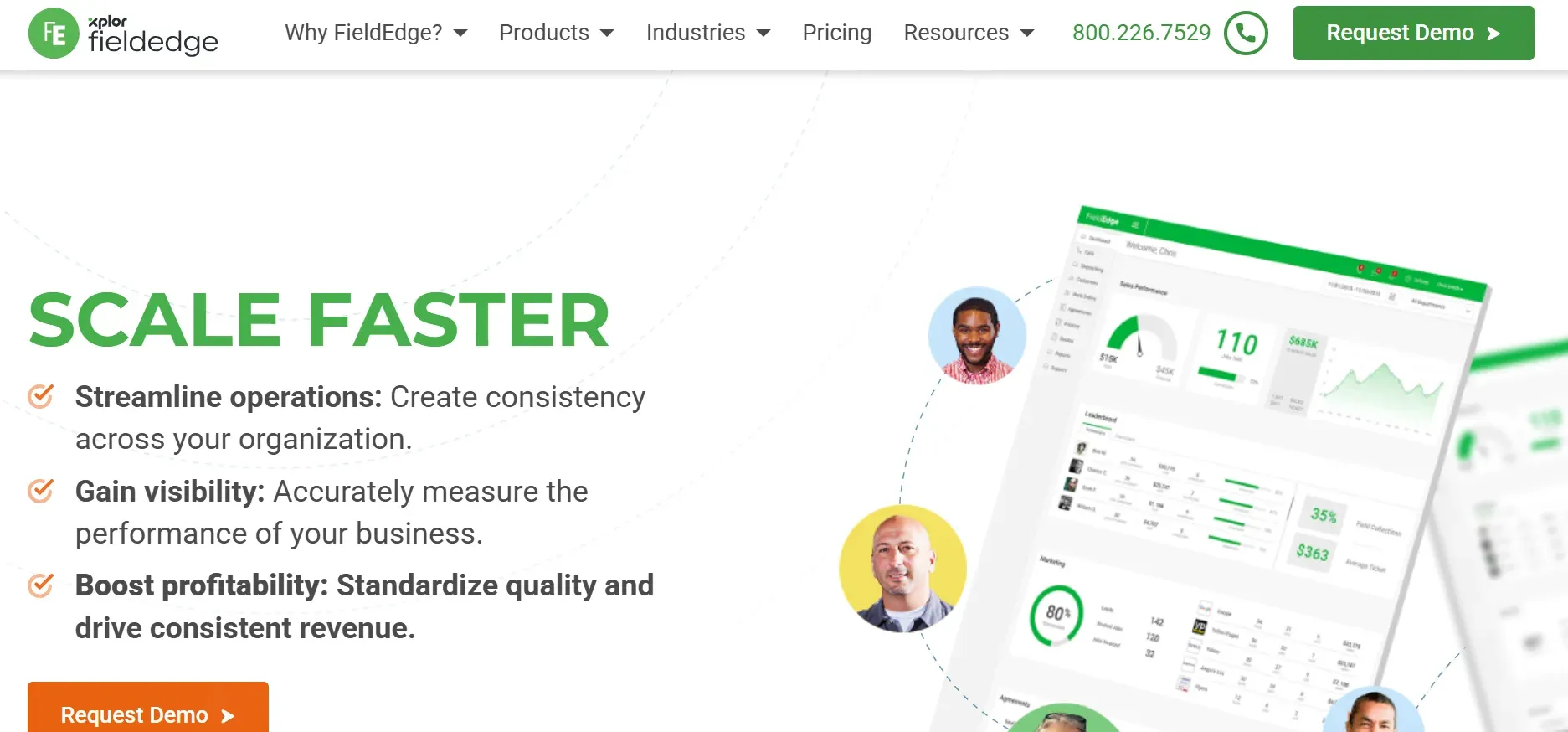
FieldEdge is a dedicated FSM platform for HVAC and plumbing contractors, covering scheduling and dispatch alongside quoting, invoicing, and service agreement tracking. It's known for a strong flat-rate pricebook (through its Coolfront integration) and deep QuickBooks sync, which matters for shops that lean heavily on accounting integration.

Best for: established HVAC and plumbing companies, generally in the 10 to 50 technician range, that prioritize flat-rate pricing depth over a cutting-edge interface.

Worth knowing: pricing runs on the higher end, commonly reported around $100 to $125 per user per month plus a setup fee, and onboarding tends to take several weeks. The interface also trails some newer competitors in terms of mobile polish.

3. Service Fusion

service fusion.webp

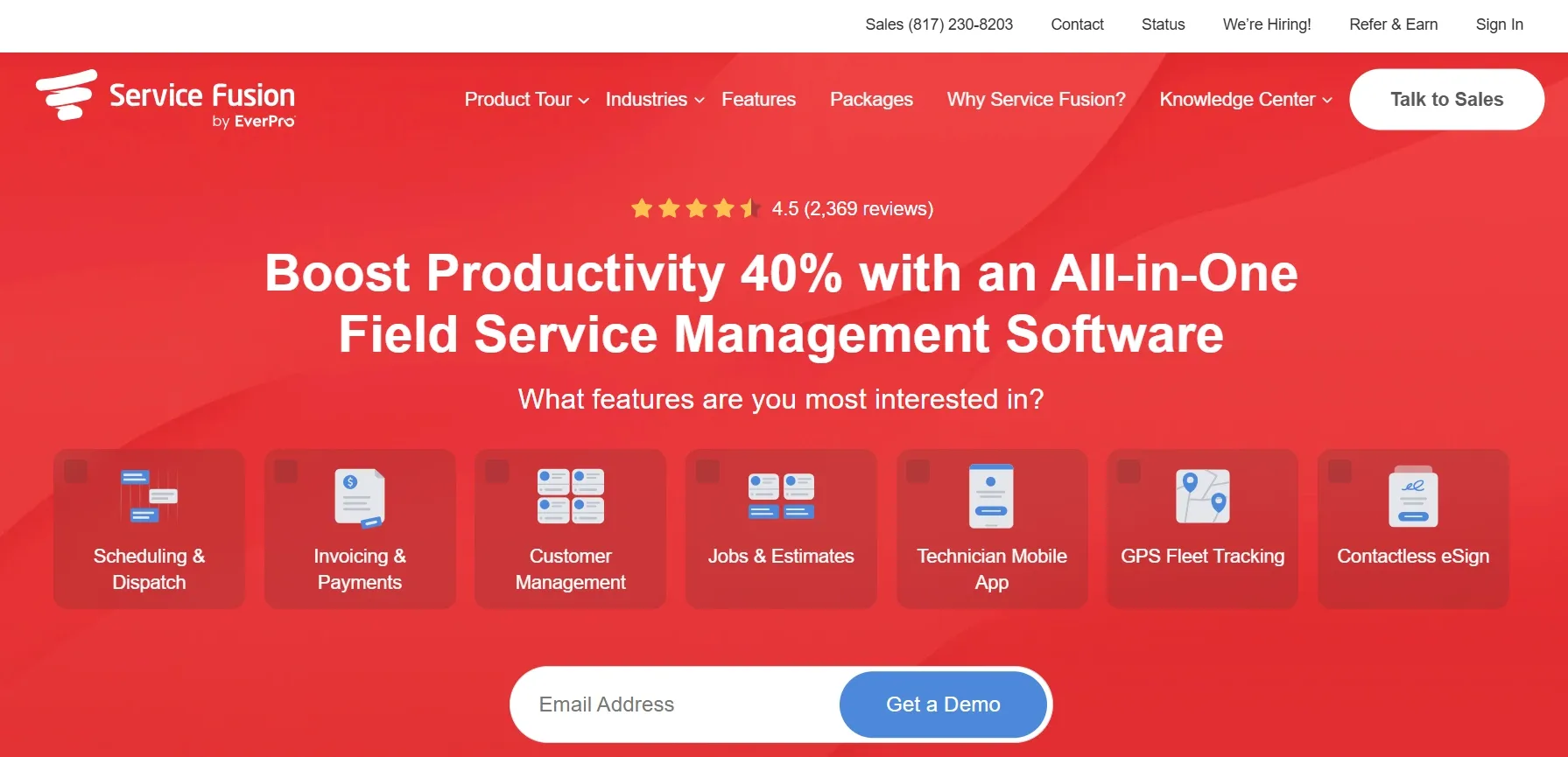
Service Fusion positions itself as an all-in-one FSM platform for HVAC, plumbing, electrical, and several other trades, and its standout feature is genuinely differentiating: flat monthly pricing with unlimited users at every tier, rather than the per-seat pricing most competitors use. Reported pricing runs roughly $149 to $389 a month depending on tier, which means a 20-technician shop pays the same monthly fee as a 5-technician shop on the same plan.

Best for: growing HVAC businesses that want predictable software costs as the team scales, without a per-technician fee eating into the savings from every new hire.

Worth knowing: the flat-rate model is attractive, but onboarding has been described as heavier than some lighter competitors, and there's typically no free trial to test-drive it first.

4. Housecall Pro

housecallpro.webp

Housecall Pro is one of the most widely used FSM platforms among small to mid-size HVAC and home service businesses, covering scheduling, dispatch, customer management, invoicing (including QuickBooks Online sync), and payment processing in a tiered pricing structure. Reported pricing starts around $59 to $79 a month for a single-user plan, climbing toward $150 to $300+ a month once you add users or features like automated marketing.

Best for: small HVAC teams that want an accessible, all-in-one platform without an enterprise price tag or a long onboarding process.

Worth knowing: the entry-level plan is genuinely limited, and a lot of growing businesses find themselves on a higher tier faster than the advertised starting price suggests.

5. Jobber

jobber.webp

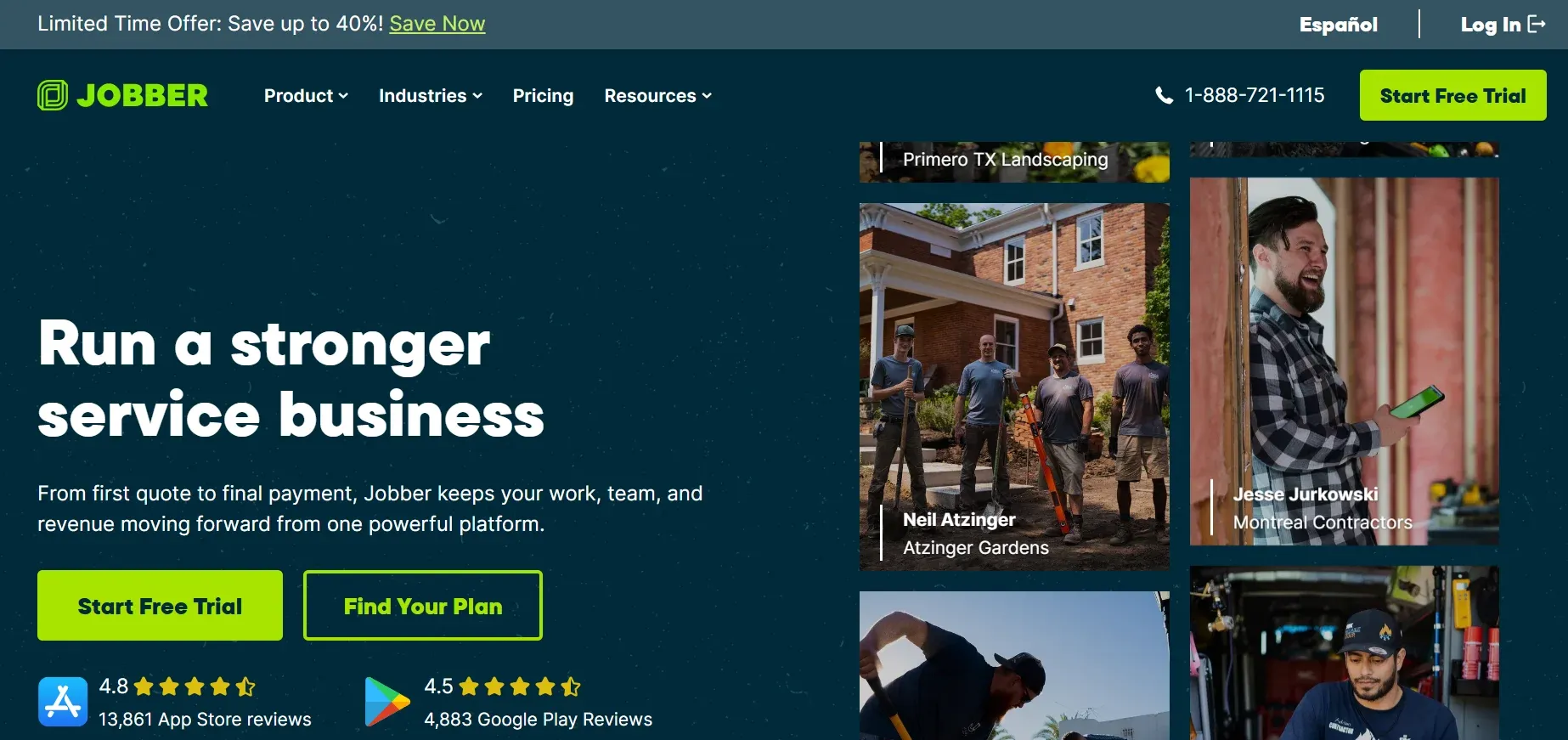
Jobber is a widely used, genuinely user-friendly FSM platform that covers scheduling, route optimization, quoting, invoicing by text, and on-site payment collection through its mobile app. It's customizable enough to fit a range of workflows and is particularly popular with smaller HVAC businesses that want something simple their whole team will actually use. Reported pricing starts around $39 a month for a solo operator and scales up toward $600 a month for larger team plans with add-ons.

Best for: small to mid-size HVAC teams that prioritize ease of use and a polished customer-facing booking experience over deep enterprise features.

Worth knowing: the advertised entry price rarely reflects the real monthly cost once per-user fees and add-ons are factored in, and larger, more complex HVAC operations tend to outgrow it over time.

6. FieldPulse

fieldpulse.webp

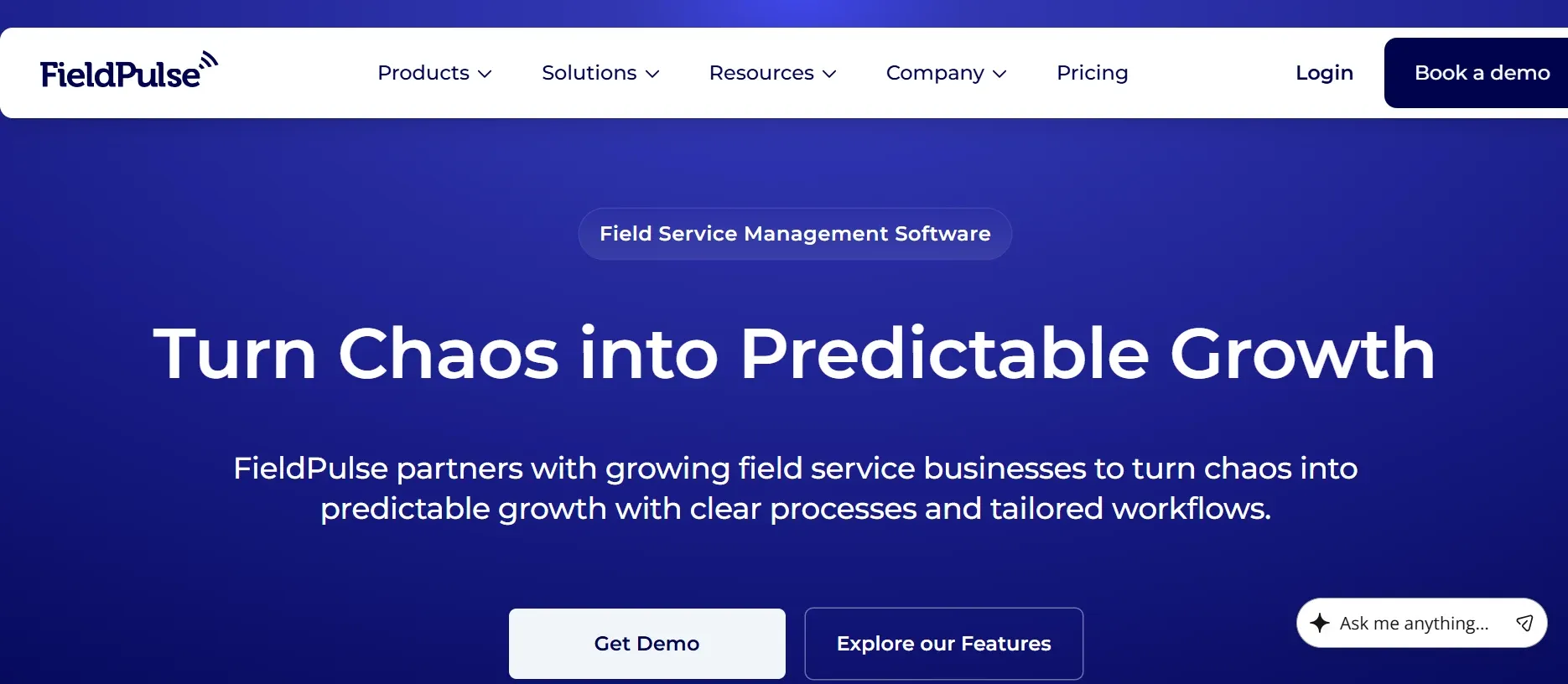
FieldPulse is an all-in-one FSM platform aimed at HVAC, plumbing, electrical, and several other trades, covering scheduling, dispatch, estimating, an advanced CRM, and a customer-facing booking portal. It's generally considered a better fit for small and mid-size contractors than large commercial operations, and its mobile app consistently earns strong reviews from field technicians specifically. Pricing starts around $99 a month, with larger or more automation-heavy setups typically requiring a custom quote.

Best for: small to mid-size HVAC teams, particularly those in the 10 to 25 technician range with recurring service agreements, that want strong automation and CRM depth without ServiceTitan-level complexity.

Worth knowing: as team size grows past the mid-size range, per-user costs can climb, and larger commercial operations may find the platform's depth better suited to residential and light-commercial work than large-scale contracts.

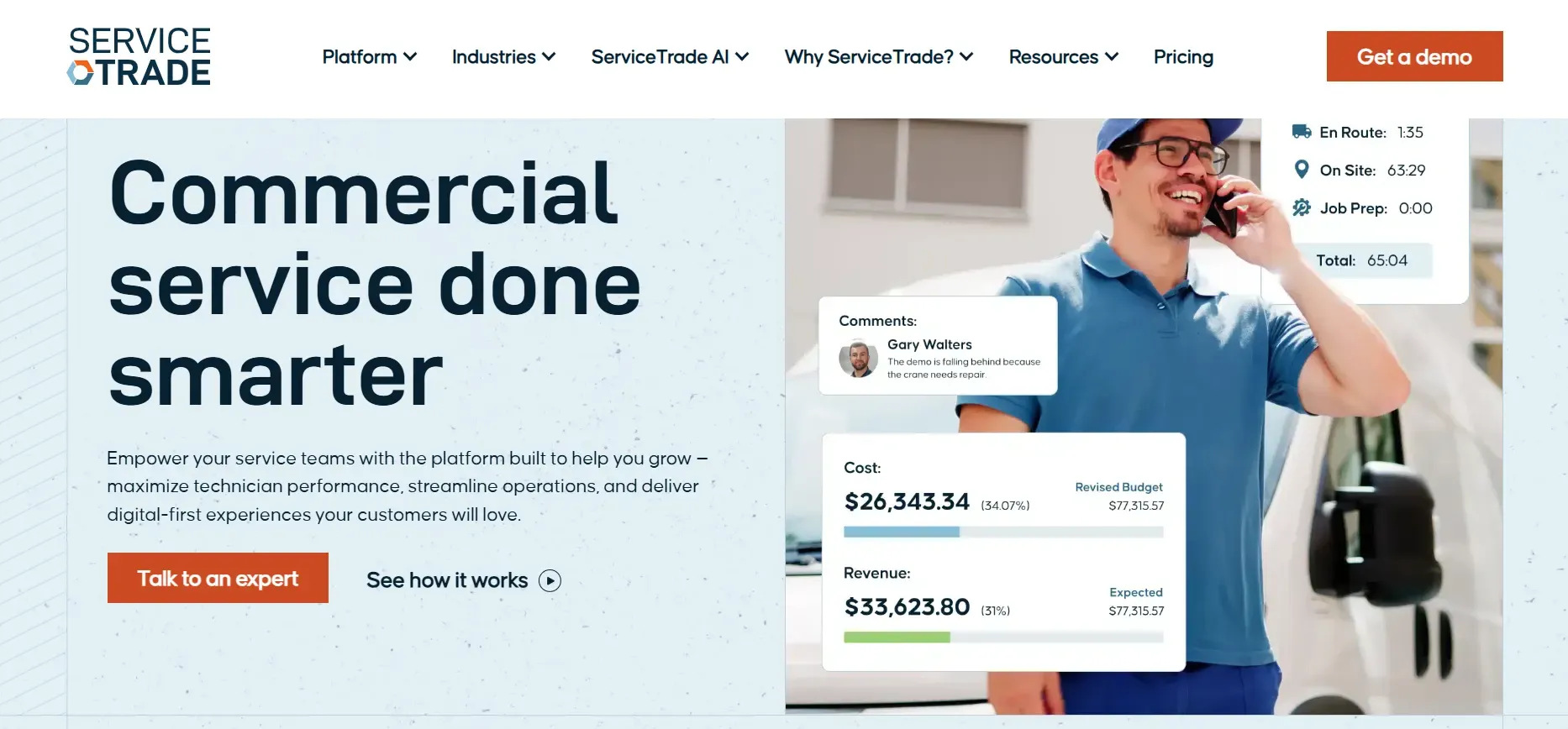
7. ServiceTrade

servicetrade.webp

ServiceTrade is built specifically for commercial HVAC, mechanical, and fire protection contractors rather than residential home service providers. It combines scheduling, dispatch, and customer management with digital inspection workflows and project management, and has built real depth in the commercial mechanical and fire-and-life-safety space specifically, serving over a thousand commercial contractors. Reported pricing starts around $95 per user per month.

Best for: commercial HVAC and mechanical contractors who need inspection workflows and project-level tracking alongside standard dispatch, not primarily residential service businesses.

Worth knowing: its commercial focus means residential-only HVAC businesses will find a lot of the platform's depth, inspection workflows especially, irrelevant to how they actually operate.

Comparing the Field at a Glance

Platform

Best for

Starting price

Notable strength

ServiceTitan

Large HVAC operations, 20+ techs

Custom quote

Deep, all-in-one enterprise platform

FieldEdge

Established HVAC/plumbing, 10-50 techs

~$100-125/user/mo

Flat-rate pricebook, QuickBooks depth

Service Fusion

Growing teams wanting predictable cost

~$149-389/mo, unlimited users

Flat pricing regardless of headcount

Housecall Pro

Small to mid-size HVAC teams

~$59-79/mo, single user

Accessible, fast to onboard

Jobber

Small to mid-size, ease of use focused

~$39/mo, solo

Polished, user-friendly booking

FieldPulse

Small to mid-size, automation-focused

~$99/mo

Strong mobile app, CRM depth

ServiceTrade

Commercial HVAC and mechanical

~$95/user/mo

Inspection and project workflows

Pricing reflects publicly reported figures as of 2026 and changes frequently, especially on quote-based platforms. Always confirm current pricing directly with the vendor before budgeting.

If you want a deeper breakdown specifically on the CRM side of this comparison, our full guide to HVAC CRM software covers the customer-management angle in more depth than dispatch alone.

The One Thing Every Dispatch App on This List Shares

Here's the gap worth being honest about: every platform above is genuinely good at managing a job once that job exists in the system. None of them answers the phone for you. Even reviewers comparing these platforms head-to-head have pointed out that the communication layer, the follow-up texts, the invoice nudges, and critically, the initial call that turns a stranger into a booked job, typically sits outside the FSM entirely, requiring a separate tool layered on top.

That's a real cost. A dispatch board full of perfectly optimized routes doesn't help the customer whose call went to voicemail at 7pm on a Tuesday when their AC died mid-summer. They just call the next HVAC company on the list, and your beautifully organized dispatch board never even finds out that job existed.

CloseCrew's Larry is an AI receptionist built specifically for HVAC contractors, and it's designed to close exactly that gap rather than compete with any of the platforms above. Larry answers every call 24/7, distinguishes a routine maintenance call from a genuine no-cool emergency, qualifies the urgency, and books the job straight into your calendar.

  • 24/7 call answering: never send an HVAC lead to voicemail, day or night.

  • Smart appointment booking: checks your real calendar and confirms bookings without back-and-forth.

  • Lead qualification: captures the issue and urgency so the right tech gets dispatched prepared.

  • CRM & calendar sync: jobs flow automatically into ServiceTitan, Housecall Pro, Jobber, or whichever FSM platform from this list you're already running.

  • Call recordings & transcripts: review every conversation, coach your team, and settle disputes with full call history.

  • Custom scripts per trade: built specifically for HVAC emergencies, maintenance, and estimates, fully customizable to how you run your business.

Pairing a strong FSM platform with a receptionist that never misses a ring is the combination a lot of HVAC businesses are missing, and it's often the real reason a well-optimized dispatch board still isn't translating into the revenue growth it should be. If you're also evaluating which platform on this list actually fits your team, this breakdown of current HVAC technology trends is worth reading alongside your shortlist, since the category is shifting quickly.

Frequently asked questions

Do I need a dispatch app if I only run a few technicians?

Even small HVAC teams benefit from moving off spreadsheets, since manual scheduling gets error-prone fast, and platforms like Jobber, Housecall Pro, and FieldPulse are specifically built with smaller teams and simpler onboarding in mind.

General CRMs track leads and customer contact but don't handle dispatch boards, technician routing, or field invoicing, all of which are core to the platforms covered here.

No. Every platform on this list manages jobs once they're in the system, but none of them answers the phone. That's a separate problem, typically solved with a dedicated CSR, an answering service, or an AI receptionist like Larry.

It varies widely. Simpler platforms like Jobber or Housecall Pro can often be running within days, while enterprise platforms like ServiceTitan, or quote-based ones like FieldEdge, commonly involve a multi-week onboarding process.

Most can, though some lean heavily toward one side. ServiceTrade, for instance, is built specifically for commercial mechanical and fire-safety work, while Jobber and Housecall Pro skew toward residential and light-commercial service.

Related tools

Run the numbers before you update your price book or field software.

Free HVAC Templates

Invoices, estimates, maintenance agreements, and flat-rate pricing sheets for heating and cooling contractors.

Browse HVAC templates

Contractor Blog

Cross-trade guides on hiring, marketing, and operations for every home services business.

View all guides

Meet Larry

AI receptionist built for HVAC — answers calls, books jobs, and follows up on leads 24/7.

See Larry for HVAC

Related articles

Never miss an HVAC service call again. Let Larry, your AI receptionist, book jobs while your crew is in the field.

We will run your numbers on the call and tell you if the maths does not work for a shop your size. That happens, and it is a cheaper conversation than finding out three months in.

Get a demo