Business Tips

10 Biggest HVAC Technician Problems and How to Fix Them in 2026

HVAC technicians spend a significant portion of their day on non-billable work, including scheduling conflicts, paperwork, parts delays, missed follow-ups, and communication gaps. These operational challenges reduce productivity, increase technician burnout, and cost HVAC businesses valuable revenue. This guide explores the 10 biggest problems technicians face in 2026 and shares practical solutions, tools, and automation strategies that help teams work more efficiently, improve customer service, and complete more profitable jobs.

10 min readPublished July 10, 2026Updated July 14, 2026

Your HVAC technicians are the foundation of your service company. They interact with customers, solve system problems, and generate the revenue that keeps your business running. But most techs lose up to 25% of their workday on tasks that don't generate revenue: hunting for parts, rekeying paperwork, chasing callbacks, and dealing with scheduling chaos.

At a $150/hour billing rate, that's roughly 3.2 hours per tech per week lost to non-revenue work. Scale that across a 15-person team and you're looking at $1.1 million in annual revenue opportunity sitting on the table.

The fix isn't hiring more techs. It's removing the friction that slows down the ones you have. This guide covers the 10 biggest pain points HVAC technicians face in 2026 and the specific tools and processes that solve each one.

Part of the Business Tips section in the HVAC Business Blog.
1. Overloaded schedules

The HVAC industry has a well-documented labor shortage. The temptation is to overbook your existing techs to keep up with demand. That leads to rushed jobs, overlooked details, poor customer experiences, and eventually techs walking out the door to work somewhere less chaotic.

The fix is scheduling intelligently, not aggressively. Give techs adequate time to complete each job. Let them see their full schedule for the day so they can plan their approach. Make sure dispatchers can see where each tech is in the service cycle so they can adjust in real time when an emergency call comes in.

Scheduling software that accounts for travel time, job complexity, and technician skill sets prevents the overbooking that causes burnout. If you need to handle more calls without overloading your team, an AI-powered system that answers and books calls automatically creates capacity without adding headcount.

For tips on keeping your team motivated and fairly compensated, see our HVAC technician salary guide.

Better scheduling doesn't just reduce technician burnout. It also helps you complete more jobs, improve customer satisfaction, and generate more revenue from your existing team.

2. Arriving at the job site uninformed

Nothing looks less professional than a tech showing up and asking the homeowner "so what's the problem?" when they already explained it to your CSR on the phone. Lack of job information wastes time, frustrates customers, and makes your company look disorganized.

Every tech should arrive knowing why the customer called, what equipment is on site (model, age, service history), whether special tools or a gate code are needed, and what previous estimates or work orders are connected to the address.

A field management system that puts complete job information on the tech's mobile device solves this. Customer profiles, job histories, CSR notes, previous photos, and past estimates should all be accessible before the tech rings the doorbell.

How CloseCrew keeps your techs informed before they arrive

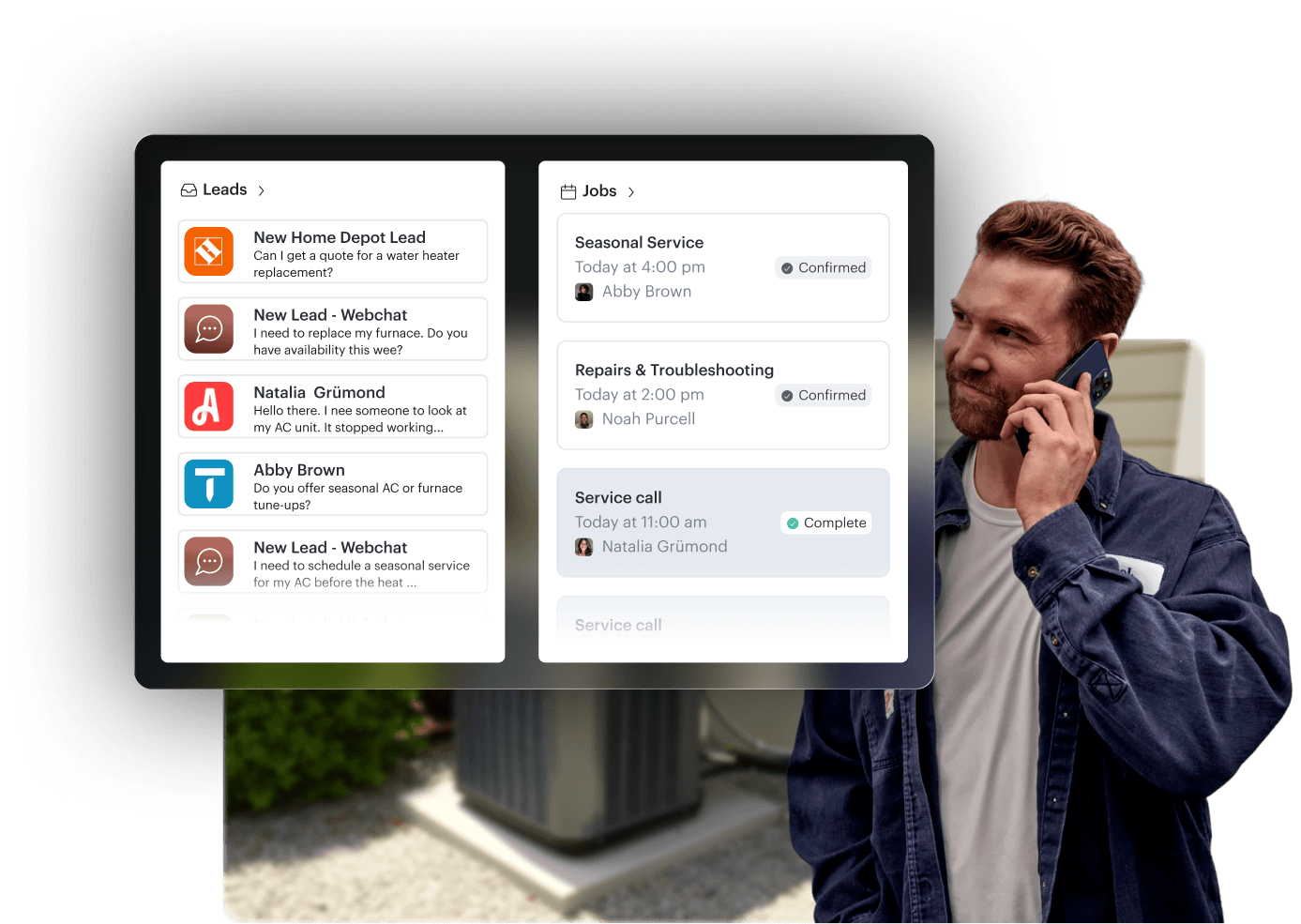
When a homeowner calls to schedule service, Larry captures the problem details, qualifies the job type (repair, maintenance, or install), and logs everything into the customer profile. By the time the tech opens their mobile app, the full context is there: what the customer described, their equipment history, and any notes from previous visits. No more "so what's going on?" at the door.

3. No system for presenting multiple options

Telling techs to "upsell" without giving them a process is unfair. Most technicians didn't get into HVAC to be salespeople. They feel awkward suggesting expensive options and default to quoting the cheapest fix to avoid an uncomfortable conversation.

The solution isn't sales training alone. It's a presentation system. When a tech can hand the customer a tablet showing good-better-best options with photos, descriptions, and pricing, the customer chooses for themselves. No high-pressure pitch. No awkwardness. The tech just explains the differences and lets the homeowner decide.

Detailed descriptions with photos and videos help educate the customer, build trust, and close larger jobs. Digital signatures on the spot increase conversion rates because the customer commits before the "I'll think about it" reflex kicks in.

4. No financing options for big-ticket jobs

No homeowner wants to hear they need a $6,000 HVAC system replacement. Without financing, many customers say "let me think about it" and never call back. The tech loses the job, the homeowner lives with a failing system, and your company misses revenue.

Integrated financing that displays payment plans automatically during the estimate changes the conversation. Instead of "$6,000 today," the customer sees "$125/month." That shifts the decision from "can I afford this?" to "which plan works best?"

Companies that offer financing in the field report financed tickets running 3-4x higher than cash tickets. That's the difference between a $1,500 repair and a $6,000 system replacement, on the same service call.

5. The parts chase that kills productivity

Your tech arrives at the wholesaler. The system shows the part "in stock." It's not there. One location becomes three. A 15-minute pickup turns into an hour. Meanwhile, the afternoon schedule stacks up, customers wait, and jobs get rescheduled.

HVAC technicians lose significant productive hours each week to parts hunting. Across a team, that lost time adds up to tens of thousands in missed revenue annually.

The fix requires real-time inventory tracking, mobile apps that show actual stock levels across locations, reliable parts reservation processes, and strategic collection points that minimize travel time. When techs start each day knowing exactly where every needed part is, productivity increases immediately.

Make sure your techs have the right essential HVAC tools organized and ready before each call.

6. Communication breakdowns between field and office

Job information shouldn't require a phone call to the office. Work orders, estimates, invoices, and payments captured in the field should sync automatically. When dispatchers can see the tech's job cycle in real time, they can reassign jobs, reroute technicians around traffic, and handle emergency calls without disrupting the entire schedule.

The communication chain for a parts request alone can involve the tech, dispatch, the wholesaler, the warehouse, and back again. Each handoff introduces delays and potential miscommunication. The average parts request passes through four to five people before the tech gets an answer.

Direct communication channels between techs and suppliers, instant mobile updates for the entire team, and automated status notifications cut this chain to two steps instead of five.

7. Paperwork and documentation eating up billable hours

Even experienced techs forget to document information or miss steps in your company's procedures. Paper forms get lost between the truck and the office. Handwritten notes are illegible. Serial numbers get transposed.

Digital forms that trigger based on job type (install, maintenance, warranty) solve this. Departure checklists ensure techs collect every piece of information before leaving the site: equipment age, model and serial numbers, photos of the work completed, and customer signatures.

One contractor reduced callbacks by 50% and increased revenue by 20% simply by requiring digital form completion on every job. The forms didn't add time. They prevented the rework that was costing far more.

For techs working on system sizing, the HVAC load calculation tools guide covers the software that speeds up this critical step.

8. Common equipment problems that waste diagnostic time

Troubleshooting is one of a tech's core skills, but certain problems come up repeatedly and waste time when techs don't have quick reference resources in the field.

AC not cooling properly. Start with the air filter. A full filter restricts airflow and is the simplest fix. If the filter is clean, check for a frozen evaporator coil. Dirty registers are another common culprit in forced-air systems.

System cycling constantly. Usually a thermostat sensor knocked out of position. The fix is bending the wire holding the sensor near (but not touching) the coil.

Heat pump running nonstop in mild weather. Remove ice from around the outdoor unit, clean and service the heat pump, then inspect ductwork for gaps that let heat escape.

Furnace not heating. Work through the basics: open heat registers, verify thermostat is set to heat, check circuit breaker and fuses, hit the reset button, change the filter, relight the pilot light. If none of these work, the hot surface ignitor may need replacement.

Boiler water leaks. Check the pressure-relief valve first (replace if it won't close). Service the expansion tank. Inspect the circulator pump seal. Trace pipes to the faulty connection.

For all of these, recommend routine maintenance contracts after the repair. Maintenance agreements generate recurring revenue, prevent future breakdowns, and give the customer peace of mind. Your field management system should make it easy for techs to sign customers up for agreements in the field with just a few taps.

Techs should also be aware of the common HVAC safety hazards they encounter daily, from electrical risks to refrigerant exposure.

9. Missed callbacks and follow-up falling through the cracks

A tech leaves an estimate with a homeowner. The homeowner says "let me talk to my spouse." Three days pass. Nobody follows up. The homeowner calls a competitor. That estimate, which took 30 minutes to build, generated exactly zero revenue.

Without automated follow-up, open estimates stack up and opportunities quietly disappear. Most contractors don't realize how much revenue they lose to unfollowed estimates until they start tracking it.

How CloseCrew follows up on every estimate automatically

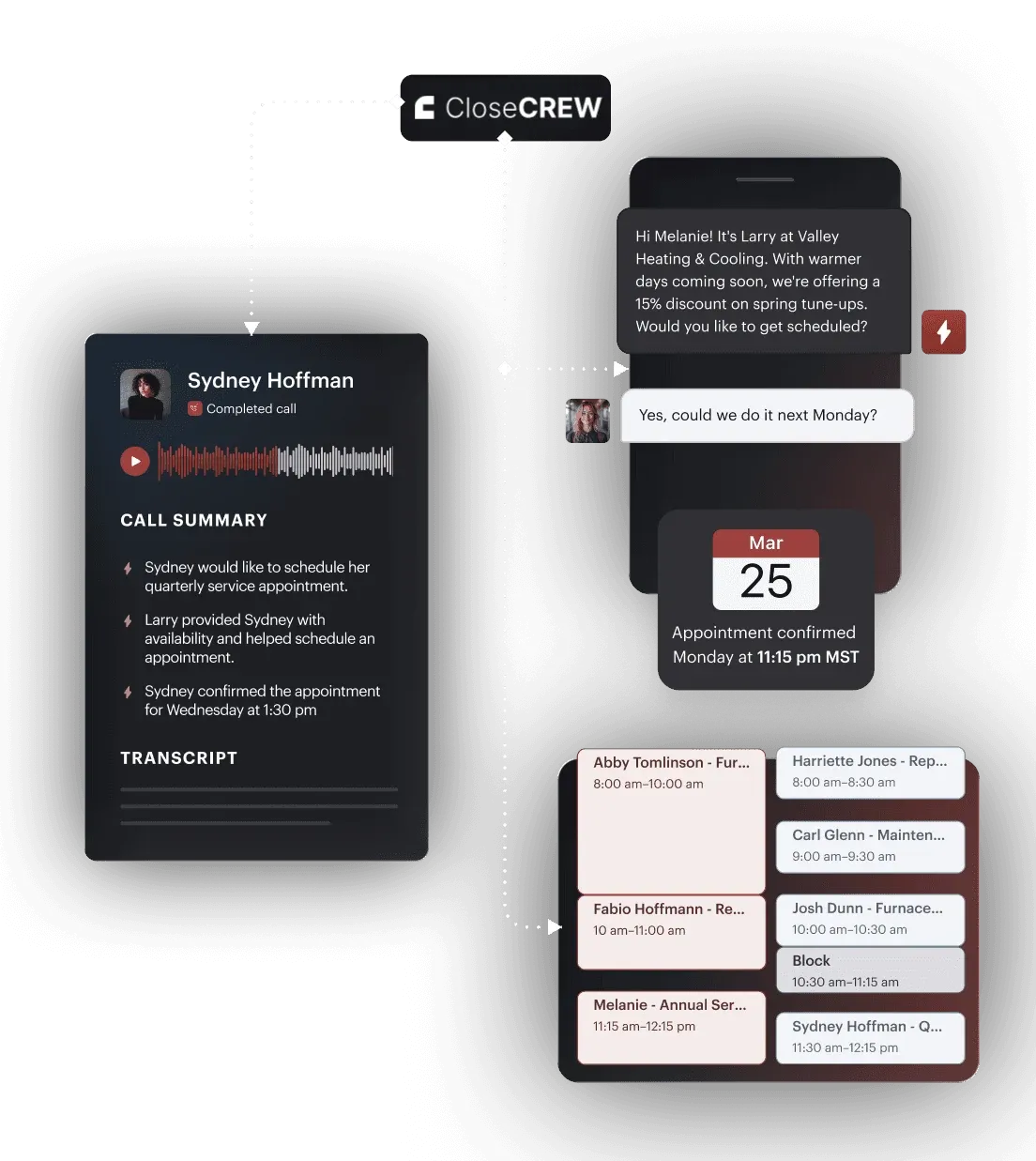
Larry doesn't forget. When an estimate goes unanswered for a set period, Larry triggers a follow-up automatically: a text, a call, or both. He checks in with the homeowner, answers questions, and books the job if they're ready.

Air Design Heating and Cooling saw their estimate conversion go from 5-10% to near 100% because Larry follows up every single time. That added 13 extra appointments in the first 30 days.

The math is straightforward. If your techs leave 50 open estimates per month and your current follow-up catches 10 of them, that's 40 estimates going cold. Even a 25% close rate on those 40 means 10 additional jobs per month that your team already did the work to earn.

re-engagement.webp

10. After-hours calls going to voicemail

HVAC emergencies don't wait for business hours. A compressor failure at 9 PM, a no-heat call at 6 AM on Saturday, a thermostat question at 11 PM. 41% of home service bookings come in after hours. If those calls hit voicemail, 85% of callers never call back. They call the next company on Google.

A full-time receptionist costs $35,000-$45,000/year plus benefits. That's a significant overhead for a growing shop. But missing after-hours calls costs more.

How CloseCrew answers every call so your techs don't have to

Larry, answers your phones 24/7 with Voice AI. He qualifies the lead, books jobs directly into your FSM calendar, sends text confirmations to reduce no-shows, and handles the entire booking conversation while your techs are on the job or asleep.

Most AI tools stop at answering. Larry goes further because he works inside the same system that runs your business. He sees every customer's history, equipment records, and past conversations. So he always knows who he's talking to and what to do next.

05-cutters.png

What contractors are saying:

  • Arctic Air: 30% more revenue in one year. Hired Larry, added a truck to their fleet, and haven't looked back.

  • Air Texas: Booked a $20,000 job after hours. Larry answered, qualified, and booked it. Without CloseCrew, it goes to voicemail.

  • Premier Heating and Air: Response time dropped from 12 minutes to under 1 minute. Converted 3x more leads after Larry started handling calls.

  • Air Design: 13 extra appointments in the first 30 days. Estimate follow-up conversion went from 5-10% to near 100%.

Your best employee doesn't take days off. Ready to hire Larry?

How to keep your techs productive and your business growing

Every problem on this list has the same root cause: friction between the tech and revenue. Parts hunting, paperwork, communication breakdowns, missed calls, and unfollowed estimates all sit between a technician's skills and a booked, completed, paid job.

The companies that solve these friction points don't just retain better techs. They generate more revenue per tech, per truck, per day. That's how you grow without adding headcount.

Start with the highest-impact fix first. For most shops, that's answering every call and following up on every estimate. Those two changes alone can add 10-20 jobs per month without changing anything else about your operation.

For broader strategies on growing your HVAC business, see our guides on HVAC SEO tips that bring in more leads and HVAC technician salaries that help you attract and retain the best techs.

Related tools

Run the numbers before you update your price book or field software.

Free HVAC Templates

Invoices, estimates, maintenance agreements, and flat-rate pricing sheets for heating and cooling contractors.

Browse HVAC templates

Contractor Blog

Cross-trade guides on hiring, marketing, and operations for every home services business.

View all guides

Meet Larry

AI receptionist built for HVAC — answers calls, books jobs, and follows up on leads 24/7.

See Larry for HVAC

Related articles

Never miss an HVAC service call again. Let Larry, your AI receptionist, book jobs while your crew is in the field.