Business Tips

6 Best HVAC Publications and Blogs Every Contractor Should Know in 2026

The HVAC industry changes quickly, from new regulations to technology and business trends. In this guide, we look at 6 HVAC publications and blogs worth following in 2026.

10 min readPublished August 25, 2026

The best HVAC publications help contractors stay ahead of industry changes, spot growth opportunities, and make smarter decisions as their companies scale.

The challenge isn't finding information anymore. It's figuring out which sources are actually worth the limited time you have.

Between labor shortages, shifting regulations, new technology, rising customer expectations, and heavier competition, today's HVAC contractors genuinely need reliable ways to stay informed. The right publications help you spot trends earlier, learn from contractors who've already solved the problem you're facing, and make sharper decisions around hiring, scheduling, pricing, customer service, and profitability.

Here's the pattern worth noticing: a lot of growing HVAC companies aren't struggling because there isn't enough demand. They're struggling with how to manage that demand efficiently, scheduling, technician utilization, hiring fast enough, first-time fix rates, and keeping response times tight. The best HVAC publications don't just report news, they help contractors turn that industry insight into better operational decisions.

If you want the short version, these are the publications and blogs most HVAC contractors should have on their radar in 2026:

This guide breaks down what each one is actually best for, what's worth paying attention to, and how to turn these resources into better business decisions instead of just more reading.

Part of the Business Tips section in the HVAC Business Blog.
  • ACHR News

  • Contracting Business

  • HVACR Business

  • ACCA Resources

  • ASHRAE Publications

  • CloseCrew Blog

Why HVAC Publications Still Matter in 2026

Space heating and air conditioning together account for roughly half of the average household's annual energy consumption, which means demand for HVAC service isn't going anywhere. The businesses that pull ahead aren't the ones with more demand, they're the ones managing that demand more efficiently: smarter scheduling, better technician utilization, tighter hiring, higher first-time fix rates, and faster response times.

That's exactly the kind of operational edge the right publications help you build. Reading with intention, even 20 to 30 minutes a week, consistently, tends to compound into real business improvements over a year. The businesses that actually benefit aren't just reading, they're applying what they read, which is the real differentiator between industry awareness and industry advantage.

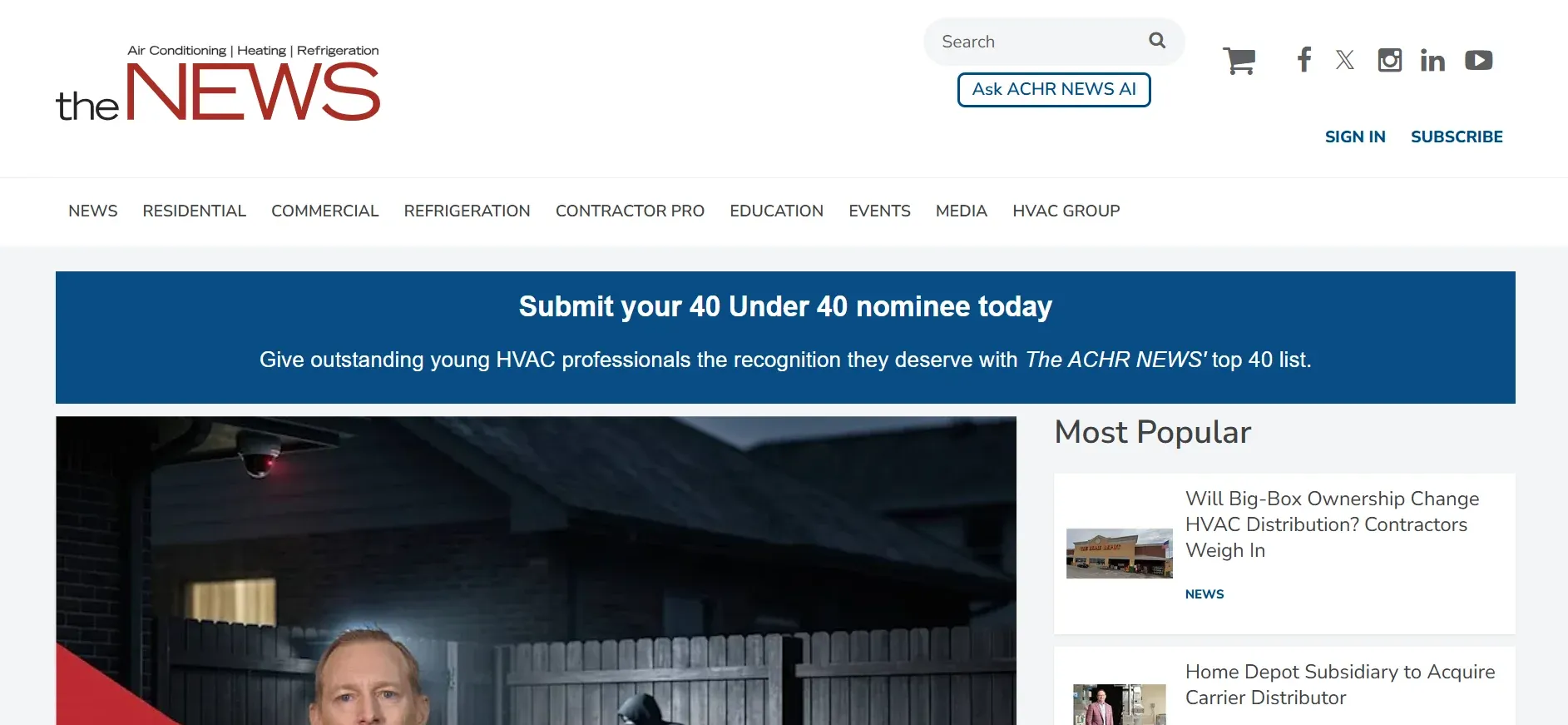
1. ACHR News

the news.webp

ACHR News is one of the longest-running and most widely read sources of HVACR industry news, covering everything from regulatory changes and refrigerant policy to technology shifts and business trends across the trade.

What it's best for: understanding where the industry is actually heading, not just where it stands today. ACHR News tends to cover regulatory and technology shifts earlier than most other outlets, which matters if you want to plan ahead rather than react after a change is already in effect.

What to pay attention to: coverage of refrigerant regulations and phase-outs, evolving efficiency standards, and broader industry data on labor and demand trends. These shifts often affect equipment costs, installation requirements, and pricing well before most contractors notice the change coming.

2. Contracting Business

contracting business.webp

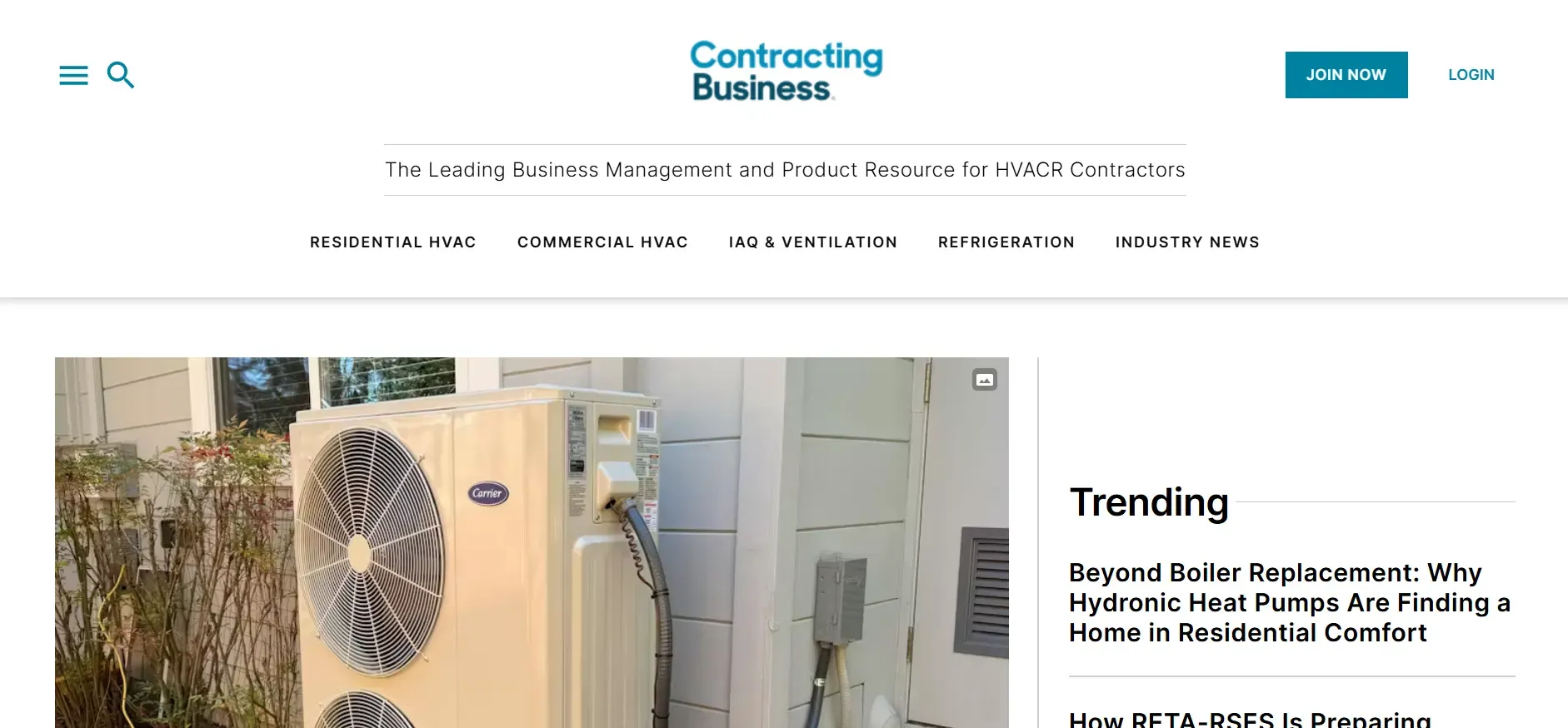
Contracting Business focuses squarely on the business side of running an HVAC company, leadership, operations, sales, and the transition most owners face as their business grows past what one person can personally manage.

What it's best for: contractors moving from a technician-led operation into something more structured. Most HVAC owners start out as technicians themselves, but growing a company requires a genuinely different skill set, delegation, systems, and leadership, not just technical expertise. Contracting Business leans directly into that transition.

What to pay attention to: content on leadership development, sales process, and scaling operations without losing quality control. It's a useful counterbalance to more technical publications, since it treats the business itself as a system worth optimizing, not just the equipment.

3. HVACR Business

hvac business.webp

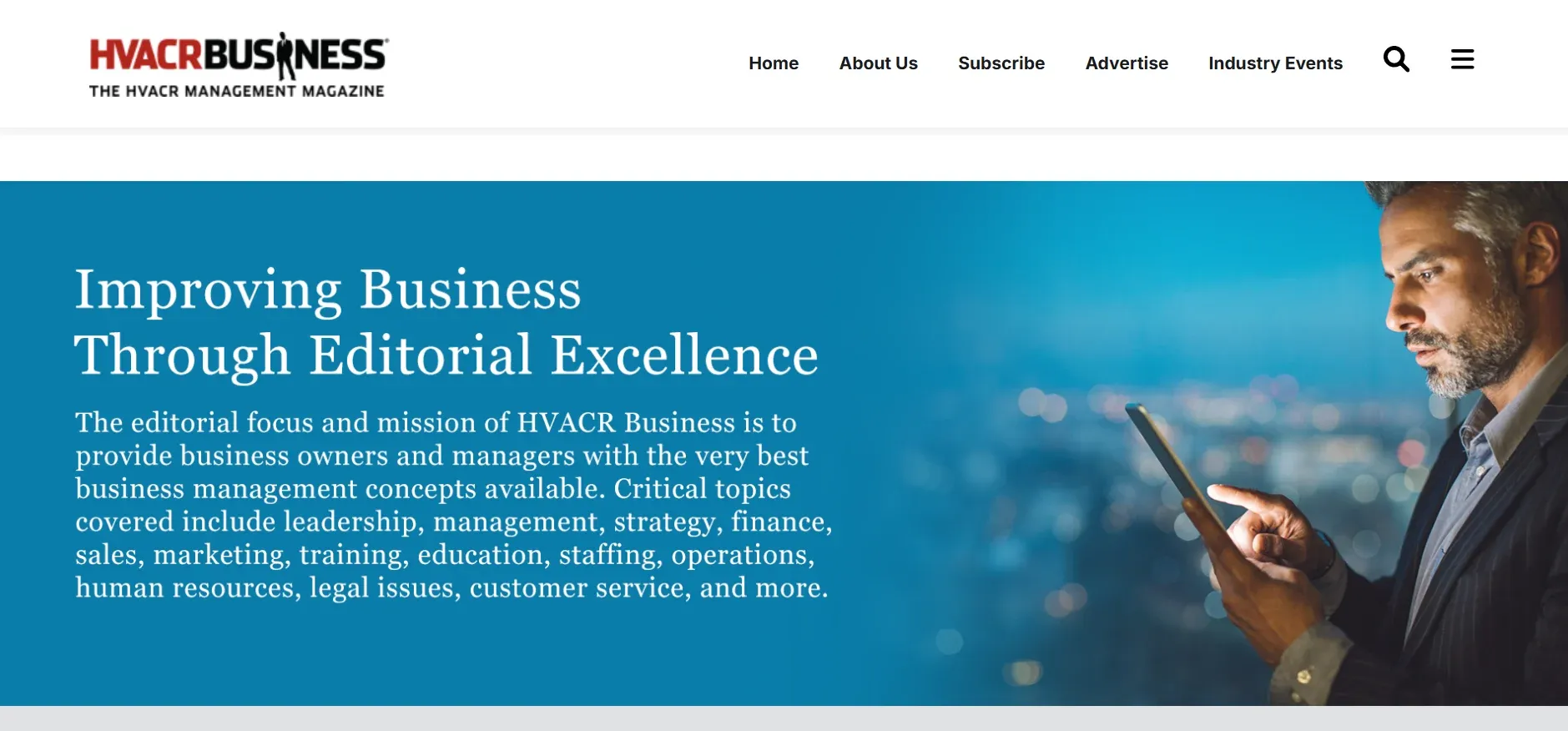
HVACR Business covers a mix of operational strategy, technology adoption, and workforce development aimed specifically at contractors trying to grow a sustainable, profitable company rather than just stay busy.

What it's best for: practical, operations-focused content that sits between the high-level industry news of ACHR News and the leadership focus of Contracting Business. It's a solid source for contractors looking for actionable process improvements rather than broad industry trends.

What to pay attention to: coverage of workforce development and technician retention specifically, since labor availability continues to be one of the biggest constraints on HVAC business growth heading into 2026.

4. ACCA Resources

acca.webp

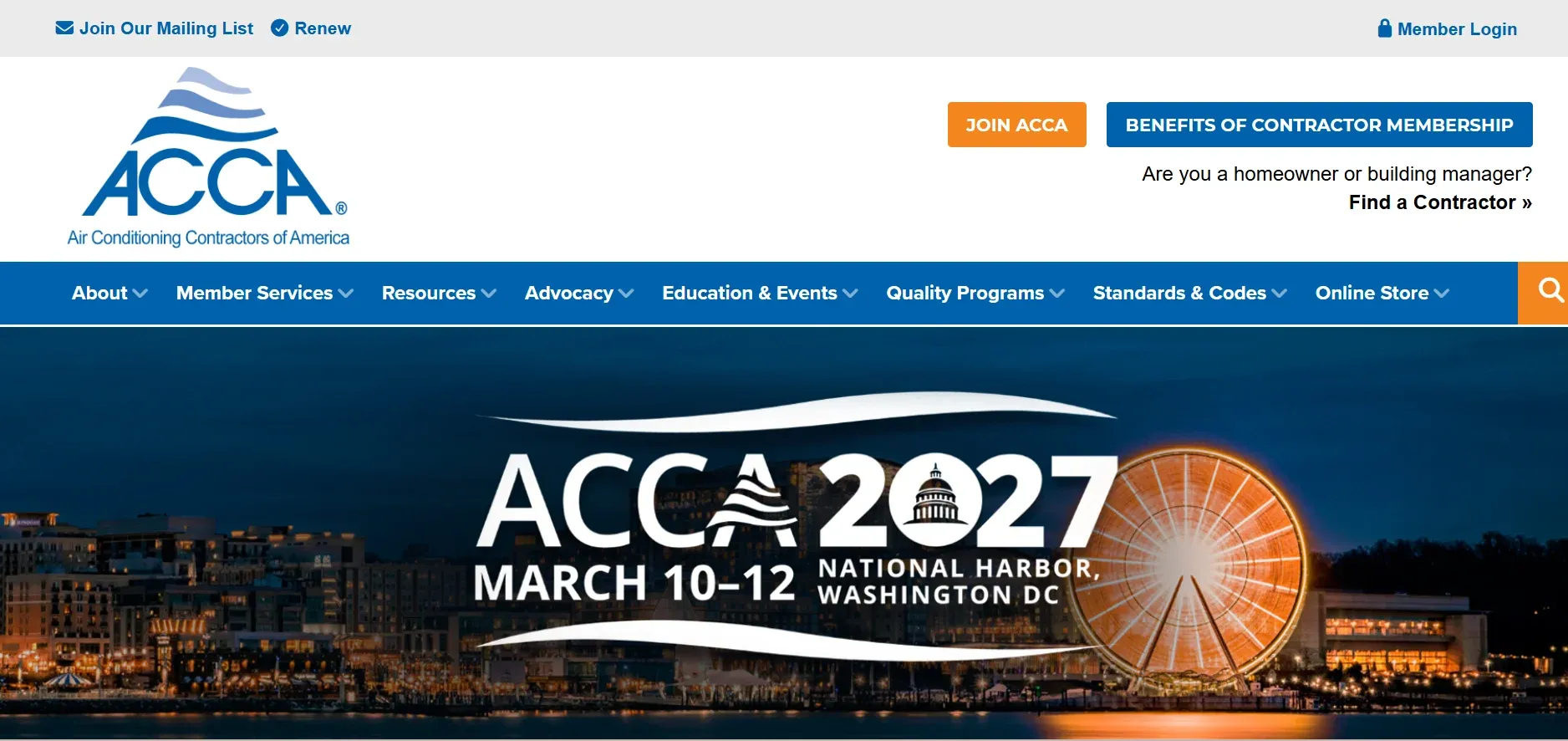
The Air Conditioning Contractors of America (ACCA) is the trade association behind a lot of the technical standards contractors rely on daily, including Manual J load calculations, Manual S equipment selection, and Manual D duct design. ACCA represents tens of thousands of HVACR professionals and thousands of member businesses nationwide.

What it's best for: technical standards and compliance guidance straight from the organization that actually writes them, plus a genuine community of contractors facing the same regulatory and operational questions you are.

What to pay attention to: updates to Manual J, S, and D guidance, which directly affect how you size and quote residential systems, along with ACCA's ongoing coverage of workforce and licensing issues that vary meaningfully by state.

5. ASHRAE Publications

ashare.webp

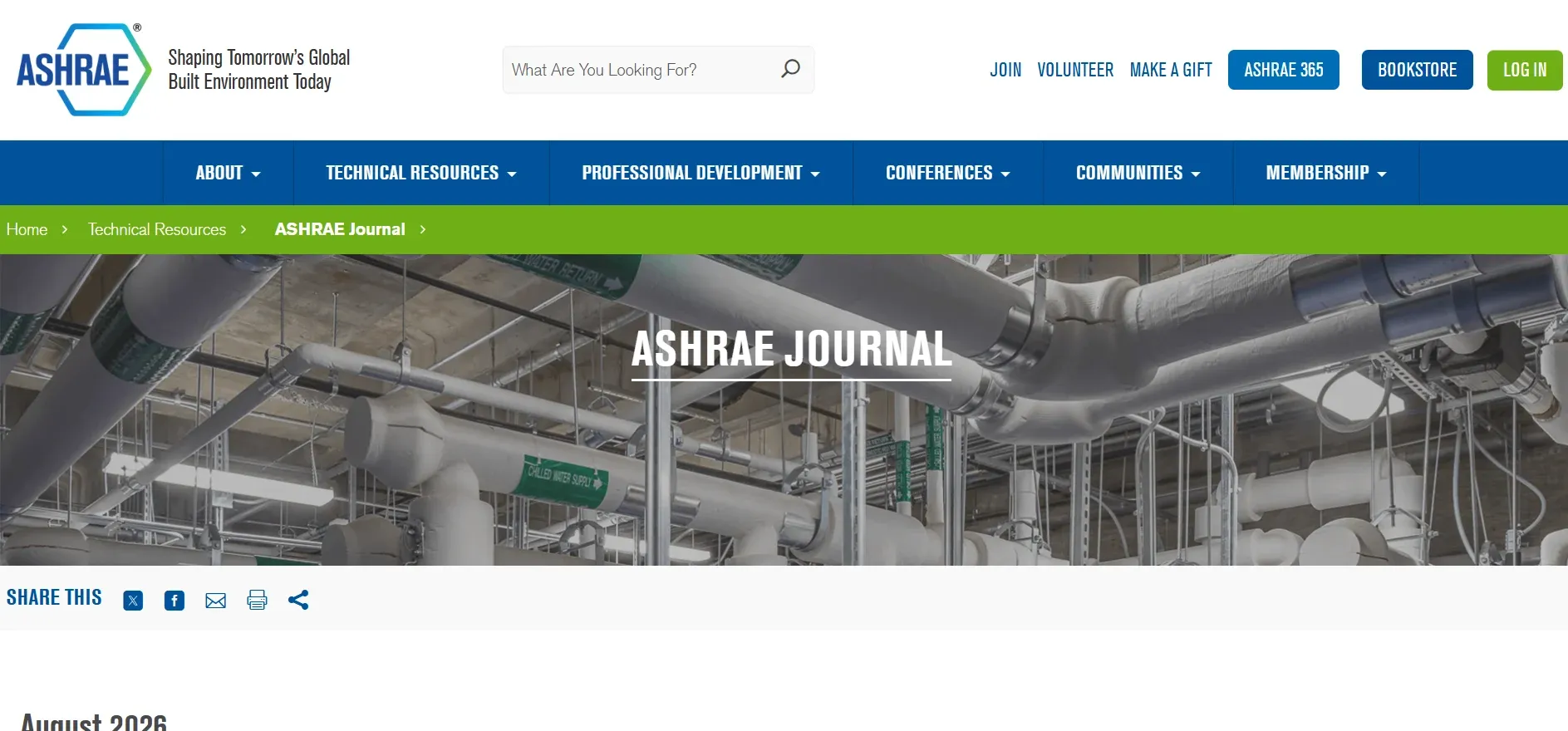
The American Society of Heating, Refrigerating and Air-Conditioning Engineers (ASHRAE) is the organization behind many of the technical standards that are eventually incorporated into local building codes, including ventilation and energy performance standards such as ASHRAE 62.1 and 90.1. It's a global professional association with tens of thousands of members spanning engineers, contractors, and building owners.

What it's best for: deep technical grounding on ventilation, indoor air quality, and energy performance standards, especially useful for contractors doing commercial work where these standards carry real regulatory weight. For a closer look at how these standards actually apply on the job, this guide to HVAC codes and standards breaks down the difference between a code and a standard, and why that distinction matters for compliance.

What to pay attention to: updates to ASHRAE 62.1 and 90.1 specifically, since both feed directly into a growing share of state and local energy codes on a rolling update cycle.

6. CloseCrew Blog

closecrew (1).webp

Rounding out the list is a resource focused specifically on the operational side most technical publications don't cover in depth: how HVAC contractors actually capture, book, and grow the leads their marketing and reputation generate.

What it's best for: practical, trade-specific guidance on the business systems that sit just behind the technical work, sales process, scheduling, marketing, and the tools contractors are actually comparing in 2026. Recent coverage includes building an effective HVAC sales process, practical tips for running an HVAC business, and HVAC social media marketing for contractors trying to build a real online presence without hiring a full marketing team.

What to pay attention to: the blog's growing library of comparison guides, includingt he best HVAC field service dispatch apps, useful reference content like common HVAC symbols and their meanings and a rundown of essential HVAC tools, and business-building content like HVAC SEO tips and HVAC company name ideas for contractors just getting a new operation off the ground.

How to Actually Build a Reading Habit That Sticks

Knowing which publications matter is only useful if you actually read them consistently, and most contractors who try to "catch up on industry news" in one long weekend session burn out before the habit ever forms. A few practical approaches that tend to work better:

Pick a fixed time, not a fixed amount. Fifteen to twenty minutes over morning coffee, or during a lunch break between calls, is far more sustainable than trying to block off an hour that competes with actual job time. Consistency matters more than volume here.

Rotate sources instead of reading everything weekly. Trying to keep up with all six resources on this list every single week is a recipe for skipping all of them. A more realistic rhythm is checking ACHR News for breaking industry news weekly, since that category moves fastest, and rotating through the more business- and operations-focused sources on a biweekly or monthly basis.

Read with a specific question in mind. Rather than passively scrolling, go in looking for an answer to something you're actually dealing with this month, a pricing question, a hiring bottleneck, a compliance update. That framing turns reading into research instead of background noise, and it's a lot easier to actually apply what you find.

Share what's useful with your team. Forwarding a genuinely useful article to a lead technician or office manager, with a one-line note on why it's relevant, does two things at once: it reinforces what you learned by explaining it, and it starts building the same industry awareness across your whole team, not just in your own head.

Podcasts and Newsletters Worth Layering In

Written publications aren't the only format worth your attention, and for a lot of contractors, audio content fits more naturally into a schedule full of driving between jobs. A short weekly HVAC business podcast, listened to during drive time rather than carved out of an already full day, is a genuinely low-friction way to absorb the same kind of leadership and operations content covered in a lot of the publications above. Pairing that with a couple of email newsletters, most of the publications on this list offer one, gives you a passive way to catch major updates without having to remember to check a website.

The format matters less than the consistency. A contractor who listens to fifteen minutes of a solid HVAC podcast every drive to a job site will absorb more useful business insight over a year than one who occasionally reads a long article and then forgets about it for three months.

Common Questions About Staying Current in HVAC

How much time should I actually spend on this each week? Twenty to thirty minutes a week, done consistently, is genuinely enough to stay meaningfully informed. The value comes from consistency and application, not from trying to read everything available.

Should I prioritize technical standards or business content? It depends on where your business is actually struggling. A contractor with strong technical execution but inconsistent scheduling or sales gets more value from Contracting Business or HVACR Business right now. A contractor doing heavier commercial work benefits more from staying current with ASHRAE and ACCA technical updates.

Is it worth paying for premium industry content or memberships? For associations like ACCA, membership often includes direct access to manuals, standards updates, and a genuine peer community, which tends to be worth the cost for contractors doing enough volume to make the technical guidance immediately actionable. For most of the publications on this list, though, the free content covers the majority of what a growing contractor actually needs.

How do I know if I'm actually applying what I read, or just consuming it? A simple test: after reading something genuinely useful, can you name one specific change you made to your business because of it within the following month? If the honest answer is usually no, the issue isn't the reading, it's the follow-through, and that's worth addressing directly rather than reading even more.

Reading consistently is only half the equation. The contractors who actually benefit from these publications are the ones applying what they learn, testing a new pricing structure from Contracting Business, tightening a Manual J process based on ACCA guidance, or fixing a scheduling bottleneck after reading about it somewhere else.

But there's a specific gap worth naming directly: none of these publications, however good, will answer your phone for you. A contractor who's genuinely more informed, better at sales, sharper on compliance, and more visible through smart marketing still loses the job if the call that results from all of that goes to voicemail. That's a strange place to lose a job after doing everything else right, and it's more common than most owners realize, since a missed call rarely shows up anywhere in the numbers you're already tracking. It just quietly disappears as a job that went to a competitor instead.

CloseCrew is an AI receptionist built specifically for HVAC contractors, answering every call 24/7, assessing urgency, and booking the job straight into your calendar, so the advantage you're building through everything above actually converts into revenue instead of leaking away from a missed ring at the worst possible moment.

Strong HVAC companies combine real industry awareness with strong execution, and a phone that never goes unanswered is as much a part of that execution as anything you'll read about in a trade publication.

Want to see how CloseCrew helps HVAC contractors turn every call into a booked job? Book a demo or see pricing to get started.

Related tools

Run the numbers before you update your price book or field software.

Free HVAC Templates

Invoices, estimates, maintenance agreements, and flat-rate pricing sheets for heating and cooling contractors.

Browse HVAC templates

Contractor Blog

Cross-trade guides on hiring, marketing, and operations for every home services business.

View all guides

Meet Larry

AI receptionist built for HVAC — answers calls, books jobs, and follows up on leads 24/7.

See Larry for HVAC

Related articles

Never miss an HVAC service call again. Let Larry, your AI receptionist, book jobs while your crew is in the field.

We will run your numbers on the call and tell you if the maths does not work for a shop your size. That happens, and it is a cheaper conversation than finding out three months in.

Get a demo