Electrical Troubleshooting Tools

Top 10 Electrical Troubleshooting Tools for 2026

Explore the best electrical troubleshooting tools for electricians in 2026. Compare essential testing equipment, software, and safety tools that make diagnosing electrical problems faster and more accurate.

13 min readPublished July 16, 2026

An electrician's job is never just about the poles and wires. It's also about solving puzzles fast, usually with a customer standing over your shoulder or a breaker panel that's already tripped twice. Carrying the right gear speeds up diagnosis, reduces guesswork, and saves time and trips back to the truck.

In this guide, you'll find:

If missed calls, messy job notes, or underpriced estimates have cost you money this year, stick around. We're covering the digital side of the trade too, not just what's in your tool bag.

Let's get into it.

Part of the Electrical Troubleshooting Tools section in the Electrical Business Blog.
  • The most trusted electrical troubleshooting tools working electricians actually carry.

  • Budget-friendly picks that make sense for apprentices and beginners.

  • The software and AI tools that support faster, more accurate work in the field and in the office.

  • Practical tips for using and maintaining your gear safely.

What Are Electrical Troubleshooting Tools

Electrical troubleshooting tools are used by technicians to pinpoint faults in circuits, systems, and equipment. They help you quickly and, more importantly, safely find problems such as short circuits, overloads, damaged insulation, and voltage drops.

The core physical testers most electricians carry include:

  • Multimeters (voltage, current, continuity, and resistance)

  • Clamp meters

  • Circuit testers

  • Non-contact voltage detectors

  • Megohmmeters (insulation testing)

  • Outlet testers

Good tools don't just solve the problem in front of you, they prevent the next one. They cut downtime and help you deliver safer, more consistent service across every job and service call, which is exactly the kind of consistency covered in this rundown of the best electrician tools for building out a full kit.

What Are the Most Essential Tools for Electrical Troubleshooting

Even with all the smart tech available today, the fundamentals still carry most of the weight. Long before field tablets and diagnostic apps, these were the instruments electricians reached for first, and they've earned a permanent spot on the tool belt because they simply work.

They help you diagnose problems fast and keep a repair from turning into an expensive guessing game.

Let's start with the one tool no electrician goes without: the multimeter.

1

Multimeters

No electrician's kit is complete without one. Multimeters measure voltage, current, resistance, and continuity, which makes them essential for both diagnosing power issues and confirming a circuit is safe to work on. Digital models with True RMS and auto-ranging are now the standard for accuracy in the field.

Fluke 117

A favorite among working electricians, the Fluke 117 delivers True RMS accuracy even on non-linear loads and includes non-contact voltage detection built right into the tip for an extra layer of safety.

Rating: 4.8/5 on Amazon

Top features: True RMS with auto-ranging, VoltAlert non-contact voltage detection, Cat III 600V rating.

Price: around $290.

Pros: rugged enough for daily jobsite abuse, lightweight at 1.3 lbs, accurate frequency checking up to 50 KHz.

Cons: the advanced feature set takes time to learn, the display is basic, and it doesn't ship with a carrying case.

Klein Tools MM720

Built for real jobsite use, the MM720 is a budget-friendly multimeter that still covers the essentials, and even includes temperature and frequency testing usually reserved for pricier models.

Rating: 4.7/5 on Amazon

Top features: True RMS with auto-ranging, AC/DC voltage measurement up to 1000V, LoZ mode to eliminate ghost voltage readings.

Price: around $100.

Pros: reverse-contrast LED display, IP42 rated and drop-tested to 6 feet, comes complete with case, leads, and batteries.

Cons: auto-ranging can slow down readings, no wireless data logging, and the backlight is fairly basic.

Klein Tools MM720.webp
2

Clamp Meters

When you're working around live wires and crowded panels, a clamp meter lets you measure current without opening the circuit. They're fast, non-invasive, and many double as basic multimeters, making them one of the more versatile tools on this list.

Fluke 323 True RMS

Built for the field and known for its accuracy, the Fluke 323 is primarily used to quickly and safely check AC current and voltage. A carry pouch makes it easy to bring into tight panels or crawl spaces.

Rating: 4.7/5 on Amazon

Top features: True RMS, resistance and continuity checking, 600V AC/DC measurement range.

Price: around $199.

Pros: very lightweight at 9.3 oz, CAT IV 300V rating, hold function for display readings.

Cons: no DC current measurement, no backlight, and accuracy increments run a bit wide at 2% +/- 5.

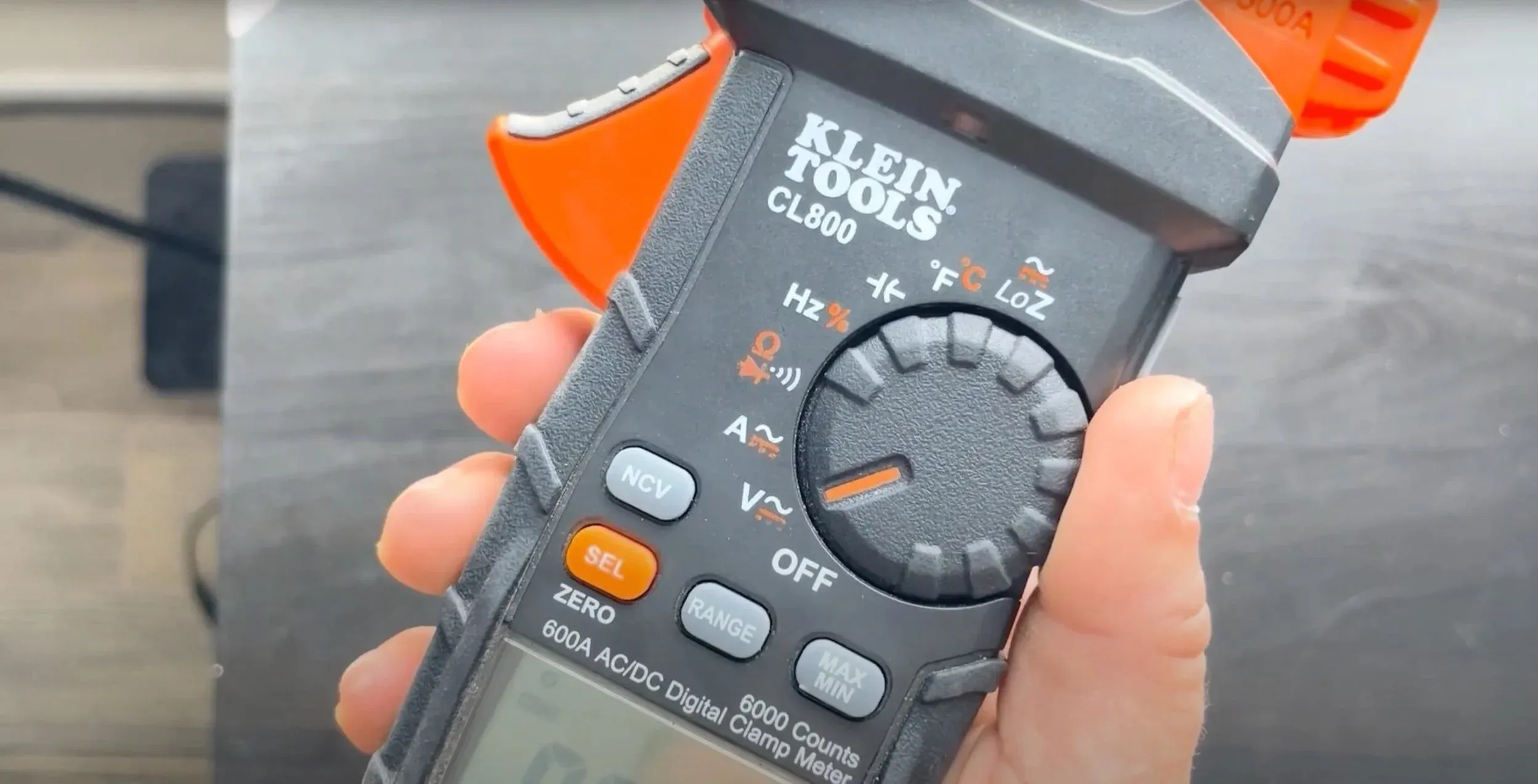
Klein Tools CL800

The CL800 offers more capability than most clamp meters under $200, measuring AC/DC current, voltage, temperature, and impedance in a single unit.

Rating: 4.7/5 on Amazon

Top features: True RMS with auto-ranging, built-in voltage detection, AC/DC voltage measurement to 1000V and current to 600A.

Price: around $140.

Pros: built-in basic multimeter functionality, rugged construction, comfortable single-hand operation.

Cons: the display is hard to read at an angle, the magnetic cabinet mount is sold separately, and the menu system takes some getting used to.

Klein Tools CL800.webp
3

Circuit Testers (Plug-In)

Fast, simple, and reliable, plug-in circuit testers are the plug-and-play solution for troubleshooting outlets. They pay for themselves the first time they catch a wiring fault before it turns into a callback, and they're essential for verifying GFCI function.

Klein Tools RT250

A step up from a basic outlet tester, the RT250 adds a backlit LCD screen, a built-in flashlight, and auto-hold for those outlets homeowners inevitably place in the worst possible spot.

Rating: 4.8/5 on Amazon

Top features: LCD with GFCI trip time display, detects open ground and neutral faults, bright, readable screen.

Price: around $25.

Pros: CAT II 135V rating, great for low-light or awkward socket locations, solid built-in safety features.

Cons: 120V sockets only, bulkier than cheaper testers, and the LCD can wash out in bright sunlight.

Southwire 40022S

A no-fuss tester with clear indicators and a dedicated GFCI trip button, the 40022S runs up to seven tests and has reinforced pins built to last through years of daily use.

Rating: 4.7/5 on Amazon

Top features: two-sided legend readable from either outlet orientation, 7-in-1 testing including open ground, neutral, and hot, GFCI test button.

Price: around $10.

Pros: budget-friendly, simple to use, fast and clear LED readout.

Cons: no trip time display, no LCD screen, and it's less suited to advanced diagnostics.

Southwire 40022S.webp
4

Insulation Testers

Also called megohmmeters, these testers check the integrity of wiring and equipment insulation, which is a key step in preventing arc faults in wiring, motors, and transformers. They apply a high test voltage to confirm resistance is where it should be.

Fluke 1507

The Fluke 1507 makes insulation testing fast and consistent, which matters when you're running repetitive tests across a large panel or facility. Multiple test voltages and a remote probe make one-handed testing realistic.

Rating: 4.6/5 on Amazon

Top features: four test voltages (50V, 100V, 250V, 500V), one-handed operation with remote probe, automatic cut-off on live circuits.

Price: around $857.

Pros: built-in dielectric absorption and PI ratio calculation, auto power-off, large backlit display.

Cons: not built for ultra-high voltage systems, battery life is on the short side, and no protective case included.

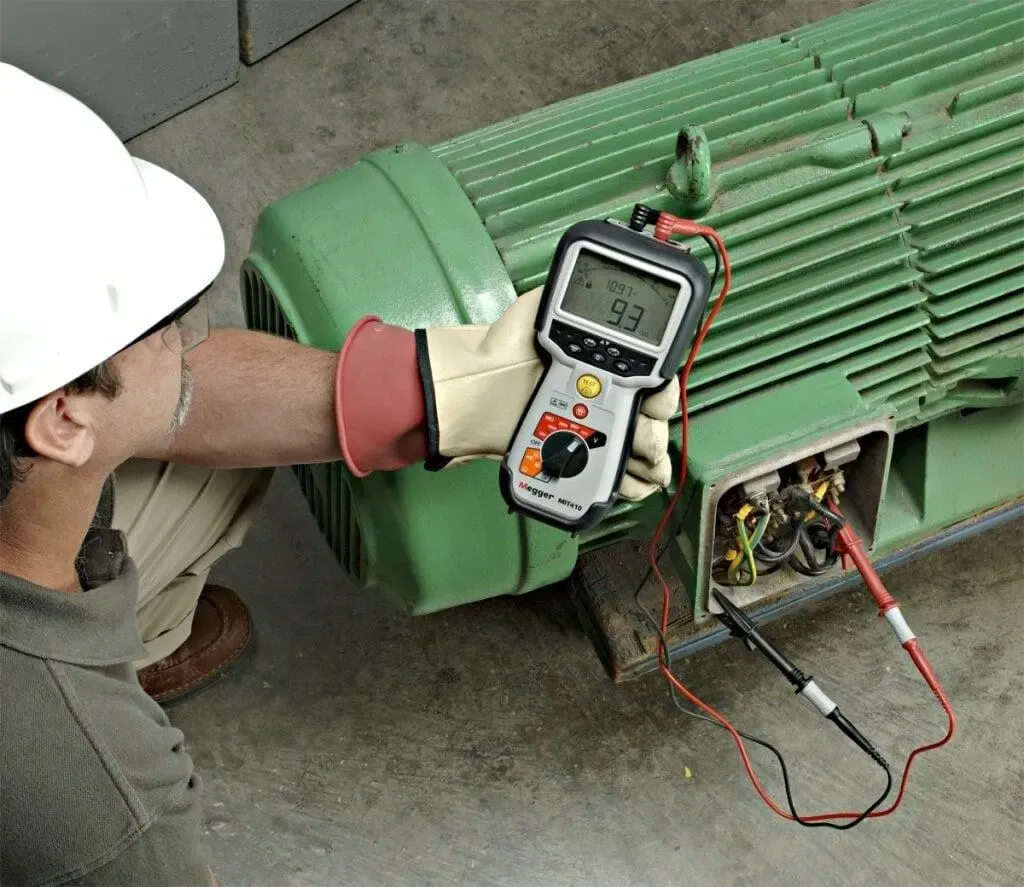
Megger MIT410/2

Accurate to within 2% on insulation voltage tests thanks to feedback-controlled output, the MIT410/2 is a serious tool for serious fieldwork. Its wide test range and IP54 rating make it a solid fit for industrial environments.

Rating: 5/5 on Amazon

Top features: measures 0.01Ω to 1.0MΩ, test range from 50V to 1000V, True RMS accuracy for AC.

Price: around $1,070.

Pros: analog bar graph plus dual display, 500mA high rupture capacity fuse, built-in memory storage and logging.

Cons: needs six batteries, heavy and bulky to haul between job sites, and genuinely overkill for most residential work.

Megger MIT410.webp
5

Voltage Detectors (Non-Contact)

Before multimeters and clamp meters ever come out, a non-contact voltage detector is usually the first thing an electrician reaches for. Pocket-sized and instant, it tells you whether a wire is live before you touch anything.

Fluke 1AC-A1-II VoltAlert

Simple, rugged, and built with Fluke's usual reliability, this detector glows and beeps when voltage is present, and a self-test feature confirms it's working before every job.

Rating: 4.7/5 on Amazon

Top features: detects voltage from 90V to 1000V AC, audible and visual alerts, always-on self-test.

Price: around $43.

Pros: durable and dependable, extremely easy to use, small enough to fit in a pocket or clip to a belt.

Cons: no flashlight or built-in screwdriver, single detection range, and the beep can get lost in a loud environment.

Klein Tools NCVT-2P

With a built-in flashlight and dual-range detection, the NCVT-2P covers more ground than most detectors in its price range.

Rating: 4.6/5 on Amazon

Top features: dual-range detection (12 to 1000V and 70 to 1000V AC), green "no voltage" indicator with auto power-off, CAT IV 1000V rating.

Price: around $28.

Pros: clear feedback when a circuit is confirmed safe, durable and IP54 water resistant, usable in comms and security work too.

Cons: bulkier than simpler pen testers, limited battery life, and no silent mode for noise-sensitive environments.

Now that the physical kit is covered, here's how to build one on a budget if you're just starting out.

Klein Tools NCVT-2P.webp

What Tools Should Beginners Use for Electrical Troubleshooting

Starting out with the right electrical troubleshooting tools helps new electricians avoid rookie mistakes and build confidence faster. A small, well-chosen kit can handle most beginner-level jobs without a big upfront investment.

  • Basic digital multimeter: covers voltage, resistance, and continuity. $40 to $60.

  • Non-contact voltage tester: fast, safe live-wire detection. $15 to $30.

  • Circuit tester: simple GFCI checks. $20 to $45.

  • Wire strippers and cutters: essential prep work. $10 to $50.

  • Insulated screwdriver set: safety should never be optional. $20 to $50.

If you're building out a kit for a specific trade specialty, start with this list and expand as your job requirements grow. It's enough to develop solid core skills without overspending before you know what you'll actually use daily.

What Safety Measures Should You Take When Using Electrical Troubleshooting Tools

Used incorrectly, electrical troubleshooting tools can cause serious injury, even to experienced technicians. Knowing the right steps matters less than actually following them, every time, on every job.

  • De-energize circuits when possible: shut down live circuits before testing whenever the job allows it.

  • Use properly insulated tools: rated for the voltage you're actually working with, not just "close enough."

  • Wear PPE: gloves, safety glasses, and arc-rated clothing.

  • Double-check tool settings: confirm the mode before you test, not after.

  • Follow lockout/tagout procedures: prevent accidental re-energizing while you're mid-repair.

  • Respect high voltage: extra caution around motors, transformers, and panels, no exceptions.

Safety should be one of the very first skills an electrician builds, and it's worth revisiting regularly rather than treating it as a one-time training box to check. This more detailed rundown of electrical safety tips for electricians is worth bookmarking alongside your tool checklist.

How Should You Maintain Electrical Troubleshooting Tools

Good tools aren't cheap, and poor maintenance is the fastest way to waste what you spent on them. A little regular care keeps your gear accurate, safe, and ready when you need it.

  • Store tools properly: dry, padded cases, not tossed loose in the back of the truck.

  • Clean after every use: wipe down probes and sensors to extend their life.

  • Check batteries often: weak power means unreliable readings, and unreliable readings mean callbacks.

  • Schedule calibrations: especially for multimeters and insulation testers, on a regular cycle.

  • Inspect leads and cords: replace anything showing wear, cracking, or exposed wire without hesitation.

  • Read the manual: if you're unsure about care schedules, the manufacturer's guidance beats guessing.

A few minutes of upkeep after each job adds years to a tool's working life.

Are There Software Tools for Electrical Troubleshooting?

Yes, and these days they matter just as much as what's in your tool bag. Mobile apps, diagnostic platforms, and trade-specific software all help electricians work faster and more accurately, both on-site and back at the office.

Some of the tools worth knowing:

  • Fluke Connect: Bluetooth sync for real-time readings and logs from compatible Fluke gear.

  • AutoCAD and MicroStation: circuit schematics and electrical infrastructure planning.

  • iCircuit: handy for simulating and testing circuit designs before you commit to the job.

  • Electrician calculators: apps like Electrodoc, ElectriCalc, and vCalc help you apply code and avoid math mistakes under pressure. CloseCrew's own wire size calculator covers this exact need for free, right from your phone, without digging through a code book mid-job.

None of that helps much, though, if the phone never gets answered in the first place. A missed call during a service panel emergency is a lost job, and often a lost customer for good. It's worth running the numbers on what that actually costs you with CloseCrew's missed call cost calculator, most electrical contractors are surprised by the total.

CloseCrew's Larry is an AI receptionist built for electrical contractors, and it's the kind of tool that closes the gap between a well-stocked truck and a fully booked calendar. Larry answers every call 24/7, qualifies the issue (a flickering light is not the same emergency as a sparking panel), and books the job straight into your schedule while you're still elbow-deep in a breaker box. Every call gets recorded and transcribed, so your office has the details before the truck even leaves, and nothing gets lost between the phone ringing and the job getting scoped correctly. Learn more about how Larry works for electrical contractors.

That same organizational thinking extends past the phone call. A messy job pipeline costs just as much as a missed call once you count the hours spent chasing paperwork. Pairing solid field tools with a CRM built for electrical contractors keeps job history, customer notes, and scheduling in one place instead of scattered across sticky notes and group texts. And once a job is booked and scoped correctly, an estimating app built for electrical work helps you quote it accurately the first time instead of eating the difference on materials you underpriced.

None of this replaces marketing, either. All the tools in the world won't help if customers can't find you in the first place, which is exactly why more electrical contractors are paying attention to electrician SEO as a real part of running the business, not an afterthought.

Conclusion

Whether you're just starting out or you've got years of calluses to show for it, the right electrical troubleshooting tools make every job safer, faster, and more accurate. From a $10 outlet tester to a $1,000 insulation meter, the gear you choose shapes how efficiently you work, day in and day out.

The same is true on the business side. A well-stocked truck still loses money if the phone goes to voicemail during a panel emergency, if job details get lost between the call and the truck rolling, or if quotes are guessed instead of calculated. CloseCrew's Larry answers every call, qualifies it correctly, and books the job automatically, while the wire size calculator and missed call cost calculator handle the kind of math that used to eat into billable hours.

Put the right tools in the truck, and the right system behind the phone, and both ends of the job get faster.

Related tools

Run the numbers before you update your price book or field software.

Contractor Blog

Cross-trade guides on hiring, marketing, and operations for every home services business.

View all guides

Electrical Licensing

State licensing requirements, exams, and renewal rules for electrical contractors.

View states

Meet Larry

AI receptionist built for Electrical — answers calls, books jobs, and follows up on leads 24/7.

See Larry for Electrical

Related articles

Never miss a Electrical service call again. Let Larry, your AI receptionist, book jobs while your crew is in the field.