Equipment and Tools

7 Best CRMs for Electrical Contractors (2026 Guide)

Most electrical shops start out running on a patchwork: spreadsheets, paper estimates, a filing cabinet, and a few apps that do not talk to each other. It works until it doesn't. As you grow, details get lost, jobs slip through the cracks, and your team burns hours hunting for information that should take seconds to find.

11 min readPublished June 19, 2026Updated July 14, 2026

A CRM, or customer relationship management system, distinguishes between a company that remembers every customer and one that constantly reintroduces itself. That memory is extremely valuable to electrical contractors who are juggling residential service calls, commercial installations, and recurring maintenance.

The numbers back it up. Industry research from Nucleus Research pegs the average return on a CRM at several dollars for every dollar spent, and most businesses report saving their staff hours every week once the manual data shuffling stops. More than nine in ten companies with a handful of employees now run on one, which tells you where the market has landed.

This guide walks through why electrical businesses need a CRM, what to look for, and seven platforms worth evaluating. If your broader goal is to scale the whole operation, pair this with our guide to growing an electrical business.

Part of the Equipment and Tools section in the Electrical Business Blog.

What Is Electrical CRM Software, and Why Do Contractors Need It?

At its most basic, a CRM centralizes all interactions with a lead or customer, providing a single source of truth rather than a dozen disparate tools. For trades, the best platforms go far beyond a contact list. They automate time-consuming tasks like scheduling, appointment reminders, invoicing, and bill chasing.

That matters because the alternative is costly. Without a system, customer information is kept on sticky notes and in someone's memory; follow-ups occur only when someone remembers, and the office and field are constantly playing catch-up. The end result is missed follow-ups, inconsistent communication, no visibility into who is performing, and revenue quietly left on the table.

The Hidden Cost of Running Without a CRM

Picture the two most common failure modes. On the residential side, customer information is dispersed across paper and apps, scheduling is error-prone, and upsell and cross-sell opportunities are missed. On the commercial side, large install and service opportunities are tracked in spreadsheets, and managers make assumptions about pipeline health based on fragmented reports that provide no insight into where deals are stuck.

Either way, it amounts to the same thing: a broken customer and sales experience that costs time and caps profits. The bigger you get, the more it costs.

CRM and Field Software by the Numbers

The case for getting organized is not just intuition. Research from Nucleus Research has long pegged the average return on a CRM at several dollars for every dollar spent, and adoption is now near-universal, with more than nine in ten companies of even modest size running one. Freshworks data suggests a CRM saves staff somewhere between five and ten hours a week by killing manual data entry.

The field side tells the same story. Field service software analyses show that first-year productivity gains average around 24 percent, and roughly three-quarters of field service companies using mobile tools saw their staff get more done. Route optimization alone typically reduces fuel and travel costs by 15 to 30 percent. The bottom line is simple: contractors who centralize and automate consistently outperform those who rely on spreadsheets.

General-Purpose vs Trade-Specific CRMs

There are two broad paths. General-purpose CRMs such as Salesforce, HubSpot, and Pipedrive serve all industries and excel at lead tracking and marketing management. Where they fall short is in field operations such as scheduling, dispatching, inventory, and generating estimates or invoices. Bending them to fit electrical workflows typically requires costly customization, third-party add-ons, and ongoing IT support.

Trade-specific platforms combine CRM and field service management into a single system built for contractors. That lets you track leads and the sales pipeline, schedule and dispatch techs, generate estimates and invoices, manage service agreements and inventory, and see every customer interaction in one view. For most electrical shops, a trade-specific platform removes the integration headaches that come with forcing a generic tool to behave like a contractor tool.

7 Ways a CRM Helps Electrical Contractors

  • Closes more deals. Consistent opportunity tracking and follow-up means fewer leads fall through the cracks, so more of them convert.

  • Saves time. One home for sales, customer data, invoicing, and dispatch eliminates the manual copying between spreadsheets and apps. Industry data suggest this frees up 5 to 10 hours per employee per week.

  • Increases efficiency. Automating tasks like appointment reminders removes whole categories of busywork.

  • Improves collaboration. A real-time, shared system keeps owners, office staff, and field techs aligned and cuts miscommunication.

  • Elevates the customer experience. Centralized records and modern touches like arrival tracking make customers feel looked after.

  • Reveals performance. Built-in reporting lets you track KPIs, coach the team, and hold people accountable.

  • Drives growth. By surfacing unsold estimates and upsell opportunities and accelerating payment, a CRM improves profitability over time.

What to Look For in an Electrical CRM

When you evaluate platforms, weigh these heavily:

  • Ease of use. A CRM only pays off if your team actually uses it, so prioritize an intuitive interface, real training, and responsive support.

  • Mobile access. Techs, CSRs, and managers should have access to live customer and job data from anywhere. It matters more than it sounds: reps who use mobile CRM are far likelier to hit their targets than those who do not.

  • Service agreement management. Look for the ability to build, schedule, and bill maintenance agreements inside the platform.

  • Field service automation. It should integrate with your scheduling and dispatch systems and automate reminders, follow-ups, invoicing, and reporting.

  • Reporting and insights. Track pipeline health, CSR, tech performance, and recurring revenue to keep improving.

Why Many CRM Rollouts Fail

Here's the uncomfortable part: according to industry data, more than half of CRM implementations fail to meet their goals. The software is rarely the culprit. The two most common issues are low user adoption and messy data. If the interface is clunky, your technicians will quietly avoid it. If the information entered is incorrect, every report generated will be incorrect as well.

Three habits tip the scales in your favor. Choose a platform that even your least tech-savvy team member can use, because a CRM is only useful when people use it. Invest in proper onboarding rather than assuming that employees will figure it out. Keep the data clean from the start, with clear rules for what gets entered and when. Contractors who treat the rollout as a process rather than a one-time purchase will see the results predicted by the statistics.

The 7 Best CRMs for Electrical Contractors

These seven platforms all take a different approach. Choose a tool appropriate to your size, the mix of residential and commercial work, and your preference for simplicity over depth. (Pricing and features change frequently, so confirm current information with each vendor.)

1

Housecall Pro

Housecall Pro, a popular all-in-one app for home service businesses, offers scheduling, dispatching, a customer database, QuickBooks invoicing, and payment processing, all accessible via phone or web portal. It is reasonably priced and ideal for stores with up to 30 employees.

Best for: Small to mid-sized residential electrical shops that want simple, mobile-first operations.

housecallpro.webp
2

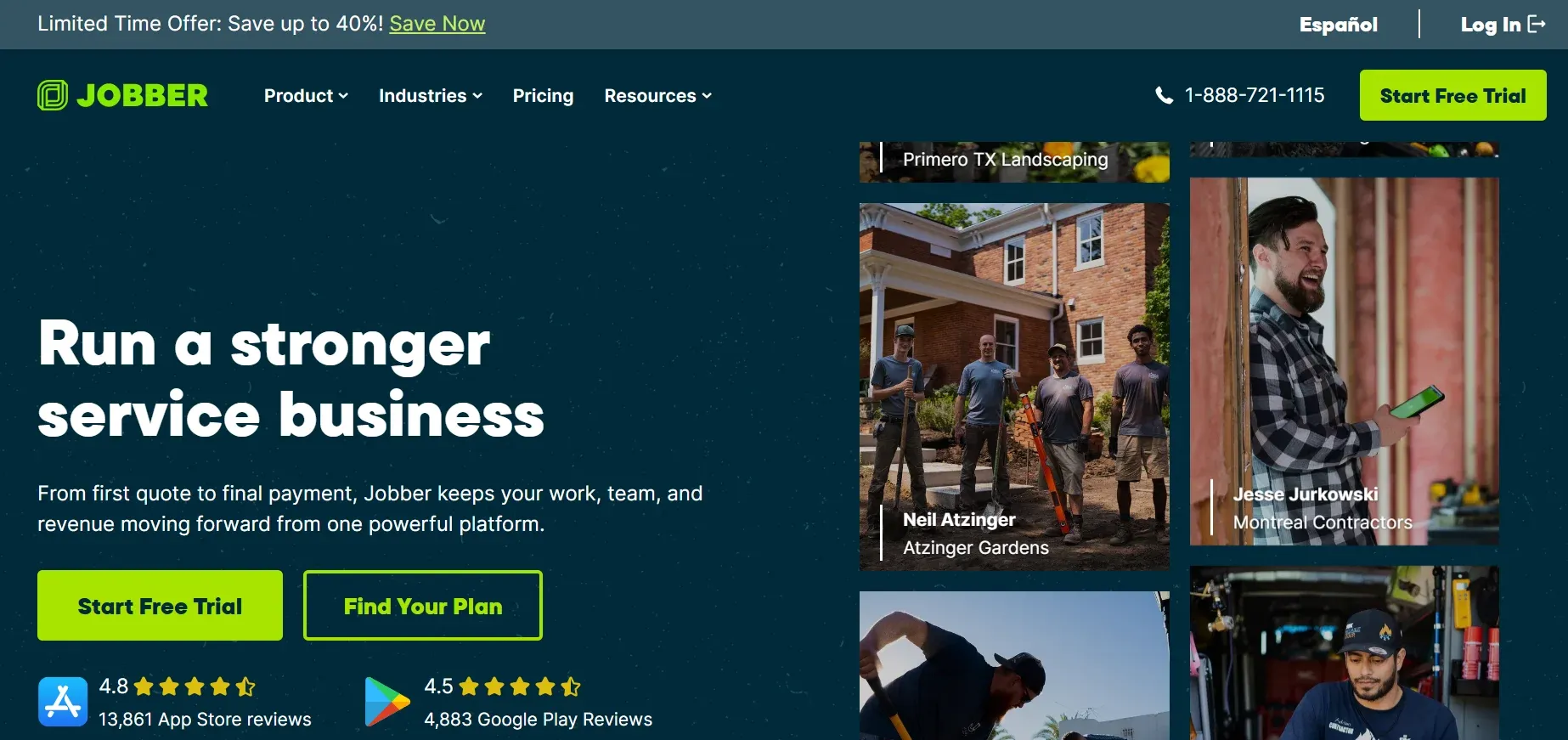
Jobber

Jobber is built for home service businesses that want an easy, approachable system. It handles scheduling, route optimization, text-based quotes and invoices, and on-site payment through its mobile app, and it adapts to your existing process. It is a favorite among smaller teams that prize ease of use.

Best for: Small electrical businesses wanting a straightforward, quick-to-adopt platform.

jobber.webp
3

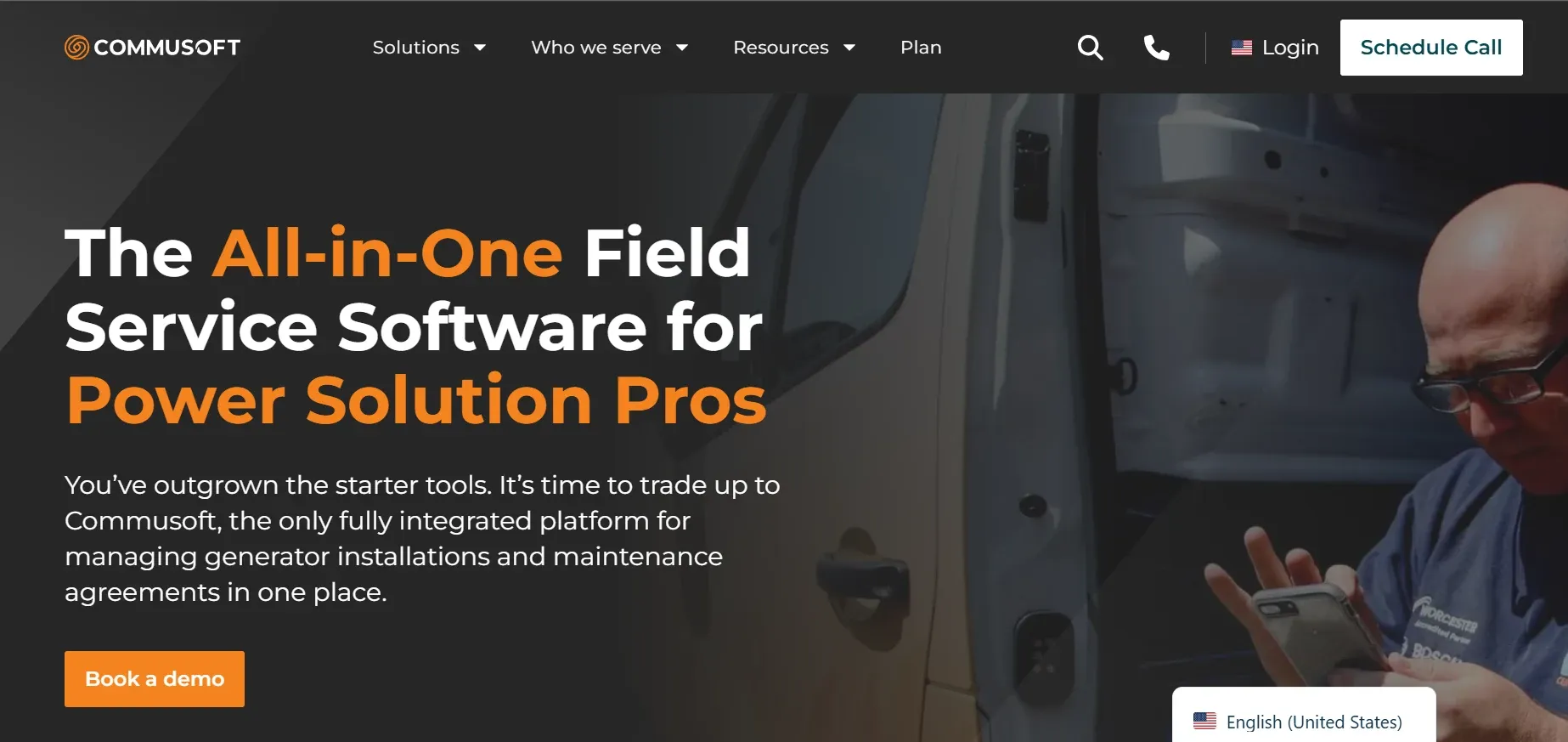
Commusoft

Commusoft is an all-in-one work order management solution with a strong commercial focus. It handles job management, quoting, scheduling, inventory, invoicing, and customer communications, syncs data in real time across the team, and integrates with accounting and payment software. Techs can create and email invoices in the field.

Best for: Contractors with significant commercial or maintenance-heavy operations.

commusoft.webp
4

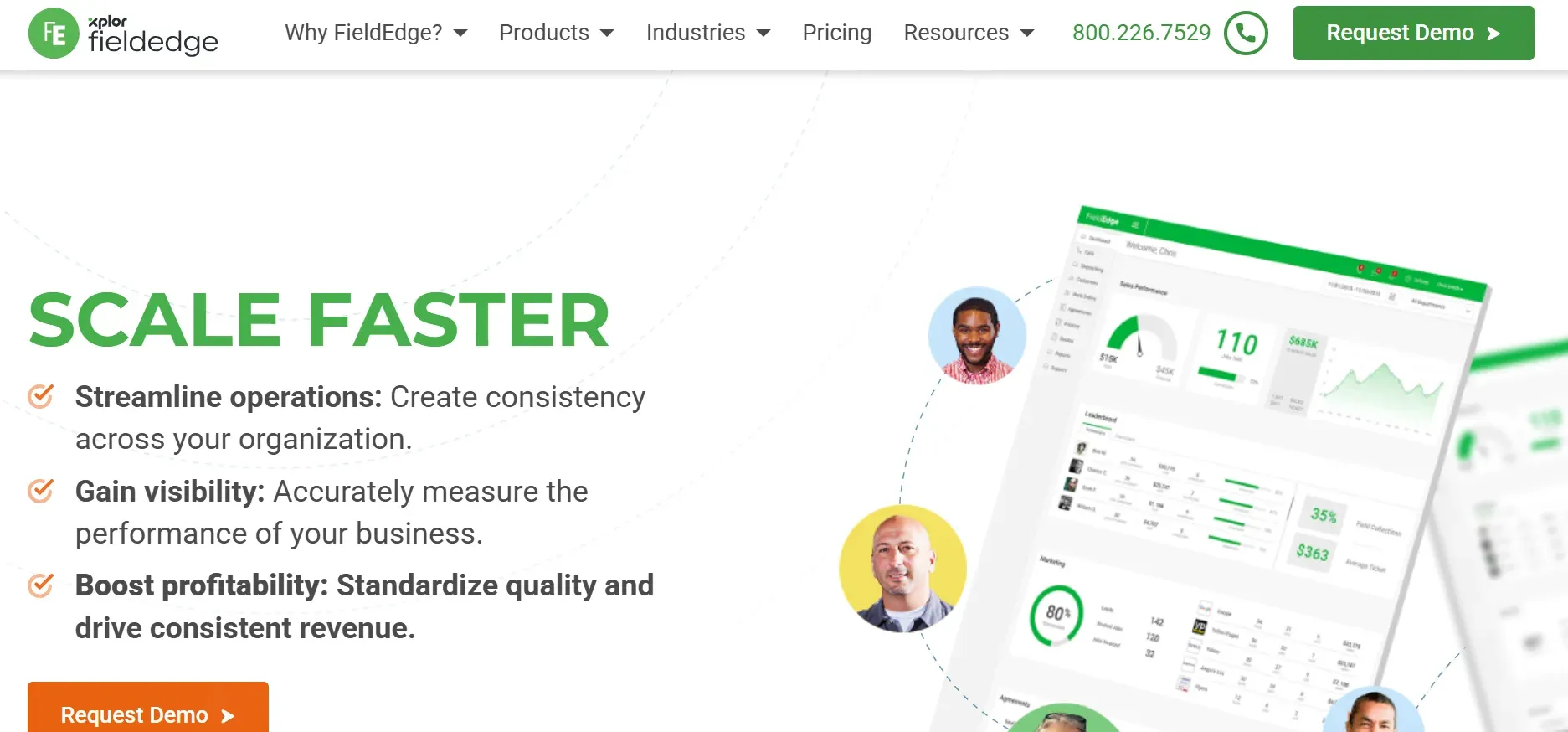
FieldEdge

FieldEdge is a long-running field service platform built for trades like electrical, HVAC, and plumbing. It pairs dispatching, service agreements, and a mobile app with tight QuickBooks integration, giving the office and field a shared, real-time view of customers and jobs.

Best for: Established shops that lean on QuickBooks and want mature service-agreement tools.

fieldedge.webp
5

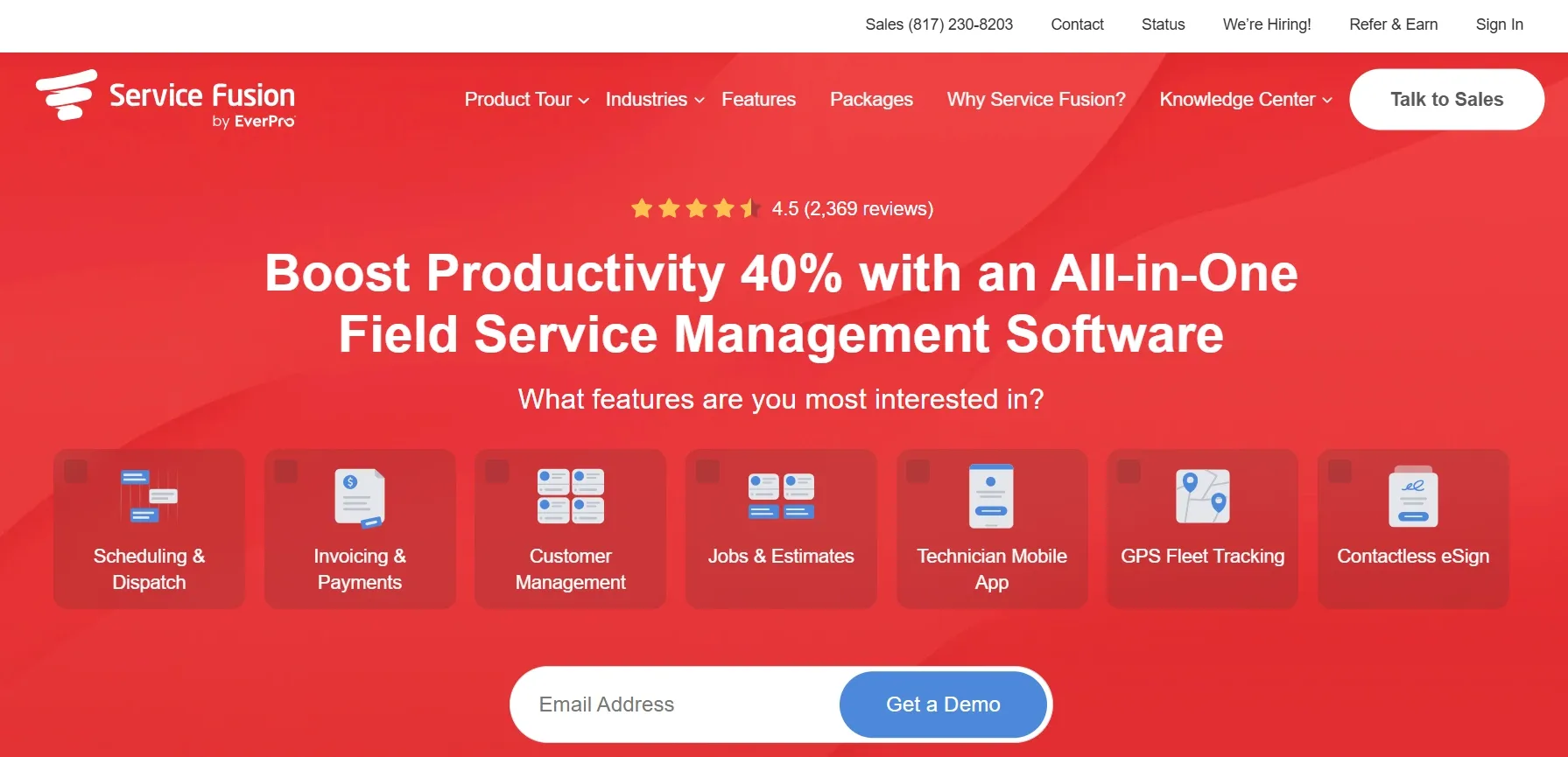
Service Fusion

Service Fusion is an affordable, flat-rate field service platform for small- and mid-sized contractors. It bundles scheduling, dispatch, estimates, invoicing, and customer management without per-user pricing, which keeps costs predictable as you add staff.

Best for: Budget-conscious shops that want full features without per-seat fees.

service fusion.webp
6

ZenTrades

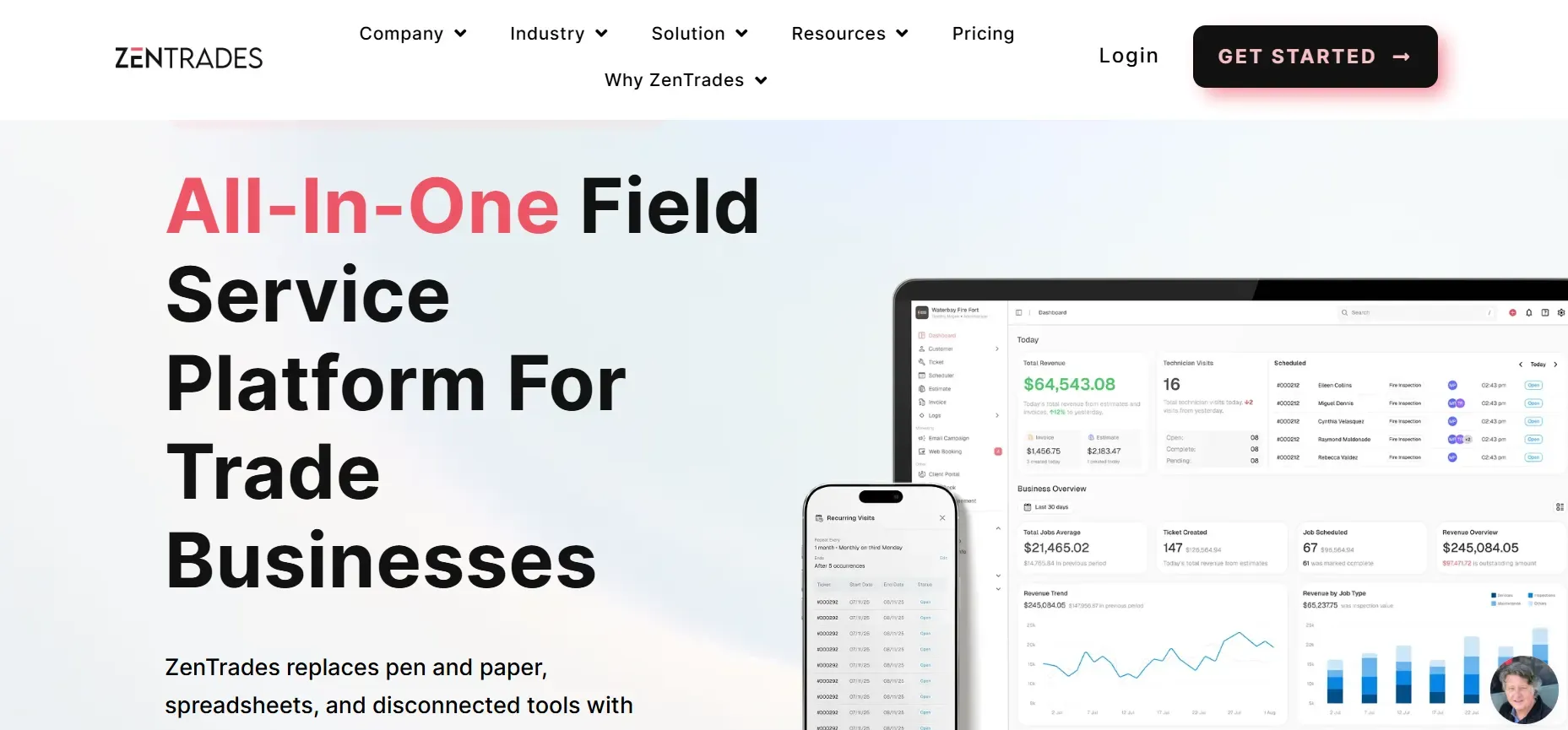
ZenTrades is a cloud-based field service platform that offers a specific electrical product. Its modular design enables you to add features as needed, such as scheduling, dispatch, and contact management, as well as customizable reporting, inventory, payments, estimate and invoice generation, with job allocation based on skill and availability.

Best for: Trade-focused contractors who want to build a tailored, modular system.

zetrades.webp
7

Procore

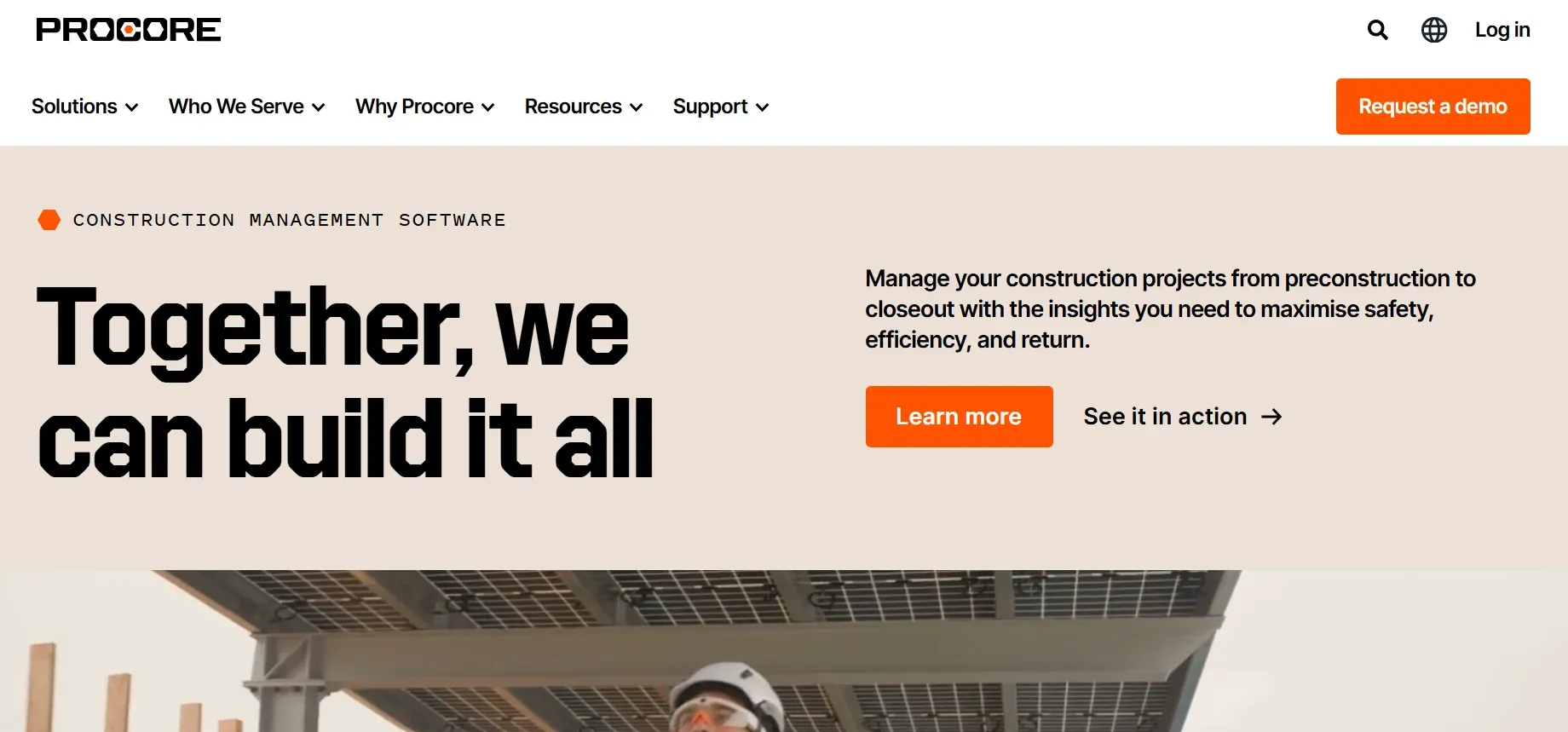
Procore is a construction management platform, not a traditional service CRM, designed to manage entire projects from planning to completion. It is ideal for large commercial and construction electrical projects that rely on drawings, documents, and schedules, with unlimited users and simple pricing.

Best for: Larger commercial and construction-focused electrical contractors.

Choosing a CRM is a big step. But even the best one leaves a gap that quietly costs most shops more than the software ever saves.

procore.webp

The One Job No CRM Does on Its Own: Answer Every Call

Here is the catch with every platform above. A CRM organizes the customers and jobs you already have, but it cannot pick up the phone at 9 p.m., during a lunch rush, or while your whole crew is on a roof. And that is exactly when the calls come. According to industry benchmarks, contractors miss between a quarter and more than half of inbound calls, and most callers who reach voicemail simply dial the next electrician. The data on speed is just as stark: research published by Harvard Business Review found that the first business to respond wins the large majority of jobs. Salesforce has also reported that nearly half of field technicians say appointments go sideways because of customer miscommunication or missing details, the exact information that gets captured cleanly when every call is logged.

CloseCrew is built for that gap, and it is not a CRM. It is the AI front desk that sits atop whichever CRM you choose. Larry, CloseCrew's AI employee, answers every call, text, and web inquiry around the clock, qualifies the caller, and books the job straight into your CRM or scheduling tool through 200-plus integrations. He sends appointment confirmations to cut no-shows, writes the customer details back into your system so nothing is lost, follows up on unsold estimates, and requests reviews. Whatever platform you land on from the list above, Larry makes sure the leads feeding it never slip away.

Want to see the size of the problem first? Run your numbers through the free missed call cost calculator, then book a demo to watch Larry handle a live call.

The Bottom Line

A CRM transforms a disorganized, paper-and-spreadsheet operation into a streamlined system that closes more deals, saves time, and reveals exactly how the business is performing. Whether you choose a simple platform like Jobber or a more robust commercial system, the best fit is the one your team will use daily.

Just remember that the CRM only works on the leads you capture. Make sure none of them slip away: size your leak with the missed call cost calculator, and book a CloseCrew demo to see how Larry answers and books every call your CRM is waiting to organize.

Still weighing platforms and how a front desk fits on top? Our team is happy to talk it through.

Frequently asked questions

What is the best CRM for a small electrical business?

Smaller businesses typically benefit from a user-friendly, mobile-first platform like Jobber or Housecall Pro. The best option depends on your size, residential-to-commercial mix, and budget, so try a few before deciding.

General CRMs handle leads and marketing, but struggle with scheduling, dispatch, and field invoicing without costly customization. Most electrical contractors benefit from a trade-specific platform that integrates CRM and field service management into a single system.

It ranges widely, from affordable flat-rate plans to per-user enterprise pricing, depending on features and team size. Factor in setup, training, and integrations, not just the monthly fee, when comparing options.

On its own, no. A CRM stores and organizes customer data, but it does not answer calls or book jobs when your team is unavailable. Pairing your CRM with an AI receptionist like CloseCrew closes that gap so every lead gets a response.

Poor adoption and messy data. If the system is hard to use or the input information is unreliable, the returns never show up. Choose a platform your team will truly use, and keep the data clean.

Related tools

Run the numbers before you update your price book or field software.

Contractor Blog

Cross-trade guides on hiring, marketing, and operations for every home services business.

View all guides

Electrical Licensing

State licensing requirements, exams, and renewal rules for electrical contractors.

View states

Meet Larry

AI receptionist built for Electrical — answers calls, books jobs, and follows up on leads 24/7.

See Larry for Electrical

Related articles

Never miss a Electrical service call again. Let Larry, your AI receptionist, book jobs while your crew is in the field.

We will run your numbers on the call and tell you if the maths does not work for a shop your size. That happens, and it is a cheaper conversation than finding out three months in.

Get a demo