25+ Best Electrician Tools for 2026: A Complete Field and Business Guide
This guide covers an electrician’s full toolkit including hand tools, power tools, safety gear, diagnostic tools, and consumables along with the software and AI tools used to manage calls bookings and jobs.
17 min readPublished June 17, 2026Updated July 14, 2026
Being well-equipped is what lets an electrician work safely, finish faster, and grow the business behind the truck. Demand is on your side: the Bureau of Labor Statistics projects 9% growth for electricians from 2024 to 2034, much faster than average, with roughly 81,000 openings a year and a median wage of $62,350, driven by EV chargers, solar panel upgrades, and data center buildout. This guide covers both sides of the modern tool kit; the hand, power, safety, and diagnostic tools you bring to every job and the digital tools that keep your schedule full. For each field tool: What it does, what to look for, approximate price range, and where to buy. Prices and availability subject to change. Use these numbers for budgeting purposes.
These are the tools that ride on your belt and come out on nearly every job.
1
Multimeter
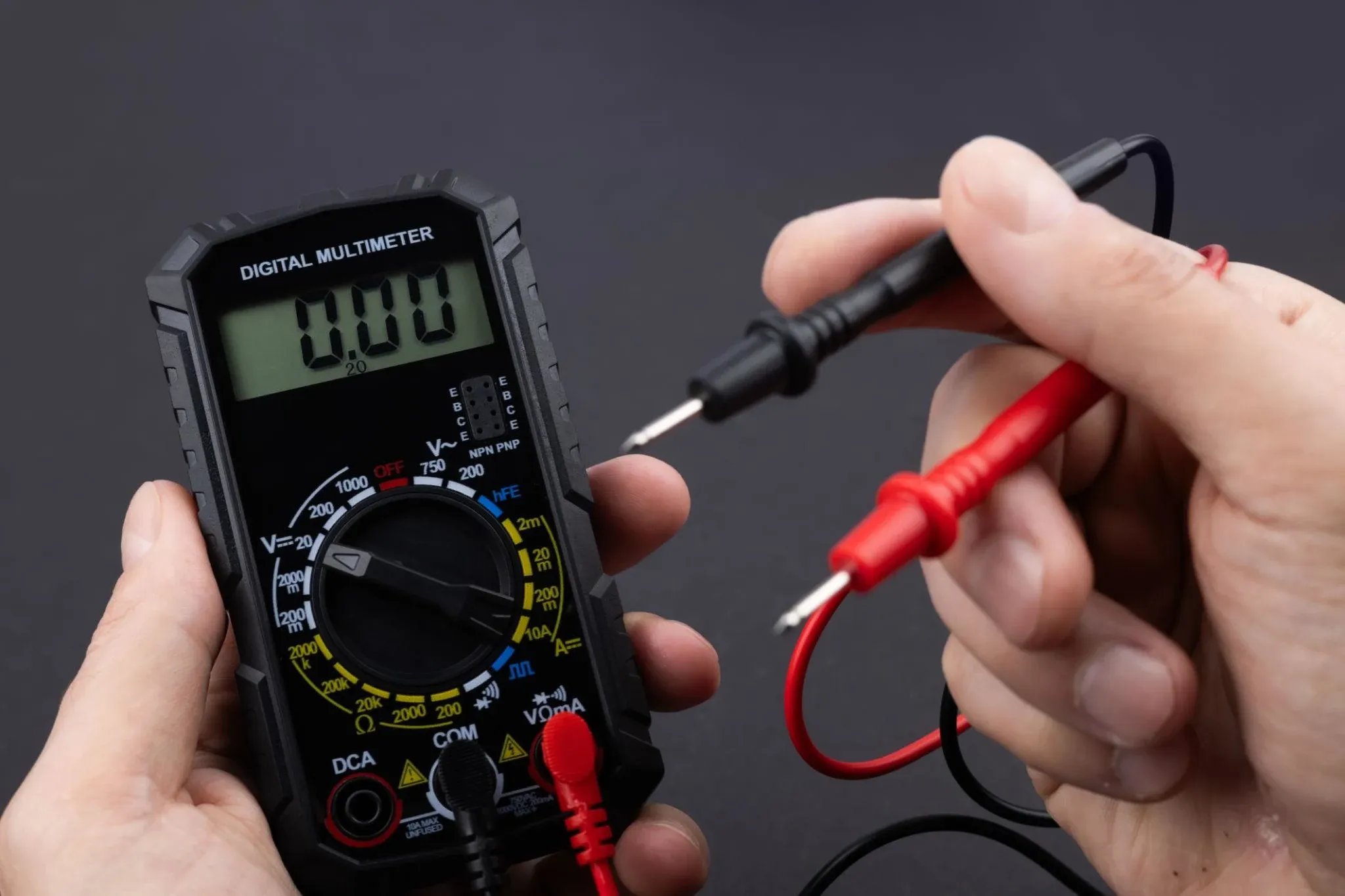
The multimeter is the electrician’s primary diagnostic tool, measuring voltage, current, and resistance so you can troubleshoot circuits, confirm power, and verify that systems work as they should. Choose an auto-ranging digital model with a safety category rating (CAT III or CAT IV) for the environment in which you work, as this rating specifies the amount of transient energy the meter can handle. True-RMS accuracy is a necessity in modern electronics. A good meter is worth the expense. It is the tool your diagnostics depend on.
Plan to spend roughly $40 to $200 or more. Look for Fluke (the trade standard) or Klein Tools. Shop on Amazon or Home Depot.
2
Voltage Tester
The first and most important safety habit on any job is to use a voltage tester before you touch a circuit. You can do a quick initial check with non-contact voltage (NCV) pens, which detect the field around the conductor, and then a 2-pole or plug-in tester will confirm the reading. Both. Pen of swiftness, tester of contact surety. Always test the tester on a known live source before trusting a dead reading.
Plan to spend roughly $15 to $40. Look for Klein Tools or Fluke. Shop on Amazon or Home Depot.
3
Pliers
There is no one plier that does it all, so electricians carry a few. Lineman's pliers are used for heavy-duty work such as gripping, twisting, cutting, and bending wire. Needle-nose pliers fit into tight spaces and can make loops around terminal screws. Flush cuts are best made with diagonal cutters (side-cutters). Locknuts and conduit are held with tongue-and-groove pliers. When working near energized parts, use pliers with insulated handles rated for 1000 volts. Quality matters because cheap cutters get dull, and the joints come apart quickly.
Plan to spend roughly $20 to $60 each. Look for Klein Tools, Knipex, or Channellock. Shop on Amazon or Home Depot.
4
Wire Strippers and Cutters
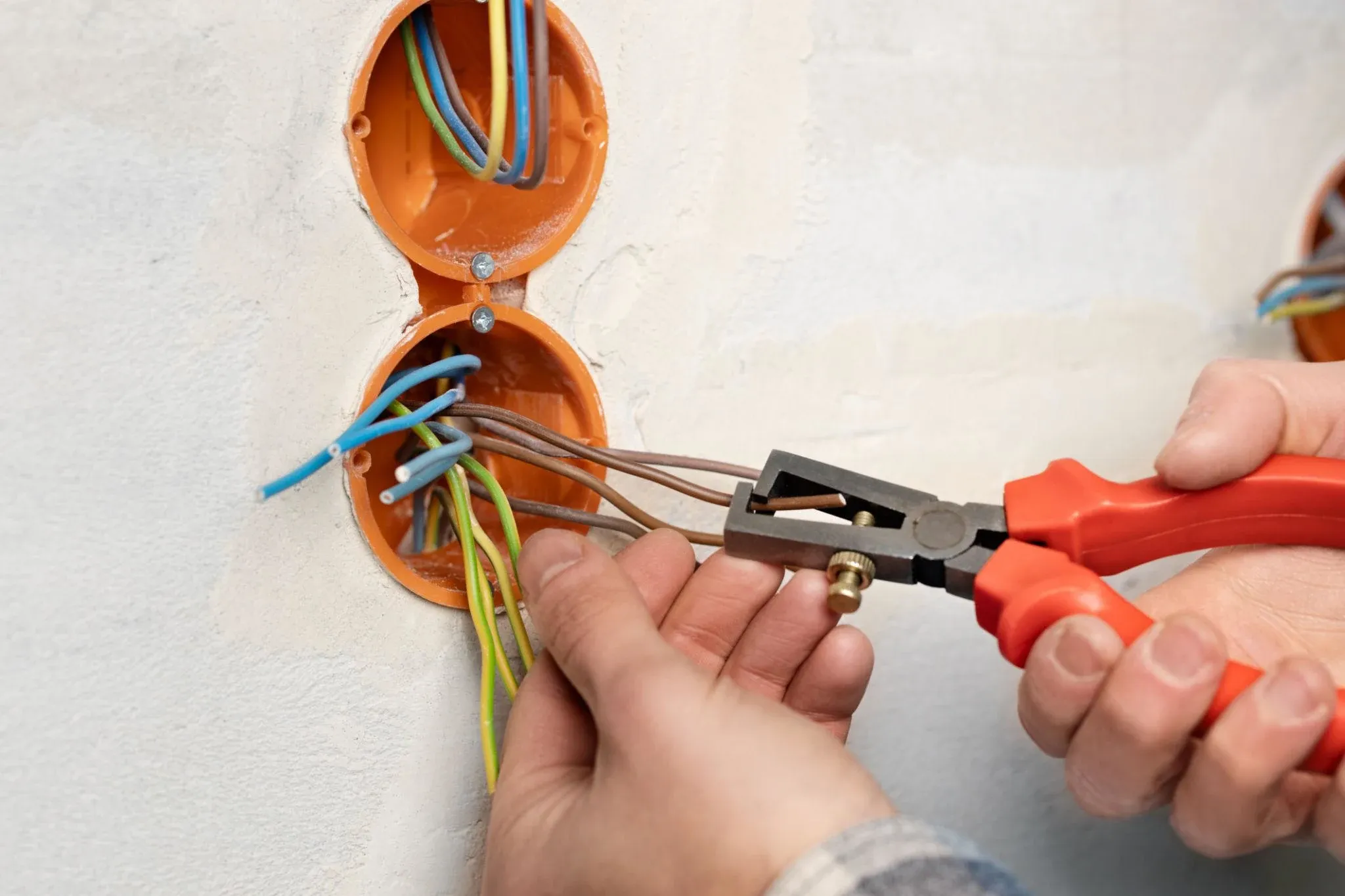
A good stripper will get it to the right gauge without nicking the copper, which keeps your connections strong and safe. Stripper holes are sized for each wire size, and self-adjusting models clamp and strip in one squeeze for speed. Many tools combine bolt stripping, cutting, and shearing in a single unit. Select the tool you use most often on solid or stranded wire and keep the cutting edge sharp.
Plan to spend roughly $15 to $40. Look for Klein Tools or Irwin. Shop on Amazon or Home Depot.
5
Screwdrivers
A good set of screwdrivers (flathead, Phillips, square, and torx) is needed to work on panels, switches, and outlets. For electrical work in particular, insulated drivers rated for 1000 volts add a crucial layer of protection against electric shock. Many pros use a multi-bit driver to cover all fasteners and avoid filling the pouch. Look for hardened tips to resist cam-out and comfortable handles for a full day of repetitive work.
Plan to spend roughly $10 to $50 for a set. Look for Klein Tools, Wera, or Wiha. Shop on Amazon or Home Depot.
6
Nut Drivers
Nut drivers are used to tighten & loosen the hex nuts and connectors used in electrical work, from grounding hardware to panel fittings. A set in common sizes, often with magnetic tips that hold the nut, really saves time over fumbling with a wrench. Get the right set quickly within a busy panel with color-coded or labeled sets.
Plan to spend roughly $15 to $40 for a set. Look for Klein Tools. Shop on Amazon or Home Depot.
7
Adjustable Wrench
The adjustable wrench turns nuts, bolts, and conduit locknuts when you do not have an exact-size tool on hand. Keep a 6-inch and a 10-inch to cover most situations. As with any adjustable, a tight jaw with little play is what separates a clean grip from a rounded-off nut, so it is worth buying a good one.
Plan to spend roughly $10 to $40. Look for Channellock, Crescent, or Klein Tools. Shop on Amazon or Home Depot.
8
Tape Measure
Good work is built on good layout. Same goes for setting boxes at the same height, spacing fixtures, or running conduit. Pick a tape with a heavy-duty blade, a long standout (how far it extends before folding), a multi-step lock, and a magnetic hook for solo measuring. Most residential and commercial work is handled by a 25-foot tape.
Plan to spend roughly $15 to $30. Look for Milwaukee or Stanley. Shop on Amazon or Home Depot.
9
Level
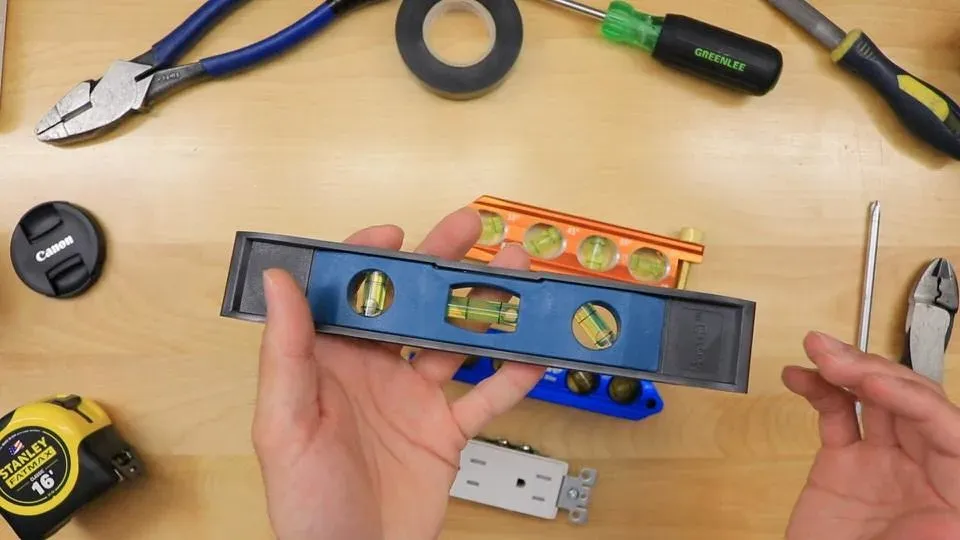
A level keeps the fixtures, boxes, and devices straight, which is important for both safety and the professional, finished look the customer sees. For daily use, the compact magnetic torpedo level is the choice because it sticks to conduit and metal boxes, leaving your hands free. Keep a longer level in the van for panel and fixture work.
Plan to spend roughly $10 to $40. Look for Klein Tools or Stabila. Shop on Amazon or Home Depot.
10
Utility Knife
The utility knife cuts the outer jackets off cables, opens boxes and packaging, and makes hundreds of small cuts in the course of a day's work. Choose one with replaceable blades that can be changed quickly and a comfortable grip. Keep spare blades close at hand - a dull blade tends to slip and cause injury.
Plan to spend roughly $10 to $25. Look for Milwaukee or Klein Tools. Shop on Amazon or Home Depot.
11
Markers
Mark wires, breakers, panels, and conduit runs with a permanent marker or wire marker to save time on the job and for whoever services the system next. Good habits like labeling panel schedules and tagging conductors are the hallmarks of professional work.
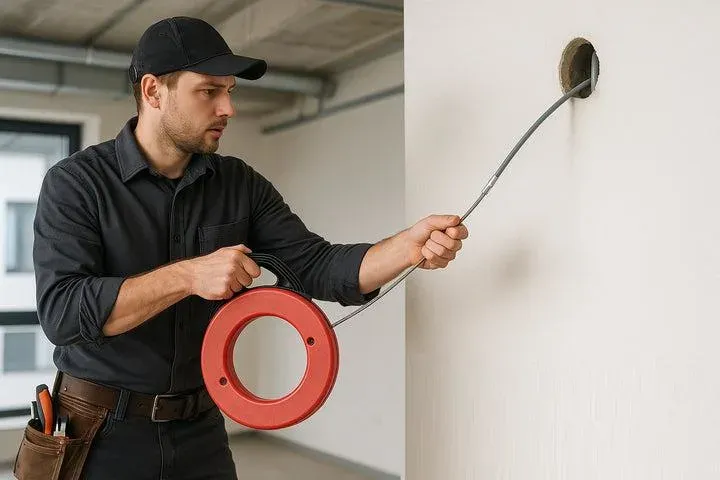
A fish tape is a tool used to pull conductors through wall cavities and conduit. You run the tape down the run, hook the wires on the far end, and pull them back. Steel tape for conduit is heavy-duty. Fiberglass and nylon tapes are non-conductive and are a safer choice where live circuits may be present. Just trim it to the perfect length for your daily runs.
Plan to spend roughly $20 to $60. Look for Klein Tools or Greenlee. Shop on Amazon or Home Depot.
13
Glow Rods (Fish Sticks)
For running wire through walls, above ceilings, and under carpet, fiberglass glow rods thread together into one long, semi-rigid push-pull rod. The glow-in-the-dark versions are genuinely useful in dark attics and crawl spaces. A kit with assorted tips (hook, bullnose, and eyelet) handles most fishing situations.
Plan to spend roughly $30 to $80 for a kit. Look for Klein Tools or Greenlee. Shop on Amazon or Home Depot.
14
Conduit Bender
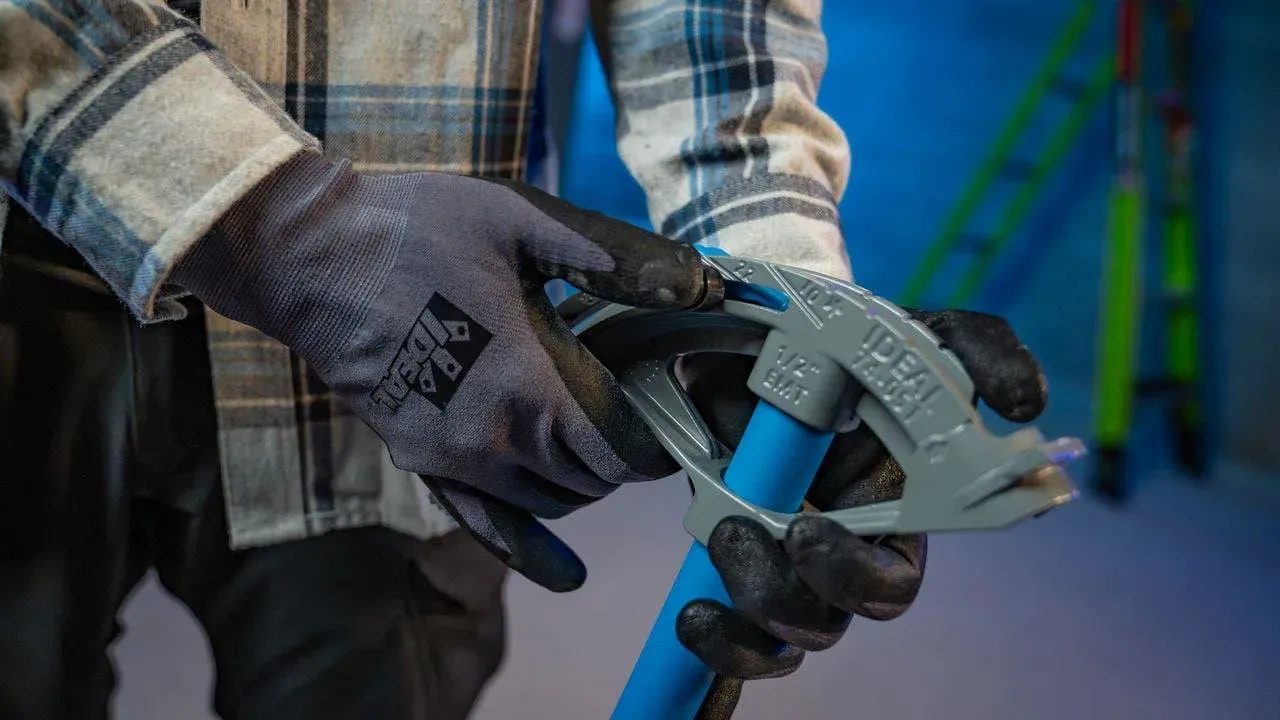
A conduit bender shapes EMT or rigid conduit into clean, accurate bends so runs sit flush to the structure and out of the way. Hand benders are specified by conduit size (1/2 inch, 3/4 inch, etc), and the head is cast with angle and take-up markings to facilitate the production of repeatable 90s, offsets, and saddles. A clean bend is a hallmark of skilled work, so this is a tool worth learning well.
Plan to spend roughly $30 to $80 for a head and handle. Look for Klein Tools or Greenlee. Shop on Amazon or Home Depot.
15
Crimping Tool
A crimper makes secure mechanical connections, attaching terminals, lugs, and connectors to wire. A ratcheting crimper is worth the money because it will not release until the crimp is complete, giving you consistent, reliable connections every time. Match the die to the terminals and wire gauges you use.
Plan to spend roughly $20 to $60. Look for Klein Tools or Knipex. Shop on Amazon or Home Depot.
16
Electrical Tape
Electrical tape is a staple of the trade. It protects and insulates connections and groups conductors together. A good 600 volt vinyl tape will be flexible when cold, resist heat, and won't dry out and unravel. Keep a few rolls and use the color codes (for phase marking) where your work requires it.
Plan to spend roughly $5 to $20 for a pack. Look for 3M Scotch. Shop on Amazon or Home Depot.
Electrician Power Tools
Power tools take the time and strain out of repetitive and heavy tasks.
17
Cordless Drill and Driver
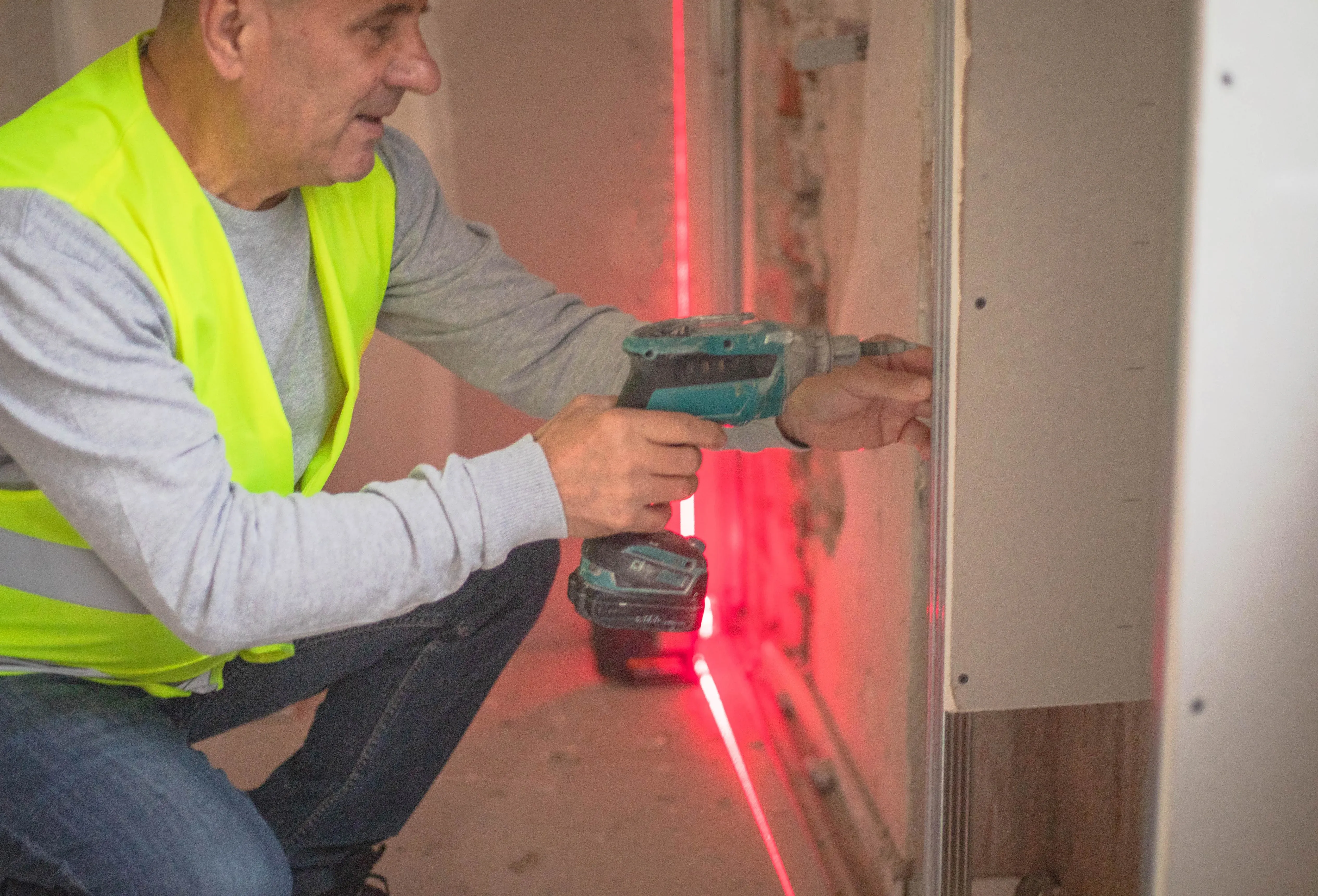
The cordless drill is the workhorse power tool, used to drill holes for cable runs, drive screws and anchors, and power hole saws and auger bits through studs and joists. Go brushless at 18 or 20 volts for longer runtime and longer life. Stay with one battery platform for all your tools. Don't forget a complete assortment of bits, including spade and auger bits, plus a step bit for knockouts.
Plan to spend roughly $80 to $200 for a kit. Look for Milwaukee, DeWalt, or Makita. Shop on Amazon or Home Depot.
18
Hammer
A hammer is simple but essential, and it secures box mounting nails and staples, drives ground rods on smaller jobs, and handles the general fastening every job throws at you. A well-balanced, comfortable hammer alleviates the fatigue of a long day.
Plan to spend roughly $15 to $40. Look for Estwing or Milwaukee. Shop on Amazon or Home Depot.
19
Reciprocating Saw
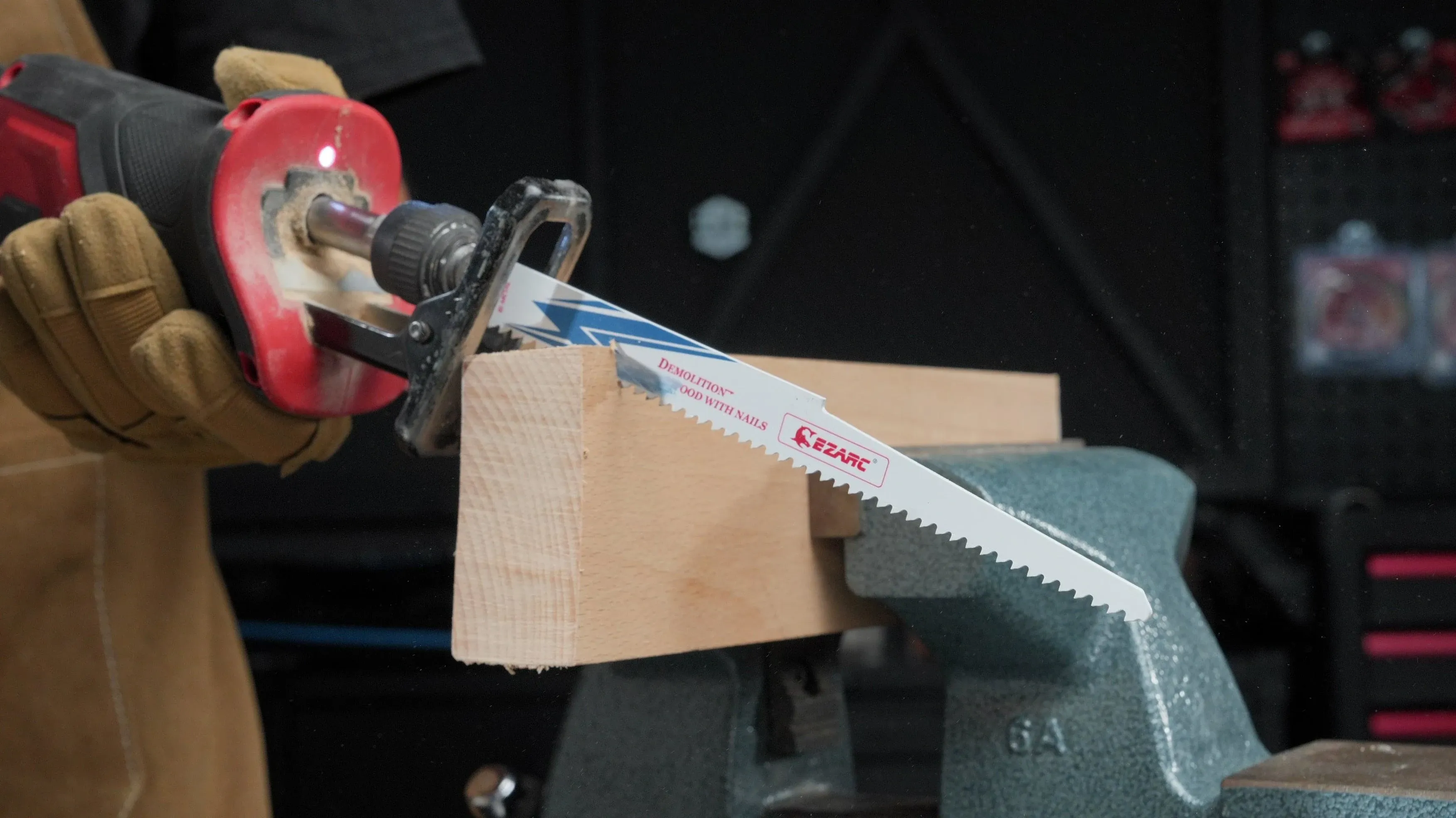
For rough-in and remodel work, a reciprocating saw cuts quickly through framing, drywall, conduit, and cable tray. With the right blade, it cuts through wood, metal, and nail-embedded lumber, making it the go-to tool for demolition and access. A cordless model on your existing battery platform is the most convenient.
Plan to spend roughly $100 to $250. Look for Milwaukee or DeWalt. Shop on Amazon or Home Depot.
20
Circular or Band Saw
A circular saw will quickly cut straight through plywood, panel boards, and general construction materials. A portable band saw will provide clean, accurate cuts on conduit, strut, and rigid pipe. Which one you need depends on your work mix; many electricians eventually carry both.
Plan to spend roughly $80 to $250. Look for Milwaukee, DeWalt, or Makita. Shop on Amazon or Home Depot.
Safety Gear
Electrical work carries real hazards, and proper protective equipment is required, not optional. OSHA obligates employers to assess job hazards and provide suitable PPE, and NFPA 70E sets the standard for arc-flash and electrical safety in the workplace.
21
Insulated Gloves
Rubber insulating gloves are the first line of defense against shock and burns when working on or around energized parts. They are rated by voltage class, worn with leather protectors, and must be inspected and tested periodically, as a pinhole defeats the protection. Use the correct class for the job and never wear a glove that has not been inspected.
Plan to spend roughly $30 to $120. Look for Klein Tools or Salisbury. Shop on Amazon or Home Depot.
22
Safety Glasses
You cut, drill, and work in panels. All day long, debris and sparks fly in your eyes. Choose glasses that meet the ANSI Z87.1 impact standard, have anti-fog lenses, and include side protection so they don't fall off. The strongest pair is the one you can wear comfortably on every job.
Plan to spend roughly $10 to $25. Look for 3M or DeWalt. Shop on Amazon or Home Depot.
23
Hard Hat
Even away from a construction site, a hard hat should be in the van. For electrical work, choose a Class E (electrical) hard hat, which is tested to resist high voltage, instead of a Class C model, which may contain conductive material.
Plan to spend roughly $15 to $40. Look for Klein Tools or MSA. Shop on Amazon or Home Depot.
24
Flame-Resistant and Arc-Rated Clothing
Any job that has the potential for an arc flash should use flame-resistant, arc-rated clothing rated in calories per square centimeter to match the hazard, as outlined in NFPA 70E. FR shirts, pants, and coveralls resist ignition and help protect against severe burns. This is essential safety equipment for live panels and high-energy work, not an accessory.
Plan to spend roughly $50 to $200. Look for Carhartt FR or Bulwark. Shop on Amazon or Home Depot.
25
Rescue Hook
A non-conductive rescue hook, made of fiberglass, can pull a coworker clear of a live source in an emergency. Keep one accessible on energized work, but remember that the safest course is to de-energize first and to let trained responders perform a rescue when current may still be present.
Plan to spend roughly $30 to $150. Shop on Amazon or Home Depot.
26
Class C Fire Extinguisher
A Class C-rated electrical fire extinguisher utilizes a non-conductive agent. Keep one charged and ready in the van and on the job. A small fire caught early protects lives and the revenue tied up in the work.
As you take on more complex residential and commercial work, these tools help you diagnose faster and work more accurately.
27
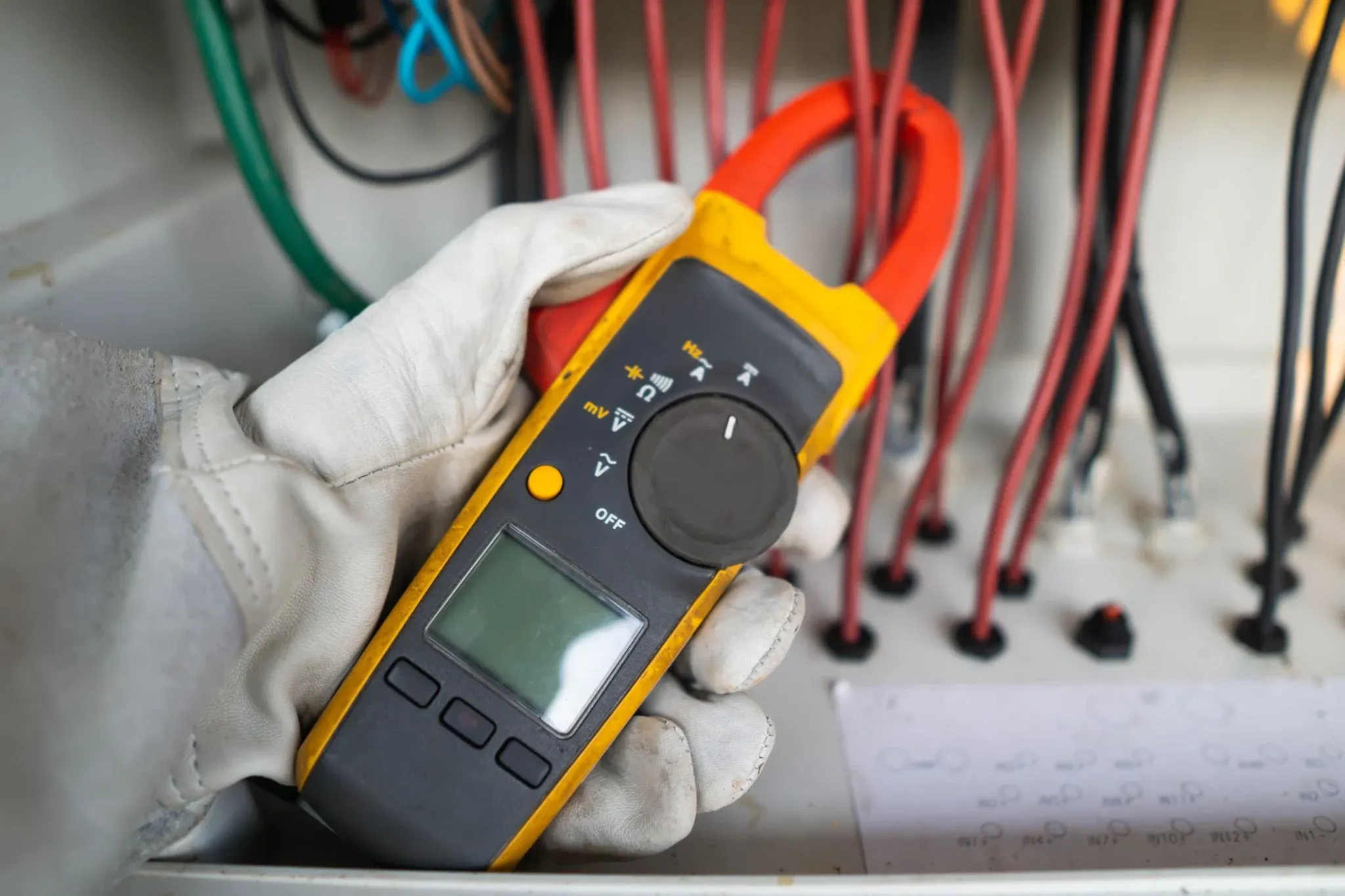
Clamp Meter
A clamp meter measures current by clamping around a conductor, which means there is no need to disconnect or break the circuit, making it ideal for load checks and troubleshooting. Many also measure voltage and resistance like a multimeter. Look for true-RMS accuracy and the correct jaw size for the conductors you test most.
Plan to spend roughly $40 to $200. Look for Fluke or Klein Tools. Shop on Amazon or Home Depot.
28
Circuit Analyzer and Receptacle Tester
A plug-in outlet tester or circuit analyzer will tell you in an instant if you have wiring errors, open grounds, reversed polarity, or miswired outlets, and the better ones will also measure voltage and impedance. This is a quick, inexpensive way to check your work and troubleshoot issues during a service call.
Plan to spend roughly $15 to $100. Look for Klein Tools or Ideal. Shop on Amazon or Home Depot.
29
Circuit Breaker Finder
Tracing which breaker feeds a given outlet is slow guesswork without the right tool. A breaker finder uses a transmitter plugged into the outlet and a receiver that you sweep across the panel to quickly and accurately identify the matching breaker, a real time-saver on unfamiliar panels.
Plan to spend roughly $30 to $70. Look for Klein Tools or Ideal. Shop on Amazon or Home Depot.
30
Lockout/Tagout Kit
A lockout/tagout kit, with breaker locks, padlocks, and tags, keeps a circuit from being re-energized while you work on it. Proper lockout/tagout is an OSHA requirement for many tasks and a basic discipline that prevents some of the worst accidents in the trade.
Plan to spend roughly $30 to $150. Look for Brady or Master Lock. Shop on Amazon or Home Depot.
Connectors and Consumables
Tools are important, but more important is to keep the van stocked with the connecting hardware that every job devours: wire nuts and push-in splicing connectors, terminal blocks, wire and cable lugs, coax connectors, and cable ties for neat, organized runs. They are cheap, but if you run out in the middle of a job, it means a trip to the supply house, so keep track of them like any other necessity.
The Digital Tools That Run and Grow Your Electrical Business
The tools in your truck keep jobs running. The software running your business keeps jobs coming in. An electrical operation really runs on a six-step workflow: capturing the call, building the estimate, tracking permits and inspections, dispatching and scheduling, invoicing in the field, and following up for reviews and repeat work. No single tool does all six well, and most shops run a small stack of specialized systems plus accounting.
The first step, capturing the call, is the step that quietly determines if the rest of the stack is ever used. And every missed call when you're on a panel is a job given to the next electrician on Google, and 40% of home-service calls come in after hours. That’s where CloseCrew comes in, that front-office layer. CloseCrew isn’t a dispatch, invoicing, or accounting platform. It’s the AI receptionist that captures and books the work and passes it to the systems you already run. Here's what Larry does:
24/7 Call Answering. Larry answers every inbound call, day or night, including the after-hours emergencies that decide so many jobs.
Instant Job Booking. Qualified callers get booked straight into your calendar: no phone tag and no lost leads.
After-Hours and Emergency Capture. A 9 p.m. "half my house lost power" call gets answered and qualified, rather than going to voicemail.
Estimate Follow-Up. Larry follows up on unsold proposals, turning quoted panel upgrades and EV installs into booked revenue.
Review Requests. A review ask goes out by text after the job, in the high-conversion window right after you restore power, to build the reputation that wins the next customer.
One Unified Inbox. Calls, texts, webchat, and email land in a single place, in English and Spanish, so nothing slips between channels.
200-Plus Integrations. CloseCrew connects to the scheduling, dispatch, invoicing, and accounting tools you already use, with white-glove onboarding in about 48 hours, so it strengthens your stack rather than replacing it.
The right tools let you handle anything a customer's panel throws at you. CloseCrew makes sure you get the chance by answering and booking every call so your fully equipped truck stays busy.
Frequently asked questions
What tools does a beginner electrician need first?
Basic hand tools include a multimeter, non-contact voltage tester, lineman’s and needle-nose pliers, wire strippers, an insulated screwdriver set, tape measure, utility knife, and fish tape, plus safety glasses and insulated gloves. As your work grows, add diagnostic tools like a clamp meter, breaker finder, and power tools like a cordless drill.
How much does it cost to build an electrician's tool kit?
A solid starter set of hand tools costs a few hundred dollars, with most individual tools priced between $10 and $60. The bigger investments are a good multimeter or clamp meter, a cordless drill and saws, and arc-rated safety gear, which together can add several hundred dollars more.
Where should electricians buy their tools?
Trusted trade brands like Klein Tools, Fluke, Milwaukee, Knipex, and Greenlee are easily accessible from retailers like Amazon and Home Depot, as well as local electrical supply houses. Supply houses are often worth the trip for professional meters, conduit-bending equipment, and expert advice.
What safety equipment do electricians need?
Safety glasses that meet ANSI standards, voltage-class insulated gloves, Class E hard hat, arc-rated flame-resistant clothing appropriate to the hazard, a Class C fire extinguisher at a minimum, and a lockout/tagout kit. Proper PPE must be provided by employers per OSHA requirements. NFPA 70E covers arc flash protection.
What software does an electrical business need?
Most shops run a small stack that covers call intake, estimating, dispatch and scheduling, field invoicing, and accounting. For a growing shop, the biggest lever is reliable call capture and booking, because that’s where leads are won or lost. The front-office layer is handled by an AI receptionist like CloseCrew that works with the rest of your tools.
Related tools
Run the numbers before you update your price book or field software.
Free Electrical Templates
Invoices, estimates, and flat-rate pricing sheets for electrical contractors.
Discover the best electrical estimating software for contractors in 2026. Compare top tools to create accurate estimates, streamline workflows, and win more projects.
This guide outlines ten practical tips to recruit and keep great electricians, grounded in current 2026 numbers, from treating hiring like marketing to building a culture people refuse to leave.
Never miss a Electrical service call again. Let Larry, your AI receptionist, book jobs while your crew is in the field.
We will run your numbers on the call and tell you if the maths does not work for a shop your size. That happens, and it is a cheaper conversation than finding out three months in.