Business Tips

10 Electrical Safety Tips for Customer and Electrician Safety

Electrical safety is more than wearing PPE. It requires the right training, tools, processes, and communication to protect technicians and reduce costly mistakes. This guide shares 10 proven electrical safety tips, along with practical ways electrical contractors can improve job site safety, stay compliant, and create a stronger safety culture.

13 min readPublished July 14, 2026

Working with electricity is dangerous. Every electrician knows this. But the risks go beyond shocks and burns.

Arc flash exposure, falls, repetitive strain, and unknown wiring all create hazards. Your team enters unfamiliar buildings every day. Each property has different panel conditions. Each home has different code compliance histories. Previous wiring work may not have followed code at all.

For electrical business owners, the stakes are even higher. Your liability extends to every job site your team visits. A single incident can trigger workers' comp claims and lawsuits. It can damage your reputation for years. It can increase your insurance premiums significantly.

A solid safety program protects your people. It also protects your business. It reduces liability exposure and insurance costs. It prevents the callbacks and rework that eat into margins. And it keeps your best techs from leaving.

We work with electrical contractors across the country. Here are 10 tips based on what we've seen work. The first five cover safety fundamentals. The last five show how CloseCrew consistently enforces those fundamentals.

Part of the Business Tips section in the Electrical Business Blog.
1. Follow OSHA and NEC best practices on every job

Overloaded outlets cause short circuits. Damaged power cords create fire hazards. Incorrect fuse wattage leads to overheating. These are the most common residential electrical problems.

When customers overload power strips, the circuit can short. This creates a fire hazard. It can also damage connected devices. Licensed electricians catch these issues early.

Your techs should alert homeowners to warning signs. Bad panels, aging wiring, and faulty breakers need attention. They should advise on safe use of extension cords. Overloaded cords cause fires and tripping hazards.

Arc flashes are among the most dangerous exposures. They happen when current jumps between two conductors. The temperature can exceed 35,000 degrees Fahrenheit. That's four times hotter than the sun's surface. Qualified electricians install AFCIs to prevent arc faults.

Every electrical business needs an EHS policy. EHS stands for environmental health and safety. Your policy should comply with OSHA regulations. It should follow NFPA standards. It should meet National Electrical Code requirements.

Electricians should follow CDC safety procedures on every job:

  • De-energize all equipment before starting work

  • Follow lockout/tagout procedures without exception

  • Use voltage testers before touching any conductor

  • Keep safe distance from energized power lines

  • Connect equipment to a GFCI

  • Verify all tools are properly grounded

Beyond electrical hazards, techs face ergonomic injuries. Repetitive motions strain muscles and joints. Poor lifting damages backs. Falls from ladders cause serious injuries. Take breaks from awkward positions. Practice safe lifting techniques. Use proper ladder setup on every job.

2. Wear the right PPE for every task

PPE reduces risk of shock, burns, and electrocution. It's not optional. It's required by OSHA. Every tech should wear it on every job. No exceptions for "quick fixes."

The arc thermal performance value (ATPV) matters more than comfort. Match your PPE rating to the potential exposure level. Underrated PPE gives false confidence. It won't protect against actual arc flash energy. Check ratings before purchasing new equipment.

Essential electrical PPE includes:

  • Hard hats and hoods for head protection

  • Face shields or safety glasses for eye protection

  • Rubber insulated gloves with protector gloves over them

  • Rubber insulated sleeves for high voltage work

  • Flame-retardant clothing that meets NFPA 70E

  • Electrical-safety rated footwear with non-conductive soles

  • Ear plugs or muffs for noise in commercial settings

Also stock insulated matting and fiberglass ladders. Keep rescue rods and poles accessible. Never use aluminum ladders near electrical work. Aluminum conducts electricity. Fiberglass does not.

Inspect PPE before every use. Rubber gloves develop micro-tears over time. A small hole makes a glove useless. Replace worn PPE immediately. Document replacements for compliance records.

Prepare for extreme weather

Power outages spike in summer and winter. Your techs get called out in harsh conditions. Extreme temperatures add risk to already dangerous work.

Winter safety: Wear insulated layers with dry backups in the truck. Secure ladders on wet or icy ground. Cold hands reduce dexterity and grip strength. Know the signs of cold stress. Perform van maintenance before the season. Follow winter driving protocols on every trip.

Summer safety: Drink fluids throughout the day. Dehydration impairs judgment and reaction time. Take breaks to prevent heat stroke. Attics can exceed 140 degrees in summer. Monitor truck interior temperatures for stored equipment. Dress for heat but never skip required PPE.

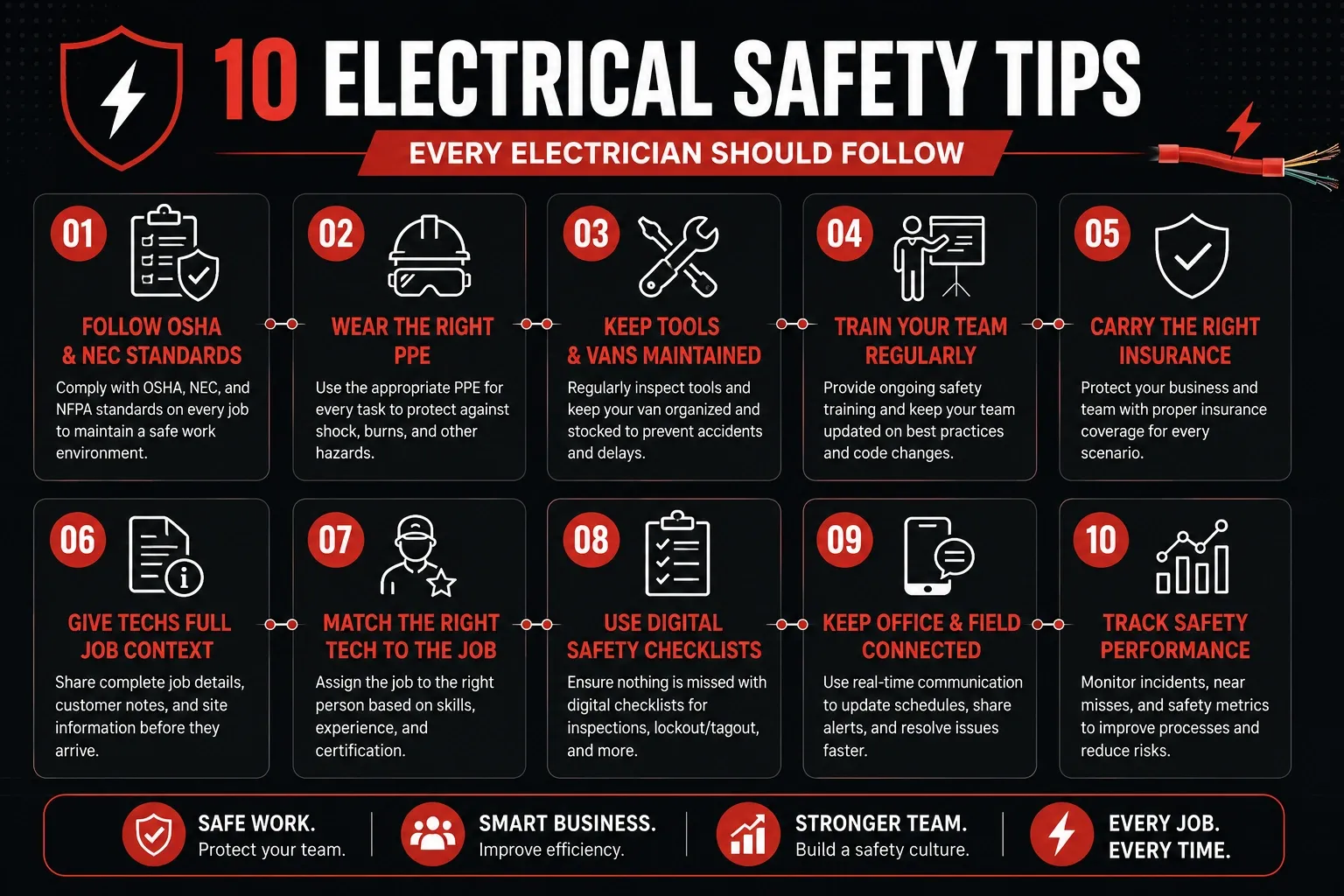
Short on time? Here's a visual summary of the 10 safety tips covered in this guide. Save it, share it with your team, or use it as a quick reference before heading to the job site.

electrical-safety-tips-for-electricians.webp

3. Keep tools maintained and vans organized

Safety starts with properly insulated tools. A frayed wire on a tool handle creates shock risk. A dull blade makes a tech apply more force. More force means less control and more accidents.

Inspect and maintain tools on a regular schedule. Don't wait for failures. Remove defective tools from service immediately. Mark them clearly so others don't grab them by mistake.

A well-stocked van eliminates unnecessary trips to the shop. Each round trip wastes 30 to 60 minutes. It burns fuel and adds road accident risk. Stock vans with common parts and materials each morning.

Organization matters as much as inventory. A messy van means hunting for the right tool. Hunting means frustration and rushing. Rushing leads to mistakes. Keep bins labeled and tools in consistent locations.

Help your electricians stay safe on the road too:

  • Optimize scheduling so techs don't speed between jobs

  • Use route planning to avoid closures and delays

  • Send customers tech ETAs to prevent rushed arrivals

  • Track driving habits and coach on safe practices

Safe driving protects your team and your reputation. A company van driving recklessly reflects on your brand. Every van is a moving billboard. Make it represent professionalism.

4. Invest in ongoing safety training

As a business owner, safety training is your responsibility. It's not just a good idea. It's a legal requirement. Your company needs a documented safety policy. It should cover emergency procedures for every job type.

Use a site-specific safety plan (SSSP) before starting new jobs. The SSSP outlines hazards specific to that location. It identifies the required PPE and procedures. Review it with every tech assigned to the job.

Electricians must stay current on NEC updates. The code changes every three years. New technologies create new hazards. Smart home devices, EV chargers, and battery storage all require updated knowledge.

Implement mandatory safety training programs for your team. Cover NEC code, OSHA requirements, and your company's specific procedures. Get feedback from techs on what topics need attention. Experienced techs see hazards that office staff don't.

Monthly safety meetings keep standards fresh. Review recent near-misses and incidents. Discuss what went right and what needs improvement. Make safety part of your culture, not a checkbox.

Stay educated between formal sessions too. The best electrician podcasts cover NEC updates and field safety. Your team can listen on the drive between jobs. Continuous learning costs nothing but builds significant awareness.

5. Carry the right insurance coverage

You can mitigate many hazards. Insurance protects you when prevention fails.

General liability covers property damage or bodily injury from your work. If a tech accidentally starts a fire, this policy responds. If a customer trips over your equipment, this policy covers it.

Commercial vehicle insurance covers road accidents driving to jobs. It covers theft from work vans. Your standard auto policy won't cover commercial use.

Property insurance covers your office, tools, and stored equipment. A warehouse fire without coverage can bankrupt a small business.

Most states require workers' compensation. It covers medical care for injured employees. It covers lost wages during recovery. It also protects your company from lawsuits. An employee who accepts workers' comp typically cannot sue you.

Consider professional liability (errors and omissions) too. If your work causes a code violation or system failure, this coverage protects you. Not all general liability policies include professional errors.

Review your coverage annually. As your team grows, your exposure changes. Add trucks, add coverage. Add services, update your policy. Don't wait for a claim to discover a gap.

Setting up insurance and business structure for the first time? Our guide on how to start an electrical business covers licensing, insurance, and the full setup process.

Safety doesn't stop with PPE and insurance. The right software helps your team follow the same safety process on every job, reduces communication errors, and keeps technicians focused on the work rather than paperwork.

The five tips above are the foundation. But policies only work when people follow them. The next five show how the right tools make safety procedures automatic.

6. Give techs full job context before they arrive

Preparation prevents accidents. Informed techs are safer techs. They know what tools to bring. They understand the potential hazards. They often know the fix before arriving.

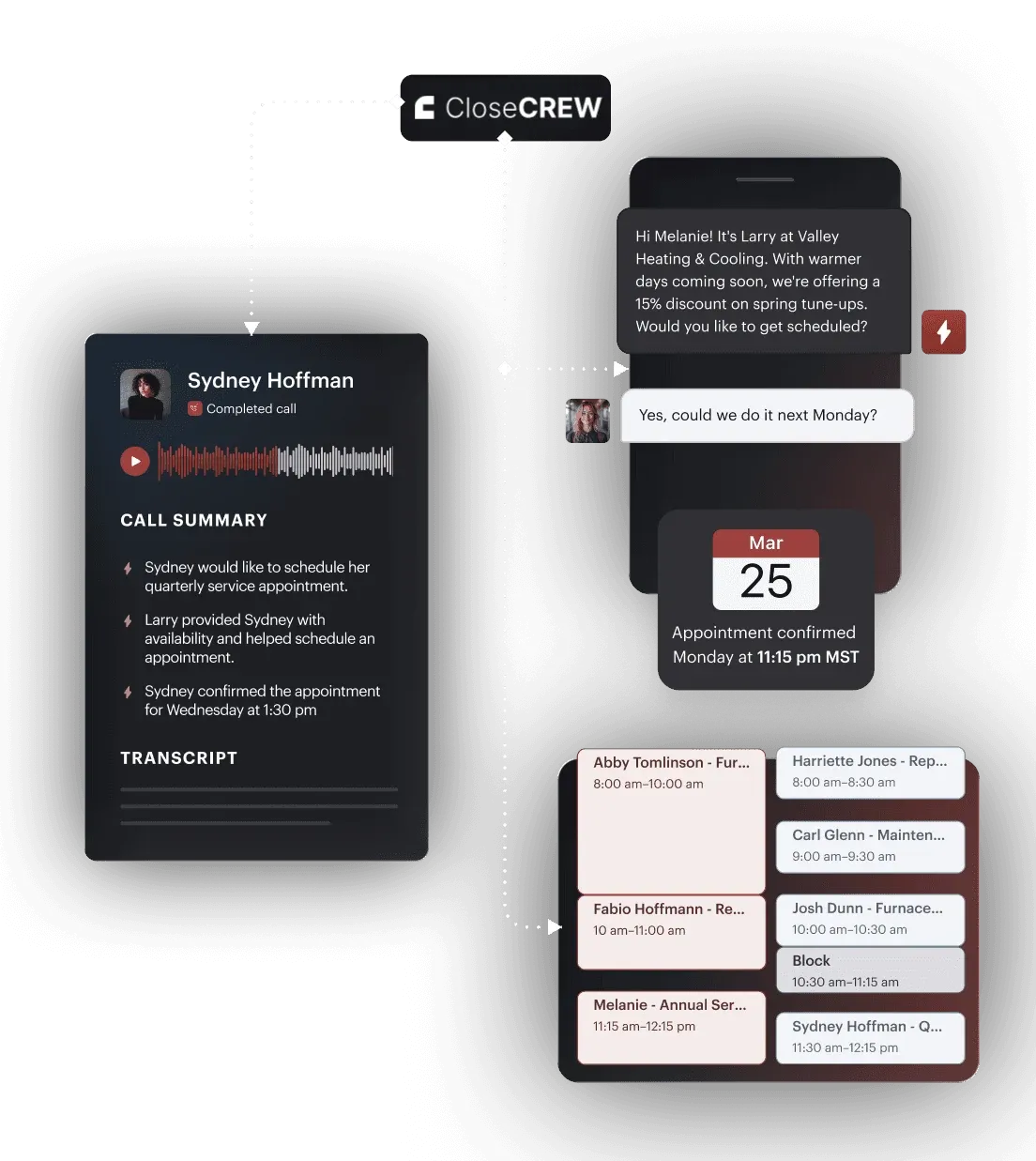
When a customer calls, Larry captures every detail. He identifies new versus existing customers automatically. He collects the problem description and equipment type. He logs access codes and special instructions.

All of this goes into the customer profile instantly. The tech opens the app and sees full context. No more asking "so what's going on?" at the door. No more missing information that a CSR forgot to write down.

Store notes with every customer record. Log gate codes for gated properties. Note that a large dog roams the yard. Flag when a specialized tool is needed for specific panel types. Note when a home has aluminum wiring that requires extra caution.

Larry does this 24/7. Not just during office hours. A customer calls at 9 PM about a sparking outlet. Larry captures every detail. He logs it to the profile before anyone sees the job next morning. No CSR needed. No details lost to voicemail.

Knowing local building codes helps too. Understanding licensing requirements for your area keeps jobs compliant. Compliance keeps everyone safer.

7. Match technician skills to job requirements

Wrong tech on wrong job creates safety risks. An apprentice on a complex panel upgrade is dangerous. A residential tech on industrial controls is out of their depth. Skill mismatches put technicians and customers at risk.

CloseCrew's dispatch tools solve this. Dispatchers see what each job requires at a glance. They match the right technician to the right task. Experienced techs get high-risk, high-profit work. Apprentices get supervised jobs matching their training level.

This matters more as your team grows. Apprentices, journeymen, and masters have different capabilities. Each should be dispatched to appropriate work. For tips on building the right team mix, see our retention guide.

GPS tracking shows every van's location in real time. Dispatchers group jobs by proximity for efficient routes. Optimized routes reduce drive time on hazardous roads. They also cut fuel costs significantly.

Staff are accounted for at all times. If a tech doesn't check in after a job, dispatch follows up. This simple accountability measure saves lives.

Customers benefit from GPS tracking too. CloseCrew texts them the tech's photo and ETA. Knowing who's coming builds trust. It reduces anxiety about a stranger entering the home.

8. Use digital checklists to prevent missed steps

Keep safety data sheets available in every tool bag and van. Record all chemicals and hazardous materials used on each job. Note what PPE each material requires.

CloseCrew's digital forms create custom safety checklists. Build them from scratch for your specific procedures. Or start with pre-built templates from other electrical companies. Customize templates to match your workflow.

Require checklists at every stage of a job. Installing a new breaker panel? Require an installation checklist before closing the job. Include a warranty form. Include a final inspection sign-off.

This prevents missed steps on every single job. It also creates documentation for liability protection. If a customer claims improper work, the checklist proves compliance.

One contractor added mandatory digital checklists to every job. Callbacks dropped 50% in the first quarter. Revenue increased 20% that same year. The checklists didn't add time to jobs. They prevented the rework that was costing far more.

9. Connect your office and field teams in real time

CloseCrew is cloud-based. All customer and job data lives in one place. Office staff access it on desktop. Techs access it on their mobile device. Everyone sees the same information in real time.

Electricians see the latest details for every job:

  • Customer contact info and notes from Larry's intake

  • Call recordings with the customer

  • Outstanding estimates that remain open

  • Job histories with photos and voice notes

  • Property details and equipment serial numbers

Techs build estimates on the spot using the mobile pricebook. They check warranty details in the field. They collect payments before leaving the house. No paperwork goes back to the office for processing.

CloseCrew's unified inbox consolidates every communication channel. Calls, texts, webchats, and third-party leads flow into one view. Your dispatcher sees every interaction. Your techs see every customer note. Larry handles overflow when your team is busy.

re-engagement.webp

Nothing falls between the cracks of five disconnected apps. Real-time access improves communication across the team. It reduces the forgotten details that create safety risks.

Seeing all of these tools working together is much easier than reading about them. If you're looking for a better way to manage calls, dispatch, customer communication, and field operations, it's worth seeing CloseCrew in action.

10. Monitor performance to catch safety risks early

Track your company's progress with actual data. Don't rely on gut feeling. Oversee each electrician's habits and routines. Make decisions based on real numbers.

CloseCrew's reporting shows key metrics per technician. Revenue generated. Services sold. Jobs completed per day. Average time per job. Response times to customer calls.

These numbers reveal patterns you can't see otherwise. A tech rushing through jobs shows up clearly. Multiple visits to fix one problem shows up too. Both patterns indicate potential safety risks.

Declining completion rates might signal burnout. Increasing drive times might signal route problems. Rising callbacks might signal training gaps. Data catches these issues before they become incidents.

Overworked electricians create unsafe situations. Monitor workloads weekly, not monthly. Grow your team strategically as revenue allows. Hiring one more tech is cheaper than one workers' comp claim.

For tracking which marketing channels fill your schedule, see our electrical leads guide. For managing customer data across your growing team, see the best CRM for electrical contractors.

Safety and efficiency reinforce each other

Every tip in this guide serves one goal. Get your electricians home safe every shift. Run a profitable business while doing it.

Techs who follow proper procedures complete jobs correctly the first time. Fewer callbacks mean more hours for new revenue. Fewer injuries mean lower insurance premiums. Better documentation protects you when questions arise later.

CloseCrew ties it all together in one system. Larry answers calls so techs stay focused on the panel. Checklists ensure every step gets completed. Customer profiles give techs full context before arrival. Performance tracking catches problems before incidents happen.

Real contractors. Real results:

  • Arctic Air: 30% more revenue in one year. Added a truck.

  • Air Texas: $20,000 job booked after hours by Larry.

  • Premier Heating: Response time cut from 12 minutes to under 1 minute. 3x more leads converted.

  • Air Design: 13 extra appointments in 30 days. Conversions near 100%.

Ready to run your electrical business more safely and efficiently? Every electrical business wants fewer accidents, smoother operations, and happier customers. If you're ready to simplify your day-to-day operations while helping your team work more safely, our team can show you how CloseCrew fits your workflow.

Frequently asked questions

How often should electricians receive safety training?

At minimum, conduct formal training quarterly. Hold monthly safety meetings to review recent incidents. Update training whenever NEC codes change. The code updates every three years. New technologies like EV chargers require additional training.

Electric shock is the most common. Burns from arc flash are the most severe. Falls from ladders cause the most missed work days. All three are preventable with proper PPE, procedures, and preparation.

Usually yes. Commercial work carries higher liability exposure. Your general liability limits should reflect the size of projects you bid. Talk to an insurance broker who specializes in electrical contractors.

Related tools

Run the numbers before you update your price book or field software.

Contractor Blog

Cross-trade guides on hiring, marketing, and operations for every home services business.

View all guides

Electrical Licensing

State licensing requirements, exams, and renewal rules for electrical contractors.

View states

Meet Larry

AI receptionist built for Electrical — answers calls, books jobs, and follows up on leads 24/7.

See Larry for Electrical

Related articles

Never miss a Electrical service call again. Let Larry, your AI receptionist, book jobs while your crew is in the field.