Equipment and Tools

Top 7 Electrician Training Software Solutions in 2026

Explore the top electrician training software solutions for 2026, including their features, pricing, pros, and cons. Learn how these platforms improve safety, compliance, onboarding, and workforce development while helping electrical businesses build more skilled and productive teams.

9 min readPublished August 3, 2026

Electrical work is definitely not the kind of job where you get to shrug off mistakes. A simple one can harm team members, miss deadlines, or even land businesses in hot water over compliance breaches.

OSHA’s latest numbers paint a sobering figure: over 195 electricians lost their lives in recent incidents, with nearly half of those fatalities caused by working on energized wires and parts.

Still, many businesses find it challenging to close skill gaps, get new hires up to speed, or keep their crews informed about industry updates. From mastering essential electrical troubleshooting tools to staying fully aligned with state-specific electrical contractor licensing requirements.

The seven training software solutions in this guide are designed to tackle these challenges head-on and help electrical companies create safer and more productive environments.

[[blog-banner:grow-revenue]]

Part of the Equipment and Tools section in the Electrical Business Blog.
Why Pair Field Training with Automation?

Before diving into training platforms, it’s worth looking at how tech-forward shops manage operational safety and efficiency on and off the job site. Training keeps your technicians safe while pulling wire and terminating panels, but operational chaos like missed calls and dispatch delays can still derail your business.

That’s why leading electrical contractors pair training software with CloseCrew. Meet Larry CloseCrew’s AI employee designed specifically for trade contractors. While your team is completing certifications or out on the job, Larry answers incoming calls 24/7, qualifies complex electrical issues, handles emergency triage, and books jobs directly into your dispatch schedule.

  • Capture Every Opportunity: Never lose an emergency callout or high-value panel upgrade to voicemail again.

  • Streamline Operations: Connect customer communications, automated review collection, and re-engagement into one smooth system.

  • Grow Without Headcount: Let your front office and field crews focus on high-value tasks while Larry handles the rest.

1. Interplay Learning

interplay.webp

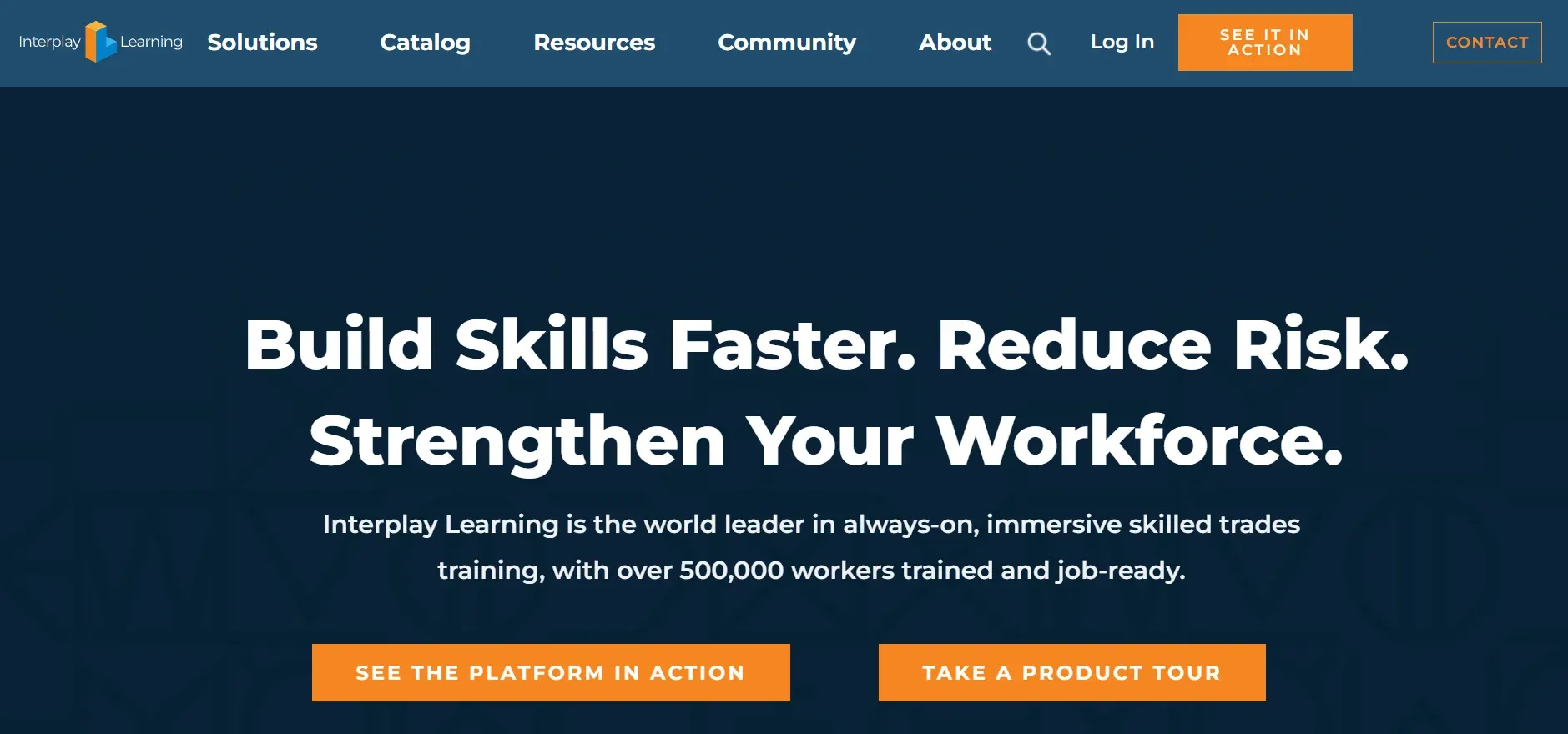
Interplay Learning takes training for electricians and other trades to a whole new level. With rich 3D simulations and virtual reality (VR) modules, this platform offers a hands-on experience that feels like you’re stepping straight onto a real-world job site.

Key Features

  • Interactive learning paths that adjust to different skill levels so both seasoned pros and those starting out always find a challenge.

  • Hands-on practice with 3D scenarios rather than endless theory.

  • Real-time performance tracking so team members get instant feedback on their progress.

Pros

  • Engaging and fun: The gamified approach keeps electricians hooked and coming back for more.

  • Multi-device access: The platform works on devices you already use, with no need to purchase additional hardware.

  • Huge content library: Covers a broad range of topics, including core electrical safety tips for electricians.

Cons

  • Costs can add up quickly: The 'per seat' pricing plan gets expensive for large teams.

  • Occasional glitches: Advanced features can sometimes cause tech issues, as some users have reported.

  • Customization limitations: Lower-tier plans don’t offer much flexibility for teams with differing skill levels.

Pricing

  • Basic Plan: Starts at $49 per month per seat (user). Includes access to 22 learning paths, basic reporting, and U.S.-based support.

  • Team & Enterprise Plans: Custom pricing available on request for larger teams requiring the full course catalog, advanced customization, and command-center administration.

Best For

Businesses looking for an innovative platform that fuses fun, immersive 3D technology, and functionality into tech training.

2. TPC Training

tpc.webp

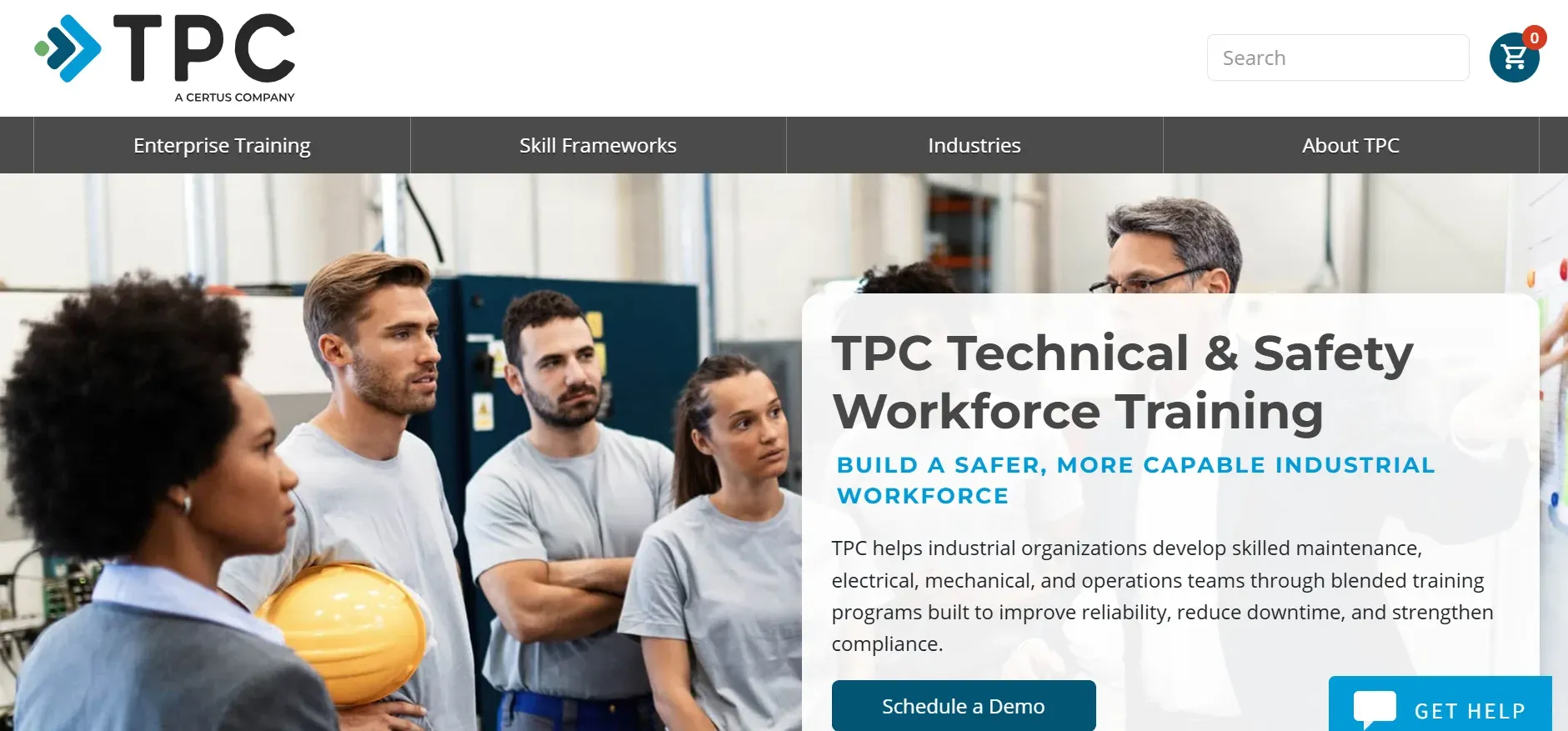
TPC Training brings a well-rounded approach to utility trades, including electrical, safety, and industrial maintenance. TPC offers a mix of on-demand video lessons, virtual labs, and tools to track compliance effortlessly.

Key Features

  • On-demand video lessons covering technical and safety topics for team members learning at their own pace.

  • Virtual labs allowing electricians to get hands-on experience with procedures right inside their browser.

  • Instructor-led maintenance courses that can be conducted on-site or through the platform.

Pros

  • Safety first: All safety training programs align with OSHA standards.

  • Flexible options: Caters to diverse learning styles with both online and in-person components.

  • Extensive library: Features over 300 courses covering electrical systems, safety, and maintenance.

Cons

  • Non-specific content: Some trade modules can feel broad or generic.

  • Steep learning curve: The interface can feel non-intuitive for technicians unused to online LMS dashboards.

  • Can get pricey: Combining technical coursework with safety modules increases overall costs significantly.

Pricing

  • Safety Tier: $15/user/month (covers essential OSHA topics like PPE and fall protection).

  • Technical Tier: $29/user/month (covers electrical troubleshooting and technical skills).

  • Combined Tier: $44/user/month (bundling both streams at a 20% savings).

  • Enterprise: Custom quotes available via sales consultations.

Best For

Businesses needing a balanced, compliance-heavy training approach for apprentices and experienced technicians alike.

3. Vector Solutions

vecor.webp

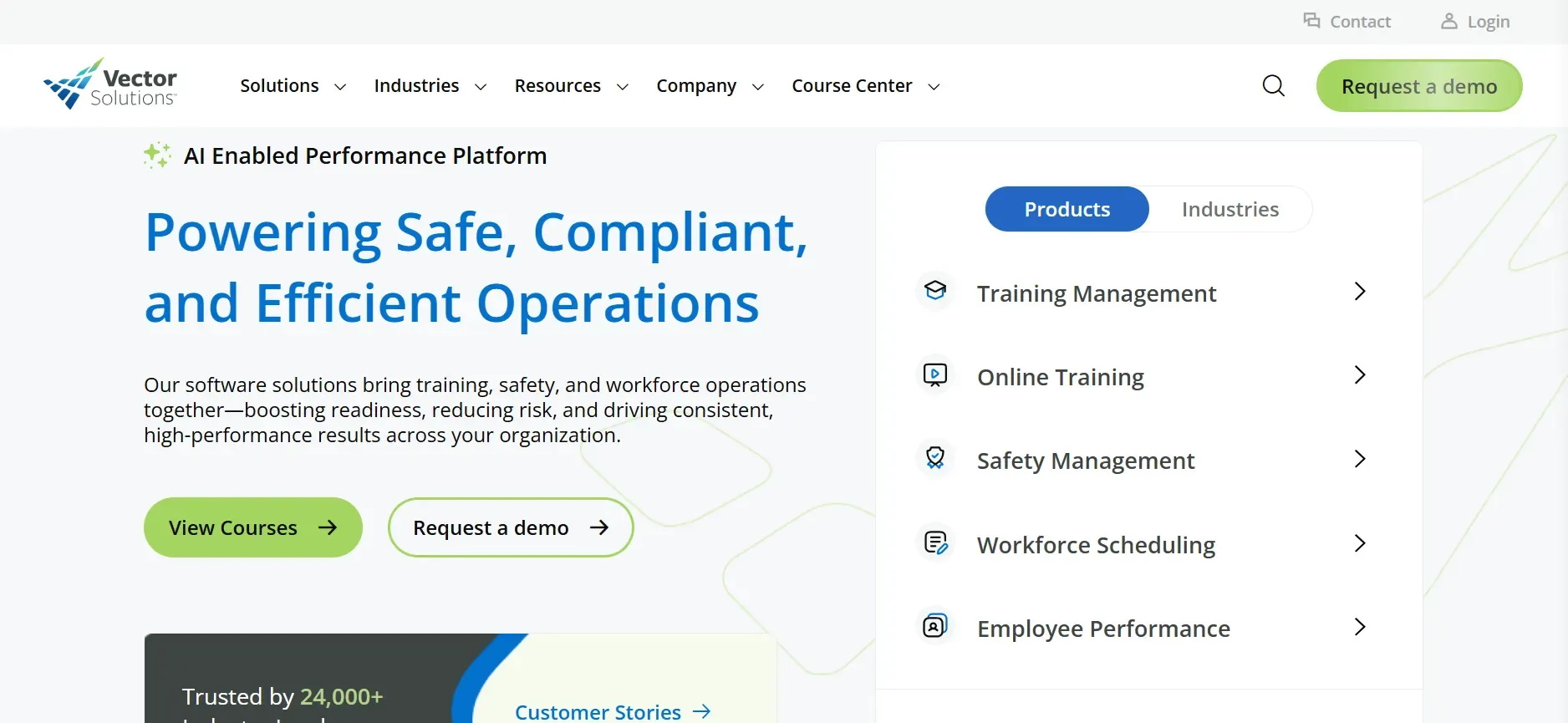
Vector Solutions is a trusted training platform for contractors specializing in high-voltage industrial work, transmission, and energy distribution systems.

Key Features

  • Built-in tracking: Monitor learner progress, quiz scores, and course completion in real time.

  • Certification management: Easily log and track certifications across your workforce so nobody falls behind on renewals.

  • Targeted high-voltage coursework: Specialized modules engineered specifically for line workers and high-voltage professionals.

Pros

  • Tailored course selection: Purchase only the specific modules your crew needs.

  • Compliance alignment: Content aligns with OSHA, NFPA, and NEC standards.

  • Flexible formats: Offers modular video and reading materials to suit varied learning habits.

Cons

  • Pay-as-you-go model: Individual course fees stack up quickly for broader training requirements.

  • Video platform glitches: Occasional video playback stops or crashes force users to restart lessons.

  • No playback speed adjustment: Fast learners cannot accelerate video playback speeds.

Pricing

Sold primarily on a per-course ala-carte catalog model, with prices varying based on subject complexity and credit hours.

Best For

Subcontractors and industrial teams specializing in high-voltage work who want pay-per-course flexibility without ongoing subscription overhead.

4. 360training

360training.webp

If flexibility and self-paced learning are top priorities, 360training is a proven contender. Known for its OSHA-approved regulatory courses, it provides a simple Learning Management System (LMS) with electrician-specific modules.

Key Features

  • Interactive knowledge checks: Quizzes and checkpoints break up standard lesson delivery.

  • 24/7 access: Learn anywhere, anytime on desktop or mobile.

  • Specialized safety tracks: Deep catalog covering general safety, hazardous environments, and technical basics.

Pros

  • Complete self-pacing: Techs can complete requirements around busy shift schedules.

  • Instant certification: Electronic certificates are issued immediately upon passing tests.

  • OSHA-compliant: Ensures regulatory peace of mind across core coursework.

Cons

  • No live instruction: Strictly self-guided with no instructor access or live feedback.

  • Catalog overwhelm: Large volumes of courses make finding specific topics tedious.

  • Dated user interface: Certain legacy modules feel visually outdated.

Pricing

Individual courses and curated bundles are priced modularly. Enterprise subscription options are available for larger companies upon request.

Best For

Independent electricians, solo contractors, or small teams under five employees needing quick, self-paced certification updates.

5. SkillCat

skillcat.webp

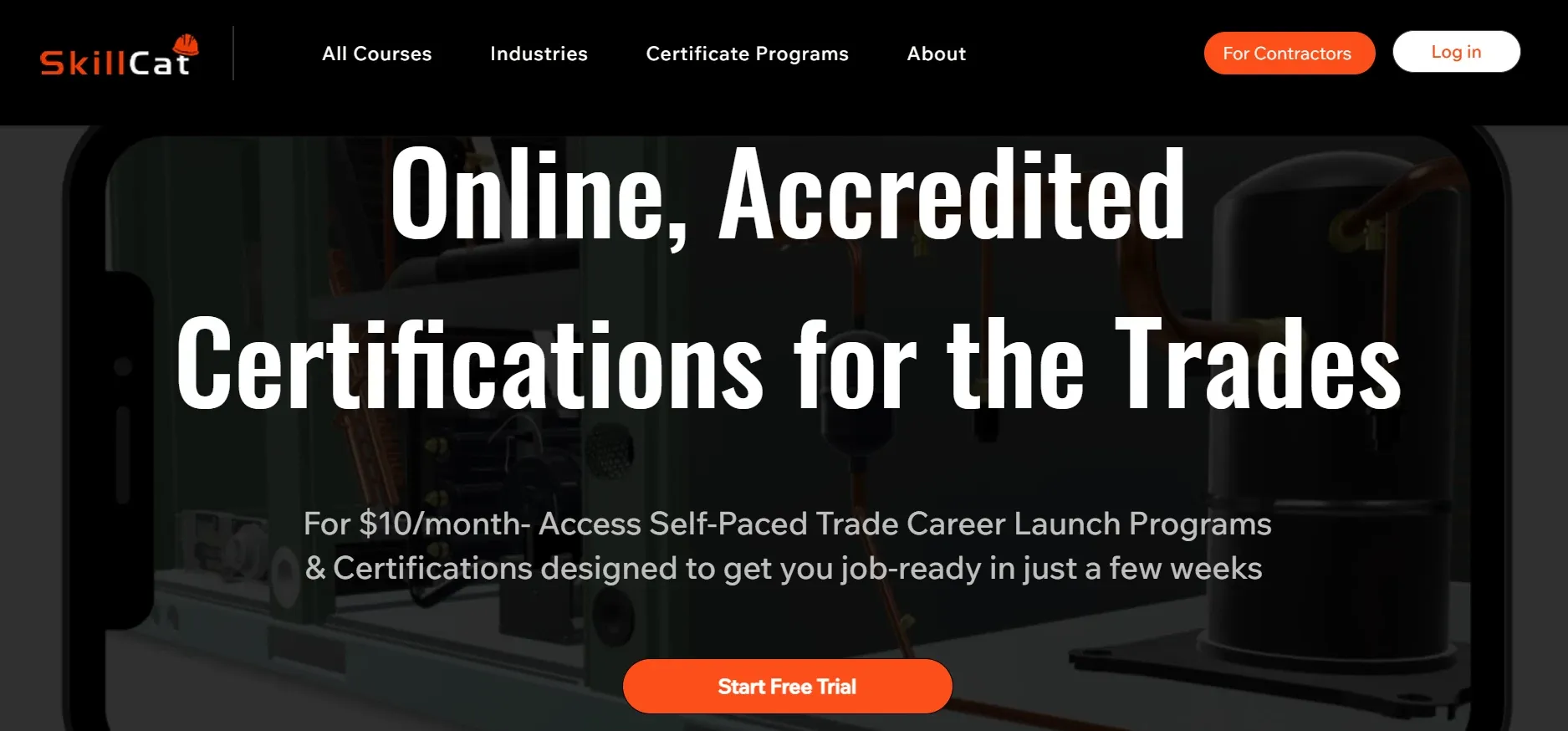
SkillCat combines accessibility, affordability, and trade readiness. Designed for apprentices and modern field teams, SkillCat incorporates 3D simulations alongside core theory and safety compliance.

Key Features

  • Interactive 3D simulations: Practice wiring, NEC code lookup, and circuit troubleshooting virtually.

  • Foundational assessments: Test skills in trade math, physics, and basic electrical concepts.

  • Community & job support: Offers trade placement, mentorship channels, and trade networking.

Pros

  • Extremely affordable: Student and entry-level tiers start at just $10/month.

  • Accredited credentials: Offers pathways to OSHA-10, EPA, and recognized trade diplomas.

  • Tailored trade content: Focuses on feeder circuits, commercial work, and essential communication skills.

Cons

  • Theory-focused: Some units tilt heavily toward classroom reading over hands-on application.

  • Varying module depth: Certain topics feel simplified for beginner audiences.

  • Course waitlists: High-demand trade school diploma tracks sometimes have waiting lists.

Pricing

  • Individual/Student: $10/month for complete course catalog and certification access.

  • Company Plans: $15–$50/user/month depending on analytics, customized learning tracks, and evaluation tools.

Best For

Apprentices, trade students, and cost-conscious contractors building foundational skills without breaking the bank.

6. NTT Training

ntt training.webp

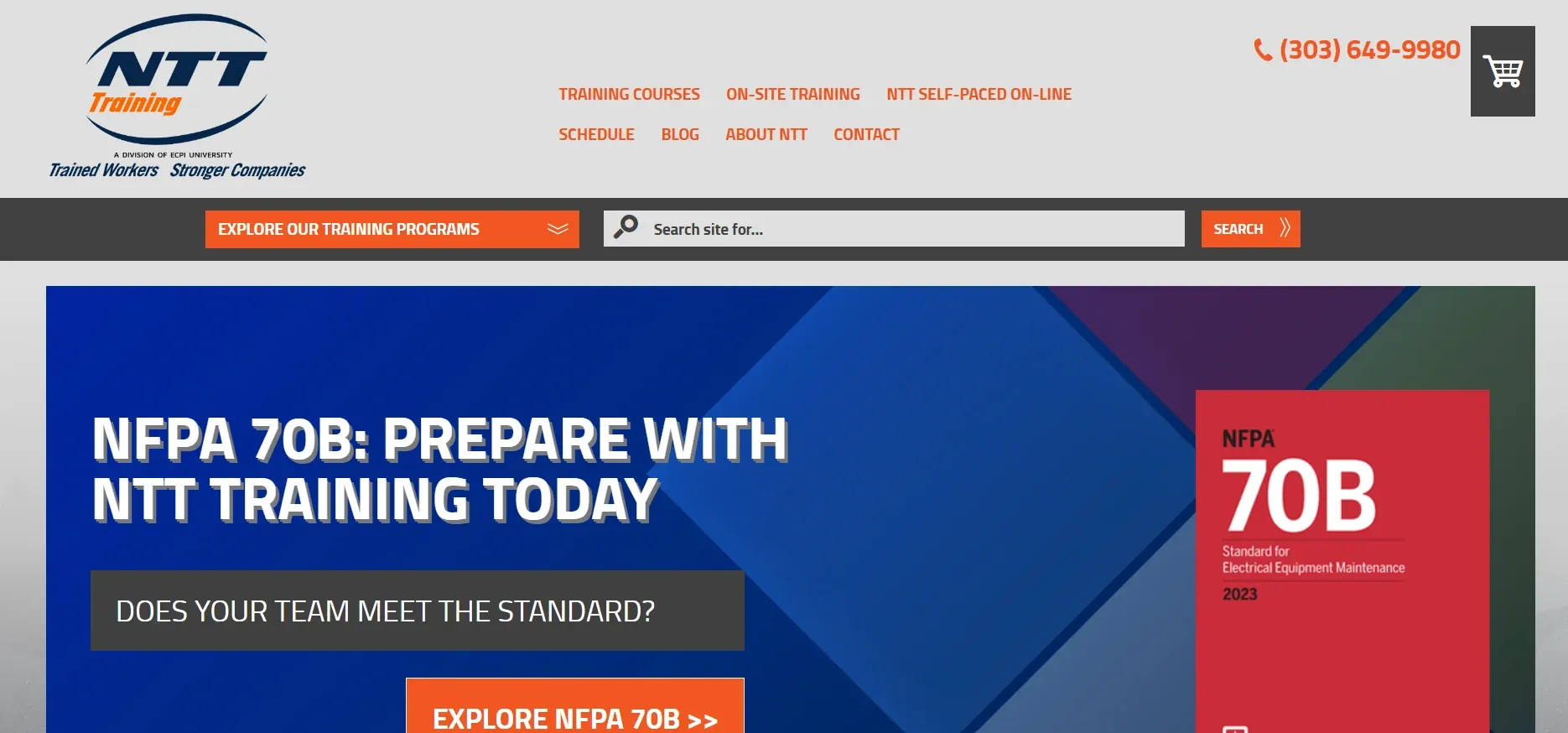
NTT Training delivers hands-on, practical industrial training. Known for real-world equipment workshops and blended learning, NTT equips electrical technicians with skills they can apply on site immediately.

Key Features

  • Hands-on workshops: Utilizes full-scale industrial equipment for realistic troubleshooting training.

  • Customized curriculum: Tailored to meet your company’s specific equipment and operational needs.

  • Blended learning: Blends classroom/virtual instruction with physical lab practice.

Pros

  • Practical experience: Techs train on real industrial hardware before touching client systems.

  • Flexible delivery: On-site training brought directly to your location, plus 100+ training centers nationwide.

  • Tailored scope: Courses can be built directly around your shop's safety and operational protocols.

Cons

  • Higher cost: Custom training and lab setups require a higher financial investment.

  • Limited fully-remote options: Hands-on focus makes it less suited for entirely remote teams without lab access.

  • Strict scheduling: Popular hands-on workshops book out far in advance.

Pricing

Custom quotes are calculated per course or workshop based on team size, location, and equipment requirements.

Best For

Mid-size to enterprise industrial electrical contractors requiring hands-on lab training and custom compliance programs.

7. Hard Hat Training

hardhat training.png

Hard Hat Training delivers clear, straightforward compliance training. Designed to get field crews trained and certified with minimal administrative fuss, their courses cover essential electrical safety and OSHA standards.

Key Features

  • OSHA-aligned safety courses: Straightforward content structure focusing directly on core regulations.

  • Bilingual learning: Courses offered in English and Spanish for U.S. and Canadian workforces.

  • Train-the-Trainer options: DIY kits allowing internal supervisors to lead certified training sessions.

Pros

  • Simple navigation: Intuitive layout requires no technical background to use.

  • Low tech overhead: Works smoothly on low-bandwidth connections and older devices.

  • Standardized format: Consistent course layouts make taking multiple units predictable and fast.

Cons

  • No course previews: Limited access to sample content prior to purchasing.

  • Older visual assets: Graphics and videos can feel dated compared to 3D simulators.

  • Limited instructor feedback: Fully automated testing leaves little room for direct instructor Q&A.

Pricing

Individual courses range from $39 (basic safety) to $79 (advanced technical modules). Bulk purchasing discounts are available.

Best For

Shops seeking simple, budget-friendly compliance training without complex tech setups or unnecessary features.

Why Your Electrician Business Needs Training Software

Proper training bridges the gap between field safety, upskilling, and business profitability:

  1. Safety & Compliance: Keeping team members trained on updated codes reduces site accidents and expensive liabilities. Learning modern tools from hands-on meters to cutting-edge electrician AI tools keeps your crew sharp.

  2. Accelerated Onboarding: Structured learning paths get new hires billable faster while keeping experienced journeymen updated on modern code shifts.

  3. Quality & Standardization: When every technician follows identical procedures, callback rates drop and customer satisfaction rises.

  4. Retention: Investing in career growth builds loyalty, reducing expensive turnover in a competitive labor market.

Key Features to Look For in Training Platforms

  • User-Friendly Dashboard: Simple navigation ensures technicians spend time learning rather than struggling with software.

  • Mobile Accessibility: Field access lets crews pull up wiring diagrams and review safety checklists directly from their mobile devices.

  • Interactive Modules: 3D simulations, video walkthroughs, and quizzes improve knowledge retention compared to static slide decks.

  • Progress Tracking: Clear reporting lets management spot skill gaps early and verify compliance before audits.

  • Automated Renewal Alerts: Automated reminders take the stress out of managing state license expirations and safety certifications.

How AI & Modern Operations Elevate Electrician Businesses

Investing in training software builds a safer, more skilled crew. But pairing field expertise with intelligent front-office automation ensures those skills translate into business growth.

While your technicians are upskilling or tackling complex job-site challenges, tools like CloseCrew ensure your office runs smoothly:

  • Accurate Pricing: Give your team tools to estimate accurately using an electrical estimating app while Larry handles inbound call qualification.

  • Reputation Management: Drive customer trust by learning how to properly respond to negative reviews and using CloseCrew's automated review collection.

  • 24/7 Service Availability: Let Larry answer late-night emergency calls, qualify job details, and dispatch techs automatically.

Related tools

Run the numbers before you update your price book or field software.

Contractor Blog

Cross-trade guides on hiring, marketing, and operations for every home services business.

View all guides

Electrical Licensing

State licensing requirements, exams, and renewal rules for electrical contractors.

View states

Meet Larry

AI receptionist built for Electrical — answers calls, books jobs, and follows up on leads 24/7.

See Larry for Electrical

Related articles

Never miss a Electrical service call again. Let Larry, your AI receptionist, book jobs while your crew is in the field.

We will run your numbers on the call and tell you if the maths does not work for a shop your size. That happens, and it is a cheaper conversation than finding out three months in.

Get a demo