Business Tips

10 Tips to Improve Customer Service for Plumbing Businesses in 2026

Learn practical plumber safety tips to protect your team, customers, and business from common workplace hazards. Learn how proper training, PPE, and safer work practices reduce injuries and improve job site safety.

12 min readPublished July 16, 2026

Plumbing is one of the most physically demanding trades. Your team works in tight crawl spaces and flooded basements. They handle sewage, chemicals, and torch work daily. They lift heavy pipe, work in extreme temperatures, and deal with pressurized systems. One wrong move creates a burn, a back injury, or a chemical exposure.

The Bureau of Labor Statistics reports over 12,000 nonfatal plumbing injuries per year. The most common causes are overexertion, contact with objects, slips, trips, and falls. Most of these are preventable with the right procedures and equipment.

For plumbing business owners, safety isn't just about your team. It's about your customers too. Your technicians enter homes and businesses every day. They work around families, pets, and personal property. An accident on the job can injure a homeowner. It can also trigger lawsuits that threaten your entire business.

This guide covers 10 plumber safety tips that protect your team and your customers. The first six cover field safety fundamentals. The last four show how CloseCrew helps your plumbers follow safety procedures consistently and work more efficiently.

Part of the Business Tips section in the Plumbing Business Blog.
1. Wear the right protective equipment on every job

PPE is the first line of defense against plumbing hazards. Every tech should have the right gear before starting any task. No shortcuts. No "I'll be fine without it" on quick jobs.

Essential plumbing PPE includes:

  • Safety glasses or goggles for eye protection from debris and chemicals

  • Heavy-duty gloves rated for the specific task (chemical-resistant, heat-resistant, or cut-resistant)

  • Steel-toe boots with slip-resistant soles

  • Hard hats in commercial and new construction settings

  • Knee pads for crawl space and under-fixture work

  • Hearing protection when using power tools

  • Respirators when working in confined spaces or around sewer gas

Different jobs need different gear. A drain cleaning job requires chemical-resistant gloves. A soldering job requires heat-resistant gloves and safety glasses. A sewer line job requires a respirator. Techs should check their PPE before every call. Replace worn or damaged equipment immediately. Document replacements for compliance records.

The cost of PPE is trivial compared to the cost of an injury. A pair of chemical-resistant gloves costs $15. A chemical burn to the hand costs thousands in medical bills and lost work days.

2. Handle hazardous materials safely

Plumbers work with chemicals that can burn, poison, or irritate. Drain cleaners contain sulfuric acid or sodium hydroxide. Soldering requires flux and lead-free solder at high temperatures. PVC cement and primer release fumes that irritate lungs.

Every chemical your team uses should have a Safety Data Sheet (SDS) on file. Keep copies in the office, in every van, and digitally accessible on mobile devices. OSHA requires employers to maintain SDS for every hazardous substance employees handle.

Safe handling practices include:

  • Read the SDS before using any unfamiliar product

  • Wear the PPE specified on the label

  • Never mix chemicals unless instructed to do so

  • Store chemicals in original labeled containers

  • Use chemicals only in ventilated areas

  • Wash hands and exposed skin immediately after contact

  • Know the location of eyewash stations on commercial jobs

Train your team on chemical handling during onboarding. Refresh the training annually. Provide hands-on practice with PPE specific to each chemical type.

3. Practice safe lifting and ergonomic techniques

Back injuries are the number one cause of missed work in plumbing. Technicians lift water heaters, cast iron pipe, and heavy fixtures daily. They work in awkward positions under sinks and in crawl spaces. These postures strain muscles and joints over time.

OSHA recommends these safe lifting practices:

  • Plan the lift before starting. Know the weight. Get help if needed.

  • Bend at the knees, not the waist. Keep your back straight.

  • Hold the load close to your body. Don't reach or twist while lifting.

  • Use mechanical aids whenever possible. Dollies, pipe carts, and straps reduce strain.

  • Take breaks during extended physical work. Fatigue increases injury risk.

For tasks requiring sustained awkward positions, rotate techs between physical and lighter jobs. A full day in a crawl space strains even young backs. Variety prevents cumulative injury.

Encourage your team to report soreness early. A minor strain treated with rest heals in days. The same strain ignored for weeks becomes chronic. Chronic back problems end plumbing careers.

4. Manage confined spaces and trenching hazards

Confined spaces kill plumbers. Sewer manholes, underground vaults, and deep trenches trap toxic gases. Hydrogen sulfide from sewage is heavier than air. It settles in low spots. It's lethal at high concentrations.

Before entering any confined space:

  • Test the atmosphere with a multi-gas detector. Check for oxygen levels, hydrogen sulfide, and combustible gases.

  • Ventilate the space with a blower before entry.

  • Station a trained attendant outside the entry point. This person monitors the entrant and calls for rescue if needed.

  • Use a retrieval system (harness and lifeline) for vertical entries.

  • Follow your company's written confined space entry procedure.

  • Never enter a space to rescue someone without proper equipment. Rescue attempts cause additional fatalities every year.

Trenching is equally dangerous. Trench collapses are one of the deadliest construction hazards. One cubic yard of soil weighs roughly 3,000 pounds. A plumber buried in a trench collapse cannot breathe.

OSHA requires trench protection for excavations over 5 feet deep. Options include sloping, shoring, shielding, or benching. Never enter an unprotected trench. Inspect trenches daily and after any rain event. Rain weakens trench walls significantly. A trench that was safe yesterday may collapse today.

Document every confined space entry. Log the gas readings, the entrant, the attendant, and the time. This documentation protects you during OSHA inspections. It also proves due diligence if an incident occurs.

5. Follow hot work and soldering safety

Soldering copper pipe requires an open flame. This creates fire hazard, burn risk, and fume exposure. Many plumbing fires start from torch work near combustible materials.

Safe hot work practices:

  • Remove all flammable materials from the work area

  • Keep a fire extinguisher within arm's reach

  • Use a flame-resistant heat shield behind the joint

  • Never leave a lit torch unattended. Not even for 30 seconds.

  • Allow joints to cool completely before touching

  • Ventilate the area to prevent fume buildup

  • Inspect the work area 30 minutes after completing torch work

Consider alternatives to torch soldering where possible. Press-fit fittings eliminate fire risk entirely. ProPress and similar systems join copper without heat. They cost more per fitting but eliminate fire hazard. Many insurance companies offer discounts for shops that use press-fit systems.

Extreme conditions create additional risks beyond the job itself. For seasonal hazards your team faces year-round, see our extreme weather safety guide.

6. Avoid slips, trips, and falls

Slips and falls are the second most common plumbing injury. Wet floors, cluttered work areas, and unstable ladders cause most incidents. These injuries seem minor until they result in broken bones or head injuries.

Prevention is simple but requires discipline:

  • Clean up water and debris as you work. Don't leave puddles for later.

  • Use wet floor signs when working in customer homes and businesses.

  • Set up ladders on stable, level ground. Follow the 4-to-1 rule for extension ladders.

  • Wear slip-resistant boots on every job. Not just outdoor jobs.

  • Keep walkways and work areas clear of tools and materials.

  • Use proper lighting in basements and crawl spaces. You can't avoid hazards you can't see.

Customer safety matters here too. Your techs work in someone's home. A puddle left on a customer's floor is a slip hazard. It's also a lawsuit waiting to happen. Clean up completely before leaving every job.

Walk the work area with the homeowner before you go. Point out anything they should be aware of. This builds trust and prevents claims. It also improves your customer service reputation and generates positive reviews. Positive reviews feed your marketing and generate more leads.

How CloseCrew helps your plumbers work safely and efficiently

The six tips above cover field safety fundamentals. But procedures only work when people follow them consistently. The next four tips show how the right tools make safety automatic.

7. Prepare techs with full job details before they arrive

An informed plumber is a safe plumber. When techs know what to expect, they bring the right tools. They wear the right PPE. They anticipate hazards before walking through the door.

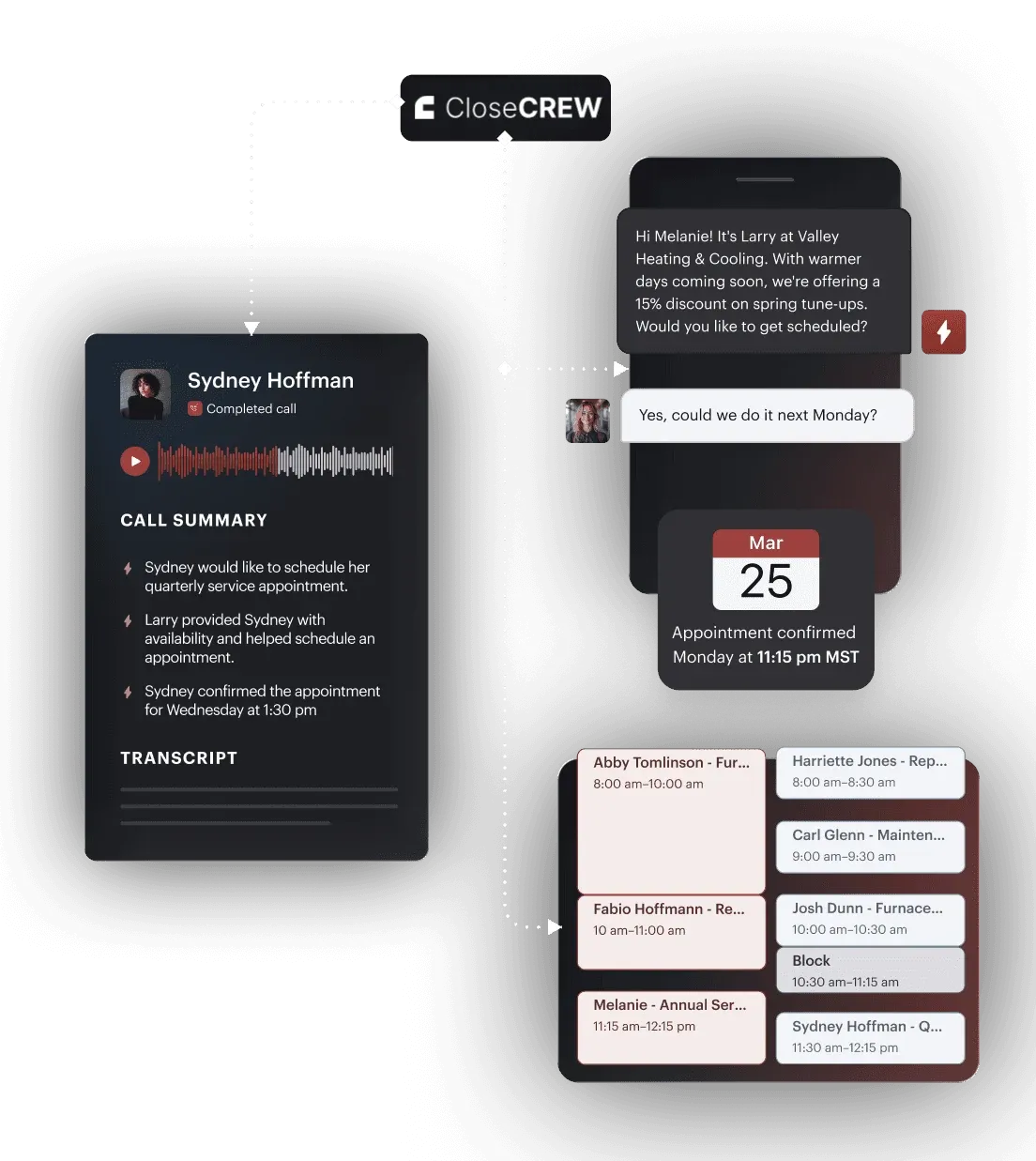
When a customer calls, Larry, CloseCrew's AI Employee, captures every detail. The problem description. The equipment involved. Access instructions. Special considerations like pets or gate codes.

All of this goes into the customer profile automatically. The tech opens the app and sees full context before leaving the truck. No more walking into a basement blind. No more forgetting the chemical-resistant gloves because nobody mentioned drain cleaning.

re-engagement.webp

Larry does this 24/7. A customer calls at 10 PM about a sewage backup. Larry captures the details. He notes that the job involves confined space work. He flags the need for specialized PPE. The tech sees all of this when they check the morning schedule.

This preparation prevents the rushing that causes accidents. A tech who knows what they're walking into moves methodically. A tech surprised by unexpected hazards makes reactive decisions. Reactive decisions cause injuries.

Good preparation also improves customer interactions. See our customer service guide for more on that connection.

8. Use digital checklists to enforce safety procedures

Written procedures don't help if techs skip them. Digital checklists built into the job workflow make skipping impossible.

CloseCrew's forms feature lets you create custom safety checklists for every job type. Drain cleaning gets one checklist. Water heater installation gets another. Sewer line work gets a confined space entry checklist. Techs complete the checklist on their mobile device before closing the job.

This does three things for safety:

Prevents missed steps. A tech installing a water heater can't close the job without confirming gas connections, T&P valve installation, and seismic strapping. The checklist won't let them skip it.

Creates documentation. If a customer claims your work caused damage, the completed checklist proves your team followed proper procedures. This is critical for liability protection.

Identifies training gaps. When the same checklist item gets flagged repeatedly, it signals a training need. Catch the pattern before it becomes an incident.

One contractor saw callbacks drop 50% after requiring digital checklists. Revenue increased 20% that same year. Checklists didn't slow techs down. They prevented the rework that was costing far more.

When your techs build estimates in the field, those estimates should reference the same checklist items. Consistency between safety procedures and estimating builds customer trust.

9. Dispatch the right plumber to the right job

Not every plumber can handle every job safely. An apprentice shouldn't run a gas line solo. A service plumber shouldn't bid a commercial buildout alone. Matching skill level to job complexity prevents dangerous mismatches.

CloseCrew's dispatch tools show each tech's skills and certifications. Dispatchers assign jobs based on capability. Experienced techs get complex or high-risk work. Apprentices get supervised tasks matching their training.

GPS tracking shows every van's location in real time. Dispatchers route techs efficiently. Efficient routes mean less windshield time. Less windshield time means less road accident exposure. It also means less fatigue at the end of the day.

When a tech gets dispatched to a job, they receive the full customer profile. Job history. Equipment records. Previous photos and notes. Past estimates. This context helps them prepare properly and work safely.

CloseCrew can also text customers the tech's photo and ETA. Knowing who is coming reduces anxiety for homeowners. It builds the trust that leads to positive reviews. Those reviews feed your marketing efforts and generate more calls.

10. Track performance to catch safety problems early

Safety issues hide in data. A tech with rising callback rates may be rushing through jobs. A tech with increasing drive times may be fatigued. A tech who consistently skips checklist items needs retraining.

CloseCrew's reporting tools track these metrics per technician. Jobs completed. Revenue generated. Average time per job. Callbacks per month. Checklist completion rates. Response times.

Review this data weekly. Don't wait for a quarterly review. Safety problems compound fast. A small pattern in week one becomes an incident by week four.

Overworked plumbers make mistakes. Monitor workloads actively. If your team is maxed out, it's time to hire. Adding one tech is cheaper than one workers' comp claim. It's cheaper than one lawsuit. It's cheaper than losing your best plumber to burnout.

Your plumbing website generates the leads that fill your schedule. Make sure that schedule is sustainable for your team.

Safety protects your team and your business

Every tip in this guide serves two goals. Keep your plumbers safe. Keep your business protected.

Techs who follow proper procedures complete jobs right the first time. Fewer callbacks mean more hours for revenue. Fewer injuries mean lower insurance costs. Better documentation protects you from liability claims.

CloseCrew connects these dots in one system. Larry answers calls so techs focus on the job. Digital checklists enforce every safety step. Customer profiles give techs full context before arrival. Performance tracking catches problems before incidents happen.

Real contractors. Real results:

  • Arctic Air: 30% more revenue in one year. Added a truck.

  • Air Texas: $20,000 job booked after hours by Larry.

  • Premier Heating: Response time under 1 minute. 3x more leads.

  • Air Design: 13 extra appointments in 30 days. Conversions near 100%.

Ready to run your plumbing business more safely and efficiently?

Frequently asked questions

What is the most common plumbing injury?

Back injuries from lifting and awkward positions. Overexertion accounts for the largest share of nonfatal plumbing injuries. Safe lifting practices and mechanical aids prevent most of these incidents.

Yes. OSHA regulations apply to all employers. Business size doesn't exempt you from safety requirements. Even a two-person shop must maintain SDS records and provide appropriate PPE.

Hold formal training at minimum quarterly. Monthly safety meetings keep standards fresh. Update training whenever new equipment, chemicals, or procedures are introduced. The investment in training prevents far costlier incidents.

Not for typical under-sink or fixture work. Some crawl spaces and septic tanks qualify as confined spaces. Look for limited entry points and possible atmospheric hazards. If both exist, your team needs confined space training.

At minimum, carry general liability and workers' compensation. Commercial vehicle insurance covers road accidents and van theft. Professional liability covers errors in your work. Review coverage annually as your team and services grow.

They prevent skipped steps. They create documentation for liability protection. They reveal training gaps through completion data. One contractor saw callbacks drop 50% after adding checklists. Revenue went up 20% the same year.

Related tools

Run the numbers before you update your price book or field software.

Contractor Blog

Cross-trade guides on hiring, marketing, and operations for every home services business.

View all guides

Plumbing Licensing

State licensing requirements, exams, and renewal rules for plumbing contractors.

View states

Meet Larry

AI receptionist built for Plumbing — answers calls, books jobs, and follows up on leads 24/7.

See Larry for Plumbing

Related articles

business-tips

10 Winter Plumbing Tips Every Plumber Needs for 2026

Excerpt: Winter is your busiest and most profitable season. Frozen pipes. Burst lines. Water heater failures. But it's also the riskiest. This guide covers 10 winter tips that help plumbing businesses work safer, faster, and more profitably when temperatures drop.

Read guide
business-tips

Plumbing Van Setup and Organization: The Complete Guide (2026)

Your efficiency disappears the moment you dig through a cluttered van for a missing wrench. This guide covers how professional plumbers organize their vans to save time, cut costs, and complete more jobs per day. Storage systems, tool lists, vehicle recommendations, and the habits that keep everything in order.

Read guide

Never miss a Plumbing service call again. Let Larry, your AI receptionist, book jobs while your crew is in the field.