Customer service

Maximizing Customer Service for Plumbers: How to Win Trust on Every Call

This guide explains how to handle customer interactions more effectively, train your team, improve call handling, and create a consistent experience that turns first-time customers into loyal advocates for your business.

11 min readPublished June 11, 2026Updated July 14, 2026

A burst pipe at 9 p.m. or an overflowing toilet on a holiday weekend is not just a plumbing problem. For the homeowner on the other end of the line, it is a stressful, often expensive emergency. When that call comes in, the customer is not only judging whether you can fix the leak. They are judging how you make them feel while you do it.

For a residential plumbing company, customer service is the product. The repair is what you sell, but the experience is what gets remembered, reviewed, and recommended. The numbers back this up. Industry research on home services shows that 97% of homeowners say response speed influences who they hire and that 78% of customers end up hiring the company that responds first. Get the experience right, and you earn repeat business, five-star reviews, and referrals that cost you almost nothing. Get it wrong, and that same customer calls the next plumber on the list, then tells their neighbors why.

This guide walks through how to deliver service that keeps your name at the top of that list, from the first ring to the follow-up after the job is done.

Part of the Customer service section in the Plumbing Business Blog.
Why Customer Service Is Your Biggest Growth Lever

Plumbing is a competitive business; it’s local, and the way customers find you and choose you has changed. Most people nowadays go online and choose based on reviews and how quickly you respond, well before they meet your technician.

Consider what the data shows:

  • Reviews decide the click. A 2025 review survey reported by Pipeline On found that 91% of consumers read local reviews, and most will not even consider a business rated under four stars. Businesses with a four-star rating or higher also pull in roughly 32% more revenue than lower-rated competitors.

  • Calls decide the booking. Plumbing is one of the service categories where customers are most likely to call after searching, and about 40% of home services consumers who call from a search go on to make a purchase, according to Google data.

  • Paid leads keep getting more expensive. LocaliQ benchmark data puts the average cost per lead for plumbing search ads around $52, and costs rose year over year for most advertisers.

Put those together, and the lesson is simple. Every call you handle well turns into a review, a referral, and repeat work, which lowers how much you have to spend on buying new leads. Customer service is not a soft skill. It is one of the cheapest growth strategies you have.

Start Every Call by Understanding the Real Problem

Not all calls are created equal, and the fastest way to lose a customer is to treat them as though they are. A slow leak in the kitchen sink and a water main break in a finished basement require very different responses and very different urgency.

The first person who answers the phone must assess how serious the situation is and how much it is costing the customer right now in damage, money, and stress. A few quick questions usually tell you what you need to know:

  • What exactly is happening, and where in the home?

  • Is water actively leaking or flooding at this moment?

  • Have they shut off the fixture supply or the main water valve?

  • How long has the problem been going on?

That last point is more important than people realize. Most homeowners don’t realize how quickly a plumbing problem can ruin a floor, wall, or ceiling until it’s too late. They can save thousands of dollars and immediately reduce their panic by doing something as simple as turning off the main valve.

This is also where you set the tone for the entire job. A 2025 survey of more than 1,000 U.S. homeowners found the top frustrations during service visits were late arrivals, unprofessional technicians, unclear pricing, and a lack of updates. Notice that two of the four are about communication, not the work itself.

Respond Fast, and Let Them Know Help Is Close

Once you understand the issue, the customer's next question is always the same: how soon can someone get here?

This is where most companies win or lose the job. The faster you confirm that a qualified plumber is on the way, the more at ease the customer feels. The data is blunt about why this matters so much. As noted above, 78% of customers hire whoever responds first, and around 40% of jobs booked online come in after hours, when a slow reply means the customer simply moves on to the next name.

Missed calls are a quiet killer here. Research summarized by Pipeline On reports a 14% missed-call rate across home services, and that most people will not answer a callback from an unknown number. So if you let a call go to voicemail, you often do not get a second chance. The fix is to answer live whenever possible and to respond to missed numbers within minutes, not hours.

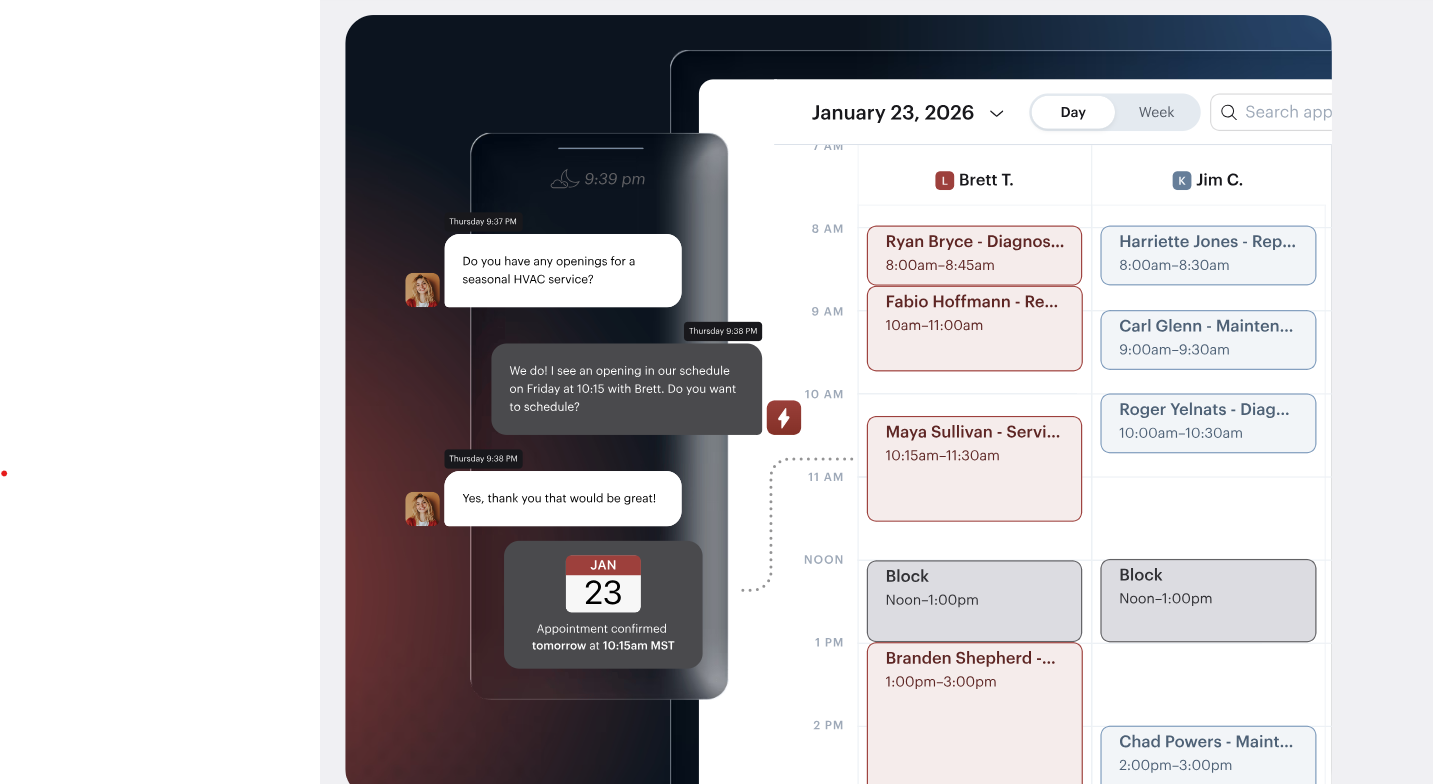
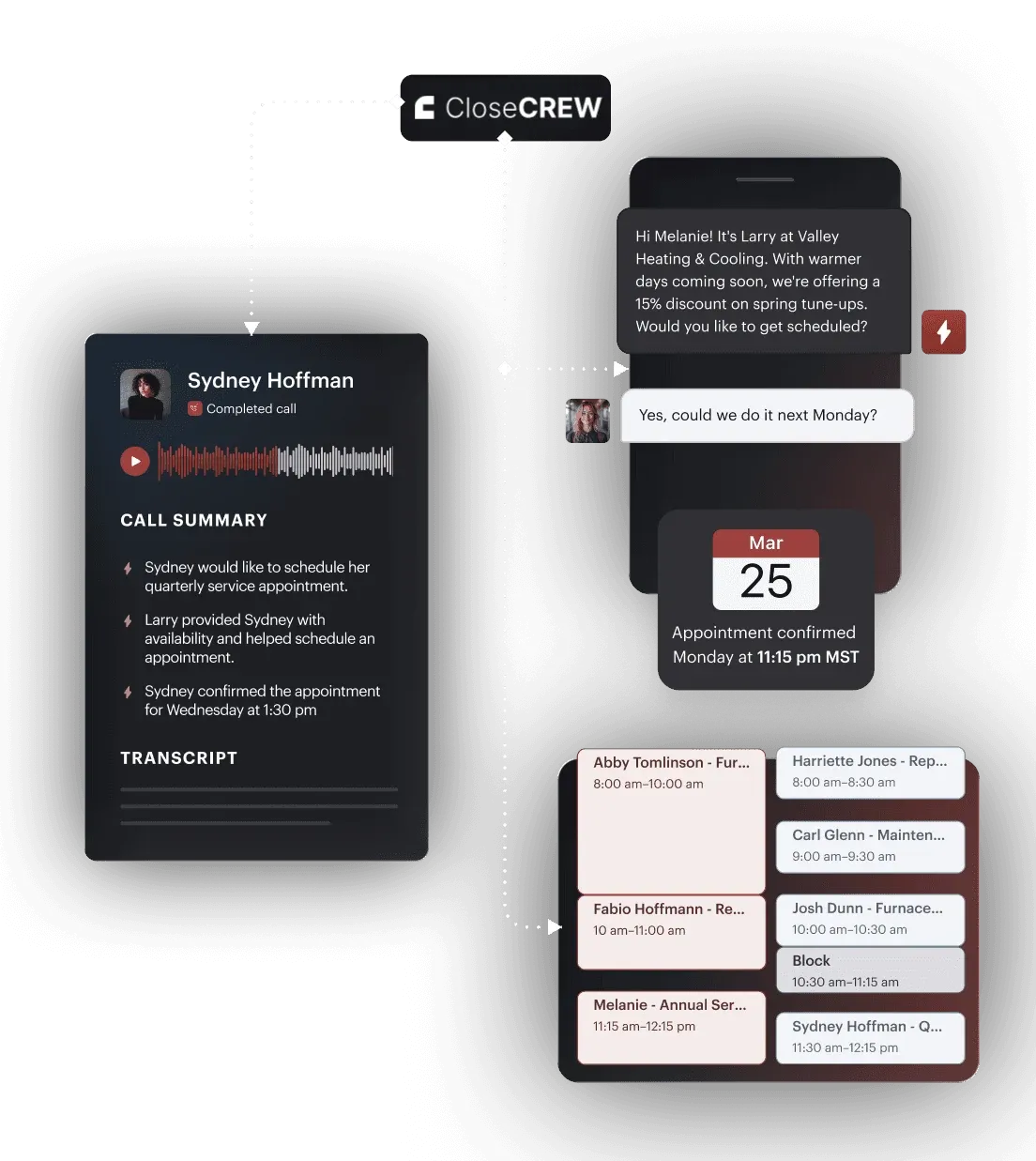
That is hard to do when your whole team is on the tools. You cannot answer the phone with your hands inside a wall, and hiring a full-time receptionist is not always realistic for a smaller shop. This is exactly the gap CloseCrew is built to close. Its AI agent, Larry, answers every inbound call as soon as it comes in, day or night, in English or Spanish. He qualifies the caller, books the job straight into your calendar, and follows up automatically. Contractors using it report converting up to three times more leads and capturing after-hours jobs worth thousands that would otherwise have gone to voicemail.

Be Clear About Pricing Before the Work Starts

Unclear pricing was one of the biggest homeowner frustrations in that same survey, and it is one of the easiest to fix. Customers in an emergency are already anxious about cost. Surprises on the invoice turn a decent job into a bad review.

A few practices remove that anxiety:

  • Give an honest estimate or price range up front, before the work begins.

  • Explain what the price covers and what could change it, such as parts or access issues.

  • Get approval on any added work before doing it, never after.

  • Put the agreed numbers in writing so there is no confusion later.

Transparent, upfront pricing does more than prevent complaints. It signals professionalism and builds the trust that earns the next call. A flat-rate pricing sheet helps every tech quote the same way, and CloseCrew offers free plumbing templates, including pricing sheets, estimates, and invoices, to keep it consistent.

Communicate at Every Step, Especially the Part Most Plumbers Skip

The job is not only about the fix. It is about the experience around it, and communication is the piece that is most often overlooked. Since a lack of updates ranks among the top customer frustrations, simply keeping people informed puts you ahead of much of your competition.

A few habits make a real difference:

  • Stay patient and reassuring on the phone. A calm voice tells a panicked homeowner they are in good hands.

  • Set clear expectations. Give an honest arrival window and explain what happens next.

  • Send proactive updates. A quick heads-up if the tech is running late beats silence every time.

  • Recap the work afterward, and follow up to make sure everything is still working.

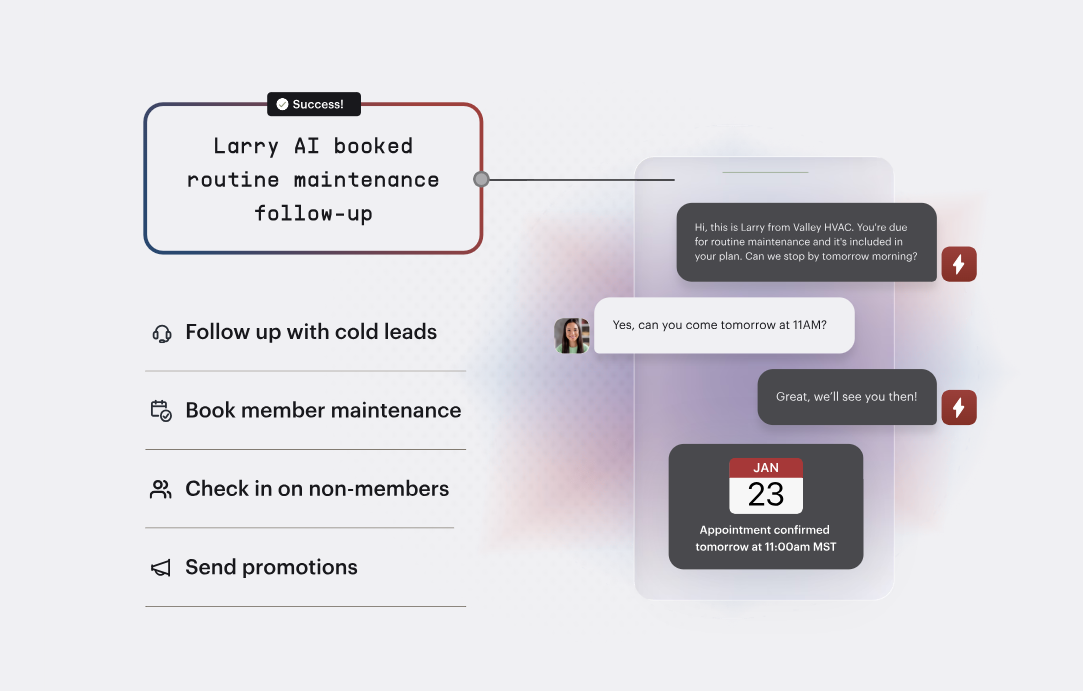
That last step, the follow-up, is where a lot of repeat business is won or lost, and it is usually the first thing to slip when the schedule gets busy. Automating it means it actually happens. CloseCrew's AI agent, Larry, handles booking, appointment confirmations, and follow-up across calls, texts, and webchat from a single inbox and even requests a review after the job, so nothing falls through the cracks after the truck leaves. 

all in one communiction.webp

Train Your Team and Review Your Calls

Great phone handling is a skill, and like any skill, it improves with coaching. The way one person answers the phone should match the way everyone else does, so every customer gets the same confident, helpful experience.

One of the best ways to improve is to listen back to real calls. You can get a sense of when call takers are rushing, skipping important questions, or sounding unsure about pricing, and coach them with specific examples. Also, recording and reviewing calls reveals a hidden marketing asset: the questions callers ask most often are precisely the topics you should answer on your website to improve your SEO and draw in more of the right customers.

Create a simple script or checklist for common scenarios, train new hires on it, and review it as you learn what works. A good company reputation is built on consistency, not on individual good calls.

CloseCrew helps you take this further by handling and optimizing your customer calls automatically through Larry, your AI employee. It answers calls 24/7, books jobs directly into your schedule, captures every lead without missed opportunities, and keeps your team aligned with full customer context in one place. It also records and structures conversations so you can review patterns, improve scripts, and ensure every call follows your best-performing approach, without manually managing every detail.

01-closecrew-growth-results.png

Turn One Good Job Into Repeat Business and Referrals

Great service pays you back long after the truck leaves. A homeowner who felt cared for during a stressful moment becomes the person who calls you first next time and recommends you to friends and family. Given how expensive paid leads have become, this kind of organic growth is gold.

To turn a finished job into future work:

  • Follow up after the visit to confirm everything is still working. This small touch is rare, so it stands out.

  • Ask satisfied customers for a Google review while the experience is fresh. Reviews drive both your conversion rate and your local search ranking, since nearly half of all Google searches have local intent.

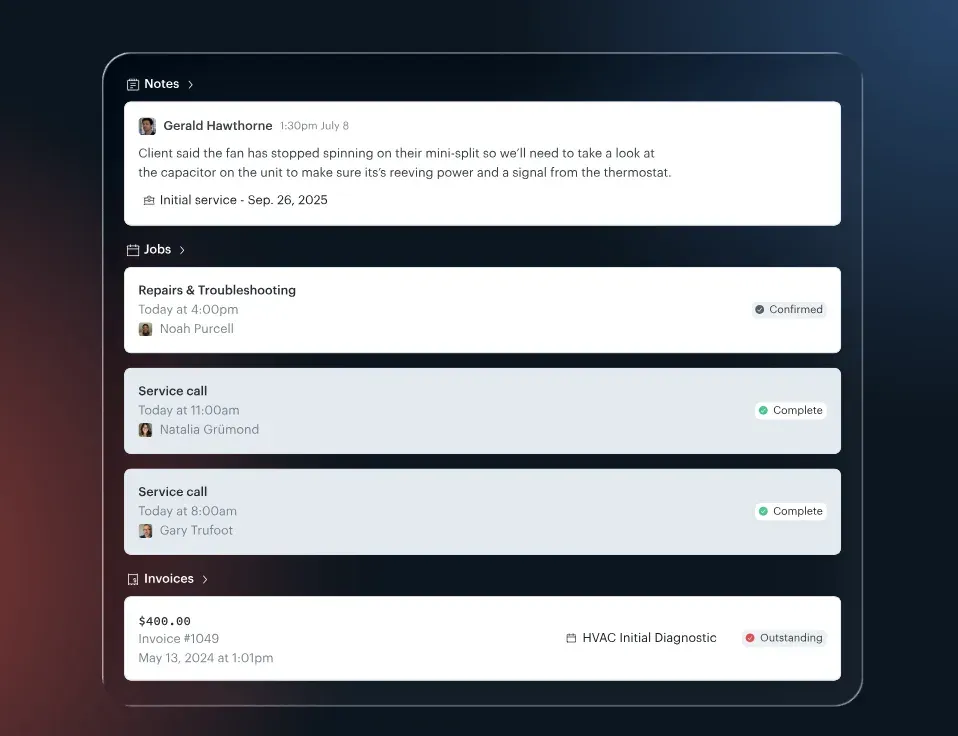
  • Keep their service history on file so the next call feels personal and informed.

  • Set up a simple referral incentive and remind happy customers that it exists.

  • Stay in touch by email. Home services email open rates are around 40-45%, well above the cross-industry average, so a seasonal maintenance reminder is an easy way to bring people back.

This is exactly where CloseCrew helps; it keeps every customer connected to your business through automated follow-ups, review requests, service history tracking, and maintenance reminders, so no job stops generating value after it’s done.

re-engagement.webp

For more on growing the business, see our guides on getting more plumbing leads and starting a plumbing business.

Measure What Actually Matters

You cannot improve what you do not track. A handful of simple metrics tells you whether your customer service is helping the business grow:

  • Average response time and missed-call rate.

  • Booking rate, or how many calls turn into scheduled jobs.

  • Review volume and average star rating.

  • Repeat customer rate.

  • Where your leads come from, so you know which efforts pay off.

Reviewing these monthly reports keeps customer service from being a vague goal and makes it a measurable part of running the company.

If you are weighing how an AI answering and booking setup would actually fit your shop, the CloseCrew team can talk through the details with you.

Never Miss the Call That Wins the Customer

23-flaring-tool.png

Fast response, clear pricing, and steady follow-up are what turn stressful emergency calls into loyal customers. The hard part is doing all of that while your team is busy in the field. CloseCrew's AI agent, Larry, answers your inbound calls, books the job, and follows up automatically, so every caller gets a fast, professional response and no lead slips away. Contractors on CloseCrew report converting more leads, saving hours of phone time each week, and never losing the call that wins the customer again.

Frequently asked questions

Why is customer service so important for a plumbing business?

Because customers choose plumbers based on trust and responsiveness, not just price. Most read reviews before calling and hire the company that responds first. Strong customer service generates the reviews, referrals, and repeat work that lower your cost to acquire new customers, making it one of the most profitable things a plumbing company can focus on.

For true emergencies like flooding or a burst pipe, aim to dispatch a technician the same day, ideally within a couple of hours. Even when you cannot be there instantly, answer the phone live, confirm a clear arrival window right away, and respond to missed numbers within minutes. Research shows most customers hire whoever responds first, so speed directly wins jobs.

Deliver a great experience, then make it easy to leave a review. Ask every satisfied customer at the end of the job while the experience is fresh; send a specific link to your Google Business Profile, and follow up with a friendly reminder. Good and bad reviews also help build trust with future customers who are reading them.

Listen first, be calm, and admit the situation is stressful. Provide an immediate step they can do, such as turning off the water, then an obvious next step, and an arrival window. People settle down quickly if they feel heard and know help is really coming.

Deliver a great experience, then make it easy to share. Ask for a review at the end of every job, follow up afterward, set up a simple referral reward, and stay in touch with past customers through email and seasonal reminders. Most referrals come from people who felt genuinely cared for and were gently prompted to spread the word.

Related tools

Run the numbers before you update your price book or field software.

Contractor Blog

Cross-trade guides on hiring, marketing, and operations for every home services business.

View all guides

Plumbing Licensing

State licensing requirements, exams, and renewal rules for plumbing contractors.

View states

Meet Larry

AI receptionist built for Plumbing — answers calls, books jobs, and follows up on leads 24/7.

See Larry for Plumbing

Related articles

operations-and-tech

8 Best Practices for Scaling a Multi-Branch Plumbing Business

In this plumbing business guide, we covered eight practical practices for scaling a multi-branch plumbing business, from knowing when to expand and standardizing pricing to managing branch performance, maintaining brand consistency, and building systems that grow with you.

Read guide
business-tips

Top 10 Plumbing Trade Shows and Conferences for 2026-2027

Trade shows give plumbing professionals the chance to see new products, network with peers, and earn continuing education. This guide covers 10 upcoming shows from late 2026 through early 2027 with verified dates, locations, and strategies for turning trade show connections into business growth.

Read guide

Never miss a Plumbing service call again. Let Larry, your AI receptionist, book jobs while your crew is in the field.

We will run your numbers on the call and tell you if the maths does not work for a shop your size. That happens, and it is a cheaper conversation than finding out three months in.

Get a demo