Business Tips

10 Extreme Weather Safety Tips for Plumbers

Extreme weather can quickly turn routine plumbing jobs into dangerous situations. These practical safety tips will help protect your technicians, reduce jobsite risks, and keep your business running safely year-round.

11 min readPublished July 15, 2026

Hazards exist everywhere, but especially in the plumbing business. Proper education and training can help keep your plumbers safe year-round.

Plumbing techs often find themselves in unsafe circumstances, from working in confined spaces near electricity and water to exposure to dangerous substances. Sweltering temperatures in summer and freezing temperatures during the winter months pose a whole different set of potential dangers.

According to the U.S. Bureau of Labor Statistics, plumbing and HVAC contractors in the private industry experienced one of the highest incident rates of on-the-job injuries in the specialty trade contractor category. Safety isn't optional, it's part of the job.

As a plumbing company, resolving customers' plumbing issues while keeping your employees and customers safe should be your top priority. Follow these 10 plumbing tips to keep your techs safe on the road and on the job.

Part of the Business Tips section in the Plumbing Business Blog.
1. Prepare for Extreme Weather

Practice cold-weather safety. Know extreme weather warning signs.

When the temperature drops, that's when customers are more likely to face frozen water lines and broken pipes, prompting them to call your plumbing company for emergency service.

While extreme cold weather contributes to plumbing problems, it also presents dangerous conditions for plumbers who must work in wet and unheated areas. Here are some weather-related tips to keep your technicians safe:

Winter weather safety tips:

  • Dress properly with insulated coats, hats, boots, gloves (and store dry backups in the truck).

  • Stay hydrated.

  • Know the signs of cold stress.

  • Take extra precautions to ensure ladders remain secure on wet or icy ground.

  • Perform winter plumbing van maintenance to minimize breakdowns.

  • Follow winter driving safety practices, especially on ice and in snow.

Summer weather safety tips:

  • Drink plenty of fluids to avoid dehydration.

  • Take appropriate breaks to prevent heat stroke.

  • Monitor interior truck temperatures.

  • Dress for the heat, but still wear protective equipment.

2. Plan in Advance

Possess the proper tools and skills. Communicate complete job information.

Approach each job proactively, so techs adequately prepare for plumbing repairs. Techs should possess the right tools, knowledge, and skills for the job to ensure safety and efficient customer service.

The more your office knows before a tech ever pulls into the driveway, the safer and smoother the job goes. A detailed intake call, one that captures the actual problem, the urgency, and any relevant history, gives the tech a real head start instead of walking in blind. That kind of upfront information is also why a lot of companies use the best field management systems to keep job notes, photos, and history in one place the whole team can see.

Preparing as much as possible beforehand, including understanding local building codes, licensing, and other local regulations, helps plumbers complete a job safely and more efficiently.

3. Stock the Right Tools

Organize tools and equipment. Maintain orderly vehicles.

A tech needs the best plumbing tools for the job and a clean, well-organized van to perform efficient work.

Holding technicians accountable for stocking and organizing tools, and for maintaining their vehicles, pays off. Companies that grade techs on everything from a fully stocked first-aid kit down to the van's tire treads tend to see fewer surprises in the field.

A well-stocked van enables a tech to safely tackle the plumbing job with the right tool. It also eliminates the wasted time and fuel, and the added risk of an accident, that comes with driving back to the shop. A solid van setup is worth revisiting every season, since the tools a plumber needs in July aren't always the ones they need in January.

Some companies award points to techs for clean and well-stocked trucks, which the techs can exchange for rewards of their choice. Others offer bonus compensation for the cleanest vehicle or most improved work van.

4. Wear Proper PPE

Protect from environmental hazards. Practice sanitary procedures.

Plumber safety begins with proper safety gear. The right clothing, eyewear, ear plugs, respirators, boots, hats, work gloves, and other equipment ensures safety on the jobsite.

Among other health hazards, professional plumbers can encounter:

  • Mold from leaking water supplies.

  • Dust from cutting water pipes.

  • Asbestos in old materials.

  • Burns from soldering or hot water heaters.

  • Toxic drain-cleaning chemicals used by homeowners attempting to clear a clog.

  • Bacteria and viruses from raw sewage due to defective sump pumps or food debris buildup inside garbage disposals.

These are the same kinds of on-the-job risks covered in this rundown of HVAC and trade safety hazards, and the precautions overlap more than most techs expect. Experts recommend following sanitary practices, such as washing hands often and avoiding touching your eyes. Employees who wash their own work uniforms should wash them separately from other household laundry.

5. Prepare for Health Concerns

Set and follow company guidelines. Keep customers informed.

When plumbers enter homes, they touch sink faucets, toilets, and other items throughout the house. Health and safety standards matter just as much for customers as they do for the crew.

Confirm with the customer and the technician about any possible exposure before a job, and take proper precautions if needed. PPE such as face masks, gloves, and shoe covers can help protect both techs and customers.

Some companies devote an entire page of their website to explaining their sanitizing practices, so customers know exactly what to expect before and after a job: tools and equipment cleaned, vehicles wiped down, and techs equipped with hand sanitizer, gloves, and shoe covers. Others build portable hand-washing stations for techs to use on-site. Following company procedures and taking additional precautions keep everyone protected.

6. Implement Safety Precautions

Avoid occupational injuries. Use proper equipment.

Besides watching out for environmental hazards, plumbers should practice key safety procedures while working.

Plumbers often climb ladders and scaffolding, use loud equipment, move repetitively, and work in crawl spaces, attics, or cabinets under the kitchen sink while completing plumbing projects.

To avoid ergonomic injuries, take breaks from awkward positions and practice safe lifting techniques. The Occupational Safety and Health Administration recommends rotating tasks and taking a quick break every 30 minutes.

Other safety precautions include keeping tools in working order, using power tools with GFCI protection to avoid electrical shock, and using air monitors in oxygen-deficient areas.

Wearing ear plugs or ear muffs helps dampen loud noises and prevents occupational hearing loss, one of the most common work-related illnesses in the trades. Plumbing apps with built-in calculations also help techs quickly figure out safe answers to urgent problems on the job, such as determining water pressure or calculating flow rate when replacing a frozen pipe that burst.

7. Dispatch the Right Tech

Match tech skills to jobs. Increase efficiency with the right systems.

Getting the right plumber to the right job isn't just about speed, it's about safety. A dispatcher who can immediately see the skills a job requires can match an experienced tech to a higher-risk repair instead of sending whoever's closest.

That's easier when the intake process already did some of the work. An AI receptionist that qualifies each call before it ever reaches dispatch, capturing the issue, the urgency, and any hazards mentioned by the customer, gives your team the context to send someone who's actually equipped to handle it. This is one of the reasons scheduling apps built for the trades have become standard: matching skills to jobs based on real information, not guesswork, cuts down on both wasted trips and avoidable safety risks.

Detailed scheduling oversight also enables dispatchers to efficiently assign qualified techs to jobs based on location, minimizing unnecessary drive time on hazardous roads. This may be a good time to remind customers about winter plumbing tips, such as removing garden hoses and covering spigots and outdoor faucets, and using pipe insulation to protect exposed pipes near exterior walls from cold air.

8. Drive with Care

Optimize plumber scheduling. Communicate arrival times.

Plumbers can possess the best tools and rigorously follow every safety protocol, but it won't make much difference if they never arrive at the job safely.

Daily driving becomes a mundane reality for virtually all plumbing technicians. But driving with care doesn't just reflect well on your company, it saves lives on the road.

To stay safe on the road:

  • Optimize scheduling, so techs don't rush from one job to the next.

  • Avoid weather-related road closures, traffic delays, and other last-minute hiccups with real-time scheduling tools.

  • Send automatic arrival-window updates, so customers know exactly when techs will show up and techs aren't tempted to speed to make up time.

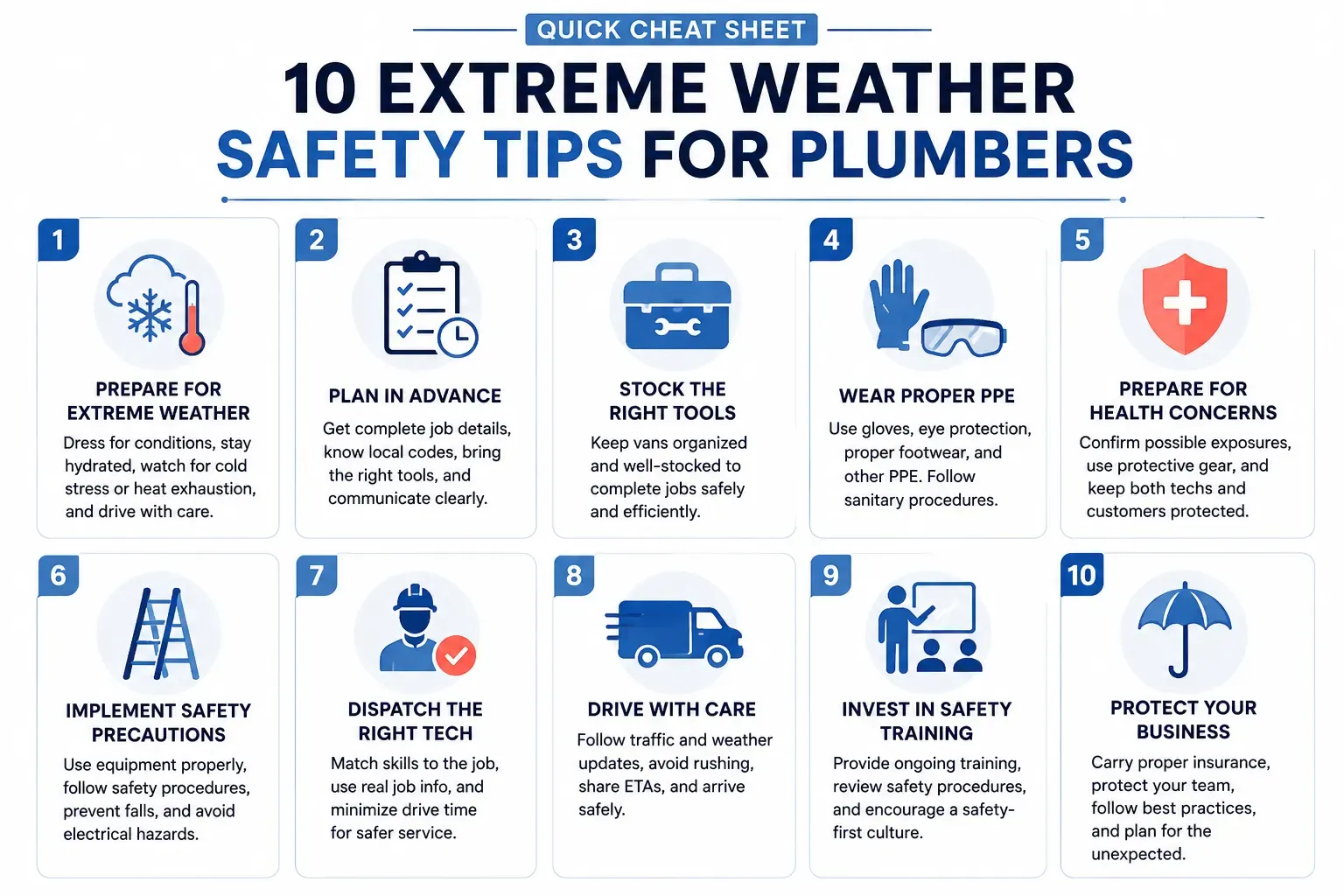
A quick reference to help plumbers stay safe before, during, and after working in extreme weather conditions. Save or share with your team.

extreme-weather-safety-tips-for-plumbers.webp

9. Invest in Safety Training

Refine skills and techniques. Follow company safety protocol.

Make workplace safety a priority by investing in ongoing plumber safety training. Consider mandatory safety training and gather feedback from your team on what should be covered in safety meetings. That way, everyone stays on the same page about current precautions and protocols, and knows safety ranks as a top priority for the company.

Plumbing techs need to stay current on their skills through continued education and on-site work experience. They should also have proper safety gear and equipment to do their job safely.

Often, a plumber discovers an environmental hazard, such as mold growth, and has to alert a homeowner to the health hazard. It's imperative they follow safety protocol when tackling those kinds of serious problems. The techs who run into these situations most often are usually the ones who'd tell you the biggest challenges in the trade rarely show up on a checklist, which is worth keeping in mind when you're building out training around common problems technicians face in the field.

An investment in your employees pays off in the end for any company working in the trades. It's often the continual investment in people, not just marketing, that ends up being the real driving force behind sustainable growth.

10. Protect Your Business with Insurance

Plan and protect for the unknown. Follow best practice procedures.

While you can attempt to mitigate as many hazards as possible, plumber insurance protects your company in unforeseen circumstances.

General liability insurance protects your company in case your work causes property damage or bodily injury to customers. Commercial vehicle insurance covers auto accidents while coming to or from a job and theft from work vans, while property insurance covers the office and everything stored in it.

Many states require workers' compensation insurance, which ensures injured employees get medical care and compensation for lost wages if they're hurt on the job. It also usually protects a company from lawsuits and extends similar protection to customers.

11. Measure Company Success

Track and analyze performance. Adjust for growth.

Track the progress of your company using an integrated system, so you know you're headed in the right direction and can easily oversee each plumber's habits and routines.

Reviewing recorded calls and transcripts is one of the simplest ways to spot patterns. It'll show you if a particular plumber tends to rush through jobs, if a tech keeps having to make multiple visits to fix one problem, or if there's an underlying safety risk hiding behind a low close rate. Real, live data turns a vague sense that something's off into a specific coaching conversation.

Analyzing real-time data enables you to gauge your company's progress and make adjustments for optimal growth. Overworked, exhausted plumbers tend to make for unsafe situations, so keep tabs on their workloads and grow your workforce strategically as your company grows.

Building a Safer, Better-Run Plumbing Business

A lot of these tips come down to the same root issue: techs who show up prepared, with the right information, are safer techs. That starts before the truck ever leaves the shop, with the call that books the job in the first place.

re-engagement.webp

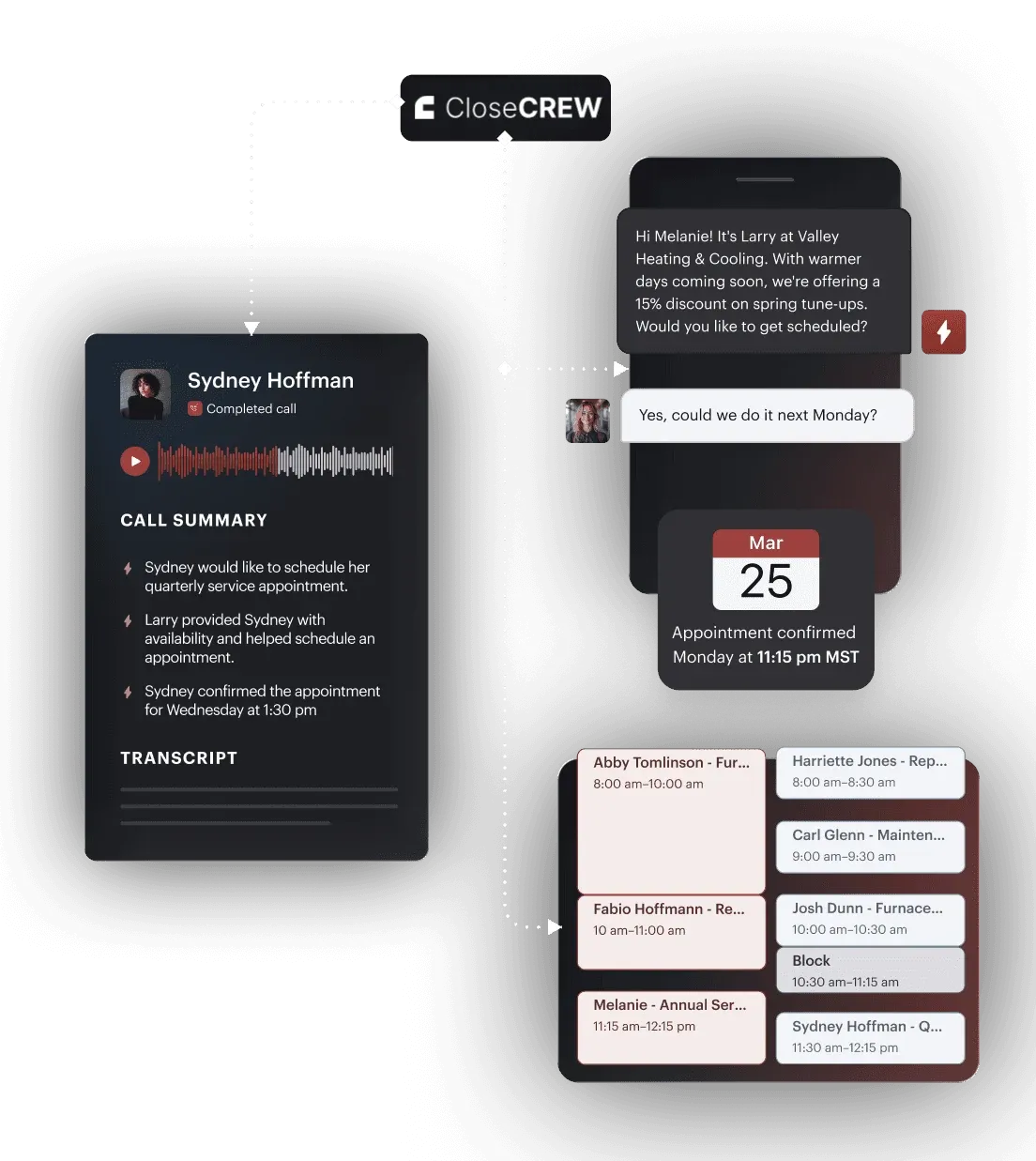
Larry is an AI receptionist built for plumbing and home service contractors. Larry answers every call 24/7, qualifies the issue and its urgency, and books the job directly into your calendar, so your office isn't scrambling to piece together job details after the fact and your techs aren't walking into a burst pipe or a gas smell without context.

  • 24/7 call answering: Never send an emergency plumbing call to voicemail, day or night.

  • Smart appointment booking: Checks real availability and confirms bookings without back-and-forth.

  • Lead qualification: Captures the issue, urgency, and details upfront, so the right tech gets dispatched prepared.

  • CRM & calendar sync: Jobs flow straight into your existing scheduling software automatically.

  • Call recordings & transcripts: Review every conversation to coach your team and catch safety issues early.

  • Custom scripts per trade: Built for plumbing emergencies, repairs, and routine service, fully customizable to your business.

Whether you run one truck or ten, CloseCrew helps you capture every call without adding headcount to the office. Book a demo or see pricing to see how it fits your business.

Related tools

Run the numbers before you update your price book or field software.

Contractor Blog

Cross-trade guides on hiring, marketing, and operations for every home services business.

View all guides

Plumbing Licensing

State licensing requirements, exams, and renewal rules for plumbing contractors.

View states

Meet Larry

AI receptionist built for Plumbing — answers calls, books jobs, and follows up on leads 24/7.

See Larry for Plumbing

Related articles

business-tips

10 Winter Plumbing Tips Every Plumber Needs for 2026

Excerpt: Winter is your busiest and most profitable season. Frozen pipes. Burst lines. Water heater failures. But it's also the riskiest. This guide covers 10 winter tips that help plumbing businesses work safer, faster, and more profitably when temperatures drop.

Read guide
business-tips

Plumbing Van Setup and Organization: The Complete Guide (2026)

Your efficiency disappears the moment you dig through a cluttered van for a missing wrench. This guide covers how professional plumbers organize their vans to save time, cut costs, and complete more jobs per day. Storage systems, tool lists, vehicle recommendations, and the habits that keep everything in order.

Read guide

Never miss a Plumbing service call again. Let Larry, your AI receptionist, book jobs while your crew is in the field.