Business Tips

10 Drain Cleaning Tips Every Plumber Should Know in 2026

Drain cleaning is one of the most profitable services a plumbing business can offer. But most shops treat it as filler work. This guide covers 10 tips that help plumbers work faster, upsell more, and turn one-time drain calls into long-term maintenance agreement customers.

12 min readPublished July 24, 2026

Drain cleaning is one of the most profitable services a plumbing business can offer. Low material cost. High customer demand. Short job duration. Strong upsell opportunities.

Yet most plumbing shops treat drain calls as filler work. Quick in, quick out. Minimum ticket. Move on to the next job. That's leaving money on the table.

A single drain call can generate $150-$400 in immediate revenue. But the real value is what comes after. A drain service customer becomes a maintenance agreement member. A member becomes a water heater replacement. A replacement becomes a whole-house repipe referral. One drain call starts a customer relationship worth $15,000-$30,000 over a decade.

This guide covers 10 tips for plumbers. Work faster. Diagnose better. Upsell more. Turn one-time calls into long-term customers. We also show how CloseCrew helps you capture every drain clearing lead and convert it into recurring revenue.

Part of the Business Tips section in the Plumbing Business Blog.
1. Diagnose before you clear

Rushing to clear the clog is tempting. But diagnosis first saves time and builds trust. Ask the customer what happened. When did it start? Which fixtures are affected? Has this happened before?

A single slow sink is usually a local clog near the fixture. Multiple slow drains suggest a main line issue. Gurgling toilets point to venting problems. Sewage odors can mean a broken pipe.

Diagnosis takes 5 minutes. It prevents sending a cable down the wrong line. It also positions you as a professional, not just a drain cleaner. Customers trust plumbers who ask questions before grabbing tools.

Document your findings. Take photos. Note the symptoms. This creates a record for the customer profile. When they call again in 6 months, your tech knows the history without asking.

2. Match the tool to the clog

Different clogs need different tools. Using the wrong one wastes time. It can also damage pipes.

Handheld drain snake (15-25 ft). Best for sink and tub drains. Hair clogs. Soap buildup near the fixture. Quick and effective for bathroom work.

Drum auger / sectional machine (50-100 ft). For kitchen drains and longer runs. Grease buildup. Food debris. Reaches past the trap and into the branch line.

Toilet auger (closet auger). Purpose-built for toilets. Protects the porcelain. Never use a regular snake in a toilet.

Hydro jetter (1,500-4,000 PSI). For main lines and heavy buildup. Grease, roots, scale, and mineral deposits. Cleans the full diameter of the pipe. Leaves the line in better condition than a cable.

Camera inspection system. Not a clearing tool. But essential for diagnosis. Shows the tech exactly what they're dealing with. Eliminates guesswork. Also creates visual evidence for the customer.

Investing in the right plumbing tools for each job type reduces callbacks. It also speeds up the work.

3. Use camera inspection to upsell

Camera inspection is the highest-ROI tool in drain clearing. It costs $3,000-$8,000 for the equipment. It pays for itself in weeks.

Here's why. A tech clears a kitchen drain with a cable. The clog is gone. Water flows. Job done. Ticket: $175. The customer is happy. You leave.

Same scenario with a camera. The tech clears the clog. Then runs the camera. Shows the customer buildup further down the line. Shows root intrusion at the cleanout. Shows a cracked fitting that will fail in 6 months.

Now the conversation changes. "I cleared your clog today. But here's what I found." The customer sees it on screen. They can't argue with video. The tech recommends hydro jetting and a root treatment. Ticket jumps from $175 to $600.

Or the camera reveals a bellied pipe that needs replacement. That's a $2,000-$5,000 job. Booked from a $175 drain call.

Camera inspection doesn't just diagnose. It sells. Customers who see the problem on video approve repairs at 2-3x the rate. Visual evidence beats verbal explanations.

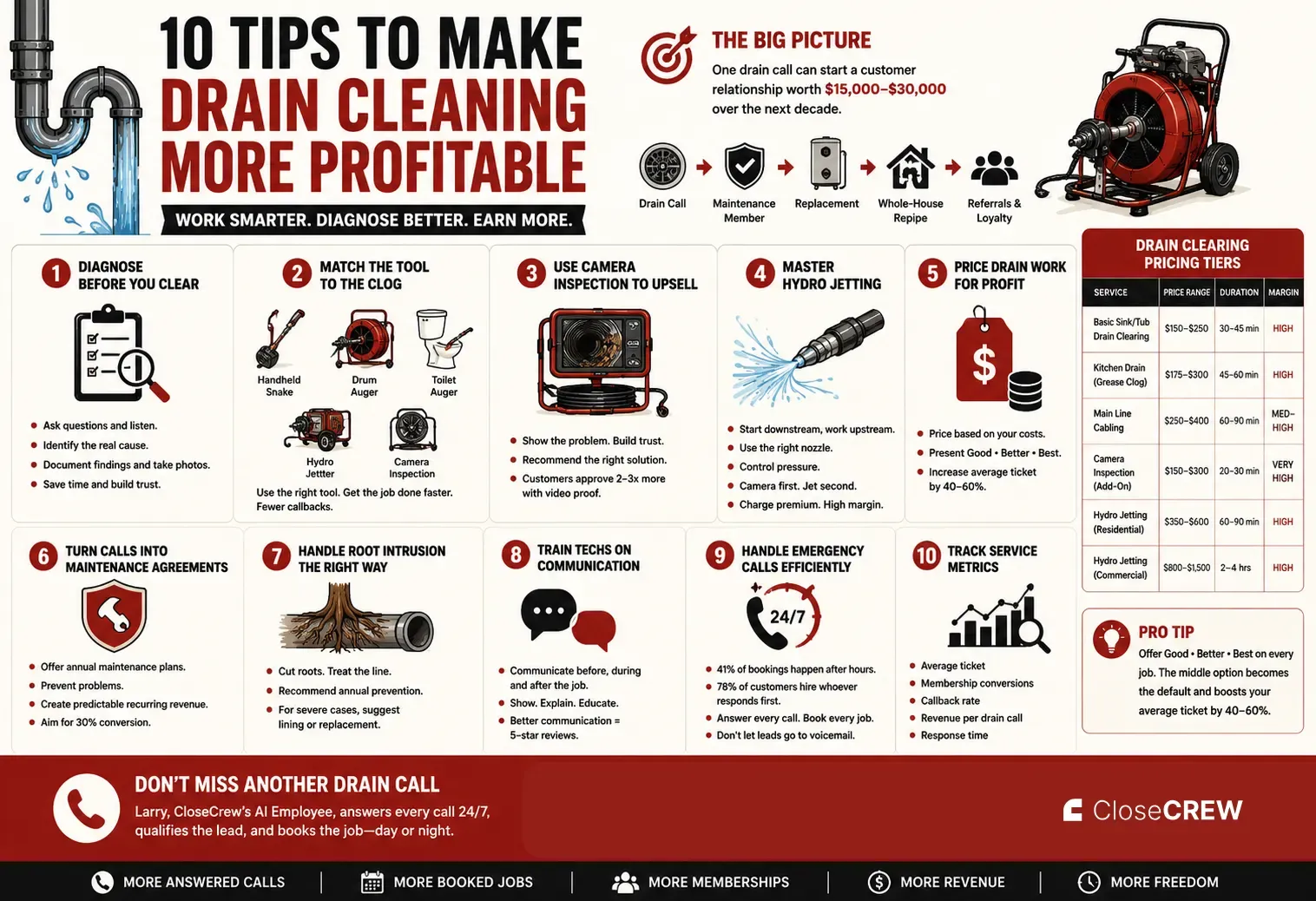
Quick Reference Cheatsheet 📌

Save this cheatsheet so it's always handy when you need it. Whether you're on a job, training your team, or looking for a quick refresher, these proven tips will help you work smarter and increase every drain cleaning ticket.

10 tips to make drain cleaning ore profitable.webp

4. Master hydro jetting technique

Hydro jetting separates professional plumbers from drain cleaners. A cable punches through a clog. Jetting removes everything. Grease, scale, roots, and buildup. The pipe comes out clean.

Key technique tips:

Start downstream and work upstream. This prevents pushing debris into clean pipe. Use the right nozzle for the job. Forward-facing jets cut through blockages. Rear-facing jets clean pipe walls.

Control your pressure. Older pipes can't handle 4,000 PSI. Start lower. Increase gradually. Watch the backflow for debris.

Never jet without camera inspection first. A compromised pipe can rupture under pressure. Camera first. Jet second.

Hydro jetting commands premium pricing. $350-$600 for a residential main line. $800-$1,500 for commercial. The margin is excellent because the time investment is similar to cabling.

5. Price drain work for profit

Many plumbers underprice drain clearing. They charge $99-$149 because that's what the competitors charge. That's a race to the bottom.

Price based on your costs. Not your competitor's prices. Factor in drive time, equipment wear, disposal costs, insurance, and your target margin.

Typical drain clearing pricing tiers:

Service

Price Range

Avg Duration

Margin

Basic sink/tub drain clearing

$150-$250

30-45 min

High

Kitchen drain (grease clog)

$175-$300

45-60 min

High

Main line cabling

$250-$400

60-90 min

Medium-high

Camera inspection (add-on)

$150-$300

20-30 min

Very high

Hydro jetting (residential)

$350-$600

60-90 min

High

Hydro jetting (commercial)

$800-$1,500

2-4 hours

High

Present good-better-best options on every drain call. Basic clearing. Clearing plus camera inspection. Clearing plus jetting plus camera. The middle option becomes the default. Average ticket jumps 40-60%.

For tools that help with job pricing, see our plumbing pricing apps guide.

6. Turn drain calls into maintenance agreements

This is the tip that transforms drain work from filler work into a growth engine.

Every drain work customer is a maintenance agreement prospect. They just experienced a plumbing problem. They don't want it to happen again. The pitch is natural: "We can prevent this from recurring."

Offer an annual drain maintenance package. Include one camera inspection and one preventive service per year. Price it at $199-$349/year. The customer avoids emergency calls. You get predictable recurring revenue.

Convert 30% of drain customers into members. That builds recurring revenue. It fills the calendar during slow seasons. 100 drain calls per quarter at 30% conversion is 30 new members. At $249/year average, that's $7,470 in annual recurring revenue from one quarter of drain work. Compound that over 2-3 years.

Maintenance agreements also create loyalty. Members call you first for repairs. They trust your recommendations. They refer you to neighbors. One $175 drain call becomes a lifetime customer worth $15,000+.

Building a steady pipeline of customers who call you first starts with answering every call. A homeowner with a slow drain calls at 6 PM on a Wednesday. If nobody answers, they call the next plumber. That membership, those referrals, that lifetime value walks away with one voicemail.

Larry, CloseCrew's AI Employee, answers every call 24/7. He qualifies the drain issue. He books the appointment. He captures the customer for your membership pitch. The drain call that would have gone to voicemail becomes a booked job and a future member.

7. Handle root intrusion properly

Tree roots are the most common cause of main line blockages. Roots seek moisture and enter pipes through small cracks. Once inside, they grow and catch debris.

Cable machines cut through roots temporarily. They grow back in 6-12 months. The customer calls again. You clear again. The cycle repeats.

Break the cycle with a proper treatment plan. Cut roots with a cable or jetter. Apply root treatment chemical (copper sulfate or foaming root killer). Recommend annual preventive treatment.

For severe cases, recommend pipe lining or replacement. Show the customer the camera footage. Explain the options honestly. A $4,000 pipe lining saves them from annual $300 root clearing calls. The math sells itself over 5 years.

8. Train techs on customer communication

Drain cleaning is dirty work. Some techs treat it like dirty work. They clear the clog, leave a mess, and move on. That approach kills your average ticket and your reviews.

Train techs to communicate at three points:

Before the work. Explain what you're going to do. Set expectations on time and noise. Ask where to set up. Lay drop cloths.

During the work. If you find something unexpected, show the customer. Don't just tell them. Use the camera. Use photos. Visual evidence builds trust.

After the work. Clean up thoroughly. Walk the customer through what you found. Explain prevention tips. Pitch the maintenance agreement. Ask for a review.

Techs who communicate well earn 5-star reviews. Techs who don't earn callbacks and complaints. The difference isn't skill. It's communication. For building a team that delivers consistently, see our plumbing marketing guide.

9. Handle emergency drain calls efficiently

Emergency drain calls are your highest-margin work. A sewage backup at 10 PM commands premium pricing. The customer will pay whatever it takes to stop sewage from flooding their basement.

But emergencies only generate revenue if you answer the call.

41% of home service bookings come after hours. 78% of customers hire whoever responds first. A sewage backup doesn't wait until morning. The homeowner calls down the list until someone picks up.

Larry answers those calls. Every one. At 10 PM. On weekends. On holidays. He qualifies the emergency. He books the job. He sends a confirmation text. Your tech gets dispatched. The job gets done.

Air Texas booked a $20,000 job after hours because Larry answered when nobody else could. Premier Heating cut response time to under 1 minute and converted 3x more leads. Arctic Air saw 30% more revenue in one year.

Emergency drain calls are the highest-value leads in plumbing. They're also the easiest to lose. One voicemail is all it takes.

Most plumbing businesses invest in equipment, training, and marketing. Then they lose the leads those investments generate because nobody picks up at 7 PM. The equipment sits in the truck. The training goes unused. The marketing dollars burn. All because the phone rang out.

Larry makes sure that never happens. Every ring gets answered. Every lead gets booked. Every emergency gets dispatched.

10. Track service metrics

You can't improve what you don't measure. Track these numbers monthly:

  • Average ticket per drain call. Are your techs upselling camera inspections and jetting?

  • Conversion to maintenance agreements. What percentage of drain customers sign up?

  • Callback rate. Are clogs returning within 90 days? If so, the initial clearing wasn't thorough enough.

  • Revenue per drain call. Including upsells and membership conversions.

  • Response time on drain calls. How fast do you answer? How fast do you book?

CloseCrew tracks these metrics automatically. You see which techs upsell most. Which lead sources generate drain calls. Which marketing channels fill the schedule. Data replaces guesswork.

For lead generation strategies, see our plumbing leads guide.

Common drain problems and how to handle them

Knowing what you'll find before you arrive saves time. Here are the most frequent drain issues by location.

Kitchen drains

Grease is the primary culprit. It enters as liquid and solidifies inside pipes. It coats walls and catches food debris. The clog builds gradually. Customers notice slow drainage for weeks before calling.

Best approach: cable to break the clog. Then hydro jet to clean the walls. Camera inspection to check for bellied pipe underneath. Recommend a grease trap for commercial kitchens.

Bathroom drains

Hair and soap scum dominate. Hair binds with soap residue to form dense plugs. These sit in the P-trap or just past it. A handheld snake clears most bathroom drains in 15 minutes.

For showers and tubs, check the overflow plate. Hair collects there. Remove and clean it. Simple fix that impresses customers.

Main sewer lines

Root intrusion is most common. Followed by grease buildup from kitchen connections. Bellied pipes collect debris at the low point. Cracked pipes let soil enter.

Always camera inspect main lines. Show the customer what you find. Recommend the right solution based on severity. Cable for immediate relief. Jetting for thorough cleaning. Lining or replacement for structural damage.

Floor drains

Common in basements, garages, and laundry rooms. These drains often dry out. A dry P-trap lets sewer gas enter the building. The fix is simple: pour water into the drain regularly.

If a floor drain backs up during heavy use, the main line may be undersized. Camera inspection confirms.

Outdoor drains

Leaves, dirt, and debris clog outdoor drains seasonally. Root intrusion is common near trees. These drains are often forgotten until they overflow during heavy rain.

Include outdoor drain checks in your maintenance agreements. It adds value. It prevents emergency calls during storms.

Drain cleaning builds your business one call at a time

Every drain call is a door. Behind it is a maintenance member. A water heater replacement. A whole-house repipe. A decade of repeat business. A dozen referrals.

But the door only opens if someone answers when the customer knocks. Larry answers. Every time. Day and night. Weekday and weekend.

Your clearing skills solve the problem. Larry gets the customer to your door. CloseCrew keeps them coming back.

Frequently asked questions

What is the most profitable service tier?

Hydro jetting with camera inspection. The combination commands $500-$900. Equipment cost pays back in weeks. Camera inspection upsells additional work 40-60% of the time.

Pitch after every clearing. Show camera footage of buildup. Explain that annual maintenance prevents emergencies. Price agreements at $199-$349/year. Aim for 30% conversion rate.

Only if you convert well. Free inspections generate leads. But if your techs can't convert inspections into paid work, you're doing free labor. Train on camera-based selling first.

Cables and blades wear with use. Inspect after every job. Replace when cutting performance drops. A dull cable wastes time and leaves roots behind. Budget for replacement quarterly.

Missed drain calls go to competitors fast. Homeowners with backups can't wait. Larry answers 24/7. He books the job while your techs finish the current one. No lead lost to voicemail.

Related tools

Run the numbers before you update your price book or field software.

Contractor Blog

Cross-trade guides on hiring, marketing, and operations for every home services business.

View all guides

Plumbing Licensing

State licensing requirements, exams, and renewal rules for plumbing contractors.

View states

Meet Larry

AI receptionist built for Plumbing — answers calls, books jobs, and follows up on leads 24/7.

See Larry for Plumbing

Related articles

business-tips

10 Winter Plumbing Tips Every Plumber Needs for 2026

Excerpt: Winter is your busiest and most profitable season. Frozen pipes. Burst lines. Water heater failures. But it's also the riskiest. This guide covers 10 winter tips that help plumbing businesses work safer, faster, and more profitably when temperatures drop.

Read guide
business-tips

Plumbing Van Setup and Organization: The Complete Guide (2026)

Your efficiency disappears the moment you dig through a cluttered van for a missing wrench. This guide covers how professional plumbers organize their vans to save time, cut costs, and complete more jobs per day. Storage systems, tool lists, vehicle recommendations, and the habits that keep everything in order.

Read guide

Never miss a Plumbing service call again. Let Larry, your AI receptionist, book jobs while your crew is in the field.