30+ Essential Plumbing Tools Every Pro Needs in 2026
This guide breaks down the 34 essential plumbing tools every pro needs in 2026 into two main categories: physical hand tools and digital business tools. The hand tools cover wrenches, pipe cutters, drain machines, safety gear, and specialty equipment like PEX tools and inspection cameras, with clear pricing and selection tips for each.
17 min readPublished June 18, 2026Updated July 14, 2026
A well-stocked truck is the difference between a one-trip fix and a frustrating day of running back to the supply house. This guide covers the 32 tools that keep a plumbing business running, split into two halves: the hand tools that solve problems at the customer's house and the digital tools that keep calls coming in and the calendar full. For each hand tool, you will find what it does, when to reach for it, what to look for when buying, a rough price range, and where to get it. Prices and brand availability vary, so treat the numbers as budgeting guidance rather than quotes.
No tool is more tied to plumbing than the wrench, and because there is no single do-everything version, most plumbers carry several to every job.
1
Pipe Wrench
The pipe wrench is the plumber's heavy hitter, with serrated, angled jaws that bite down harder on round pipe and fittings as you apply more force. The standard technique uses two at once: one to hold the pipe still and one to turn the fitting. Carry a range of sizes, commonly 10, 14, 18, and 24 inches, so you can match the tool to the pipe. Heavy steel models are the most durable, while aluminum versions cut weight for overhead work. Look for replaceable jaws and teeth so that a worn wrench can be rebuilt rather than replaced. One caution: the teeth will mar chrome and finished fittings, so never use a pipe wrench on visible trim.
Plan to spend roughly $15 to $30 for a mid-size wrench, more for a full set. Trusted brands include Ridgid (the trade standard) and Milwaukee. Shop on Amazon or Home Depot.
2
Basin Wrench
The basin wrench exists for one miserable job: reaching the mounting nuts behind a sink to install or remove a faucet. Its long shaft and spring-loaded, clamp-style head pivot into the cramped, blind space under the basin where nothing else fits. Look for a telescoping shaft to handle different depths and a self-adjusting jaw that flips direction so you can tighten or loosen without repositioning. It is a single-purpose tool, but on faucet work, it turns a knuckle-busting ordeal into a two-minute task.
Plan to spend roughly $10 to $20. Look for Ridgid or Husky. Shop on Amazon or Home Depot.
3
Adjustable Wrench
The adjustable, or crescent, wrench handles hexagonal nuts and fittings when you do not have an exact-size wrench on hand. The 6-inch and 10-inch versions cover the large majority of plumbing jobs, so keep both within reach. The thing that separates a good adjustable wrench from a bad one is jaw tolerance: a tight, low-slop jaw grips cleanly, while a sloppy one rounds off nuts and creates more problems than it solves. Many models include measurement markings on the jaw. Pull the wrench toward the fixed jaw side for the strongest, safest grip.
Plan to spend roughly $10 to $40. Look for Crescent, Channellock, or Klein Tools. Shop on Amazon or Home Depot.
4
Faucet Key
A faucet key is a small, X-shaped tool used to open and close spigots, sillcocks, and loose-key valves without a permanent handle. Each of the four ends fits a different stem size, typically 1/4, 9/32, 5/16, and 11/32 inch, so one inexpensive tool covers the common fittings you will meet on outdoor and utility valves. It is cheap, takes up no space, and saves you when a valve has no handle.
Most of a plumber's day is spent cutting, joining, and reshaping pipe, often copper, PVC, or PEX, in tight quarters. These tools make that work faster and cleaner.
5
Hacksaw
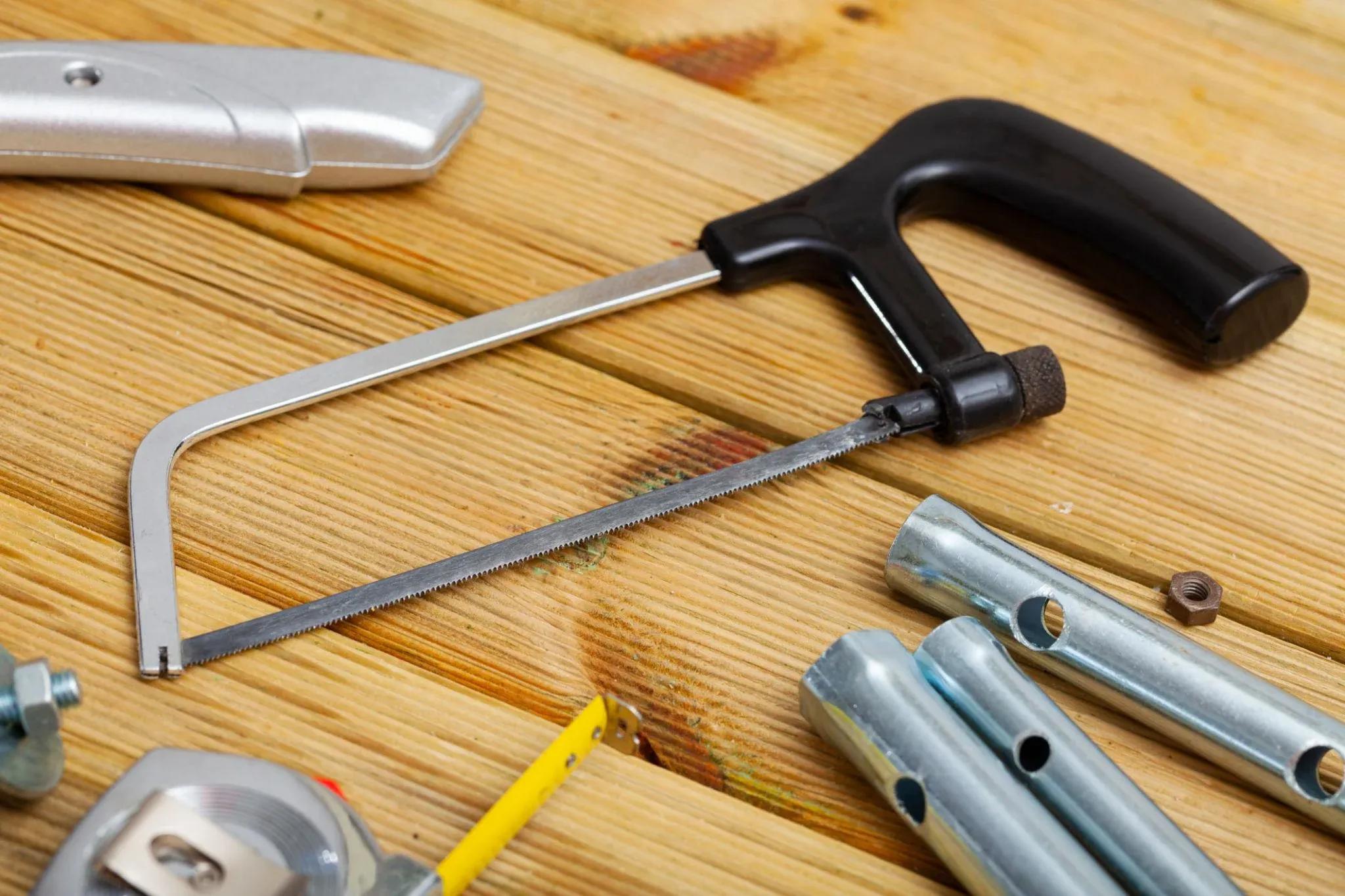
The hacksaw is the all-purpose cutter for pipe, bolts, threaded rod, and hardware that a tube cutter cannot handle. The key to clean, fast cuts is blade choice and tension: use a finer blade, around 18 to 24 teeth per inch, for metal, and keep the blade drum tight in the frame. Blades dull and snap, so always carry spares in the truck. A compact hole saw and a mini hacksaw for tight spots round out the cutting kit nicely.
Plan to spend roughly $15 to $30. Look for Stanley or Milwaukee. Shop on Amazon or Home Depot.
6
Tube and Plastic Pipe Cutters
For copper, a rotary tube cutter gives a clean, square cut with far less burr than a saw, which means better joints and faster work. For plastic, a ratchet or scissor-style cutter slices PVC and PEX in one squeeze. Look for cutters with a built-in deburring/reaming tip, a replaceable cutting wheel, and a size range that matches the pipe you run most often. Keeping both a copper tube cutter and a plastic pipe cutter on the truck means you are ready for either material without reaching for the hacksaw.
Plan to spend roughly $10 to $40. Look for Ridgid or Milwaukee. Shop on Amazon or Home Depot.
7
Plumber's Torch
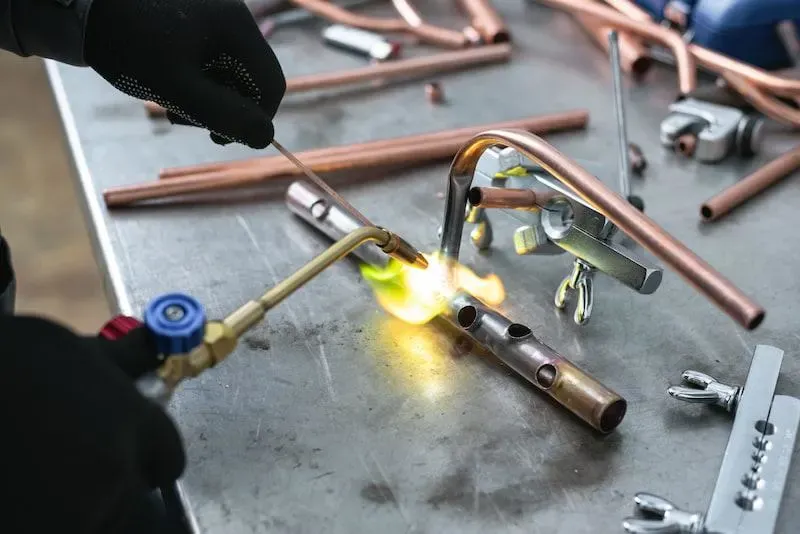
When you solder copper, you need a torch, and a handheld propane or MAPP gas torch delivers precise, intense heat exactly where the joint needs it. A self-igniting trigger model saves the fumbling of a striker and lights instantly. Look for an adjustable swirl flame for even heating and compatibility with MAPP gas, which burns hotter than propane and speeds up the welding of larger joints. Always pair the torch with a heat shield (tool 18) when working near framing, walls, or finished surfaces.
Plan to spend roughly $20 to $40 for the torch head. Look for Bernzomatic. Shop on Amazon or Home Depot.
8
Thread Sealing Tape
Thread sealing tape, also called PTFE or plumber's tape, wraps around male threads to fill tiny gaps that would otherwise cause leaks. Color tells you the type: white is the standard residential tape, yellow is rated for gas lines, and pink is a thicker, heavy-duty version. Wrap three to five times in the direction the fitting will tighten (usually clockwise) so the tape does not unravel as you thread the joint. Buy it in multipacks, since it is cheap and you will use it constantly.
Plan to spend roughly $10 to $15 for a multipack. Shop on Amazon or Home Depot.
9
Pliers
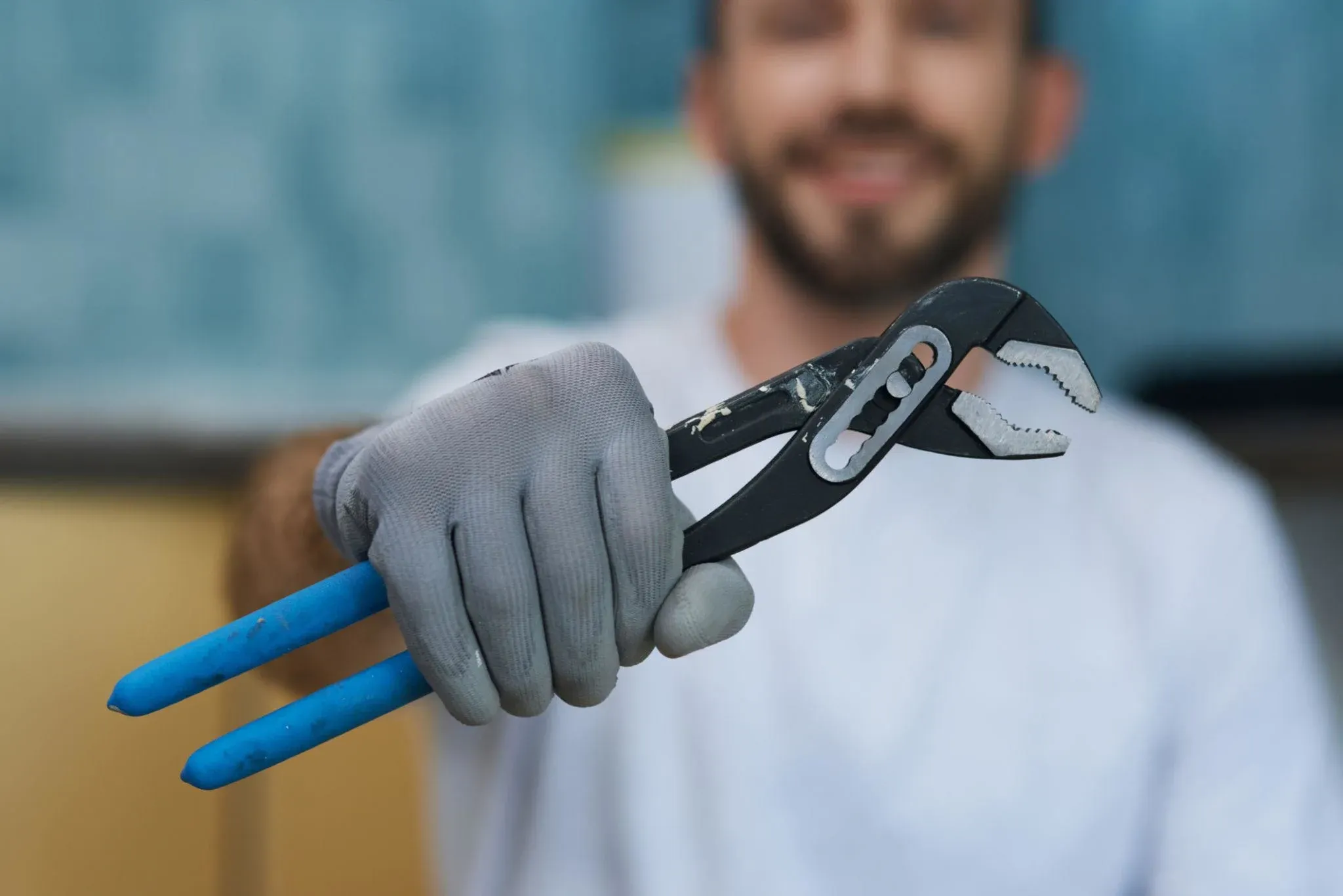
Tongue-and-groove pliers, often called water pump or groove-joint pliers, are the tool you will reach for more than almost any other. The adjustable groove lets one tool grip pipe, nuts, and fittings across a wide range of sizes, and the long handles give you leverage in tight spots a wrench cannot reach. Carry a set, commonly a 10 inch and a 12 inch, so you have both reach and finesse. Better pliers hold their adjustment under load and have hardened teeth that grip without slipping.
Plan to spend roughly $15 to $70 for a set. Look for Channellock, Klein Tools, or Knipex. Shop on Amazon or Home Depot.
10
Deburring Tool
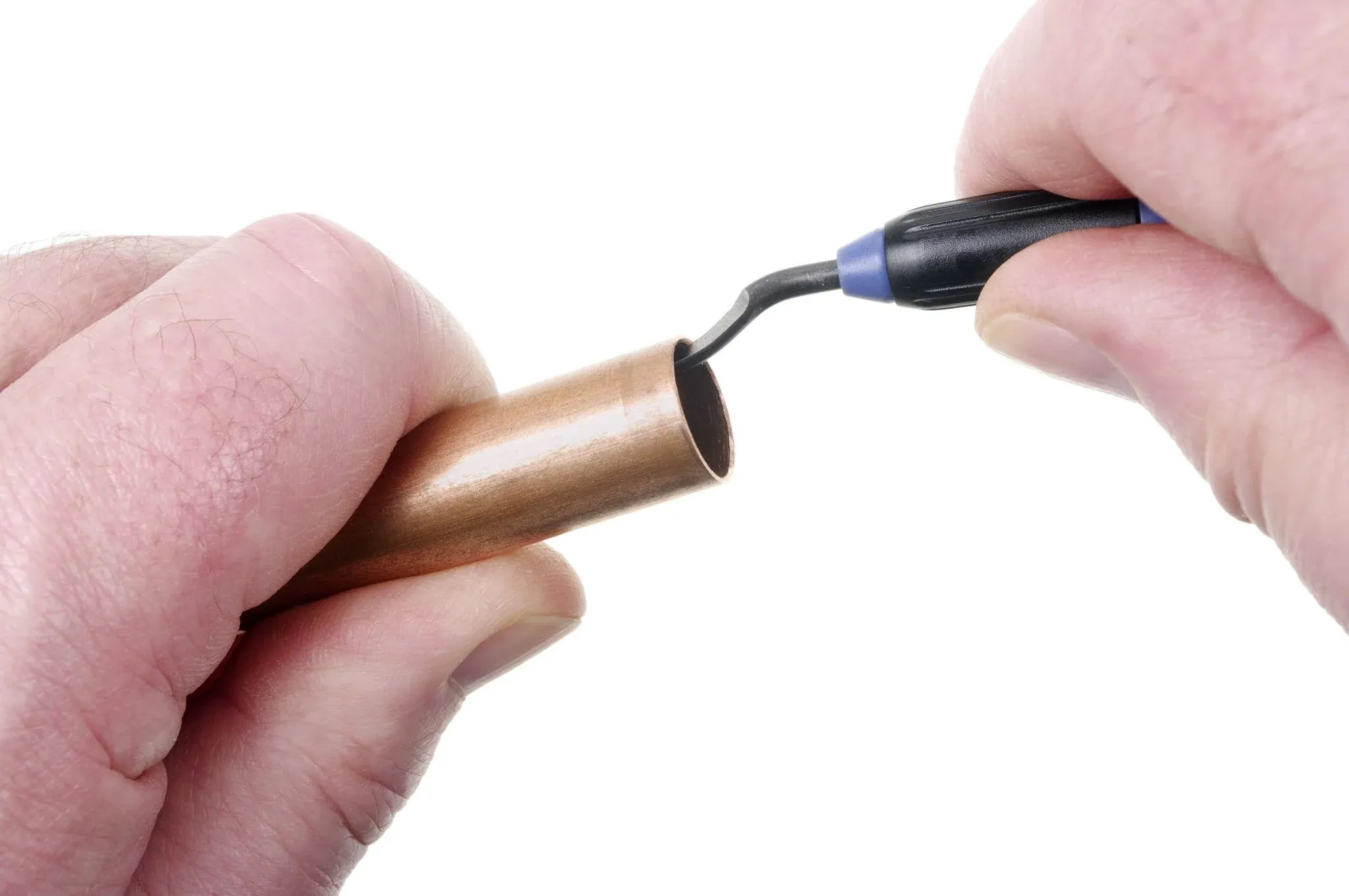
Every time you cut copper, PEX, or PVC, you leave a sharp burr on the inside and outside edge. A deburring or reaming tool shaves those burrs off, which matters more than it sounds: a clean edge prevents turbulence, reduces erosion and noise inside the line, and lets fittings seat properly. It is a small, cheap tool that protects the quality of every cut you make, so keep one in the bag at all times.
Plan to spend roughly $10 to $20. Look for Ridgid. Shop on Amazon or Home Depot.
11
Press Fitting Systems
A press tool is a battery-powered jaw that mechanically clamps a fitting onto a pipe, forming a permanent, watertight seal in seconds with no flame. For shops doing volume copper or PEX work, it pays for itself fast: connections that took minutes to solder now take seconds, with no fire risk, no draining the line, and no torch near finished surfaces. Look for jaw sizes that match your pipe range and a tool on the battery platform you already use. Note that a complete press tool is a serious investment, often well into the hundreds or thousands of dollars; the lower range below reflects individual jaws and adapters.
Plan to spend roughly $80 to $200 for jaws and adapters, more for the full tool. Look for Ridgid or Milwaukee. Shop on Amazon or Home Depot.
Clearing Clogs and Blockages
Sometimes the trouble is not the pipe but what is stuck inside it. Drain work is a steady part of the job, so carry a range of options for sinks, tubs, toilets, and sewer lines.
12
Plungers
A pro should carry two types: a flange plunger, whose extended rubber lip seals the curved opening of a toilet, and a cup plunger for flat-surfaced sink and tub drains. Heavy-duty professional plungers generate far more suction than the consumer versions homeowners already own and usually failed with before they called you. Keep a couple of sizes so you can seal everything from a small basin to a large floor drain.
A hand auger, or drum auger, feeds a coiled cable down a drain by hand crank to break apart and hook out clogs in smaller lines like sink and basin drains. A closet auger is the toilet-specific version, with a protective sleeve that guides the cable into the trap without scratching the porcelain. Look at cable length and whether you want a compact handheld or a larger drum model. For routine residential clogs, a good hand auger handles most of what you will see before you need to reach for a machine.
Plan to spend roughly $20 to $40. Look for Ridgid or Cobra. Shop on Amazon or Home Depot.
14
Snake Machine
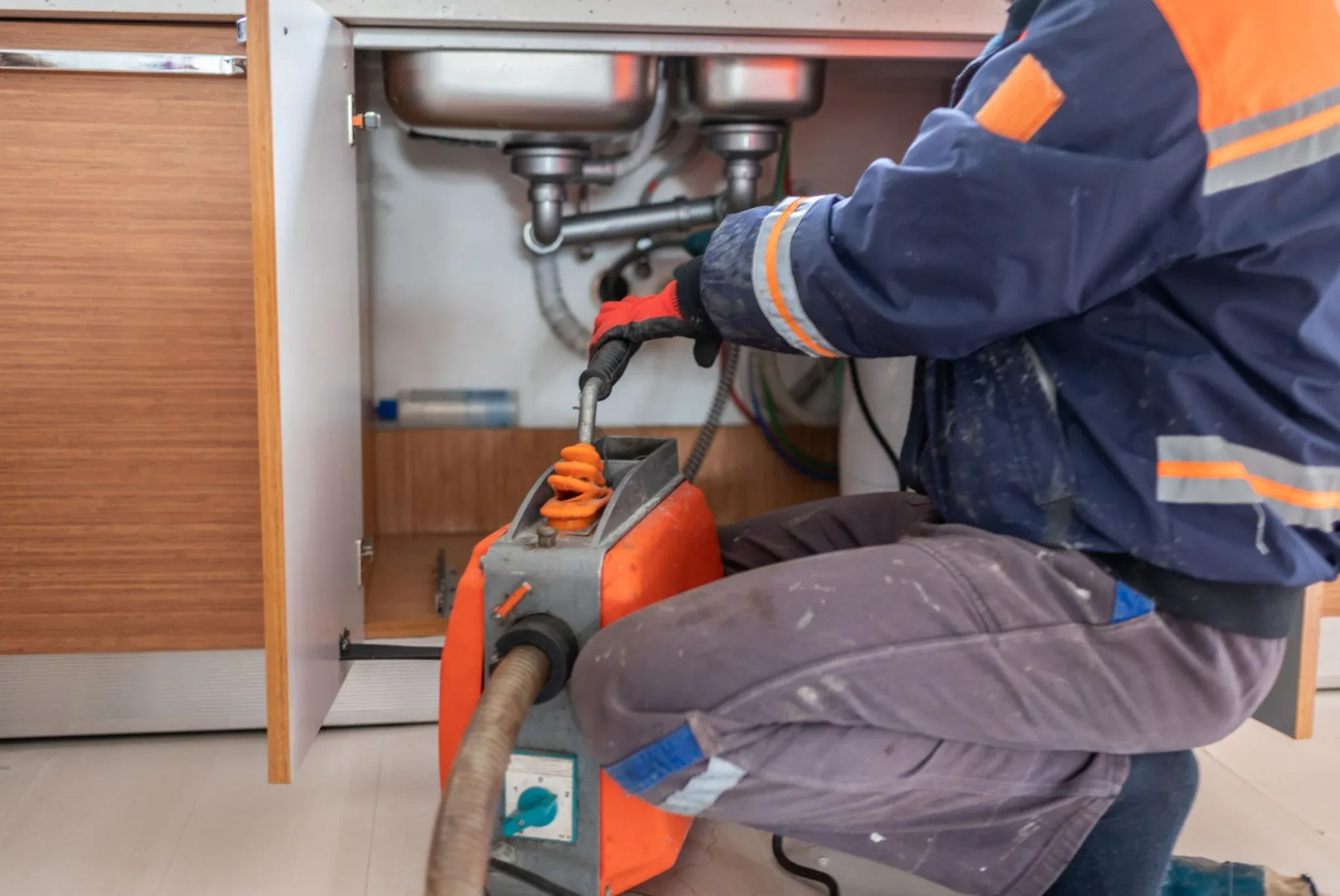
When a clog is deep, dense, or in the main line, a motorized drain machine has the power a hand-crank cannot match. These come as drum or sectional machines, and the right cable diameter and length depend on the size of the line you are clearing. Because they are powerful and can whip or kick back, always run them with gloves and proper cable control. A small machine handles branch lines and tubs; full sewer machines for main lines are a larger investment.
Plan to spend roughly $80 to $200 for a smaller machine, considerably more for sewer-rated units. Look for Ridgid. Shop on Amazon or Home Depot.
15
Inspection Camera
A drain inspection camera, or borescope, puts eyes inside the pipe so you can find the break, root intrusion, or blockage instead of guessing. What was once high-end gear is now standard, and affordable prosumer models connect right to a smartphone. For serious sewer diagnostics, look for a longer, self-leveling head, a waterproof cable rated for the depth you need, and a built-in locator so you can mark the trouble spot from above ground. Showing a homeowner the actual footage also makes selling the necessary repair far easier.
Plan to spend roughly $30 to $200 for a prosumer camera, up to several thousand for professional sewer systems. Look for Milwaukee or Ridgid. Shop onAmazon orHome Depot.
Safety Gear
There are countless ways to get hurt on a plumbing job, and the right protective equipment dramatically lowers the odds. OSHA requires employers to assess job hazards and provide PPE suited to them.
16
Safety Goggles
Between soldering, cutting, cleaning drains, and inspecting leaks up close, your eyes face hazards on nearly every job. Choose eyewear rated to the ANSI Z87.1 impact standard, and look for anti-fog coatings and wraparound side protection so they stay clear and actually get worn. The best safety glasses are the ones a tech is comfortable enough to keep on.
Plan to spend roughly $15 to $20. Look for 3M or Dewalt. Shop onAmazon orHome Depot.
17
Gloves
Plumbers handle things no one wants to touch bare-handed, from drain sludge to hot pipe to sharp metal edges. Match the glove to the task: cut-resistant gloves for sheet metal and cutting, chemical-resistant gloves for drain cleaning, and nitrile-dipped gloves for grip on wet, slick fittings. Keeping a few types in the truck means the right protection is always at hand.
Plan to spend roughly $15 to $30. Look for Ironclad or Milwaukee. Shop onAmazon orHome Depot.
18
Heat Shields and Pads
Any time you solder near framing, drywall, cabinets, or insulation, a flame-resistant heat shield or pad protects the home and prevents the fire that ends a career. Lay the pad behind the joint to block the torch flame from scorching surrounding material. It is inexpensive insurance that belongs in the bag alongside the torch, not left in the van.
Plan to spend roughly $15 to $20. Look for Oatey. Shop onAmazon orHome Depot.
Other Essentials
New hardware and materials keep changing the trade, and a few extra tools round out a modern kit.
19
PEX Pipe Expander and Fittings
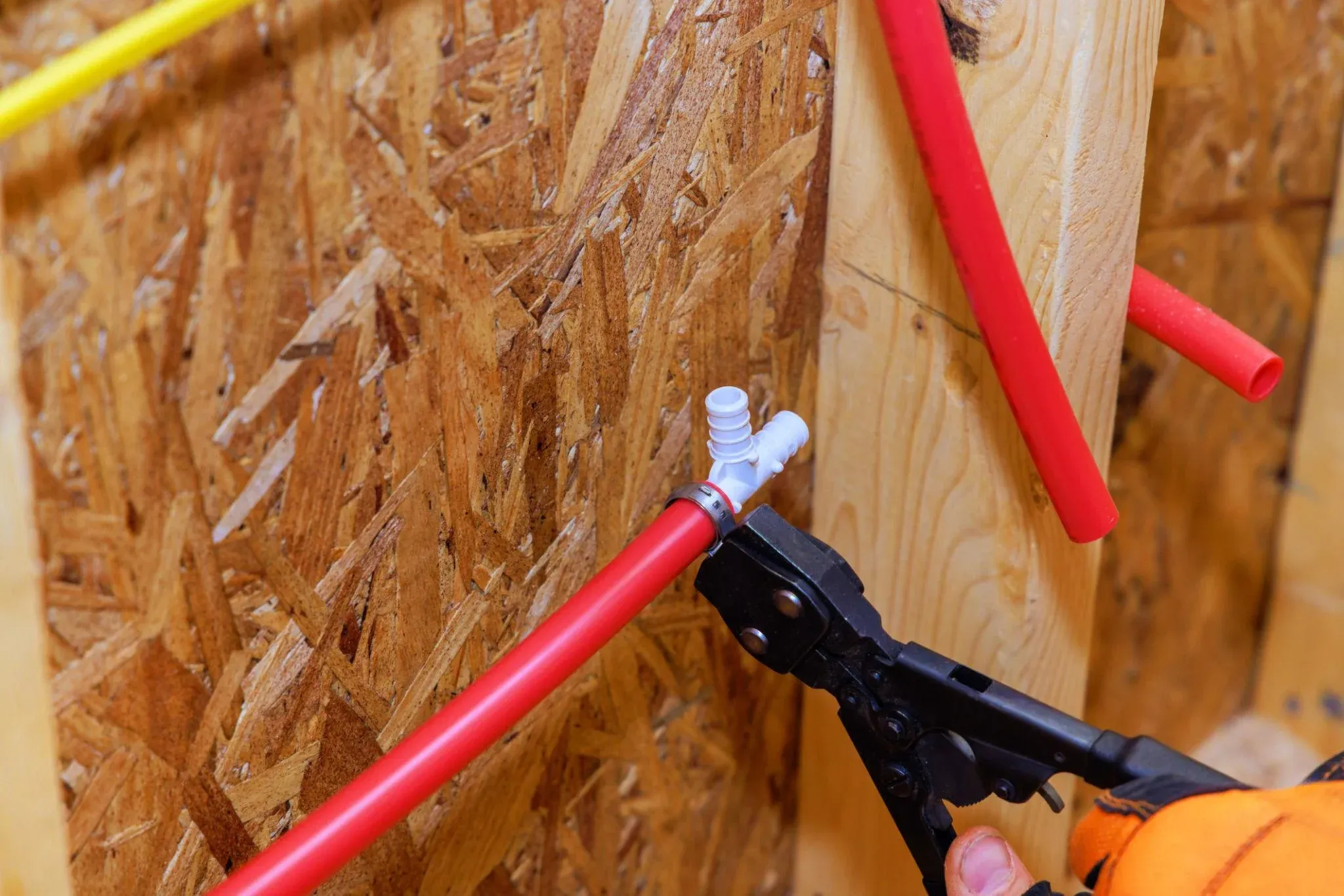
For expansion-style (cold-expansion) PEX systems, an expander tool stretches the pipe and its ring open so a fitting slides in; as the PEX shrinks back to size, it grips the fitting for a strong, reliable seal. Drill-style and battery expanders speed up high-volume work, while manual tools suit lighter use. Look for expander heads that match the pipe sizes you install most. PEX has become a residential staple because it is fast, flexible, and freeze-tolerant, so the right expander earns its keep quickly.
Plan to spend roughly $80 to $150 for a manual tool, more for powered models. Look for Milwaukee, Dewalt, or Apollo. Shop on Amazon or Home Depot.
20
Crimpers
For crimp- and clamp-style PEX, a crimper makes the connection, and this tool is one where quality genuinely matters. A cheap crimper that produces inconsistent rings leads to callbacks and leaks, which cost far more than the savings. Look for a tool with a built-in go/no-go gauge to verify each crimp, and consider a clamp-ring tool if you use cinch fittings. Buy once, buy well.
Plan to spend roughly $25 to $60. Look for Milwaukee, Klein Tools, or iWISS. Shop on Amazon or Home Depot.
21
Tube Bender
A tube bender shapes copper and soft tubing into smooth bends without kinking or collapsing the line. A spring bender is the cheap, simple option that slides over the tube, while a lever-style bender gives precise, repeatable angles for cleaner work. Match the bender to the outside diameter of the tubing you run. Bending instead of adding elbow fittings means fewer joints, fewer leak points, and a tidier install.
Plan to spend roughly $15 to $60. Look for Klein Tools or Ridgid. Shop on Amazon or Home Depot.
22
Stubby Screwdriver
It sounds basic, but a stubby screwdriver is the tool that saves the day when a screw sits in a spot a full-length driver simply cannot reach, behind a fixture, inside a cabinet, or up against a wall. Look for a model that accepts multiple flathead and Phillips bits so one short handle covers most fasteners. It costs almost nothing and earns its spot in the bag the first time you need it.
Plan to spend roughly $10 to $20. Look for Klein Tools or Husky. Shop on Amazon or Home Depot.
Handy Calculators
23
Flow Rate Calculator
A free online flow rate calculator tells you how fast water moves through a pipe based on its diameter and velocity, without the manual equations and unit conversions. It is useful for sizing supply lines, checking whether a fixture will get adequate flow, and explaining performance to a customer in numbers they can see.
24
Pipe Volume Calculator
A pipe volume calculator works out how much water a given length and diameter of pipe can hold and how much that water weighs. That helps you confirm the correct pipe size for a job, estimate drain-down and fill times, and reduce wasted material on larger installs.
25
Water Pipe Sizing Calculator
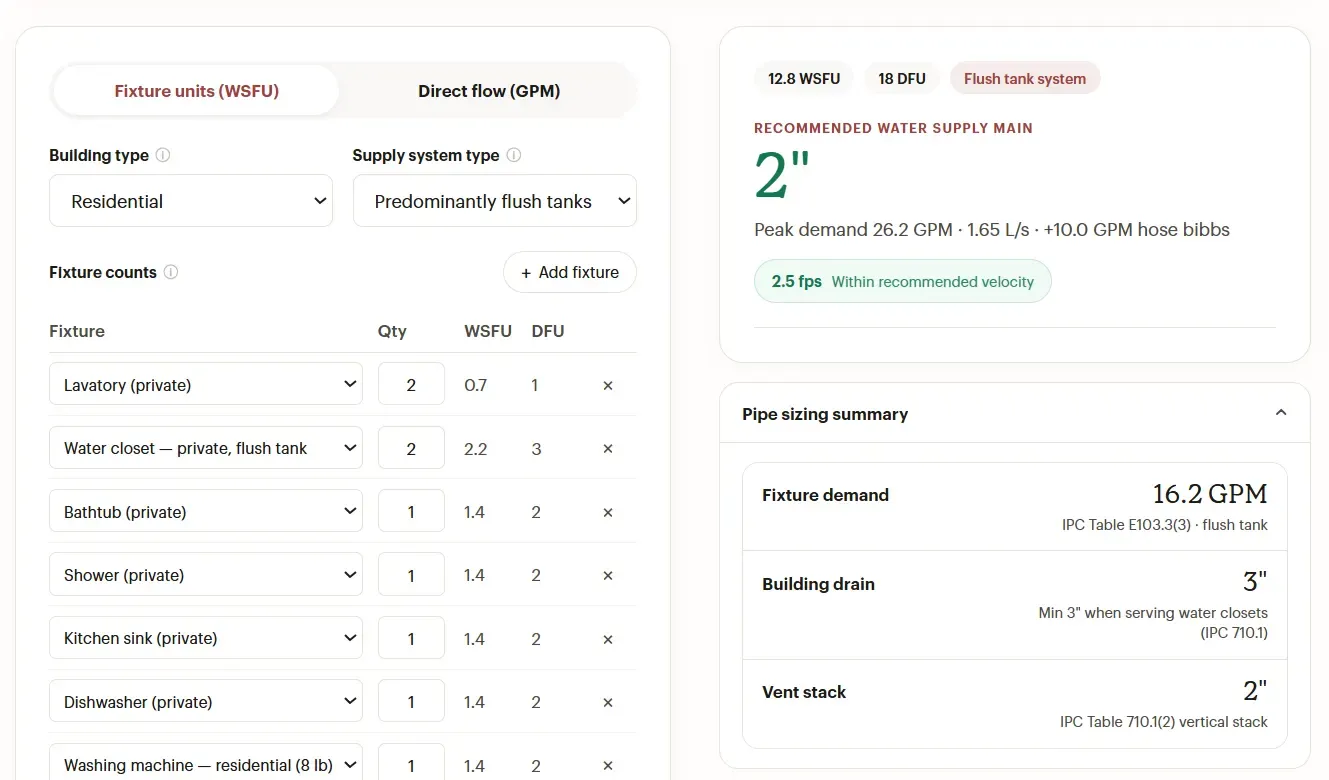
A free water pipe sizing calculator helps you convert fixture counts into water supply fixture units (WSFU) and drainage fixture units (DFU), then into peak flow in GPM and recommended pipe sizes. It can also support pressure-based service-main sizing per IPC guidelines, making it useful for both residential and light-commercial design work.
26
Missed Call Cost Calculator
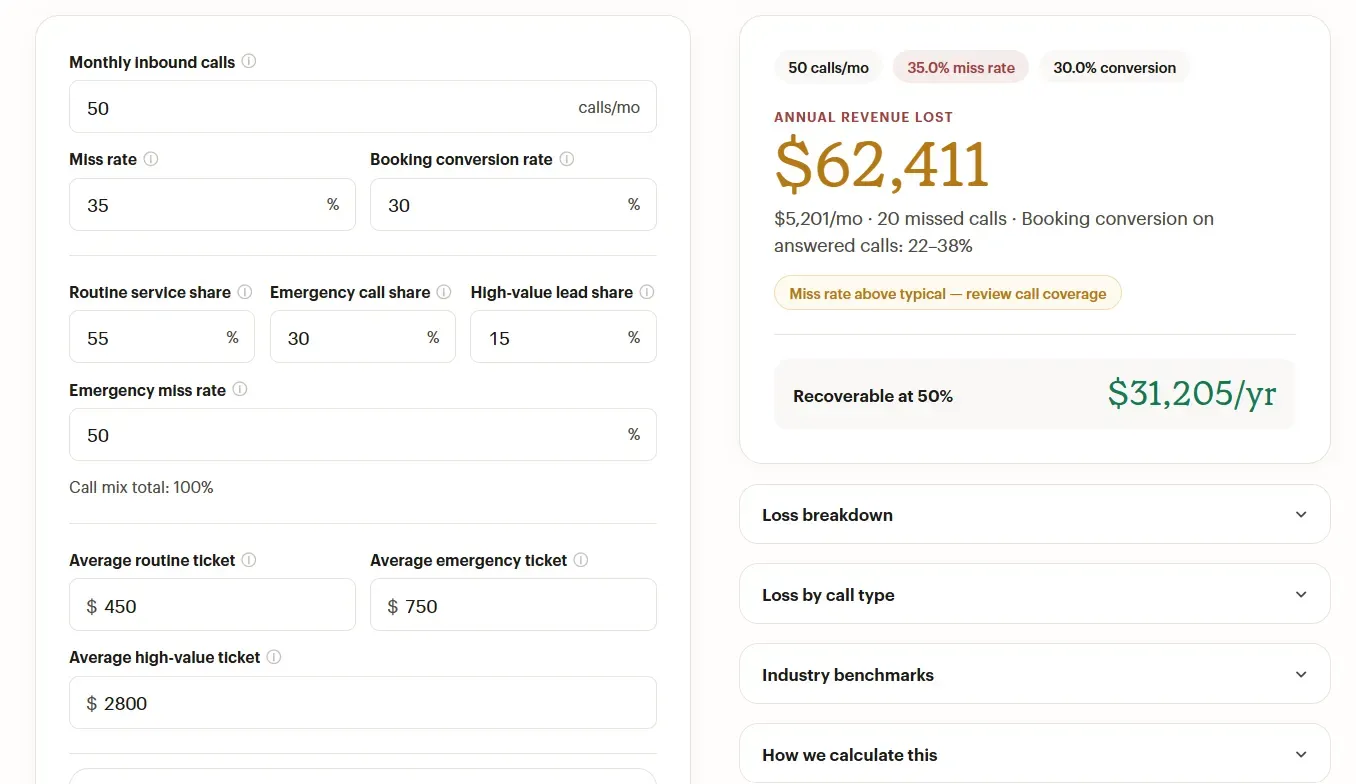
A free missed call cost calculator shows how much revenue your business loses from unanswered calls. By entering call volume, miss rate, conversion rate, and average ticket values, it estimates monthly and annual revenue leakage and highlights how many jobs could be recovered by improving response time.
The Digital Tools That Run and Grow Your Plumbing Business
Hand tools fix the pipe. But a plumbing business is won or lost long before the tech arrives, on the phone call that books the job and the follow-up that earns the next one. That is the other half of your toolkit, and it is where most shops leak the most money. Every call that rings out while you are under a sink is a job handed to the competitor who picked up.
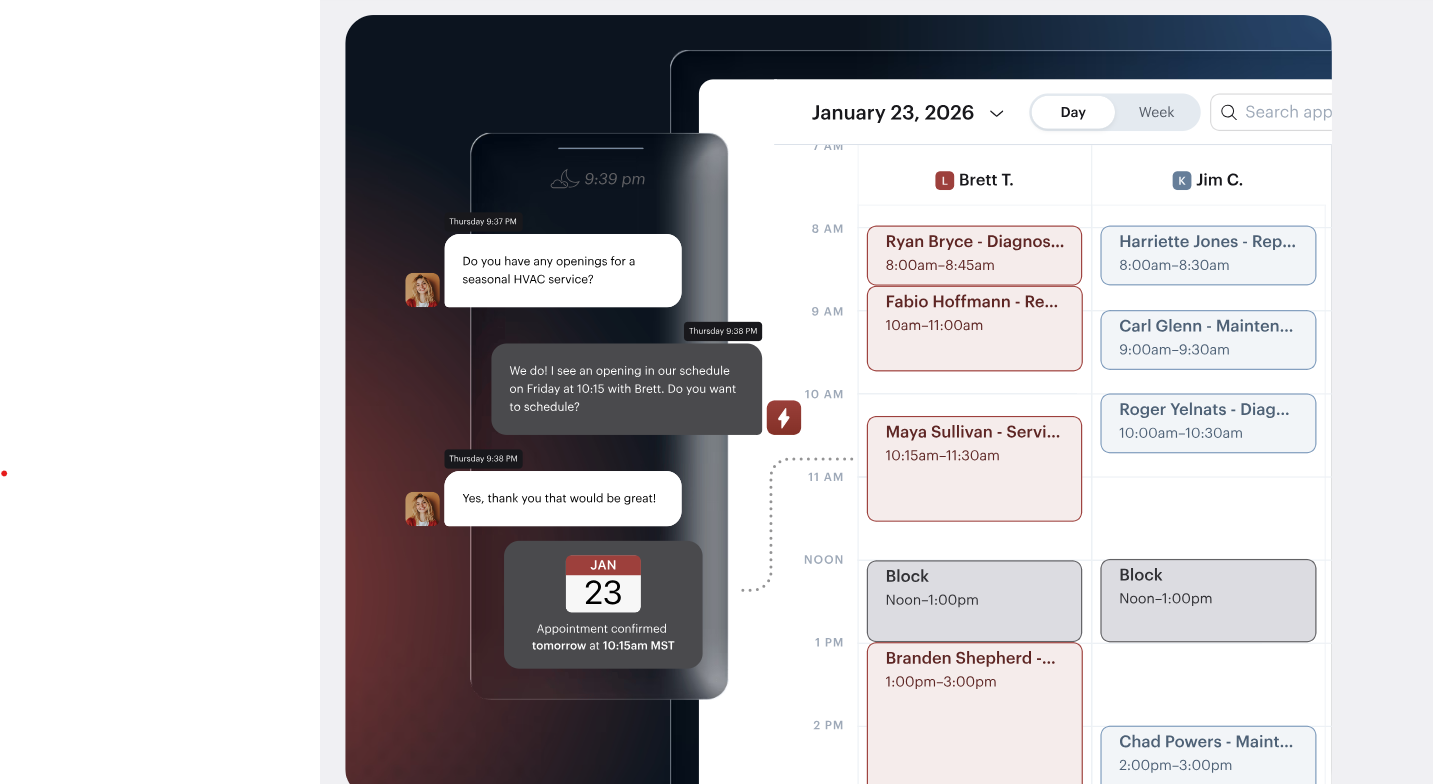
This is the gap CloseCrew is built to close. Larry, CloseCrew's AI receptionist, answers, qualifies, and books your calls so the work your hand tools are ready to do actually lands on the schedule. Here are the eight digital tools that round out the list. Unlike a full operations platform, CloseCrew focuses on the front office and integrates with the systems you already usecalendar:.
27. 24/7 Call Answering. Larry picks up every inbound call, day or night, including the roughly 40 percent of home-service calls that come in after hours.
28. Instant Job Booking. Qualified callers get booked straight into your calendar, no phone tag and no missed opportunities.
29. Estimate Follow-Up. Larry automatically follows up on unsold estimates, calendar, turning maybes into booked revenue.
30. Review Requests. A review is requested via text after the job is done, while the experience is fresh, to build the reputation that wins the next customer.
31. One Unified Inbox. Calls, texts, webchat, and email all land in a single place, so nothing slips between channels.
32. Memberships and Re-engagement. Keep maintenance customers coming back with reminders and re-engagement that protect your recurring revenue.
33. Bilingual Coverage. Larry handles calls in both English and Spanish, so you never lose a customer to a language barrier.
34. 200-Plus Integrations. CloseCrew connects to the scheduling, dispatch, and invoicing tools you already use, with white-glove onboarding in about 48 hours, so it strengthens your stack rather than replacing it.
CloseCrew reports contractors using it capture up to 3x more booked leads and save 5 to 15 hours a week on phone and follow-up work. If you are still building the business behind the toolkit, our guides on how to start a plumbing business and how to get more plumbing leads cover the next steps.
Stock the Truck, Then Answer the Phone
The right tools let you fix anything a customer throws at you. CloseCrew makes sure you actually get the chance by answering and booking every call so your fully stocked truck stays busy.
Frequently asked questions
What tools does a beginner plumber need first?
Start with the everyday hand tools: a pipe wrench, an adjustable wrench, a basin wrench, tongue-and-groove pliers, a hacksaw, tube and pipe cutters, thread sealing tape, and a set of plungers, plus safety goggles and gloves. Add specialty tools like a press system, a drain machine, or a PEX expander as your work demands.
How much does it cost to build a basic plumbing tool kit?
A starter set of quality hand tools can be assembled for a few hundred dollars, since most cost between $10 and $40by each. The bigger investments are powered and specialty tools, such as drain machines, press tools, inspection cameras, and PEX expanders, which can each run $80 to $200 or far more.
Where should plumbers buy their tools?
Reputable trade brands like Ridgid, Milwaukee, Klein Tools, and Channellock are widely available through retailers such as Amazon and Home Depot, as well as local plumbing supply houses. Supply houses are often worth the trip for professional-grade drain machines and press tools, plus expert advice and warranty support.
What safety equipment do plumbers need?
At a minimum, ANSI-rated safety goggles, heavy-duty gloves matched to the task, and heat shields or pads for soldering work. OSHA requires employers to assess job hazards and provide appropriate personal protective equipment.
What software tools do plumbing businesses need?
Beyond hand tools, most shops need a way to answer and book calls, follow up on estimates, request reviews, and connect those front-office functions to their scheduling and invoicing systems. An AI receptionist like CloseCrew handles the call-and-booking side and integrates with the rest of your stack.
Related tools
Run the numbers before you update your price book or field software.
Free Plumbing Templates
Invoices, estimates, and flat-rate pricing sheets for plumbing contractors.
A plumbing landing page has one job: turn an expensive ad click into a booked job. Most pages leak that traffic because the headline does not match the ad, the page loads slowly on a phone, the call to action is vague, or worst of all, the lead that finally fills out the form sits in an inbox while a competitor calls back first. This guide fixes all of that.
This guide explains how plumbing businesses can get more customers using 16 practical marketing strategies. It covers the essentials like having a mobile-friendly website, improving local SEO, setting up a strong Google Business Profile, and collecting customer reviews to build trust and visibility.
Never miss a Plumbing service call again. Let Larry, your AI receptionist, book jobs while your crew is in the field.
We will run your numbers on the call and tell you if the maths does not work for a shop your size. That happens, and it is a cheaper conversation than finding out three months in.