10 Best Plumbing Pricing Apps to Price Plumbing Jobs Profitably
Pricing is where plumbing businesses quietly win or lose money. Charge too little and you eat your margin on every third job; charge inconsistently and your books become a mess. The right pricing app fixes both by giving every tech an accurate, up-to-date pricebook and the tools to build professional estimates in seconds.
16 min readPublished June 30, 2026Updated July 23, 2026
Most standalone pricing and estimating apps share two flaws. First, they do not communicate with the rest of your software, so your team wastes hours copying numbers across estimating, invoicing, and accounting, introducing errors at every step. Second, many lack the features that keep a pricebook current, like bulk editing, so prices drift out of date and techs quote from stale numbers, undercharging without realizing it.
That is why most growing plumbing companies move toward an integrated pricebook, one that lives inside the system they already use to run jobs, so a price change updates everywhere at once. This guide walks through how to approach pricing, what to look for in an app, and the 10 best options on the market. If your software search is broader than pricing alone, our roundup of the best field management systems for contractors is a natural next read.
A plumbing pricing app is software that stores your pricing and helps you build estimates. At its simplest, it is a digital pricebook: a structured list of your services, materials, and labor rates that techs pull from to quote a job. The best versions go further, syncing with supplier catalogs, automating price updates, building good-better-best proposals, and connecting directly to invoicing and accounting so the number you quote is the number you bill and the number you bank.
The goal is consistency and profit. When every tech quotes from the same current pricebook, you stop leaking margin to guesswork, and your customers get clear, professional pricing every time.
The right tools don't just keep your pricing consistent. They also help you book more jobs, respond faster, and grow revenue without adding more staff.
Why Accurate Pricing Makes or Breaks a Plumbing Business
Plumbing can be one of the more profitable trades when priced correctly, yet many shops never capture that advantage. Industry analysis suggests the average plumbing company nets under 8 percent profit, while well-run operations on the same revenue hit 18 to 25 percent. The difference is rarely the work. It is the pricing discipline behind it.
A few benchmarks worth anchoring to:
Material markup. The widely cited industry standard is a 40 to 60 percent markup on parts and materials, which covers acquisition, truck stock, purchasing time, and storage that otherwise go unrecovered.
Labor rate. In 2026, residential plumbers commonly charge between $75 and $150 per hour for standard daytime work, with most falling between $90 and $125. Master and commercial work run higher, and emergency or after-hours rates often reach $150 to $300 per hour.
Flat-rate lift. Flat-rate pricing consistently raises average ticket size by 20 to 30 percent compared with hourly billing, because customers approve a defined job rather than an open-ended clock.
Accuracy starts before the markup, too. Sizing pipe and materials correctly is what keeps you from both undercharging on the quote and eating callbacks later, so a free pipe sizing calculator is a handy companion to whatever pricing app you choose.
The takeaway: small, consistent pricing improvements compound. An app that keeps markups uniform and prices current is not an expense, it is margin protection.
Plumbing Pricing Models: Flat-Rate, Hourly, and Hybrid
Most plumbing companies use one of three models, and the right choice depends on how predictable the work is.
Flat-rate pricing quotes one fixed price for a defined job, regardless of how long it takes. It works best for repeatable work where you know the typical labor time, materials, and risk. Customers like it because they approve the cost upfront, and it tends to lift your average ticket and protect your margin on efficient jobs.
Hourly, or time-and-materials, pricing bills for time plus materials as they are used. It fits diagnostics, commercial work, hidden leaks, slab work, and older systems, where the scope can change mid-job. The key is transparency: spell out your hourly rate, service-call fee, material markup, and any minimum charge before work begins, and consider a not-to-exceed ceiling so customers feel protected.
Hybrid pricing blends the two, flat-rating the predictable portions and billing on a time-and-materials basis for the unknowns. Many established shops settle here because it captures the upside of flat-rate while protecting against surprises.
Whichever you use, every price should cover four things: burdened labor cost (wages plus taxes, benefits, and nonbillable time), materials with markup, overhead, and your target profit. Start from your true costs, not a competitor's rate.
What the Best Plumbing Pricing Apps Do
Before comparing apps, it helps to know what separates a great pricing tool from a basic one. The features below are what actually move profit, and they make a useful checklist as you evaluate options.
Flexible pricebook setup. Look for the ability to import an existing pricebook, build one item by item, or start from a prebuilt flat-rate library. Cloud access means the same live pricebook is available on desktop and mobile, in the office and the field.
A customizable structure. Good software lets you organize the pricebook by division (residential vs commercial), by trade if you also do HVAC or electrical, or by material type, with fast search by name, code, or category and access permissions per team.
Bulk editing and dynamic pricing. This is the feature most teams underrate. Instead of exporting to a spreadsheet, editing one by one, and reuploading, strong apps let you apply markups or price changes across the whole pricebook or selected categories at once. The best add rules that auto-update prices when material or labor costs change and automatically apply after-hours premiums. Inconsistent markup is one of the biggest hidden margin leaks in plumbing, and bulk tools fix it.
Supplier catalog sync. Some platforms connect directly to supplier catalogs so material prices update automatically, with alerts when costs or descriptions change. Many also surface upgrade and upsell recommendations that protect margin and grow ticket size.
Good-better-best proposals. The ability to present multiple options in the field, each with images, descriptions, and clear pricing, raises both close rates and average ticket. Built-in financing options help customers say yes to larger projects.
Multiple estimate types. You want line-item estimates for small jobs with known scope, and rough or summary-level estimates for large or early-stage projects where flexibility matters more than line-by-line detail.
Estimate follow-up. Look for online estimate approval with e-signature, automatic reminders on unsold estimates, alerts when a customer views or signs, and an easy way for techs and office staff to log follow-ups. Most lost revenue hides in estimates that were never chased.
A capable mobile app. Techs should be able to pull the pricebook, build estimates, present options, take photos, collect signatures, and accept payment on-site.
Deep integrations. The whole point of an integrated pricebook is that one price flows into estimates, invoices, accounting, and reporting without re-entry. Confirm it connects to your accounting tool, such as QuickBooks.
The 10 Best Plumbing Pricing Apps
These ten platforms each handle pricing and estimating differently. Match the tool to your size, your residential-to-commercial mix, and whether you want a full field service platform or a focused estimating app. (Features and pricing change often, so confirm current details with each vendor.)
1
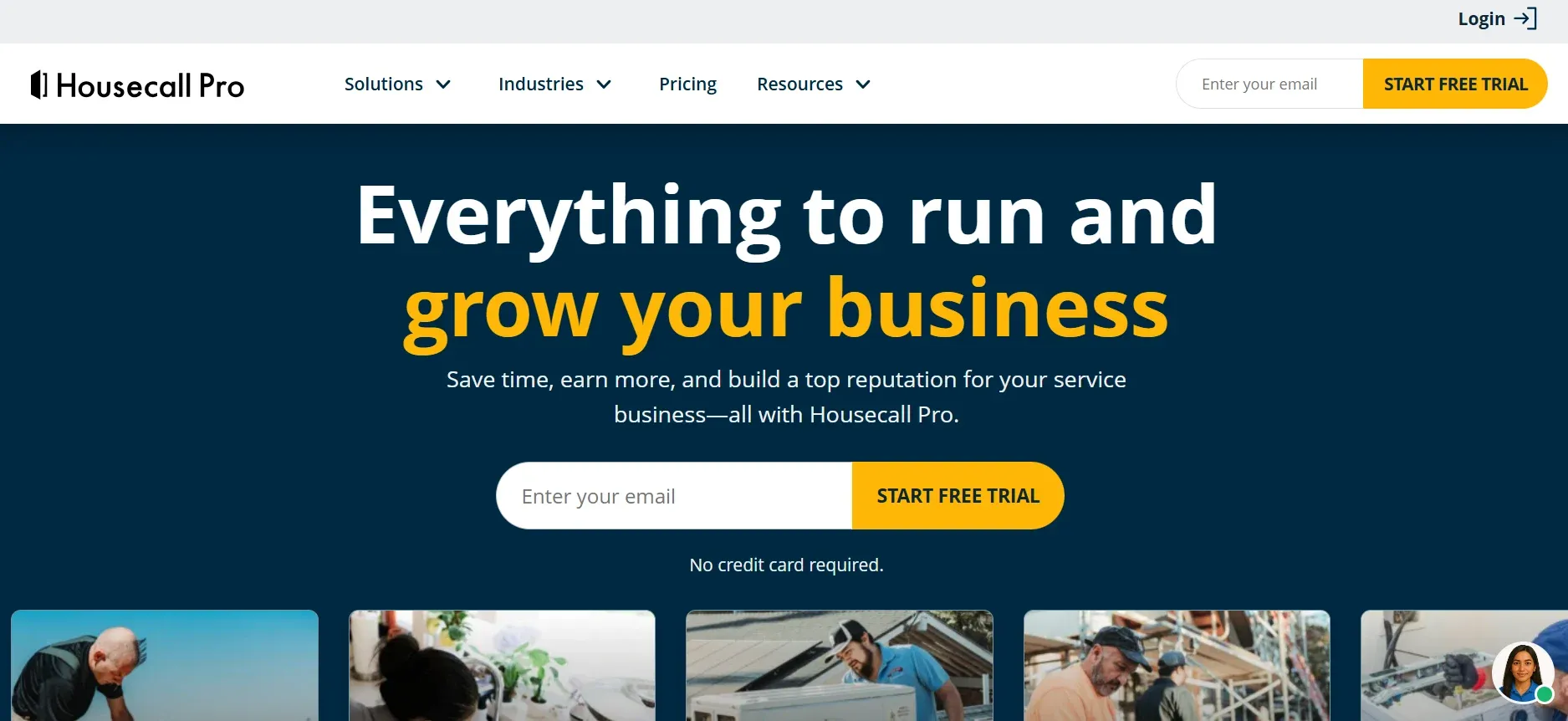
Housecall Pro
Housecall Pro is an all-in-one home services platform with a built-in pricebook and estimating alongside scheduling, dispatch, invoicing, and payments. Techs can build estimates on-site, present options, and collect payment, while the office keeps pricing and QuickBooks in sync.
Platforms: iOS, Android, and web.
Pricing: Basic from about $59 per month, Essentials roughly $149 to $189, and MAX about $299 to $329, with extra users around $35 each. There is a 14-day trial but no permanent free plan.
Pricing and estimating strengths: built-in pricebook, on-site estimates, multi-option proposals, and two-way QuickBooks-synced invoicing.
Pros: quick to adopt, strong QuickBooks depth, and built-in marketing and payments.
Cons: the bill climbs fast with add-ons and extra users, and job costing is lighter than enterprise tools.
Best for: residential plumbing shops that want simple, integrated pricing inside a full operations app.
2
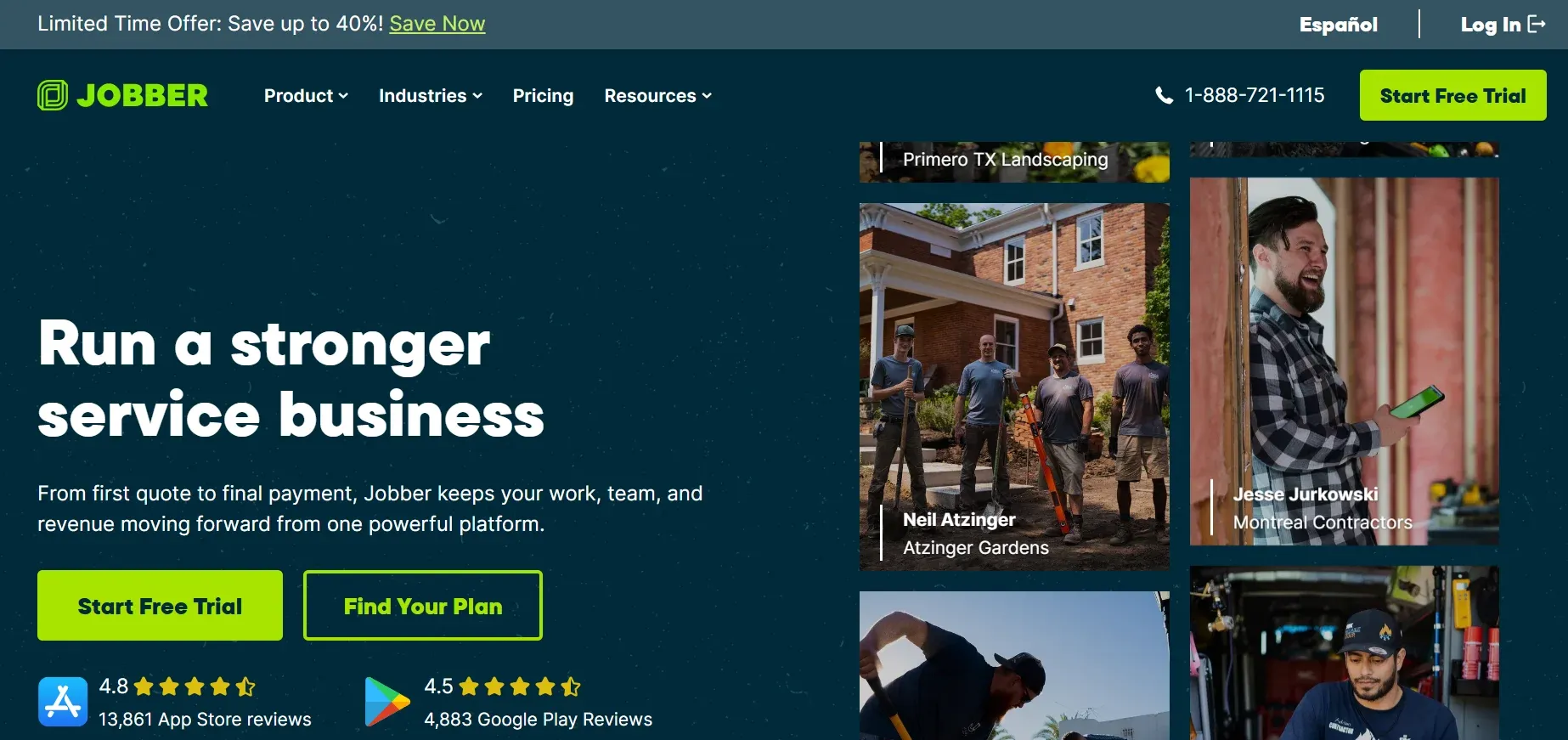
Jobber
Jobber is a widely praised, user-friendly field service platform. Plumbers can build and text quotes, run good-better-best-style options, schedule, optimize routes, and collect payment on-site, all from one clean mobile app, with published, transparent pricing.
Platforms: iOS, Android, and web.
Pricing: Core from about $39 per month (1 user) to Plus at around $599 (15 users), with extra users at about $29 each. Annual billing can save up to roughly 40 percent, and there is a 14-day free trial.
Pricing and estimating strengths: fast quote-to-invoice workflow, automated quote follow-ups, and a client hub for online approvals.
Cons: per-user fees add up, and some advanced reporting and job costing is limited to higher tiers.
Best for: small plumbing businesses that want easy, professional quoting in a simple system.
3
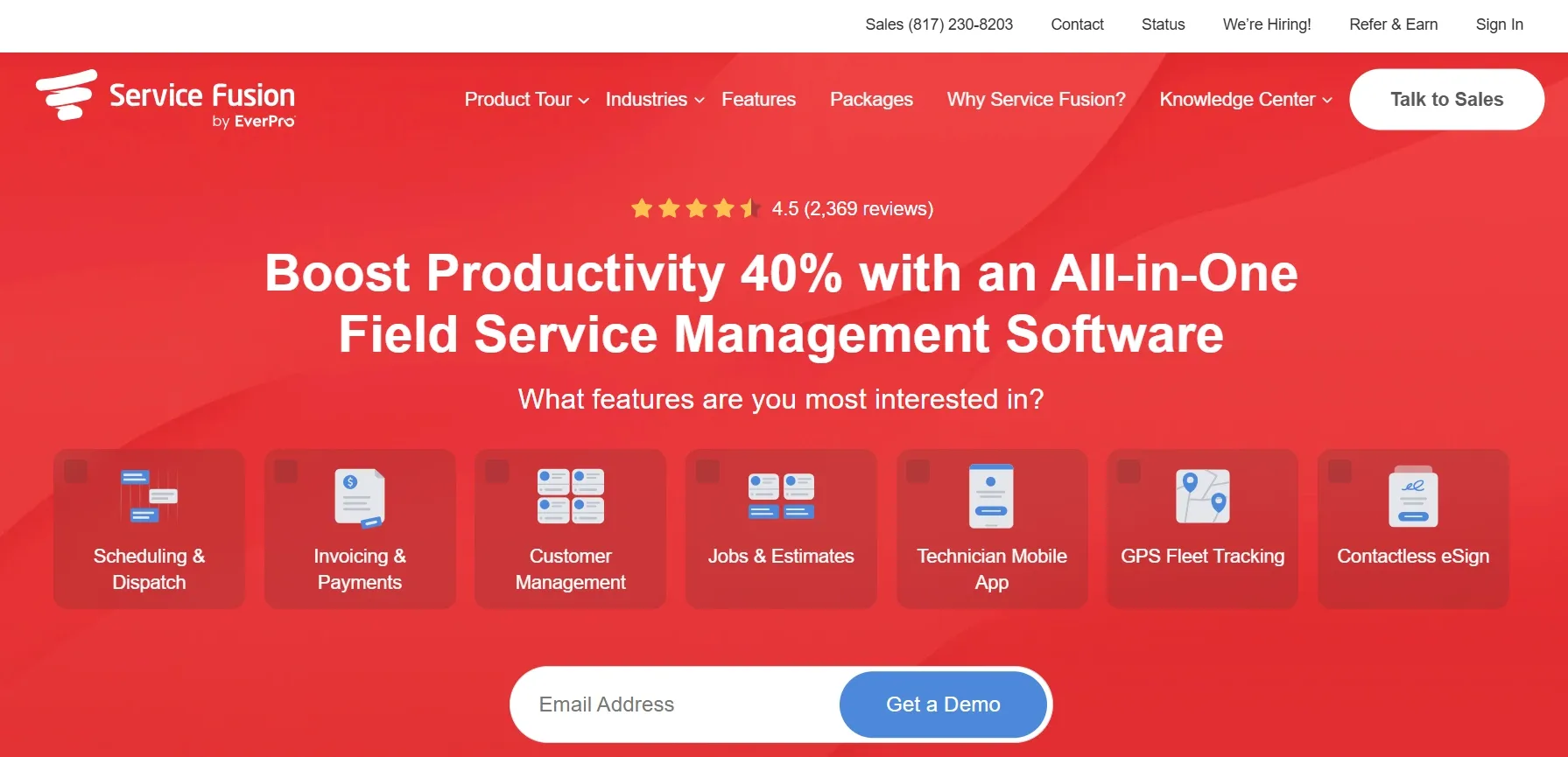
Service Fusion
Service Fusion is an all-in-one field service platform known for flat-rate pricing and unlimited users, keeping costs predictable as you grow. It covers estimates, customer management, scheduling, dispatch, invoicing, and payments.
Platforms: iOS, Android, and web.
Pricing: flat-rate tiers commonly running from about $208 per month (Starter) to roughly $245 (Plus) and higher (Pro), with no per-user fees.
Pricing and estimating strengths: estimate creation with customer tags and dispatch zones, plus on-site invoicing and payments.
Pros: no per-seat charges, easy setup, strong value for multi-tech teams.
Cons: the mobile app lacks some advanced tools, and reporting can feel rigid.
Best for: growing plumbing shops that want full estimating without per-seat fees.
4
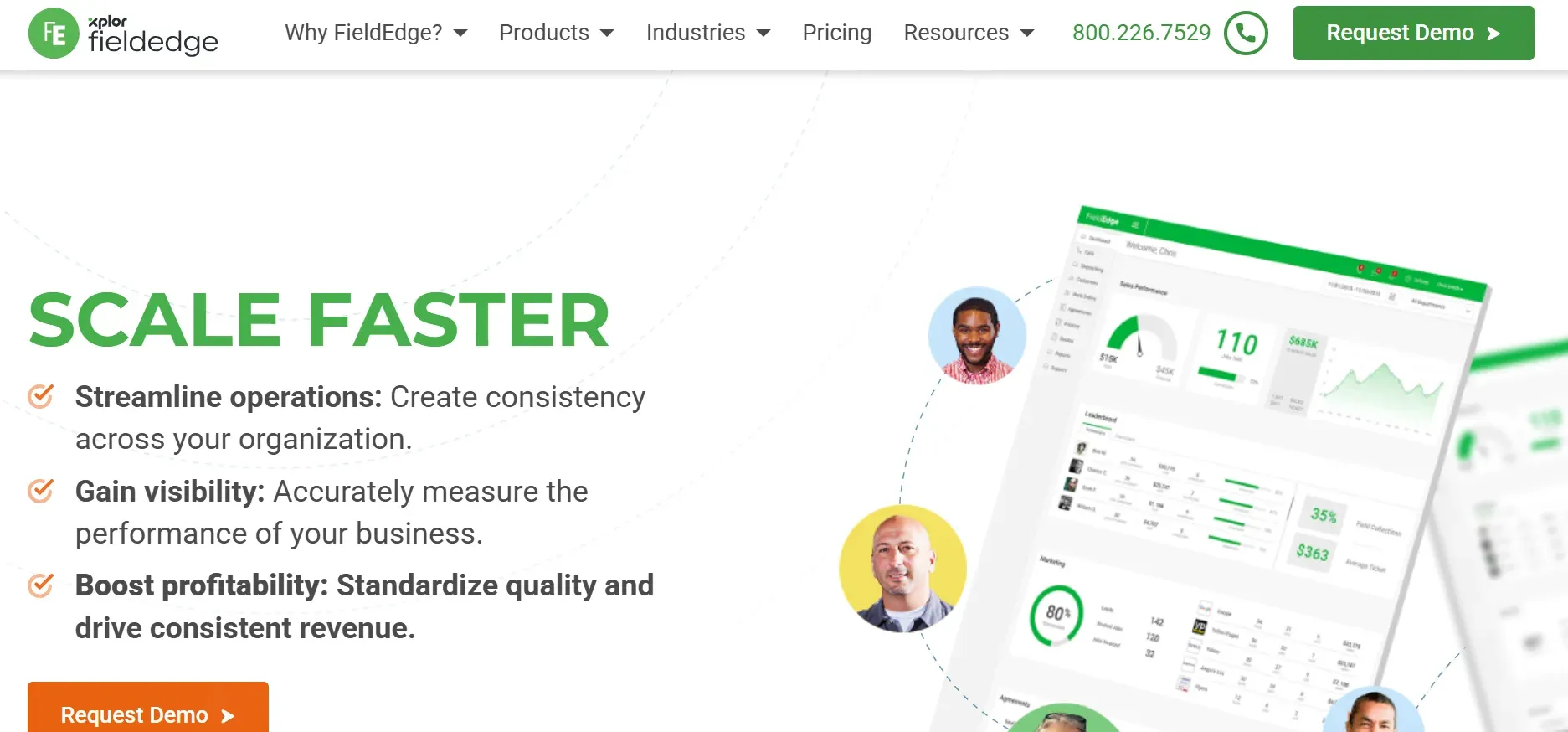
FieldEdge
FieldEdge is a field service platform purpose-built for trades like plumbing and HVAC, pairing quoting, invoicing, scheduling, dispatch, and service agreements with deep QuickBooks integration that keeps pricing and accounting aligned.
Platforms: iOS, Android, and web.
Pricing: custom, quote-based via demo, with a monthly fee plus a setup charge. Industry estimates put smaller teams around $100 to $300 per month depending on tech count and tier.
Pricing and estimating strengths: flat-rate pricebook, good-better-best options, and real-time office-to-field price sync.
Pros: mature service-agreement tools and excellent QuickBooks sync.
Cons: no public pricing, fewer integrations, and best suited to a narrower set of trades.
Best for: established plumbing teams that live in QuickBooks and rely on service agreements.
5
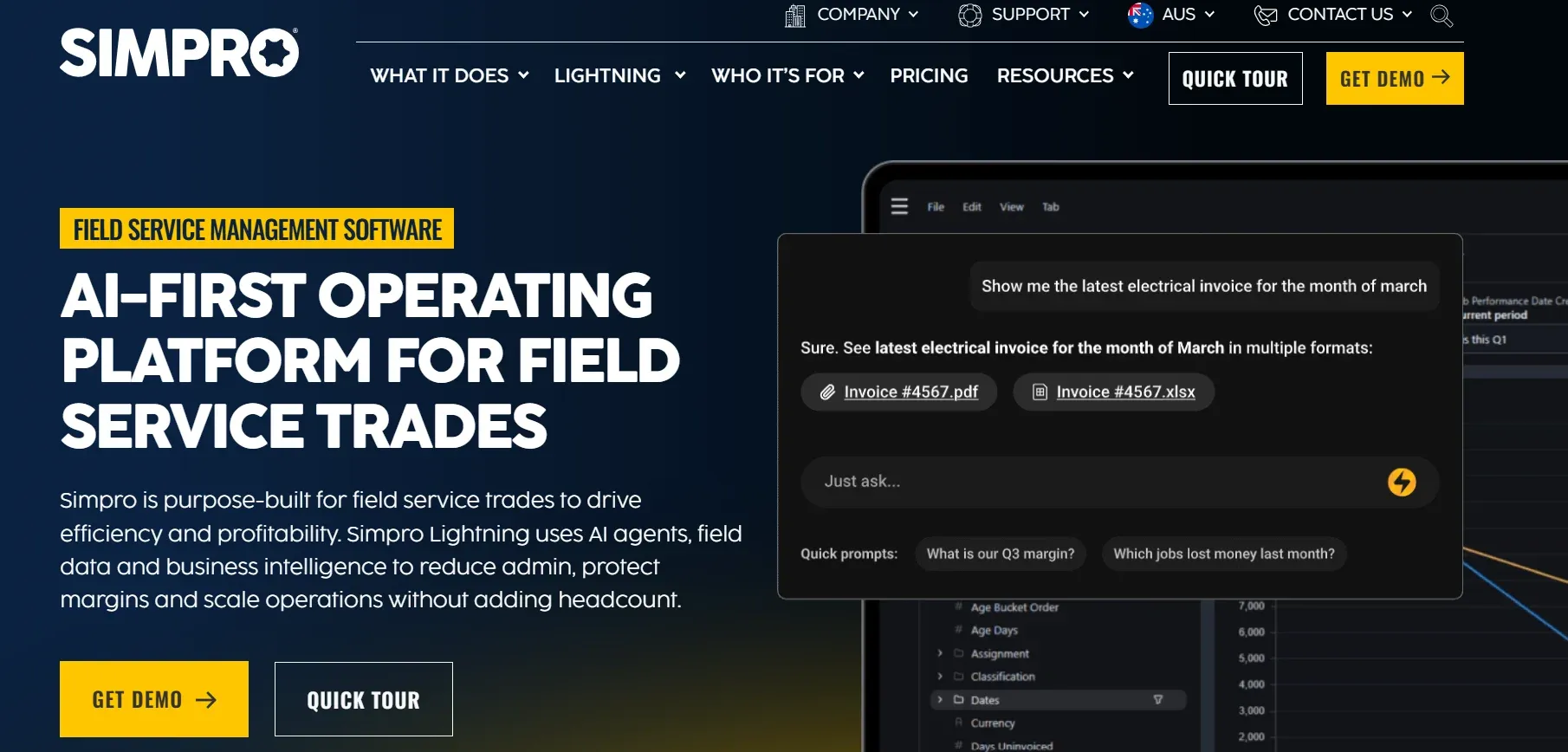
Simpro
Simpro is an end-to-end field service platform built for complex, project-heavy work, with detailed estimating, quoting, job costing, and inventory. It is strong where plumbing intersects with multi-stage commercial and construction projects.
Platforms: iOS, Android, and web.
Pricing: custom, quote-based. It is a more significant investment than entry-level apps and is priced for larger or commercial operations.
Pricing and estimating strengths: granular estimating, job costing against budget, and inventory-linked pricing.
Pros: deep project and cost control for complex work.
Cons: steeper learning curve and can feel over-engineered for simple residential service.
Best for: plumbing companies handling commercial or project work that needs tight cost control.
6
Workiz
Workiz is a field service platform popular with call-heavy home-service trades, built around booking, scheduling, dispatch, estimating, and communication. Its strength is managing inbound-call-driven operations.
Platforms: iOS, Android, and web.
Pricing: a free Lite plan for up to 2 users, then paid tiers roughly from $187 per month (Kickstart) to about $229 (Standard) and $270 (Pro), with Ultimate quoted on request.
Pricing and estimating strengths: quick estimates, online booking, and built-in call tracking that ties leads to jobs.
Pros: a genuine free tier, strong call and booking tools, easy to use.
Cons: advanced automation and reporting sit in higher tiers, and some call features cost extra.
Best for: service-focused plumbing shops that live and die by inbound call volume.
7
Procore
Procore is construction management software aimed at plumbers whose work is primarily or solely construction, covering preconstruction, project and financial management, resource planning, and analytics.
Platforms: iOS, Android, and web.
Pricing: custom, quote-based, with unlimited users. It is built for and priced toward larger construction operations.
Pricing and estimating strengths: construction-grade budgeting, bid management, and financial controls rather than flat-rate service pricebooks.
Pros: powerful for drawings, documents, and large-project financials.
Cons: overkill and a poor fit for service or hybrid plumbing shops.
Best for: construction-focused plumbing contractors, not service-based shops.
8
Joist
Joist is a focused estimating, invoicing, and payments app for contractors. It is lighter than a full field service platform but strong and affordable at the core estimate-to-payment basics, with QuickBooks sync.
Platforms: iOS, Android, and web.
Pricing: a free version is available, with an affordable Pro upgrade (commonly around $12 to $15 per month) that unlocks more estimating and document features.
Pricing and estimating strengths: fast, professional estimates and invoices with deposits and online payments.
Pros: very low cost, simple, quick to learn.
Cons: no scheduling, dispatch, or pricebook automation, so it is estimating-only.
Best for: solo plumbers and small shops that want simple, dedicated estimating and invoicing.
9
Profit Rhino
Profit Rhino, powered by Callahan Roach, is a dedicated flat-rate pricebook and mobile sales tool built specifically for plumbing, HVAC, and electrical contractors. Rather than running your whole operation, it does one thing exceptionally well: gives techs an accurate, image-driven pricebook and good-better-best options to present in minutes. It integrates with and exports to most major field service platforms.
Platforms: iOS, Android, and web.
Pricing: subscription-based, quoted on request.
Pricing and estimating strengths: a prebuilt, fully customizable flat-rate pricebook with 135-plus good-better-best recommendations, cross-sells, upsells, and built-in financing, kept current by the Profit Rhino team.
Pros: purpose-built for pricing, proven to raise average ticket, and integrates with the FSM you already run.
Cons: it is not a full field service platform, so you still need scheduling, dispatch, and invoicing elsewhere.
Best for: plumbing shops that want a best-in-class pricebook to bolt onto their existing software.
10
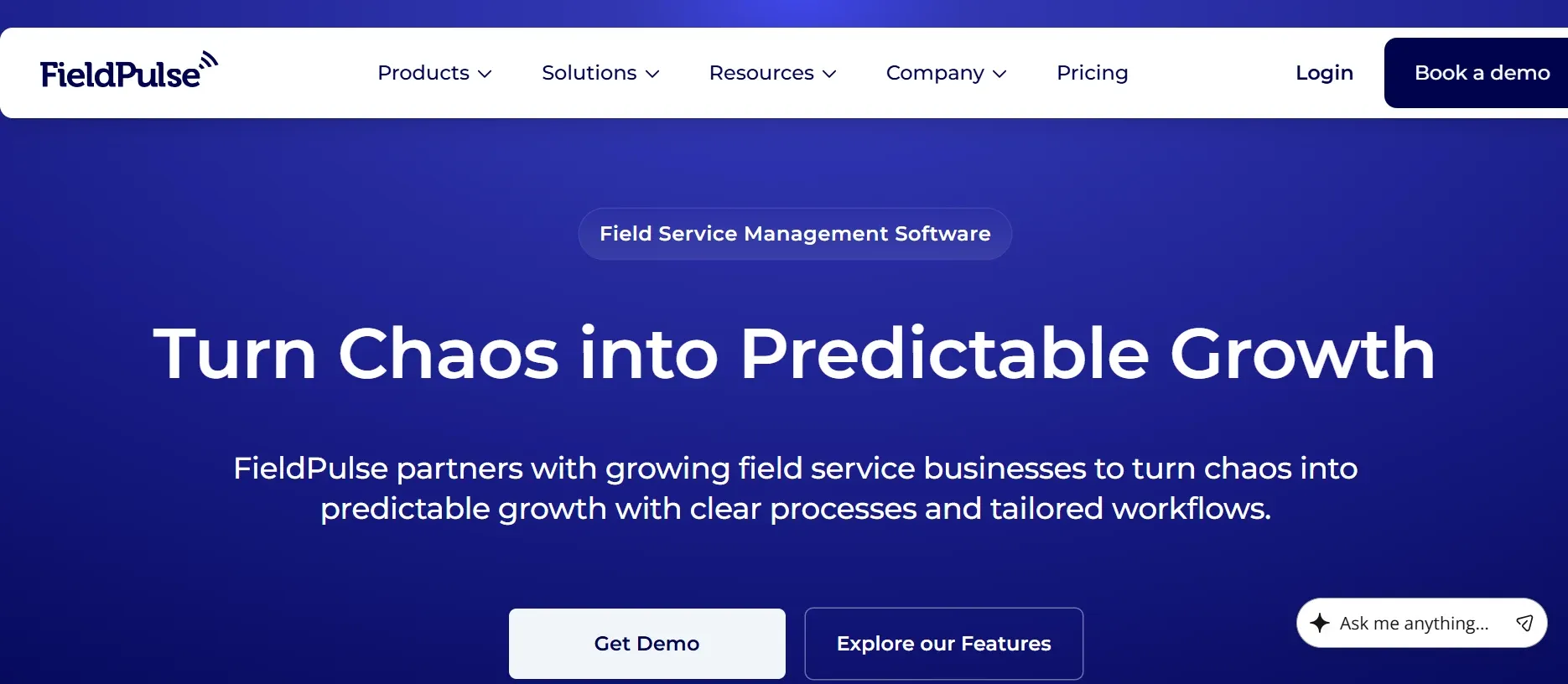
FieldPulse
FieldPulse is a field service platform with a notably strong pricebook and estimating engine, popular with plumbers and electricians who want quick, consistent, margin-aware quoting. Its prebuilt pricebook lets techs assemble estimates in a fraction of the usual time, with material and labor costs already baked in.
Platforms: iOS, Android, and web.
Pricing: custom, quote-based via demo.
Pricing and estimating strengths: a prebuilt pricebook with preset service prices, material and labor costs, custom categories, and gross-margin targets that flag low-margin bids before you send them.
Pros: fast quoting, genuinely useful margin tools, and well-reviewed support.
Cons: pricing is not published, so you need a demo to gauge fit and cost.
Best for: growing plumbing teams that want a full platform with serious estimating muscle.
Price Right, Then Capture and Close the Lead
Here is the gap no pricebook fills. A perfect estimate is worthless if the call that would have triggered it went to voicemail, or if the proposal you built never got a follow-up. Industry benchmarks suggest contractors miss anywhere from a quarter to well over half of inbound calls, and most callers who reach voicemail simply dial the next plumber. The research on speed is blunt: a study published by Harvard Business Review found the first business to respond wins the large majority of jobs. And plenty of revenue hides in estimates that were sent and then forgotten.
This is where CloseCrew complements whichever pricing app you choose. It is not a pricebook; it is the AI front desk that ensures your pricing has something to work with. Larry, CloseCrew's AI employee, answers every call, text, and web inquiry around the clock, qualifies the caller, and books the job into your system, then follows up automatically on unsold estimates, re-engages quiet customers, confirms appointments, and requests reviews. Your pricing app builds the profitable quote; Larry makes sure the lead arrives and the estimate gets chased.
CloseCrew also offers free plumbing tools to help you quote and run the numbers. Use the pipe sizing calculator to size lines correctly before you quote, the missed call cost calculator to see what unanswered calls are costing you, and browse the rest of the free plumbing tools. Then book a demo to watch Larry handle a live call.
Picking the right pricing app is a big step toward healthier margins. But sharp pricing only pays off on the jobs you actually capture and close.
How to Choose a Plumbing Pricing App
Weigh these factors against how you actually quote and run jobs:
Integration. The app should connect your pricebook to invoicing, accounting, and reporting so a price entered once flows everywhere without re-keying.
Pricebook maintenance. Prioritize bulk editing and, ideally, dynamic or supplier-linked updates so prices never go stale.
Estimate quality. Look for good-better-best proposals, templates, and financing to lift close rates and ticket size.
Mobile capability. Techs should build and present estimates, capture signatures, and take payment from the field.
Follow-up tools. Automatic reminders and view or sign alerts on unsold estimates protect revenue you have already earned the chance at.
Scalability and support. Pick a platform your team will actually use, with onboarding and support that match your size.
The Bottom Line
The right plumbing pricing app protects your margin by keeping every tech on the same current pricebook and making professional, profitable estimates fast to build. Match the tool to your size and the kind of work you do, favor one that integrates with the rest of your operation, and keep your markups consistent.
Then make sure that pricing has jobs to work on. Size your biggest leak with the free missed call cost calculator, and book a CloseCrew demo to see how Larry captures every lead and chases every estimate your pricing app helps you build.
Still mapping out how lead capture fits alongside your pricing tools? Our team is happy to talk it through.
Frequently asked questions
What is the best app for pricing plumbing jobs?
It depends on your size and mix of work. Small residential shops often do well with Housecall Pro or Jobber, project-heavy companies lean toward Simpro, and solo operators may prefer a focused estimating app like Joist. The best pick keeps your pricebook current and connects to the rest of your workflow.
How much should I mark up plumbing materials?
The common industry range is 40 to 60 percent, applied consistently across materials to cover handling, truck stock, and overhead. Inconsistent markup is a leading cause of lost margin, so a pricebook that enforces one multiplier helps.
Is flat-rate or hourly pricing better for plumbing?
Flat-rate suits predictable, repeatable jobs and tends to raise average ticket, while hourly fits unpredictable diagnostic or older-system work. Many shops use a hybrid, flat-rating known work and billing time and materials for the unknowns.
Do I need a dedicated pricing app or a full field service platform?
If you only need estimates and invoices, a focused app like Joist can be enough. Most growing plumbing companies prefer an integrated platform so pricing, scheduling, invoicing, and accounting all share one source of truth.
How do I stop losing money on quotes I already sent?
Follow up relentlessly. Use your app's reminders and view-or-sign alerts, and pair it with a system that chases unsold estimates and answers new leads automatically so nothing slips.
Related tools
Run the numbers before you update your price book or field software.
Free Plumbing Templates
Invoices, estimates, and flat-rate pricing sheets for plumbing contractors.
No single pair does everything, though. A smart plumber keeps a few types stocked in the van and reaches for the right one per job. This guide rounds up the best plumbing gloves in six categories: disposable, cut-resistant, chemical-resistant, grip, heat-resistant, and cold-weather.
This guide is a complete, plain-language reference to the symbols you will meet on plumbing plans: pipeline and service-line symbols with their abbreviations, piping and fitting symbols, valves, instruments, fixtures, equipment, fire-protection symbols, and the building-context marks that share the page.
Never miss a Plumbing service call again. Let Larry, your AI receptionist, book jobs while your crew is in the field.
We will run your numbers on the call and tell you if the maths does not work for a shop your size. That happens, and it is a cheaper conversation than finding out three months in.