Equipment and Tools

Best Work Van for HVAC: 7 Top Vehicles and How to Choose in 2026

Your work van is the most expensive tool your HVAC business buys after payroll, and it's the one your customers see first. Choose well and it pays you back for a decade. Choose wrong and you fight cramped cargo, weak payload, and surprise repair bills every week. This guide ranks the seven best HVAC work vans for 2026 with real specs, current prices, and a simple way to match a van to how you actually work.

12 min readPublished June 19, 2026Updated July 14, 2026

Ask any HVAC owner what runs the business, and they'll name the crew and the phone. The vehicle parked in the driveway every morning rarely makes that list, yet it quietly sets the ceiling on how much work actually gets done. A van that is too small, too thirsty, or forever in the shop will cap your capacity no matter how skilled your technicians are.

The choice is also harder than it first appears. Every major manufacturer offers dozens of configurations across roof heights, wheelbase lengths, payload ratings, and now gas, diesel, and battery-electric drivetrains. The right answer for a solo technician running residential service calls looks nothing like the right answer for a multi-truck install crew covering an entire metro.

That is what this guide is built to settle. We compare seven of the strongest HVAC work vans for 2026 on the numbers that shape your day, including cargo room, payload, fuel or energy costs, and reliability. Then we lay out how to match a van to your routes, organize it for speed, and protect the revenue that the van alone can't capture.

Part of the Equipment and Tools section in the HVAC Business Blog.
Why the Right Work Van Matters for HVAC Contractors

A work van directly shapes how much you earn and how smoothly your days run. Three factors stand out.

Productivity. When a van is sized correctly and stocked well, technicians spend less time driving back for forgotten parts and more time billing hours. Even 20 minutes saved per call adds up to extra jobs every week.

Reliability. HVAC vehicles rack up serious mileage and carry heavy loads daily. A model with a strong reliability record keeps you off the side of the road and away from costly downtime. Routine, scheduled maintenance extends that lifespan considerably.

Brand visibility. A clean, wrapped van is a moving advertisement that puts your logo, phone number, and tagline in front of customers at no recurring cost. To get the most from it, make the name on the door memorable (these HVAC company name ideas can help) and pair the rolling billboard with a few proven HVAC marketing ideas so the impression turns into calls.

Customization. Full-size vans give you the room to add shelving, bin systems, ladder racks, and equipment-specific mounts so each vehicle is purpose-built for the work your team actually does. If you're still getting your operation off the ground, our guide on how to start an HVAC business walks through outfitting that first truck.

The right van keeps your crew moving in the field. The right system keeps the work coming in so that van never sits idle.

The 7 Best Work Vans for HVAC in 2026

The list below spans budget workhorses, premium long-haulers, and the newer electric options now entering service fleets. Prices reflect starting MSRPs and shift with configuration, so treat them as a baseline rather than an out-the-door figure.

1

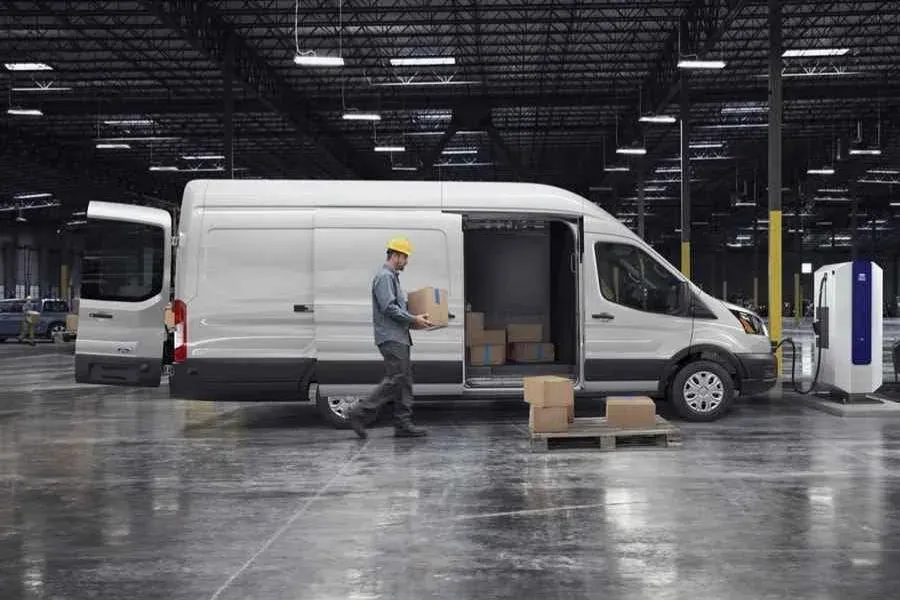
Ford Transit: Best All-Around Choice

The Ford Transit has been the best-selling full-size van in the U.S. for years, and it earns that position with sheer flexibility. Buyers choose from three roof heights, multiple wheelbase lengths, and a lineup of V6 engines, including a twin-turbo EcoBoost for crews that haul heavy. Power runs through a 10-speed automatic, and intelligent all-wheel drive is available without raising the load floor, a real advantage in snowy regions.

Cargo volume ranges from roughly 246 cubic feet in the smallest configuration to about 487 cubic feet in the high-roof extended body, enough for a fully shelved walk-in setup. Maximum payload tops out above 5,000 pounds on heavy-duty trims, and towing reaches around 6,900 pounds when properly equipped.

  • Cargo volume: 246 to 487 cu ft

  • Engine: Gas V6 (incl. 3.5L EcoBoost), 10-speed auto, RWD or AWD

  • Real-world MPG: 16 to 19

  • Starting price: about $50,500

  • Best for: Contractors who want one platform that scales from light residential to heavy commercial

Ford Transit.webp
2

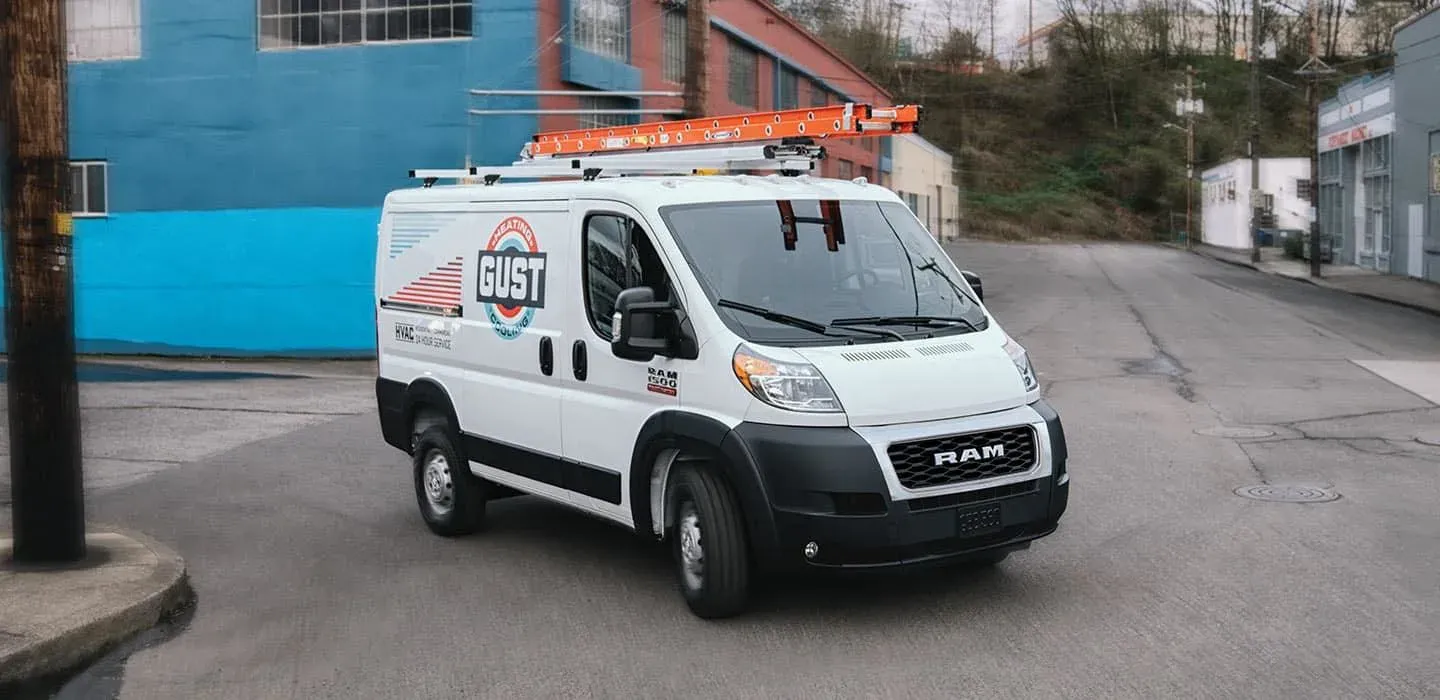
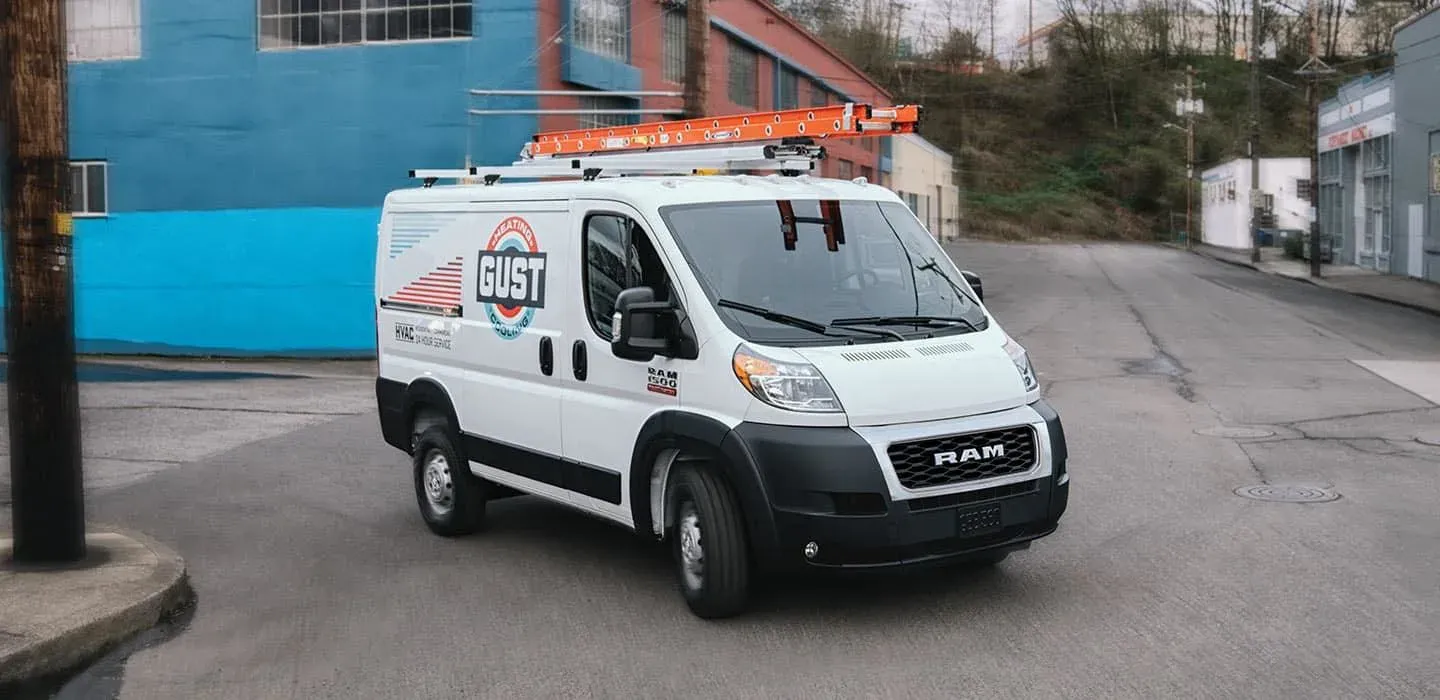
Ram ProMaster: Best Value and Easiest to Upfit

If your priority is maximizing usable space per dollar, the Ram ProMaster is hard to beat. It's the only full-size van in its class with front-wheel drive, which results in the lowest, flattest, and widest load floor in the group. That geometry makes loading equipment easier and gives upfitters a clean canvas for shelving and workbenches.

The 3.6L Pentastar V6 (276 hp) pairs with a 9-speed automatic, and front-wheel drive adds welcome traction on wet docks and snowy mornings. Cargo volume reaches roughly 524 cubic feet in the tallest extended configuration, with a class-leading payload approaching 4,750 pounds.

  • Cargo volume: up to 524 cu ft

  • Engine: 3.6L V6, 9-speed auto, FWD

  • Real-world MPG: 18 to 20

  • Starting price: about $47,000 to $49,000

  • Best for: Shops that want the most cargo room and the simplest interior to customize

Ram ProMaster.webp
3

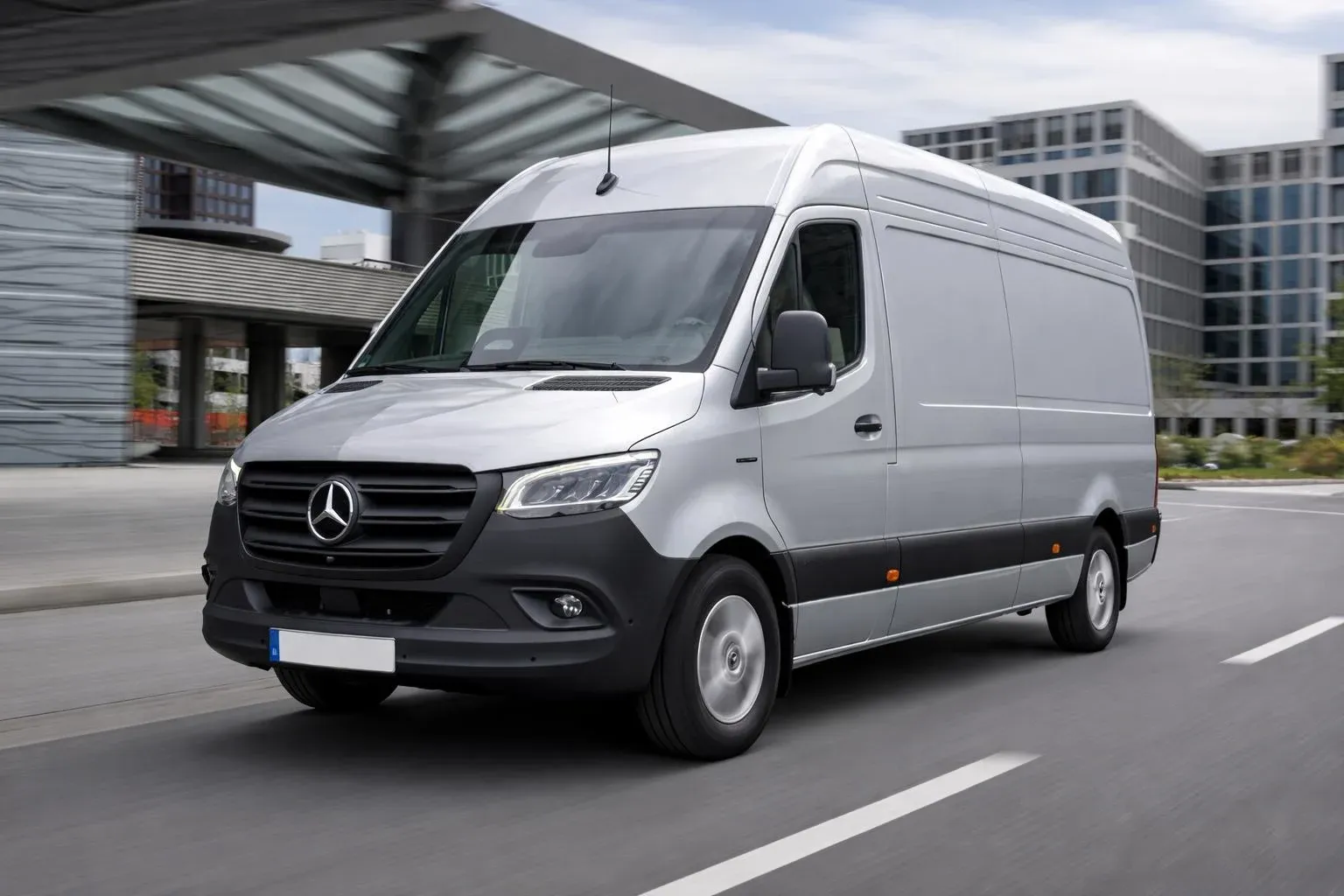
Mercedes-Benz Sprinter: Best Premium and Long-Haul Option

The Sprinter is the van against which the rest of the segment is measured. It costs more upfront, but contractors who treat a vehicle as a decade-long business tool often find the premium pays off through build quality and strong resale value.

A 2.0L turbo-diesel four-cylinder engine (offered in 168- or 208-hp tunes) delivers torquey, fuel-efficient performance, and all-wheel drive is available on many configurations. With multiple wheelbases, two roof heights, and an extended body, the Sprinter can be configured for nearly any HVAC application, and the high-roof models let most technicians stand fully upright inside.

  • Cargo volume: up to 586 cu ft

  • Engine: 2.0L turbo-diesel I4, 9-speed auto, RWD or AWD

  • Real-world MPG: 18 to 22 (diesel)

  • Starting price: about $49,000 to $51,000

  • Best for: Established businesses prioritizing durability, diesel range, and resale value

Mercedes-Benz Sprinter.webp
4

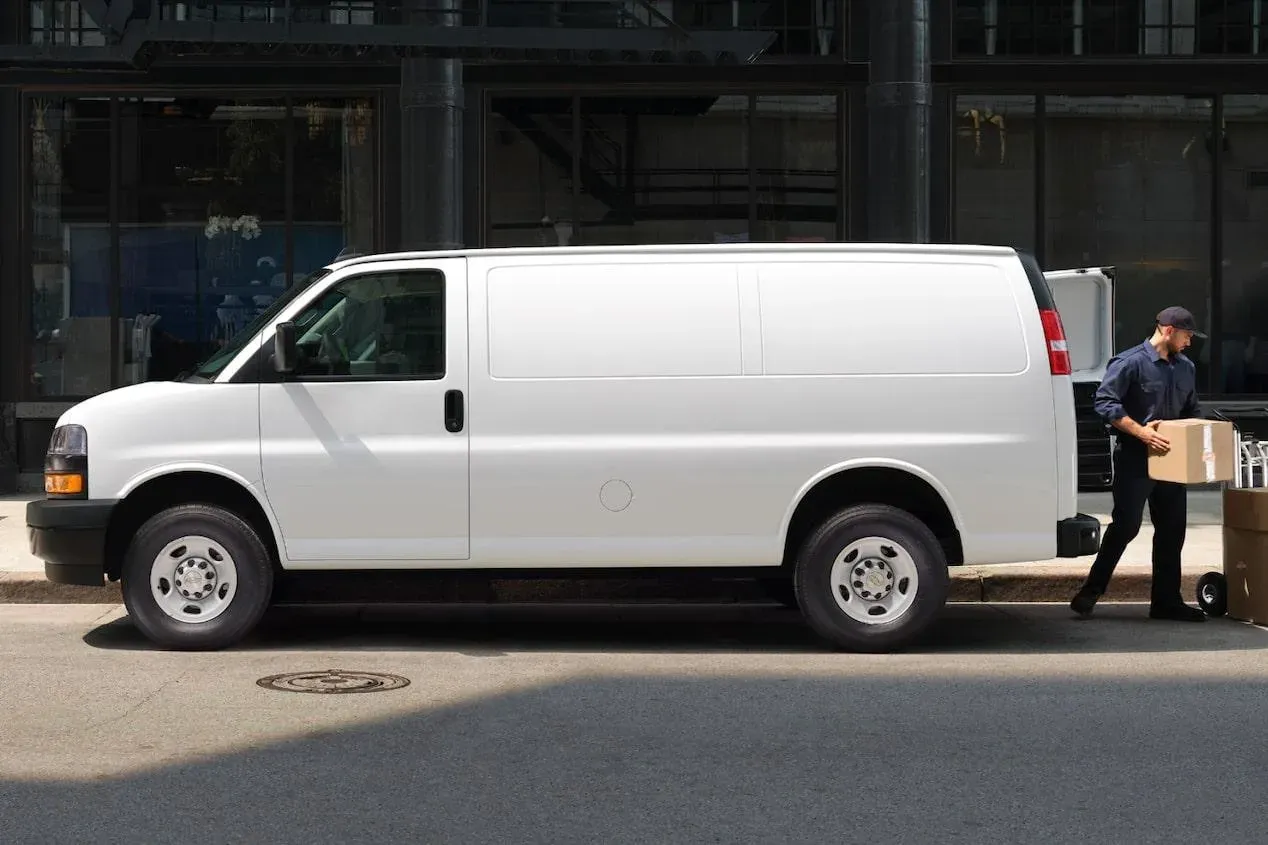
Chevrolet Express: Best Budget Workhorse

The Chevrolet Express has been on the road essentially unchanged for two decades, and that's part of its appeal. Mechanics know it inside and out, parts are cheap and everywhere, and the platform is dead simple to service. Two engine choices (a 4.3L V6 and a 6.6L V8) route through an 8-speed automatic.

It lacks the towering high-roof options of the Euro-style vans, so you won't stand up inside a standard model, but cargo space runs up to roughly 314 cubic feet in the extended version, and towing capability is strong for the class. For a price-focused fleet that values predictability over modern packaging, it remains a smart buy.

  • Cargo volume: up to 314 cu ft

  • Engine: 4.3L V6 or 6.6L V8, 8-speed auto, RWD

  • Real-world MPG: about 15

  • Starting price: about $43,800

  • Best for: Budget-conscious fleets that want low purchase and maintenance costs

Chevrolet Express.webp
5

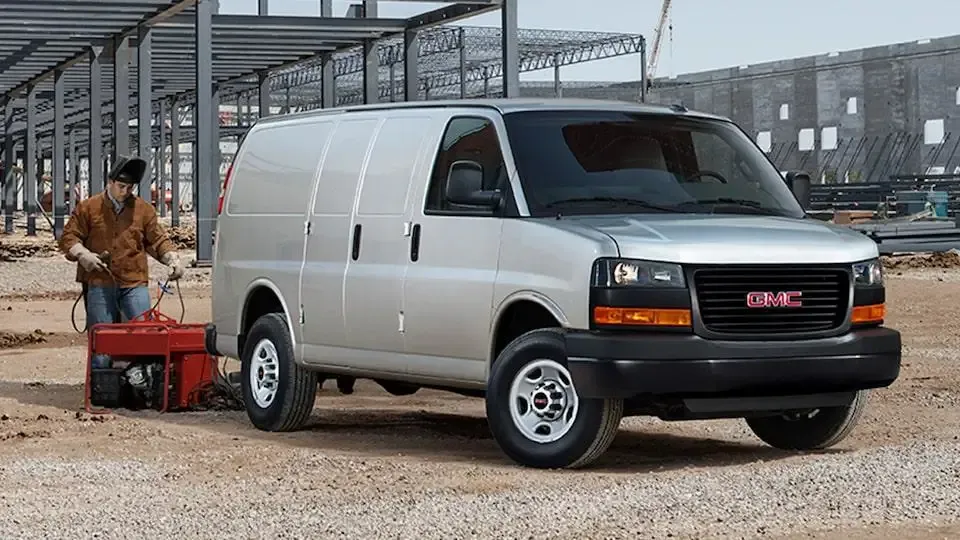
GMC Savana: Best for Reliability

Mechanically a near-twin of the Express, the GMC Savana has built a reputation as one of the most reliable work vans you can buy. Owner satisfaction scores sit well above the segment average, and complaints on recent model years are minimal, exactly what you want from a vehicle that has to start every morning without drama.

It shares the Express engine lineup and 8-speed transmission, offers regular and extended wheelbases with cargo room up to about 284 cubic feet, and includes a large fuel tank that means fewer stops on long routes. Payload runs to roughly 4,280 pounds on higher trims.

  • Cargo volume: 239 to 284 cu ft

  • Engine: 4.3L V6 or 6.6L V8, 8-speed auto, RWD

  • Real-world MPG: about 15

  • Starting price: about $44,600

  • Best for: Contractors who rank long-term dependability above all else

GMC Savana.webp
6

Ford E-Transit: Best Electric Van for Local Routes

For HVAC businesses operating within a defined metro area, the all-electric Ford E-Transit makes a compelling financial case. It uses the familiar Transit body, so the same roof heights, lengths, and upfit options carry over, but swaps the gas engine for a single rear motor producing 266 hp and immediate low-speed torque.

EPA-estimated range sits around 159 miles, which is plenty for a day of local service calls and depot-to-site loops. The real payoff is operating cost: dramatically lower fuel and maintenance spend, plus a quiet, low-vibration cab that's easier on technicians. The trade-off is highway range, so plan around Level 2 charging at your shop.

  • Range: about 159 miles (EPA est.)

  • Powertrain: Single-motor RWD electric, 266 hp

  • Payload: up to 3,300 lbs

  • Starting price: about $51,000 to $55,700

  • Best for: Urban and suburban fleets with predictable daily mileage and depot charging

Ford E-Transit.webp
7

Ram ProMaster EV: Best Electric Alternative

Ram's electric ProMaster brings the platform's signature low, flat load floor into the EV era. After a significant price cut and the addition of cargo-van body styles, it's now far more accessible to working contractors than its launch version.

A 110-kWh battery delivers roughly 164 miles of combined range, rising to around 180 miles in stop-and-start city driving, which mirrors how many HVAC techs actually operate. The front-wheel-drive electric drive module is rated at 268 hp, and the payload sits near 3,000 pounds. Like the gas ProMaster, it has a boxy, low-floor cargo bay that is exceptionally easy to outfit.

  • Range: 164 to 180 miles

  • Powertrain: FWD electric, 268 hp, 110-kWh battery

  • Payload: about 3,000 lbs

  • Starting price: about $58,500

  • Best for: Shops that want EV running costs plus the easiest-to-load cargo area in the class

Ram ProMaster.webp

How to Choose the Best HVAC Work Van for Your Business

With the contenders covered, here's how to narrow the field to the right vehicle for your operation.

Match cargo space and payload to your real load. Weigh and measure what you actually carry on a typical day, including the heaviest jobs. Buy for that, plus a margin. Overloading a van that's too small wears it out fast and is unsafe.

Prioritize easy customization. Look for a model with a square, accessible cargo bay and broad aftermarket support for shelving, bins, and racks. The ProMaster and Transit lead here; the Sprinter is excellent but pricier to outfit.

Weigh fuel and energy costs honestly. Fuel is a major line item when you drive between jobs all day. Diesel and electric options can lower per-mile costs, but only pencil out if your mileage and routes fit their strengths. Run the numbers against your typical week.

Don't ignore reliability and resale. A slightly more expensive van that rarely breaks down and holds its value can be cheaper over a five to ten year ownership window than a bargain model that nickel-and-dimes you. Check owner reviews and recall history before committing.

Protect the investment. A work van is a major asset that carries thousands of dollars in tools every day, so line up the right HVAC business insurance before it ever hits the road.

Consider drivetrain and climate. If you work in snow or on unpaved sites, all-wheel drive (Transit, Sprinter) or front-wheel drive (ProMaster) gives you traction that a standard rear-drive Express or Savana can't match.

Choosing the right van is half of a productive shop. The other half is a calendar that stays full, no matter when the phone rings. That part is easier to understand once you see it running on a real workflow.

How Should You Organize an HVAC Work Van?

A well-stocked van that's a chaotic mess still slows you down. Organization is where good vehicles become productive ones.

Set a company-wide standard. Decide where everything lives and apply the same layout across every van. When any technician can step into any vehicle and find the same part in the same spot, you eliminate wasted searching and make restocking simple.

Run a real inventory system. Track consumables and parts so techs know what's on board before they leave the shop. Standardize what you stock and source it from your go-to HVAC manufacturers and suppliers so reorders stay consistent across the fleet.

Install modular shelving and bins. Adjustable shelving keeps the essential HVAC tools every tech carries secured and visible, and modular systems let you reconfigure as your needs change without rebuilding the whole interior.

Go digital with the back office. Beyond the physical van, keeping customer records, bookings, and follow-ups in one connected system stops jobs from slipping between the call and the invoice. CloseCrew centralizes every lead and conversation in a single view, so your team and your AI assistant always know who they're dealing with and what's owed.

The Van Gets Your Tech There. Make Sure There's a Job Waiting.

A great van solves the second half of the problem: getting your technician and equipment to the job. It does nothing about the first half, capturing the lead and booking it before a competitor does. That's where most HVAC shops quietly lose money.

Around 40% of home services calls come in after hours, on weekends, or while your team is already on the phone, and a missed call usually becomes a missed job. Hiring another dispatcher or CSR to cover the gap is expensive (see what HVAC staff actually cost in 2026), and even a full front desk can't answer two lines at once.

This is the role Larry, CloseCrew's AI employee, was built for. Larry answers every call 24/7, qualifies the caller, checks your availability, and books the job straight into the calendar in the CRM or field service platform you already run, with 200-plus integrations including ServiceTitan. He works calls, texts, webchat, and email from one inbox, in English or Spanish, and follows up on unsold estimates, renews memberships, and requests reviews without anyone reminding him.

Because Larry is trained specifically for HVAC, he tells a no-heat emergency from a routine tune-up and responds accordingly. Contractors using CloseCrew report booking more jobs, setting dozens of extra appointments a month, and saving hours of phone time every week, all without adding headcount. Onboarding is white-glove and typically goes live in days, not months.

So once you've chosen the van that fits your routes and loads, make sure the phone behind it never goes unanswered. See how Larry books more jobs for HVAC shops.

The Bottom Line

There's no universal "best work van for HVAC," only the best van for how you work. A solo residential tech may be happiest in an easy-to-load ProMaster or a local-route E-Transit, while a commercial install crew leans toward a high-roof Transit or a long-haul Sprinter. Budget-driven fleets still can't go wrong with the proven Express and Savana.

Focus less on brand prestige and more on the fit between the vehicle, your daily loads, your routes, and your growth plans. Get that right, organize the interior with discipline, and back it with a front office that books every lead, and your van will pay for itself many times over. Book a CloseCrew demo to see how Larry keeps your calendar full.

Still weighing your options, from the van on the lot to the system answering your phones? Our team can map it to your shop.

Related tools

Run the numbers before you update your price book or field software.

Free HVAC Templates

Invoices, estimates, maintenance agreements, and flat-rate pricing sheets for heating and cooling contractors.

Browse HVAC templates

Contractor Blog

Cross-trade guides on hiring, marketing, and operations for every home services business.

View all guides

Meet Larry

AI receptionist built for HVAC — answers calls, books jobs, and follows up on leads 24/7.

See Larry for HVAC

Related articles

Equipment and Tools

10 Best HVAC Multimeters for Techs in 2026

In this guide, you'll find the best HVAC multimeters for 2026, compare their features, pricing, and pros and cons, and learn which models are best for beginners, professionals, and everyday HVAC troubleshooting.

Read guide

Never miss an HVAC service call again. Let Larry, your AI receptionist, book jobs while your crew is in the field.

We will run your numbers on the call and tell you if the maths does not work for a shop your size. That happens, and it is a cheaper conversation than finding out three months in.

Get a demo