HVAC Business Insurance: Types, Costs & How to Choose (2026)
Most HVAC businesses build from a few core policies: general liability, workers' compensation, commercial auto, and commercial property, often bundled into a business owner's policy (BOP). General liability is commonly required to get a license, sign a lease, or win a contract, and workers' compensation is mandatory in most states once you hire.
17 min readPublished June 12, 2026Updated July 14, 2026
HVAC is a high-stakes trade. Your team handles high-value equipment, live electrical and refrigerant lines, rooftop and ladder work, and customer property, then drives between jobs all day. When something goes wrong, a damaged unit, a job-site injury, a fender-bender in the van, or a client dispute, the bill can be brutal. HVAC business insurance exists to absorb that risk so one bad day does not sink your company.
This guide breaks down the policies HVAC contractors actually need, what each one costs, the providers worth comparing, how to choose, and how to keep claims, renewals, and cancellations from catching you off guard.
HVAC work stacks risk on every front. You handle expensive condensers and furnaces, work around electricity and refrigerant, climb ladders and roofs, and operate inside customers' homes and businesses. A single mistake can mean a ruined unit, an injured technician, water or fire damage, or a lawsuit.
Insurance does three things at once. It covers the cost of damage when something goes wrong, satisfies the licensing and contract requirements that let you operate, and signals to clients and general contractors that you run a legitimate, professional business. Many homeowners and commercial customers will not sign until you show proof of coverage. If you are still setting things up, the U.S. Small Business Administration's overview of business insurance is a useful starting point, and our guide to how to start an HVAC business covers insurance alongside licensing, pricing, and hiring.
The Types of Insurance HVAC Contractors Need
HVAC contractors carry liability on two fronts: the on-site risk of working in customers' homes and businesses, and the post-job risk, known as completed operations, of an installed system that fails months after you leave. Good coverage has to address both. Most HVAC companies build their protection from a handful of core policies, then add specialty coverage as they grow.
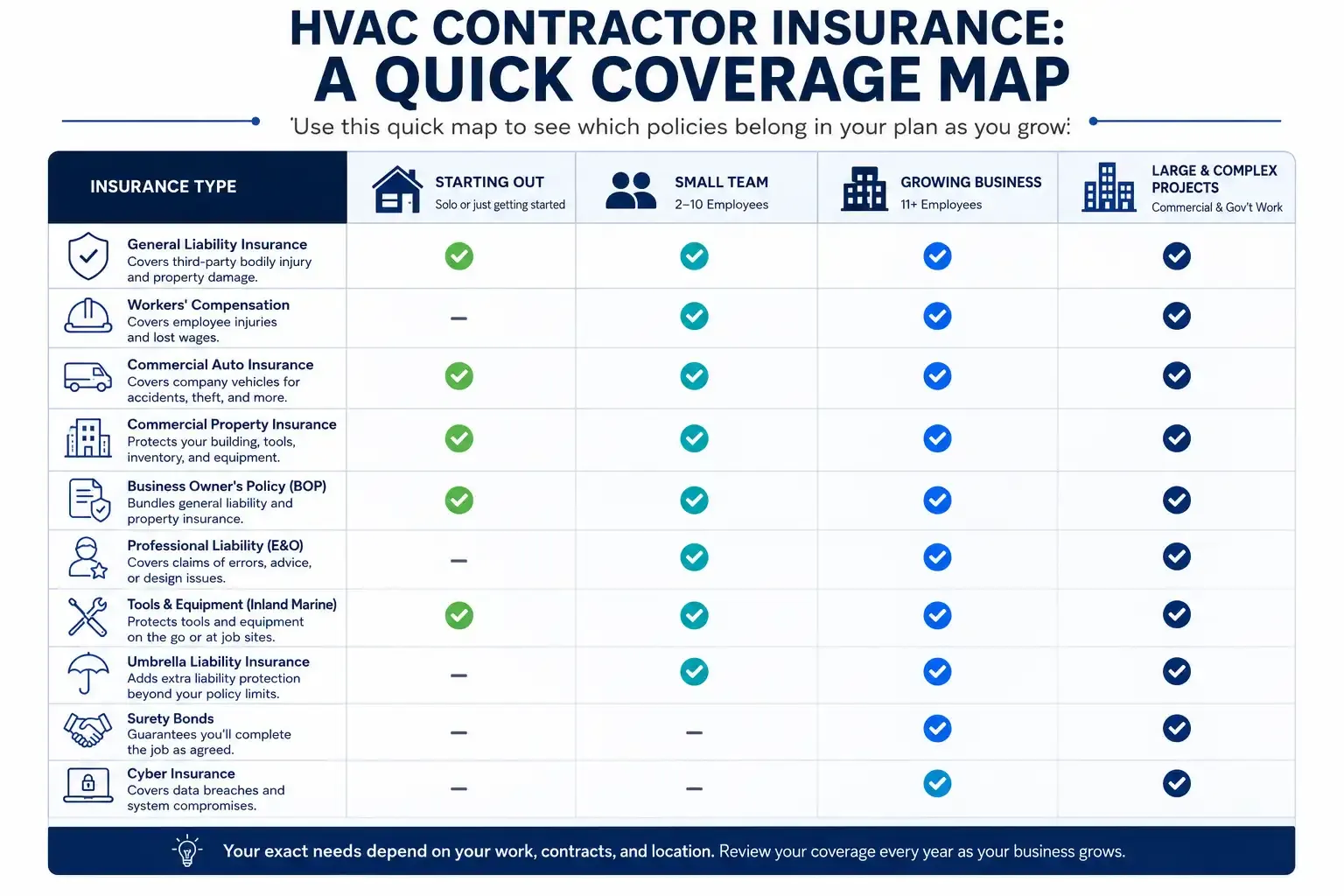
General Liability Insurance
This is the foundation. General liability insurance covers you from third-party bodily injury and property damage caused in conjunction with your work. For example, a client might trip over your equipment or you might damage property during an installation. It is the policy most often cited in licensing rules, leases, and client contracts, and it covers legal defense and settlements that would otherwise come out of pocket.
Workers' Compensation Insurance
Once you have employees, workers' compensation covers their medical bills and lost salary if they are hurt on the job, and in return, it generally shields you from injury lawsuits. HVAC technicians work in genuinely hazardous conditions, around electricity, refrigerant, heavy equipment, and heights, so a strong safety program built on OSHA guidance protects both your team and your premiums. Most states make this coverage mandatory the moment you hire, with real penalties for failing to provide it. Because rates are tied to payroll, it helps to know your local pay scales, as laid out in our HVAC technician salary guide.
Commercial Auto Insurance
Your crews are driving around in company vans all day long, full of tools and parts, and a personal auto policy almost always excludes business use. Commercial auto insurance covers your vehicles against collision, liability for injury or damage done to others, theft, and vandalism. This is non-negotiable once you put your name on a van.
Commercial Property Insurance
If you own or lease a shop, office, or store with tools, parts, and inventory in your trucks, commercial property insurance covers those assets in the event of fire, weather, water damage, and theft. It usually insures the building (if you own it) and the equipment and stock inside, so a break-in or fire doesn’t close your business down entirely.
Business Owner's Policy (BOP)
BOP is a package policy that provides general liability and commercial property in one, often less expensive package, making it a popular choice for small and midsize HVAC companies. You can often buy coverage such as business interruption or equipment breakdown as part of a BOP. The bundle is generally cheaper than buying the policies on their own. Remember, a BOP doesn't cover commercial auto, workers' compensation or professional liability, so you'll still have to carry those on your own.
Coverage for Additional Liability Risks
Beyond the basics, a few specialty policies cover the exposures a standard plan leaves out.
Professional Liability (Errors and Omissions)
General liability protects you against physical injury and property damage. Professional liability protects you against claims that your work, advice or design caused a financial loss (for example, system sized wrong, install underperforms). For HVAC firms doing design or specification work, it fills an important niche.
Tools and Equipment Insurance (Inland Marine)
Your tools move from job to job, and standard property policies generally exclude equipment that’s not located in one place. Tools and equipment protection is a type of inland marine insurance that covers gauges, recovery machines, and power tools against theft or damage while in transit or on a job site.
Umbrella Liability Insurance
An umbrella policy is an extra layer of insurance that sits on top of your other policies and kicks in when your liability or auto policy limits are reached. For a small premium it protects you from the rare catastrophic lawsuit. This matters most on large commercial projects or with several vans on the road.
Surety Bonds
Surety bonds are financial guarantee (not insurance) that you will perform a job as promised. It’s a three-way deal: you, your client, and the bond issuer. For government and big commercial projects, proof of bonding is often required before a contract is awarded. The bond covers the cost of putting it right if you don’t deliver.
Cyber Insurance
As HVAC systems become more sophisticated, more stores connect to building automation controls and keep digital records of client facilities, access points, and payments. Cyber insurance includes the costs of a data breach or system compromise, including notification, recovery and liability. It's easy to overlook in the trades, but it becomes important once your company handles sensitive client data or interacts with connected equipment.
Use this quick map to see which policies belong in your plan as you grow:
Insurance Requirements for Licensed HVAC Contractors
Licensing and insurance go hand in hand and vary from state to state. To apply for or renew an HVAC license in most states, you must provide proof of general liability insurance and workers' compensation. Some states require commercial auto coverage or a surety bond before issuing a license.
Because the rules vary by state and city, always confirm the exact licenses, permits, bonds, and insurance limits with your state licensing board before you bid work. Keep your certificates of insurance handy too, since clients and general contractors often ask for them before a job starts. CloseCrew's free HVAC templates for work orders and service agreements help you keep that paperwork consistent from day one.
How Much HVAC Insurance Costs
There is no single price. HVAC insurance usually runs from $350 to $10,000 annually, depending on what coverage and limits you select, your payroll and headcount, your claims history, and your state. HVAC is a higher-risk trade, so expect to pay more than you would for a lower-risk business.
Here is a typical monthly range for each core policy, based on current market estimates for small HVAC businesses:
Policy
Typical monthly cost
General liability
$70 to $80
Workers' compensation
$130 to $250
Commercial auto
$100 to $200
Commercial property
$35 to $70
Business owner's policy (BOP)
$60 to $150
Annualized, a one-person shop with a single van and no employees can land near the bottom of the overall range, while a multi-truck company with a full crew often runs several thousand dollars a year once the core policies are combined. A few things explain the spread:
Workers' compensation is the biggest swing. It is priced per $100 of payroll and varies widely by state and job classification, so a shop with several field technicians sits at the high end or above.
Commercial auto scales with your fleet. Each added van and each driver's record moves the number, which is why it becomes many contractors' largest line as the team grows.
A BOP usually beats buying separately. Most small shops will start there because it's less expensive to combine general liability and commercial property into one policy rather than having two separate ones.
Add-ons stack up. Professional liability, umbrella, tools and equipment, and a surety bond each carry their own premium on top of the core policies above.
Estimates vary widely by source and by how much coverage you carry. The monthly ranges above reflect lean, small-shop policies. Independent analyses that price fuller coverage, with HVAC's completed operations and field-injury risk built in, run higher. One 2026 analysis by MoneyGeek, fact-checked by the Insurance Information Institute, put the average HVAC policy near $197 a month, or about $2,361 a year, with individual coverages landing roughly at:
General liability: about $377 a month ($4,522 a year), the priciest single line because of completed-operations exposure
Workers' compensation: about $310 a month ($3,724 a year)
Commercial auto: about $204 a month ($2,453 a year)
Commercial property: about $110 a month ($1,319 a year)
Professional liability: about $92 a month ($1,105 a year)
Cyber insurance: about $87 a month ($1,041 a year)
By profile, that analysis estimated a residential service tech carrying general liability and commercial auto at around $581 a month and a small commercial firm adding workers' compensation at around $891 a month. The gap between these and the learner figures above comes down to coverage limits and how much completed operations and field risk your policy is built to absorb.
Bundling into a BOP, maintaining a clean claims and safety record, increasing your deductible, paying annually rather than monthly, and obtaining multiple quotes before renewing are all common ways to lower your premium. It also helps to remember that insurance is a largely fixed cost, so the more jobs you book, the less each one has to carry. Filling the calendar is as valuable as trimming premiums, and our roundup of HVAC marketing ideas shows how to do it.
How to Choose the Right Policy and Provider
A policy is only as good as the company behind it, so it weighs more than the premium.
Assess your risks first. Look at your daily work, headcount, services, equipment value, and any subcontracting to decide what coverage you actually need.
Compare several providers. Request quotes and review limits, deductibles, and exclusions side by side, not just the price.
Check financial strength. Claims are paid from the insurer's reserves, so favor carriers rated highly by agencies like AM Best, ideally "A" or better.
Read claims reviews. A carrier that pays fairly and quickly is worth more than a slightly cheaper one that drags its feet.
Use a knowledgeable broker. A contractor insurance agent can identify coverage gaps and match you with client and licensing requirements.
Set limits for the claims that hurt. The minimum limits are for the small claims, not the big ones. A claim for completed operations on a system you installed two years ago could eat up a $1 million per occurrence limit in legal fees alone. Set limits by asking what it would really cost to resolve a serious loss.
Get compliance-ready. Most general contractors and property managers want a certificate of insurance and some require additional insured status prior to your crew beginning work. Add in your state’s contractor licensing requirements, EPA Section 608 certification if your technicians work with regulated refrigerants, and any performance bond required for public or large commercial work.
HVAC Insurance Providers to Compare
No one carrier is right for every shop, so get a few quotes and compare coverage, not just price. Independent reviewers rate HVAC providers on cost, coverage and customer experience. Recent studies showed low monthly rates of around $154. For many HVAC contractors, these are the suppliers they start with.
1
NEXT Insurance
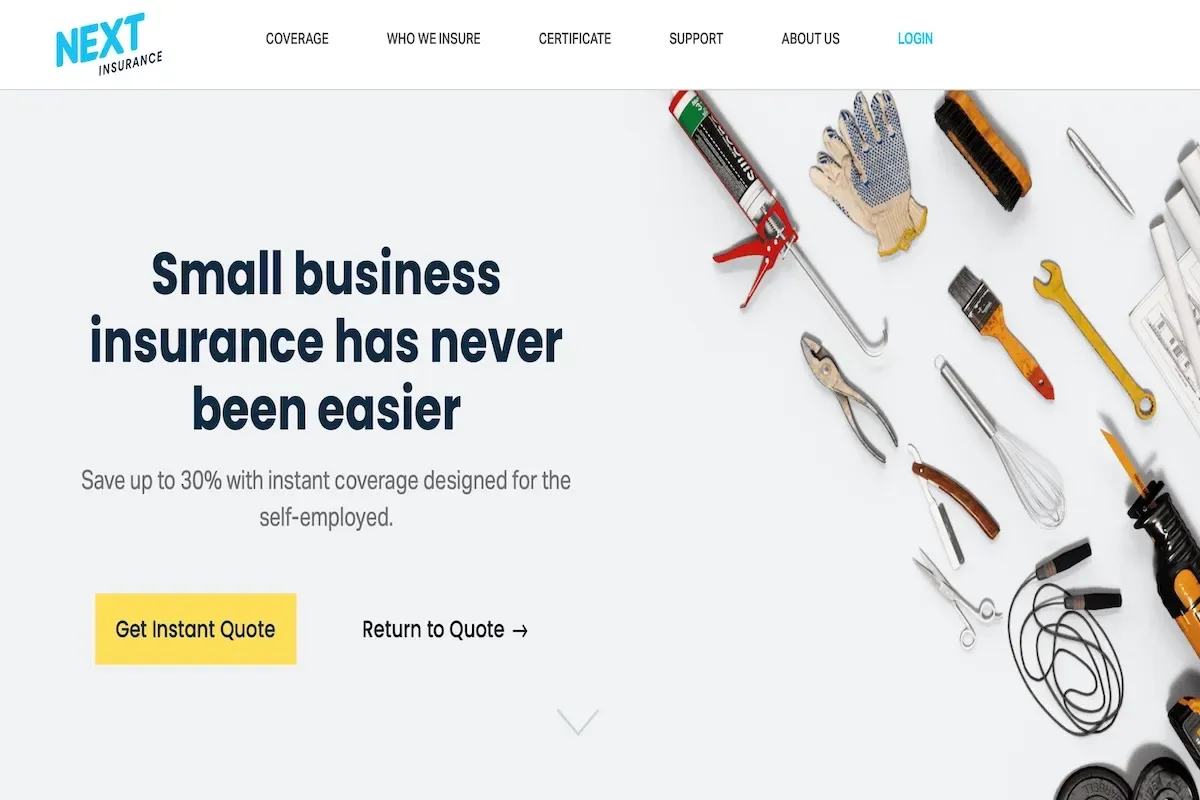
NEXT Insurance is a fully digital insurance provider built for small businesses and contractors, offering coverage such as general liability, workers’ compensation, commercial auto, and tools-and-equipment insurance. It is focused on speed and simplicity, allowing users to manage everything online without paperwork or traditional agents.
The company has helped hundreds of thousands of small-business customers in the U.S. since its launch and has grown rapidly, processing millions of policies and quotes through its digital platform. It’s a great solution for quick and mobile-first insurance management, where users can purchase coverage in minutes, immediately download certificates of insurance, and submit claims straight from their phone.
Best for: small HVAC businesses that want fast, app-based coverage with instant proof of insurance.
2
The Hartford
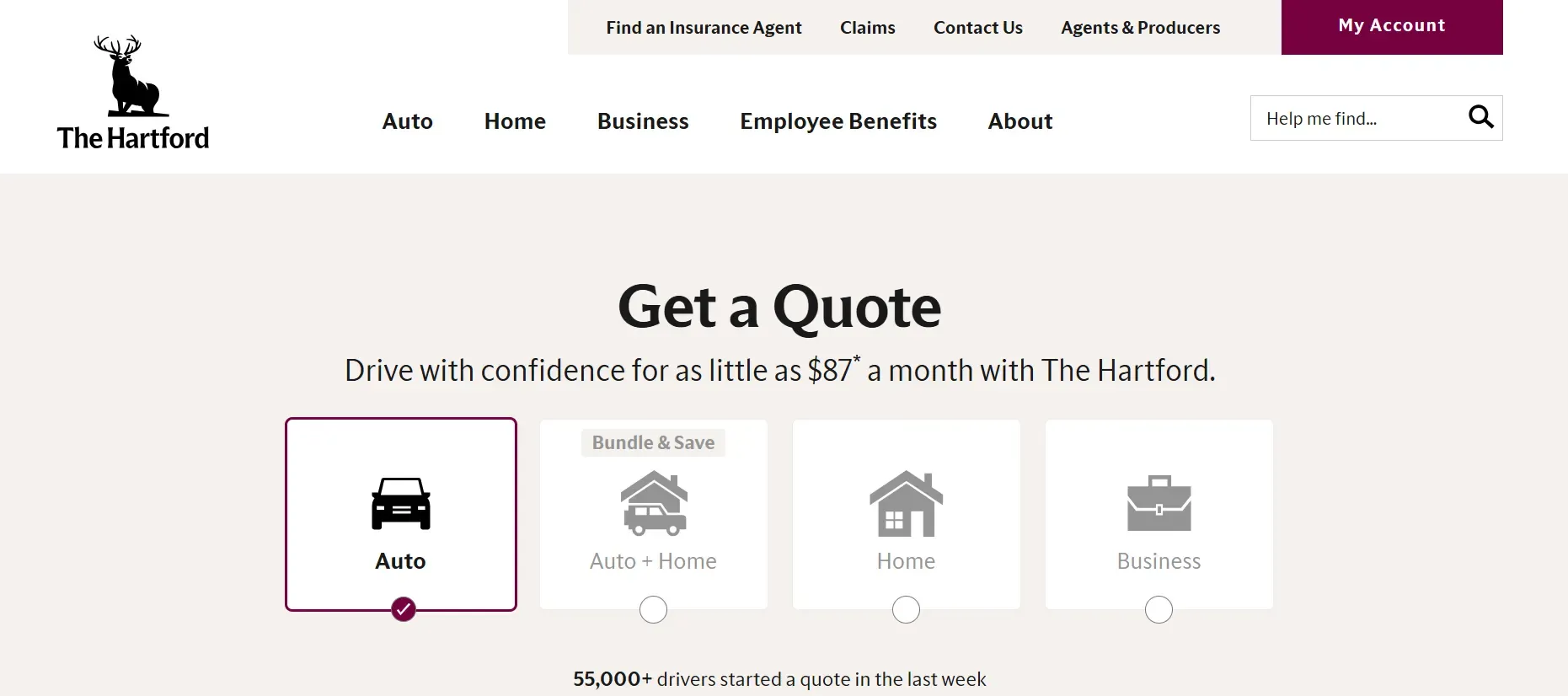
The Hartford is a long-established U.S. insurance company with over 200 years of history, offering coverage across auto, home, and business insurance. It provides competitive pricing, with auto insurance starting as low as $87 per month, and is trusted by millions of customers nationwide.
More than 1.3 million small businesses depend on it, and it’s protected AARP members for more than 40 years. With its strong brand trust and scale, The Hartford continues to position itself as a reliable choice for people and businesses looking for stable, long-term insurance coverage.
Best for: midsize and larger contractors that want tailored packages and broader coverage options.
3
Hiscox
Hiscox is a global specialist insurer serving small businesses, freelancers, and professional service providers with tailored coverage, including general liability, professional liability, cyber insurance, and business owner policies. It focuses on flexible, industry-specific protection, a strong digital-first experience, and fast online quotes.
The company writes billions in annual premiums and has millions of customers in multiple countries, making it one of the most established players in the small business insurance market. Hiscox is recognized for its robust financial stability and credit ratings, and its sustained growth fueled by the demand for cyber and professional liability coverage from today’s service-oriented businesses.
Best for: small HVAC service companies that want straightforward, flexible policies they can manage online.
4
biBERK
biBERK, a Berkshire Hathaway company, has updated its homepage to highlight that it has sold over 1.7 million policies, reflecting strong growth since its launch in 2015. The redesign replaces earlier messaging and focuses more on customer reviews and faster online quote generation.
Strong website traffic and major investment in search marketing are growing the company's digital presence. This makes biBERK a fast growing competitor in the small business insurance space, going after simple, online-first coverage for contractors and small businesses.
Best for: contractors who want a financially strong, low-cost, self-service carrier.
5
Nationwide
Nationwide Mutual Insurance Company is a well-established Fortune 100 firm founded in 1926. It provides a wide variety of insurance and financial products, like annuities, life insurance, property coverage, and retirement plans. Known for its strong financial stability and high credit ratings, the company has built a long-standing reputation for reliability and has paid billions in claims and benefits to policyholders.
For contractors and larger commercial clients, Nationwide provides comprehensive insurance packages that include general liability, commercial property, workers’ compensation, and surety bond options. This makes it a strong fit for businesses taking on bigger or more regulated projects, especially in commercial or government sectors that require broader coverage and bonding support.
Best for: contractors taking on bigger or government and commercial jobs that need bonding and broad coverage.
Whichever route you choose, confirm the carrier is rated "A" or better and specifically lists HVAC or trade contractors as a target market, so your policy covers the risks you actually face.
Managing Your Policy: Claims, Renewals, and Cancellations
Buying coverage is only the start. Three moments tend to catch contractors off guard.
Claims usually take anywhere from a couple of weeks to several months, depending on complexity. Simple property-damage claims move quickly, while disputes involving third parties or missing paperwork drag on. The single biggest factor you control is documentation: complete reports, photos, and records submitted upfront speed everything up. Tools that automatically log every call, text, and job, like CloseCrew, mean those records are already there when you need to file.
Renewals are typically annual and not automatic. Before each one, review your coverage and update the carrier on any changes, like new technicians, added vans, or expanded services, then request fresh certificates of insurance for active clients and projects.
Cancellations require care. Review the cancellation terms first, give written notice with your policy number and preferred date, settle any outstanding premium or fees, and never cancel until a replacement policy is active, since even a short gap can expose you to a claim.
How the Right Systems Protect Your Business
Insurance covers the worst day.” Good systems eliminate the small misses in between that cost you, and make claims far easier when you do file. Clean records are the connective tissue. Documented calls, photos, signed estimates and consistent paperwork are exactly what an insurer asks for, and exactly what a busy HVAC shop tends to lose track of.
That's where CloseCrew comes in. Larry, its AI agent, answers every inbound call as it comes in, day, night or weekend, in English or Spanish, then qualifies the caller, books the job into your calendar and follows up automatically. All calls, texts and conversations are stored in one place so you always have a record of who asked for what and when. Nearly 40 percent of all calls for home services are received after hours and because most callers don’t leave a voicemail, live answering can be the difference between a booked job and a lost job.
Pair that with CloseCrew's free HVAC templates for work orders, service agreements, and invoices, which give you the paper trail insurers want, and its free HVAC tools, including a profit margin calculator to make sure your pricing covers fixed costs like coverage. Protecting the business and keeping it booked are two halves of the same job.
Protect the Business, Then Keep It Booked
Insurance is what saves you on your worst day. Booked jobs keep the lights on every other day, and the two work together: solid coverage protects what you’ve built, and the right systems make sure you keep building it. CloseCrew’s AI agent, Larry, takes every call, schedules the job and automatically follows up, in English or Spanish, 24/7, so a missed call is never a lost customer while you stay protected and out doing the work.
Frequently asked questions
Do HVAC contractors need insurance?
Yes, in most states. Generally, you’ll need general liability to get or renew your HVAC license, and workers’ comp as soon as you have employees. Many contracts and leases also require proof of insurance. Each state and city has its own requirements, so check yours before bidding work.
What insurance does an HVAC business need to start?
Most new HVAC companies start with general liability, then add commercial auto for company vans, then add workers compensation as soon as they hire. Liability and property can be bundled affordably in a business owner's policy. A surety bond may be required for larger or commercial jobs.
How much does HVAC insurance cost?
It depends on your size, payroll, location, and coverage. In total it commonly runs from about $350 to $10,000 a year. General liability is often a few hundred to a thousand dollars annually for a small shop, commercial auto is usually the largest line, and workers' compensation is priced per $100 of payroll.
Is a surety bond the same as insurance?
No. A surety bond guarantees your work to a client or agency that requires it, and if a valid claim is paid you repay the bond issuer. Insurance protects your business directly, and you do not repay covered claims. Many HVAC contractors carry both.
What does general liability cover for an HVAC business?
It covers third party bodily injury and property damage caused by your work like a client getting hurt on a job site or damage during an install, including legal defense and settlements. It doesn't cover your own employees (that's workers' comp), your vehicles (commercial auto) or your professional errors (professional liability).
Related tools
Run the numbers before you update your price book or field software.
Free HVAC Templates
Invoices, estimates, maintenance agreements, and flat-rate pricing sheets for heating and cooling contractors.
Automating HVAC processes creates a more efficient, scalable business. This guide covers 7 key areas to automate including timesheets, marketing, dispatching, and billing, plus the 8th automation that makes all the others profitable.
An HVAC van can do more than get your technicians to job sites. A well-designed wrap can turn every drive and service call into local advertising that keeps working for years.
Never miss an HVAC service call again. Let Larry, your AI receptionist, book jobs while your crew is in the field.
We will run your numbers on the call and tell you if the maths does not work for a shop your size. That happens, and it is a cheaper conversation than finding out three months in.