Meeting Customer Expectations
Customers expect electrical work to be completed correctly and at a fair price. But the experience does not end there.
They also want to know when a technician will arrive, what the visit will involve, and whether the final cost could change.
Small communication issues can quickly become frustrating. A customer who takes time off work for an appointment does not want to wait without an update. Someone allowing a technician into their home may also appreciate knowing who is coming and what work they will perform.
Clear communication can make these situations easier.
Let customers know when a technician is on the way. If there is a delay, communicate it early. Give customers enough information to understand what will happen next.
These simple steps can make the service experience feel more organized and professional.
Handling Calls Quickly
Electrical problems do not always happen during convenient business hours.
A customer may discover an electrical issue in the evening, during a weekend, or while the office team is already handling other calls. They still expect someone to respond and help them understand what to do next.
Missed calls can mean missed opportunities. A customer who cannot reach your business may simply call another electrician.
That makes phone handling an important part of customer service. Your team needs a reliable way to answer calls, collect the right information, and move the customer toward the next step.
Training Customer Service Representatives
Customer service representatives are often the first people customers interact with. Their communication can influence the customer's experience before an electrician ever arrives.
Training CSRs can help them handle common questions, collect accurate job information, and communicate clearly.
Call recordings can also help managers review conversations and provide specific feedback. New employees can listen to real examples and learn how experienced team members handle different situations.
However, training alone does not solve every problem. Businesses also need a process that keeps call handling consistent when the office is busy or no CSR is available.
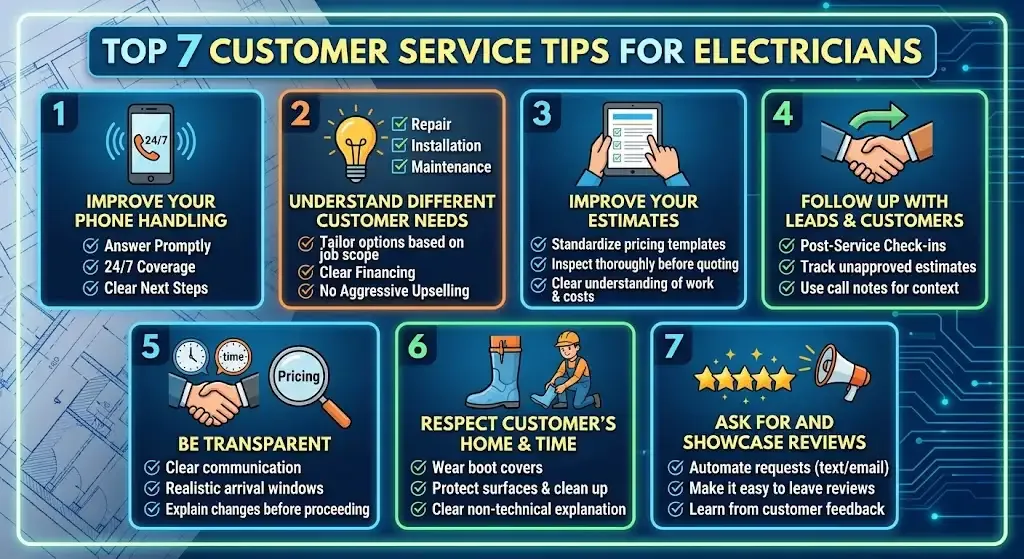
The following seven tips can help electrical contractors improve that process.
The phone is often the first point of contact between an electrical business and a potential customer.
Customers want someone to listen to their problem, understand what they need, and explain what happens next. Sending every unanswered call to voicemail can make that difficult.
Train CSRs to answer promptly, listen carefully, and collect the important details about the job. They should also give customers a clear next step instead of simply saying someone will call them back.
Your business should also have a plan for busy periods and after-hours calls.
This is where Crew from CloseCrew can help. Crew is an AI receptionist designed for electrical contractors. It can answer calls 24/7, collect customer information, qualify requests, and schedule appointments.
For example, a homeowner may call about a faulty switch or an electrical panel issue when your office is closed. Crew can collect the relevant details and help schedule an appointment based on your configured availability.
The information can then be passed to your team so they have more context before speaking with the customer or sending a technician.
A consistent phone experience also helps prevent important customer information from getting lost between the initial call and the service visit.
Not every customer needs the same type of service or support.
One customer may need a simple electrical repair. Another may be planning a large installation. Someone else may need financing or want to set up regular maintenance.
Understanding these differences helps your team provide more useful recommendations.
For example, service agreements can help customers schedule routine electrical checks instead of waiting for problems to become emergencies. Financing options may also help customers manage larger projects.
The important part is to explain these options clearly.
Customers should understand what they are getting, how much it costs, and what the terms involve. Avoid presenting additional services simply as an upsell. Instead, explain how they relate to the customer's actual needs.
Customers want estimates they can understand and trust.
Manual estimating can make it easier to overlook material costs, labor requirements, permits, inspection fees, or other expenses.
A standardized estimating process can reduce these mistakes.
Use consistent templates and keep material pricing up to date. Make sure your team follows the same basic process when calculating labor and project costs.
The information gathered during the initial visit also matters. A technician who arrives with the right tools and information can inspect the job properly and provide a more accurate estimate.
The goal is not simply to create estimates faster. Your estimates should also give customers a clear understanding of the work, expected costs, and what is included.
Customer service does not stop when the electrician leaves the property.
After completing a job, follow up with the customer to make sure everything went as expected. This gives customers an opportunity to raise questions and gives your team a chance to address issues early.
Following up on estimates that have not been approved is also important.
Electrical businesses spend time and money generating leads. A customer who does not approve an estimate immediately may still become a customer later.
Create a simple process for tracking open estimates and following up with them.
The original conversation can provide useful context during that follow-up. If a customer mentioned a specific concern or budget requirement, your team should know about it before calling again.
Crew's call transcripts can help here. Conversations are recorded so your team can review what was discussed instead of relying on incomplete notes or memory.
This can make follow-up conversations more relevant and help your team respond to the customer's actual concerns.
Clear communication builds trust throughout the customer journey.
Tell customers what to expect before the technician arrives. Give them a realistic arrival window and let them know about delays as soon as possible.
Pricing is another important part of transparency.
Customers should understand what an estimate includes and what could cause the final price to change. If the technician discovers additional work during the visit, explain the situation before proceeding.
Avoid unexpected charges whenever possible.
The same principle applies to the first phone call. If your team collects accurate information from the beginning, customers receive clearer expectations about the appointment and the work involved.
Crew can support this process by collecting customer details consistently during every call.
The quality of the customer experience also depends on what happens during the service visit.
Electricians are working inside people's homes and businesses. Customers notice how technicians treat their property, how they communicate, and whether they leave the work area clean.
Simple habits can make a difference.
Use boot covers when appropriate. Protect surfaces before starting work. Clean up debris after completing the job. Explain the work in language the customer can understand instead of relying on technical terms.
If a job takes longer than expected, explain why. If additional work is required, discuss it with the customer before moving forward.
These practices do not require expensive software. They require clear expectations and consistent standards for technicians.
Consider making cleanliness, communication, and customer updates part of your standard service process.
Good customer service can lead to repeat business and referrals, but satisfied customers do not always leave reviews without being asked.
Make review requests part of your normal follow-up process.
After completing a job, send customers a simple text or email asking them to share their experience. Keep the process easy and provide a direct review link.
Recent reviews can also help potential customers understand what it is like to work with your business.
Do not focus only on getting more reviews. Pay attention to what customers say in them.
If several customers mention the same problem, such as late arrivals or unclear estimates, treat that feedback as a signal that something in your process needs improvement.
Positive feedback can also show you which parts of your service customers value most.
Customer service for electrical contractors starts long before the technician arrives.
A fast response, accurate estimate, clear communication, and respectful service can all contribute to a better customer experience.
Start by looking at the full customer journey.
How are calls handled when your office is busy? How quickly are new leads contacted? Are estimates easy to understand? Do customers receive updates when plans change? Are technicians expected to protect the customer's property and clean up after the job?
Small improvements across these areas can create a more consistent experience.
Your team should also make follow-up part of the process. Check that customers are satisfied after the job and stay in touch with leads that have not yet approved an estimate.
Finally, ask satisfied customers for reviews and use their feedback to improve your service.