Plumbing Van Setup and Organization: The Complete Guide (2026)
Your efficiency disappears the moment you dig through a cluttered van for a missing wrench. This guide covers how professional plumbers organize their vans to save time, cut costs, and complete more jobs per day. Storage systems, tool lists, vehicle recommendations, and the habits that keep everything in order.
Your day rarely stops at one job. Revenue depends on moving quickly from site to site. But efficiency disappears when you dig through clutter for a missing wrench.
Worse, you end up rebuying tools you already own. They're buried somewhere in the mess. You just can't find them.
A well-organized plumbing van saves time on every call. It reduces tool damage. It prevents injuries. It impresses customers. And it lets your techs complete more jobs per day without adding hours.
This guide covers how professional plumbers organize their vans. Storage systems. Tool placement. Inventory management. Vehicle recommendations. And the long-term habits that keep everything in order.
A plumber's van setup is a defined system for storing tools and equipment. The vehicle is remodeled to serve as a mobile workshop.
A typical setup includes four key components:
Storage systems. Shelves, bins, trays, boxes, and panels mounted inside the cargo area. Some mount to the interior of rear doors for quick access.
Partition wall. The bulkhead separating the driver's cabin from the cargo area. This protects the driver from shifting tools during braking.
Mobile workbench. A flat surface for cutting, measuring, and assembling parts on-site.
Exterior components. Roof racks and conduit carriers for ladders, long pipes, and oversized materials.
These components keep tools stored securely. They also make everything easy to access.
Why van organization matters for plumbing businesses
Organizing your van delivers five specific benefits.
More jobs per day. Less time searching means faster job completion. An organized tech completes tasks within time limits. That opens slots for additional calls.
Fewer accidents. It's easy to slip on a forgotten sledgehammer. Or get cut by a blade stuffed in a bag. Proper organization prevents these injuries.
Better inventory control. When everything has a place, you know what's available. You know quantities. You know condition. No more buying parts you already own.
Longer tool life. Tools stored properly don't knock against each other. They don't get buried under heavy items. They stay clean, dry, and functional longer.
Stronger customer perception. A customer who sees a chaotic van questions the quality of your work. A clean, organized truck builds confidence before the tech touches a pipe.
An organized van saves money. It reduces overhead. It builds a team of responsible techs. And it scales with your business.
The basics of an organized plumber's van
Prioritize safety first
All shelves must be securely fastened. Tools cannot fall during transit. Use non-slip floor mats throughout the cargo area. Store all chemicals in airtight containers.
Include a first aid kit and fire extinguisher. Mount them in a visible, accessible location. Check them monthly.
An organized space is essential. But overspending on shelving and racks hurts your bottom line. Plan within your means. A functional setup doesn't require the most expensive components.
Start with essentials. Add premium upgrades as revenue grows.
Group tools into categories
Segment your van into major divisions. Hand tools in one section. Power tools in another. Fittings and parts in a third.
Subdivide further by type and size. Six different groove pliers? All in the hand tool section. Under "groove pliers." Labeled clearly.
When every tool has a labeled home, techs find what they need in seconds. Not minutes.
Keep frequently used tools within reach
Adjustable wrenches. Channel locks. Tape measures. These live in the most accessible spots. Side-door racks. Front shelves. Belt pouches.
Don't bury daily-use tools behind specialty equipment. The tools you grab 20 times per day should be reachable without moving anything else.
Van storage solutions that work
Keeping a van organized isn't one-size-fits-all. Find what works for your team. Here are proven solutions:
Numbered van racks with labeled storage bins
Color-coded shelving with dividers
Cargo nets attached to the ceiling for light items
Hooks and magnetic strips for vertical storage
Roof ladder racks for ladders and long PVC pipes
Ceiling brackets for long items like copper pipe
Bulkhead-mounted tool holders on van doors
Individual parts boxes for specific job types
LED light strips for visibility in dark cargo areas
Dedicated floor space for water heaters and heavy equipment
Cleaning supplies (sanitizer, dusters) stored on a hook
A mounted trash can to minimize mess
Essential plumbing van inventory
From safety gear to specialty tools, here's what belongs in every van.
Safety equipment: Gloves. Safety glasses. First aid kit. Knee pads. Fire extinguisher. Non-slip mats.
For the complete plumbing tools guide, see our detailed list with brand recommendations.
Making common tools easy to access
Some tools solve multiple problems daily. These need the fastest access.
Install door-mounted tool holders. Turn empty vertical space on truck doors into storage. Hooks and clips hold frequently used hand tools.
Use the driver's compartment. Overhead compartments, armrests, and under-seat storage work for daily-use items. First aid kit lives here too.
Add side boxes. Install beneath the cab area or on side panels. Rail-mounted ladder racks store ladders and pipes externally.
Create a grab-and-go belt station. Mount tool belt hooks near the rear door. Techs grab a loaded belt before walking to the job. Everything they need for the first 30 minutes is on their hip.
Best plumbing service vehicles
The right van makes organization possible. The wrong van fights you every day. Choose based on your job types, crew size, and service area.
How to choose a plumbing service vehicle
Before comparing models, answer four questions:
What do you carry? Water heaters require tall roofs. Long pipe runs need 10+ feet of interior length. Heavy equipment needs low floor height for loading.
Where do you work? City plumbers need compact vans for tight streets. Suburban and rural plumbers need larger cargo capacity for longer trips between jobs.
How many techs share the van? Solo techs can use smaller vans. Two-tech teams need more space.
What's your budget? New vans cost $35,000-$55,000. Used vans cost $15,000-$30,000. Upfit adds $2,000-$8,000. Factor total cost of ownership, not just sticker price.
Ford Transit-250 Cargo Van
Spec
Detail
Best for
Maximum storage. Fleets scaling past 10 vans
Roof options
Low, medium, and high roof
Wheelbase
130" and 148"
Cargo volume
Up to 487 cubic feet (high roof, extended)
Payload
Up to 3,500 lbs
Starting MSRP
~$42,000
The Transit-250 is the most popular plumbing van in the US. High roof models fit water heaters standing upright. The 148" wheelbase with medium roof handles 10-foot pipes with room to spare.
One fleet manager running 45 trucks switched exclusively to Transit-250s. Storage capacity and economics made it the clear winner. The Transit also won the 2019 Edmunds Best Retained Value Award. That means stronger resale when you rotate vehicles out of service.
Pros: Best cargo volume in class. Multiple roof heights. Strong resale value. Wide aftermarket upfit support.
Cons: Higher starting price than Nissan. Fuel economy drops with high roof and extended wheelbase.
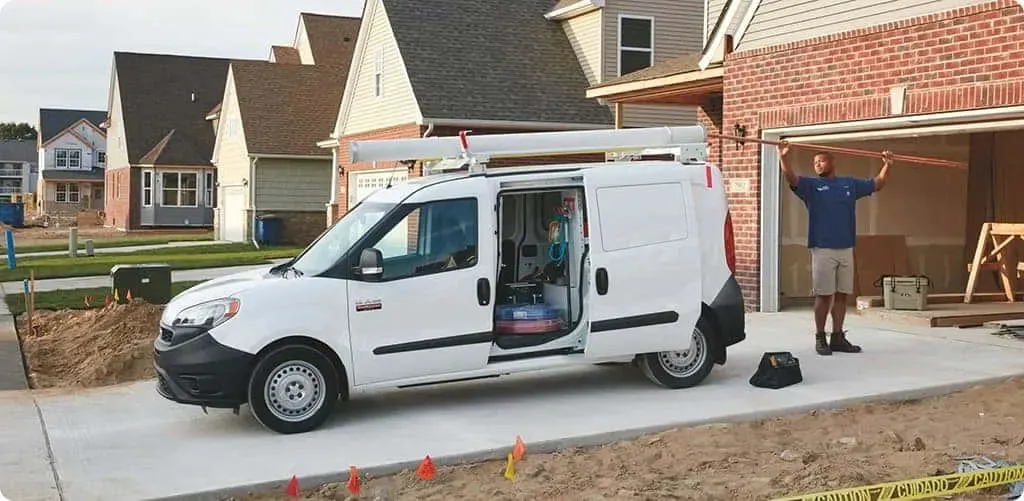
Ram ProMaster Cargo Van
Spec
Detail
Best for
Walk-in access. Low loading floor
Roof options
Standard and high roof
Wheelbase
118", 136", and 159"
Cargo volume
Up to 462 cubic feet
Payload
Up to 4,680 lbs
Starting MSRP
~$38,000
The ProMaster has the lowest load floor in the class. At 21 inches, it's significantly easier to load water heaters and heavy equipment. The front-wheel-drive layout creates a flat cargo floor. No wheel wells intruding into storage space.
The widest interior width (75.6") lets you install side-by-side shelving without cramping the center aisle. Plumbers who carry bulky equipment appreciate the extra width.
Cons: Front-wheel drive limits traction in snow. Turning radius is larger than competitors.
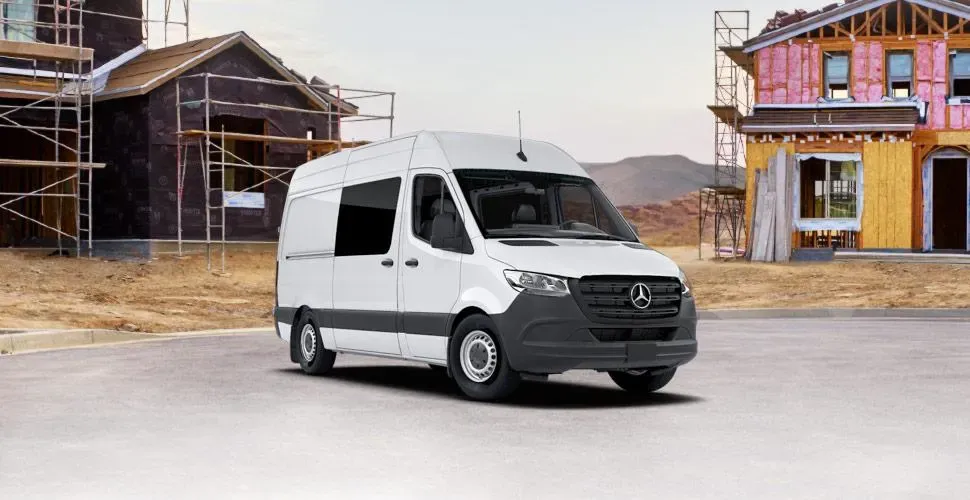
Mercedes-Benz Sprinter Cargo Van
Spec
Detail
Best for
Premium build quality. Long-term durability
Roof options
Standard and high roof
Wheelbase
144" and 170"
Cargo volume
Up to 488 cubic feet
Payload
Up to 3,700 lbs
Starting MSRP
~$45,000
The Sprinter costs more upfront. But it lasts longer. Many plumbing fleets report 300,000+ miles with proper maintenance. The diesel engine option delivers better fuel economy on long routes.
Safety features include crosswind assist, attention assist, and collision prevention. The MBUX infotainment system integrates fleet management tools.
Pros: Longest lifespan in class. Best safety features. Diesel option for fuel economy. Premium build.
Cons: Highest price. Parts and service cost more. Longer dealer wait times for repairs.
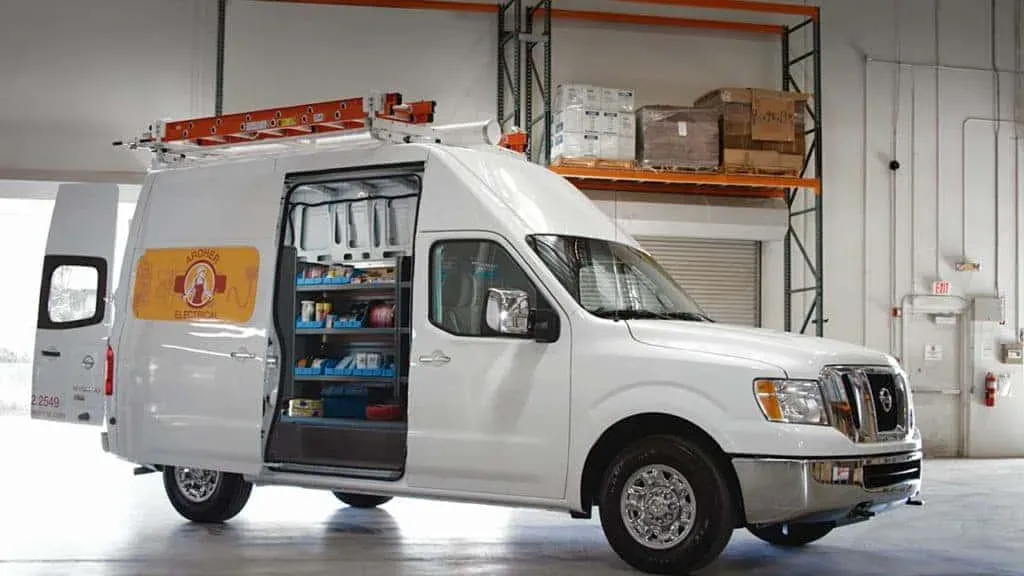
Nissan NV Cargo (if available used)
Spec
Detail
Best for
Budget fleets buying used
Roof options
Standard and high roof
Cargo volume
Up to 323 cubic feet
Starting price (used)
~$18,000-$28,000
Nissan discontinued new NV production. But used models remain excellent value. Approximately 25% less than comparable competitors. The five-year bumper-to-bumper warranty covers many used units.
The lockable center console works as a mobile office. Fold-down passenger seat creates a work desk. One limitation: only fits 9'6" pipe with an internal pipe cage.
Cons: Discontinued. Parts may become harder to source long-term. Pipe length limitation.
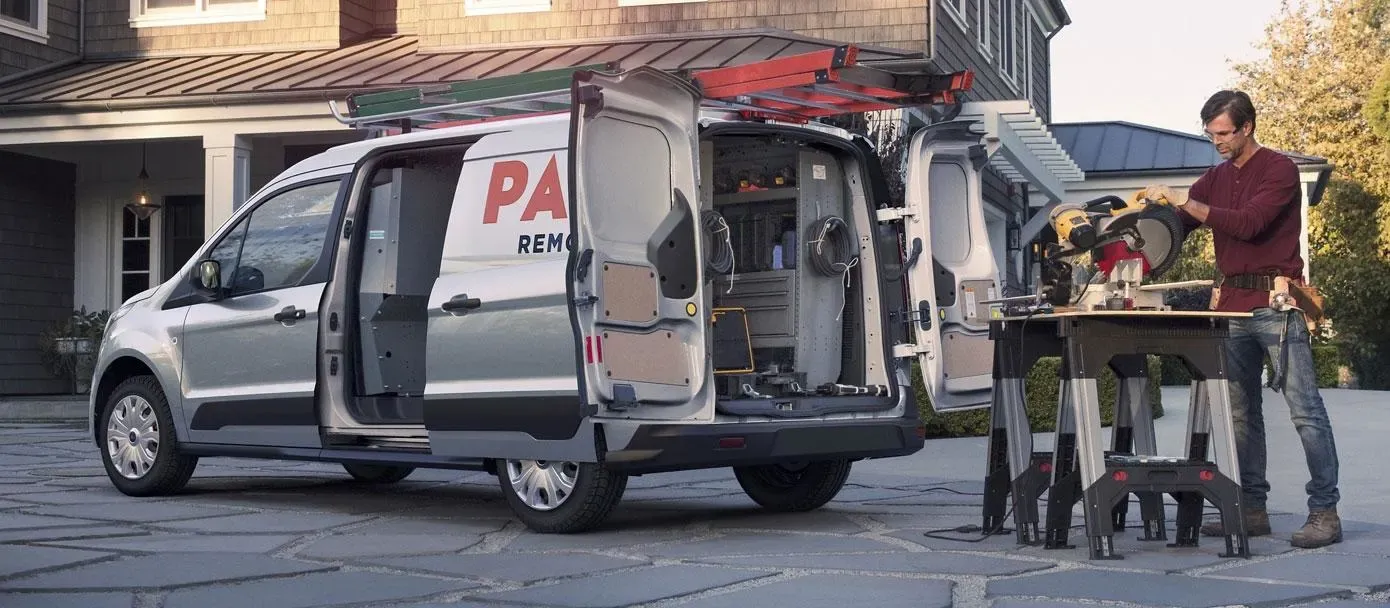
Ford Transit Connect (compact option)
Spec
Detail
Best for
City plumbers. Drain cleaning specialists
Cargo volume
Up to 128 cubic feet (long wheelbase)
Payload
Up to 1,570 lbs
Starting MSRP
~$32,000
The compact option for city work. Fits in parking garages. Navigates narrow streets easily. Fuel-efficient for stop-and-go driving.
Best for drain cleaning specialists and service plumbers who carry hand tools and small equipment. Not enough cargo space for water heater replacements or large repiping jobs.
Pros: Best fuel economy. Easiest to park and maneuver. Lowest price point.
Cons: Limited cargo space. Can't fit water heaters or long pipe. Not suited for install work.
Quick comparison
Vehicle
Cargo Volume
Payload
Best For
Starting Price
Ford Transit-250
Up to 487 cu ft
3,500 lbs
Full-service plumbing fleets
~$42,000
Ram ProMaster
Up to 462 cu ft
4,680 lbs
Heavy equipment. Low loading
~$38,000
Mercedes Sprinter
Up to 488 cu ft
3,700 lbs
Premium long-term investment
~$45,000
Nissan NV (used)
Up to 323 cu ft
3,000 lbs
Budget fleets
~$18,000-$28,000
Ford Transit Connect
Up to 128 cu ft
1,570 lbs
City service work
~$32,000
How to maintain van inventory long-term
A clipboard or spreadsheet tracks quantities and locations. But manual systems have limits. Updates require effort after every job. Miscounts happen. You discover missing stock only when you need it on-site.
Digital inventory management solves this. The right software tracks quantities and locations in real time. Techs confirm availability before heading to a job. No calling the warehouse. No checking every van manually.
The system works like this. Assign inventory templates to each van. Set minimum quantity thresholds. When a tech uses a part on a job, the system records it automatically. Stock drops below threshold? A replenishment order triggers automatically.
No more pausing a job because a fitting is missing. You know what's on the van. You save time. You maintain professionalism. You keep customer trust.
For setting up your full business systems, see our startup guide.
Organizing paperwork in your plumbing van
Physical paperwork options include cab organizers, waterproof document holders, under-seat storage, and lockable briefcases.
But paper gets damaged. It gets lost. It becomes illegible. The better approach is going digital.
Digital forms replace paper work orders, estimates, and receipts. Techs access the right form for each job type on their mobile device. Managers configure forms to trigger based on job type. Forgetful techs get automatic prompts.
Payments happen digitally too. Point-of-sale capture processes invoices, signatures, and credit card information securely. No sensitive data crumpled under the seat.
Digital paperwork isn't just cleaner. It's faster. And it feeds data directly into your scheduling and invoicing system.
Every completed job becomes a follow-up opportunity. A maintenance agreement pitch. A review request. A future estimate. But only if the data makes it from the van to the system. Paper gets lost. Digital doesn't.
That data flow is where CloseCrew connects van operations to business growth. Every job your tech completes feeds into the customer profile. Larry uses that profile to follow up on open estimates. To pitch maintenance agreements at the right time. To send review requests after every completed job.
Your van organization gets the tech to the job prepared. CloseCrew makes sure the next job is already booked.
What plumbing pros recommend
Organize for safety
One manager shared this story. Before he took over, a tech threw everything onto the cargo floor. One day, the tech tripped over tools while searching for a part. He fell out the back of the van. He ended up in the ICU with a concussion.
Now that manager runs weekly inspections. Inside and outside each truck. If it's dirty or messy, the tech cleans and organizes before it leaves the lot.
Hold techs accountable
One company grades technicians on every detail. First aid kit completeness. Fire extinguisher placement. Even tire tread condition. Every 90 days, the tech with the lowest score runs inspections for the next quarter. The cycle continues until everyone understands the standard.
Reward proper setup
The most impactful program one shop implemented was a rewards system. Techs earn points for cleanliness. Is the van stocked? Is it clean? Points exchange for gift cards, cash, days off, or vacation.
Points stack month over month. Techs earn more for being on time, improving efficiency, higher sales, and positive reviews. Even install techs participate. Their trucks get the dirtiest.
Common van setup mistakes
Choosing looks over function. Efficiency and access matter more than aesthetics. The prettiest shelving system is useless if techs can't reach daily tools.
No layout plan. Setting up without a plan creates scatter. Determine your layout based on job types before installing anything.
Skipping inventory counts. No regular counts leads to two problems. Overstocking ties up cash. Understocking leaves you short on-site.
Ignoring vertical space. Walls, doors, and ceilings hold tools too. Hooks, magnetic strips, and nets multiply your storage capacity.
Keeping your van organized long-term
Setup is step one. Maintaining it daily is the real challenge.
Train every tech. Penalize disorganization. Reward clean, well-stocked vans. Make it part of your culture.
Daily cleanup. Remove trash each morning. Put every tool back in its spot. Takes 10 minutes. Saves hours over the week.
Weekly inventory. Restock supplies. Inspect safety equipment. Check first aid kit, PPE, and fire extinguisher.
Monthly deep clean. Vacuum the floor. Wipe drawers and bins. Empty shelves. Lubricate drawer slides.
Quarterly review. Note items unused in the last month. Move them to the warehouse. Review your job types. Adjust the layout to match actual work patterns.
The shops with the best vans aren't the ones with the most expensive equipment. They're the ones with consistent habits. Every day. Every tech. Every van.
That consistency extends beyond the van. The shops that grow fastest are consistent in everything. Answering every call. Following up on every estimate. Requesting a review after every job. Van organization is just one piece.
Larry handles the pieces your techs can't. He answers calls while they're under a sink. He follows up on estimates while they're driving to the next job. He books appointments while they're restocking the van at the end of the day.
Your van gets the tech to the job. Larry gets the job to the tech.
Your van is your mobile office. Make it work.
A well-organized van makes every job faster. Techs find tools in seconds. Customers see professionalism. Inventory stays accurate. Safety risks drop. Revenue per truck goes up.
Build the setup once. Maintain it daily. Make sure leads don't get lost while your team is out working.
Frequently asked questions
How do you keep equipment secure from theft?
Install security locks on all doors. Use lockable drawers for high-value tools. Perform regular inventory counts. Consider security cameras inside the cargo area. Park in well-lit, visible locations.
How much does it cost to set up a plumber's van?
Varies widely. Basic shelving and bin systems cost $500-$2,000. Professional upfit packages cost $3,000-$8,000. A new van adds $30,000-$55,000. Used vans with basic organization start around $15,000-$25,000 total.
How can you optimize your van for safety?
Secure all shelves so nothing falls during braking. Store sharp objects in protective sleeves. Cover the floor with anti-slip matting. Mount the first aid kit and fire extinguisher where every tech can reach them instantly.
Where can you find van setup inspiration?
YouTube van tours show real setups from working plumbers. Pinterest boards collect organization ideas visually. Trade forums share real-world solutions. Manufacturer guides provide detailed upfit walkthroughs.
How often should you reorganize your van?
Do a layout review quarterly. Check which tools you used most. Move them to more accessible spots. Remove tools you haven't touched in 90 days. Send them to the warehouse. Your layout should match your current job mix. Not the job mix from six months ago.
What's the biggest van organization mistake?
No plan before installing shelving. Techs who build the setup randomly create a layout that makes sense to nobody. Decide on categories first. Map the layout on paper. Then install shelves and bins. Plan once. Organize forever.
Related tools
Run the numbers before you update your price book or field software.
Free Plumbing Templates
Invoices, estimates, and flat-rate pricing sheets for plumbing contractors.
Trade shows give plumbing professionals the chance to see new products, network with peers, and earn continuing education. This guide covers 10 upcoming shows from late 2026 through early 2027 with verified dates, locations, and strategies for turning trade show connections into business growth.
Plumbing van wraps generate thousands of daily impressions at the lowest cost per impression of any advertising method. This guide covers wrap types, design best practices, costs, maintenance, and the strategy that turns daily impressions into actual booked revenue for your plumbing business.
Never miss a Plumbing service call again. Let Larry, your AI receptionist, book jobs while your crew is in the field.
We will run your numbers on the call and tell you if the maths does not work for a shop your size. That happens, and it is a cheaper conversation than finding out three months in.