9 Best Calculators for Electricians (Online, Apps, Physical)
The right electrical calculator helps electricians work faster, reduce calculation errors, and improve job-site accuracy. Here are 9 of the best online, app, and physical calculators for electricians.
Electrical calculations are part of almost every electrician’s day. The right calculator can make those calculations faster, easier, and more accurate.
You may need to calculate voltage drop, wire size, conduit fill, breaker capacity, or electrical load. Doing these calculations manually can take valuable time.
A reliable electrical calculator puts the formulas and reference data you need within easy reach. That can help reduce errors and keep projects moving.
The challenge is choosing the right tool. There are dozens of electrical calculator apps, online tools, and physical calculators available today.
Many offer similar features, but they are not all designed for the same type of work.
We reviewed nine options across three categories: mobile apps, online calculators, and physical calculators. Each tool has different strengths and ideal use cases.
Why Every Electrician Needs the Right Calculation Tools
Electrical work leaves zero margin for error. A minor miscalculation in wire sizing, conduit fill, or breaker capacity doesn't just waste material. It creates severe safety hazards, code violations, and costly project re-runs.
While every licensed electrician learns the fundamental formulas during their apprenticeship, relying on memory or manual lookup tables in extreme weather, dimly lit basements, or tight attic spaces is a recipe for mistakes. Having purpose-built calculators, whether on your smartphone, in a web browser, or as a ruggedized handheld unit, serves three distinct purposes:
Safety and Code Compliance: Instant alignment with National Electrical Code (NEC) tables ensures every circuit, conduit run, and panel loading meets or exceeds official standards.
Speed and Efficiency: Complex multi-step calculations like motor full-load amps (FLA) or three-phase power factors take seconds instead of minutes.
Professional Credibility: Presenting clients or inspectors with precise, code-backed figures instills immediate trust and eliminates disputes on job sites.
Below, we dive deep into the 9 best calculators currently available across three primary categories: mobile apps, online browser tools, and dedicated physical units.
Category 1: Best Phone App Calculators for Electricians
Mobile phone applications have become the standard tool for modern technicians. They eliminate the need to carry extra physical devices, feature clean user interfaces, and receive regular over-the-air updates when code requirements shift. Here are the top four electrical app calculators dominating the trade.
1
Electrodoc (Formerly ElectroDroid)
Electrodoc is one of the most widely used digital reference toolkits and calculation suites available for mobile platforms. Designed as a comprehensive pocket library, it combines raw calculation modules with dense technical reference guides.
Key Capabilities & Features:
Complex Circuit Formulas: Handles minimum circuit breaker sizing, ampacity adjustments, power factor corrections, and three-phase motor calculations effortlessly.
Unit Conversions: Converts seamlessly between metric and imperial measurements, electrical units (such as Watts to Horsepower or Amps to kVA), and temperature scales.
Integrated Reference Data: Includes built-in copper/aluminum wire tables, resistivity charts, component pinouts, and capacitor marking codes.
Cross-Platform Availability: Available on Android, iOS, and Windows mobile platforms.
Electrodoc offers a free version supported by subtle non-intrusive banner ads, as well as a paid Pro version that removes advertising and unlocks additional reference lookup tables.
Best For: Field technicians who want a fast, all-in-one digital reference tool that performs both basic circuit calculations and component-level lookups without needing active internet access.
2
Ugly’s Electrical References App
For more than three decades, Ugly’s Electrical References has been the undisputed pocket bible for electricians, engineers, and contractors. The official mobile app brings the entire print handbook into an interactive, digital format.
Key Capabilities & Features:
Official Code Integration: Packs current National Electrical Code (NEC) guidelines, including official tables for conductor ampacity, conduit fill, and transformer sizing.
Visual Math Guides: Offers step-by-step visual diagrams for complex geometric calculations, such as conduit bending offsets, concentric bends, and three-point saddles.
Formula Libraries: Solves Ohm’s Law equations, voltage drop variations across long runs, and multi-phase power requirements with minimal user input.
Flexible Access Options: Electricians can opt for the subscription-based mobile application on Android/iOS or purchase the classic spiral-bound pocket handbook for $26.95.
Because the app directly mirrors official codebooks, reviewing these guidelines digitally helps crews stay compliant. To ensure your entire team maintains rigorous safety standards on site, review these crucial electrical safety tips during your weekly tailgate meetings.
Best For: Journeymen and master electricians who want instant, definitive NEC code lookups and precise conduit bending formulas right on their phones.
For better profitability, accurate field calculations should also be supported by efficient business tools.
3
ElectriCalc Pro App
Developed by Calculated Industries, the ElectriCalc Pro App is a pixel-perfect digital emulation of the famous handheld ElectriCalc Pro calculator. If you already know how to use the physical device, transitioning to the app requires zero learning curve.
Key Capabilities & Features:
12-Digit Internal Precision: Provides professional-grade accuracy for complex engineering and estimating tasks.
Conduit Sizing Engine: Automatically handles conduit fill for any combination of conductor types, including THW, THHW, XHH, XHHW, THHN, and THWN wires.
Dedicated Parameter Keys: Feature-specific buttons allow you to enter variables like wire gauge, insulation type, ambient temperature, and circuit length directly without navigating complex menus.
Help System: Long-pressing any key opens an immediate interactive user guide explaining the underlying formula and inputs.
Using specialized phone tools like ElectriCalc Pro speeds up on-site work significantly. If you manage a team of field technicians, combining phone calculation apps with the best electrical dispatch apps allows you to schedule jobs seamlessly, dispatch nearby crews, and process site measurements in real time.
Best For: Electricians who want the speed and familiar button-driven workflow of a dedicated physical calculator without carrying an extra piece of hardware.
4
Electrical Formulator
The Electrical Formulator stands out as one of the most expansive formula-driven apps available for Apple devices. It focuses heavily on categorizing formulas systematically and making calculation data exportable.
Key Capabilities & Features:
Massive Formula Range: Contains hundreds of conversion and calculation formulas covering everything from basic Amps-to-kVA conversions to complex motor efficiency calculations.
Recent & Favorites Tracking: Automatically saves your most frequently used formulas to a custom quick-access tab.
Exporting & Reporting: Allows you to print, save, or email calculation results directly from the app, which is ideal for attaching math logs to client estimates or project files.
Regulatory Links: Includes direct reference links to safety regulations and state-specific code amendments across the US.
Best For: Estimators, project managers, and lead electricians who need to document, log, and send formal calculation results back to the office or client.
Category 2: Best Online Electrician Calculators
While mobile apps are excellent in the field, online browser-based calculators shine when you’re working at a desktop, setting up project estimates, or reviewing blueprints. Browser tools benefit from larger screen space, zero storage requirements, and immediate cross-device access.
5
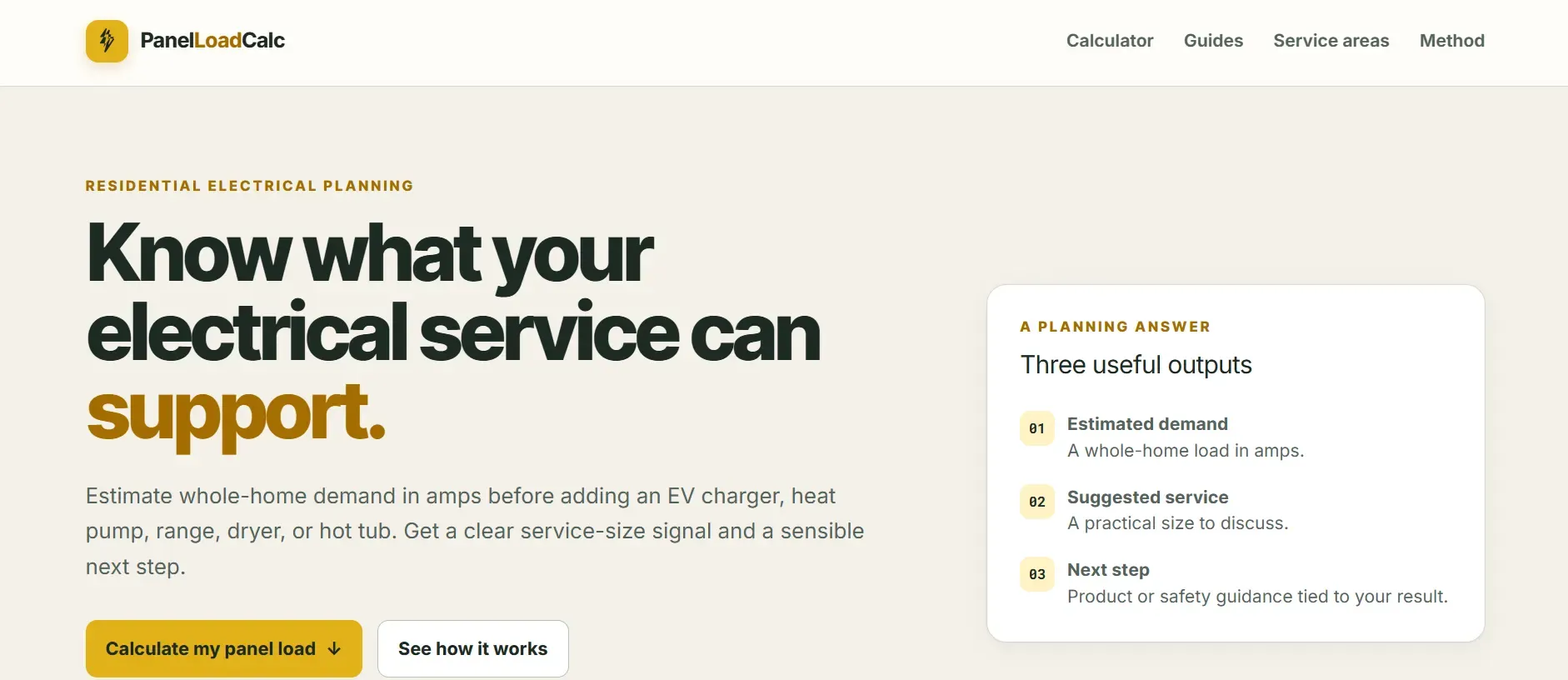
Residential Service Panel Load Calculator
Determining whether an existing residential service panel can handle additions, such as EV chargers, heat pumps, or hot tubs, is a daily task for residential contractors. The Residential Service Panel Load Calculator simplifies this complex NEC load calculation.
Key Capabilities & Features:
NEC Article 220 Compliance: Guides users through standard and optional residential load calculation methodologies step-by-step.
Interactive Field Guidance: Features built-in tooltips and starter guides, making it simple for apprentices to learn how demand factors apply to general lighting, small appliances, and heating/cooling loads.
Clear Summary Outputs: Generates a clean breakdown of total calculated load versus recommended main breaker capacity.
Mastering residential load sizing allows contractors to present clear service upgrade proposals to homeowners. When marketing these services online, applying smart electrician landing page tips will help convert online visitors searching for panel upgrades into booked, high-margin service calls.
Best For: Residential electricians, inspectors, and apprentices who need to perform accurate, step-by-step panel load calculations.
6
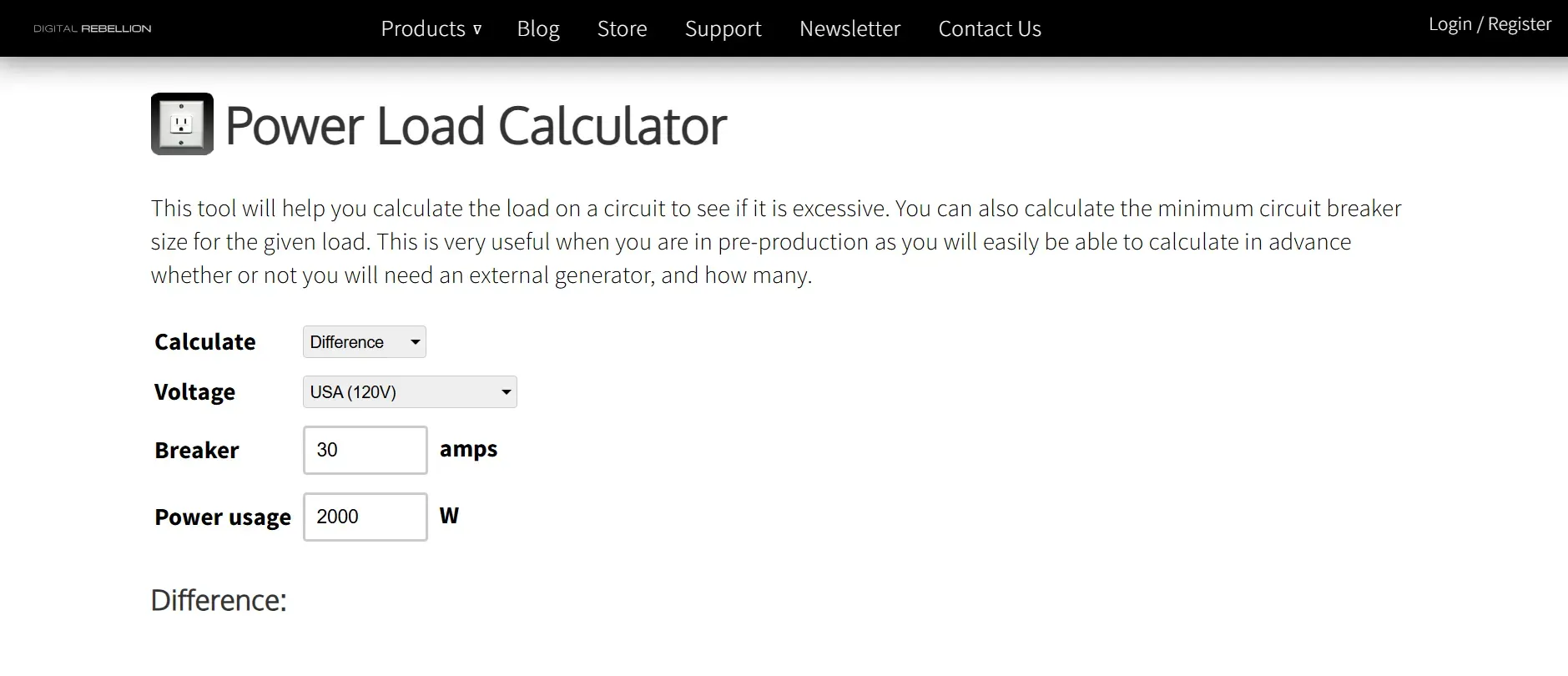
Powerload Calculator
The Powerload Calculator is a high-capacity web application designed for commercial and industrial circuit planning. It calculates maximum electrical loads and minimum protective device requirements quickly.
Key Capabilities & Features:
Multi-Voltage Support: Supports various national and global power supply standards (120V, 208V, 240V, 277V, 480V, single-phase, and three-phase).
Continuous Load Adjustments: Automatically factors in the 80% continuous load rule for circuit breaker sizing.
Fast Processing: Computes maximum safe wattage limits instantaneously across large distribution branch circuits.
Best For: Commercial project planning, panel schedule design, and sizing large branch circuits quickly during project design phases.
7
Inch Calculator (Electrical Suite)
Inch Calculator is not just a single tool. It is a massive web hub housing dozens of dedicated, high-precision electrical estimators, wire sizing tools, and unit converters.
Key Capabilities & Features:
Comprehensive Tool Library: Offers dedicated calculators for raceway fill, conduit bending, voltage drop, motor power conversions, and generator sizing.
Cost & Energy Estimators: Includes tools to calculate appliance operating costs, home energy consumption, and preliminary material cost estimates.
Step-by-Step Mathematical Explanations: Explains the math and NEC codes behind every calculation, making it ideal for double-checking complex formulas.
Large electrical contractors managing multiple job sites often rely on comprehensive resources like Inch Calculator to verify field data. If your company is scaling into multiple service regions, reading about managing a multi-branch electrical business will provide structure on how to maintain consistent service quality and standardized toolsets across all locations.
Best For: Anyone looking for a complete web portal that covers everything from quick unit conversions to complex wire sizing and project cost estimation.
8
Electricians Calculator from vCalc
vCalc designed this online electrical module specifically as an educational and operational web tool. It breaks complex physics formulas down into clean, manageable input blocks.
Key Capabilities & Features:
Categorized Equation Libraries: Separates formulas cleanly into DC circuits, AC single-phase, AC three-phase, and cost estimation sections.
Educational Explanations: Every equation module includes detailed text explaining variable inputs, constants, and underlying principles.
Crowdsourced Accuracy: Formulas on vCalc are built and peer-reviewed by engineering communities to maintain precision.
Best For: Electrical apprentices, instructors, and estimating teams who want clear formula breakdowns alongside their calculation outputs.
Category 3: Best Physical Electrician Calculators
Online tools and mobile apps are convenient, but they rely on working battery life, touchscreen responsiveness, and stable digital environments. What happens when you’re working in a deep basement with no cell signal, extreme sub-zero weather, or a site where mobile devices are restricted for security?
That is where a dedicated physical calculator becomes essential.
9
ElectriCalc Pro (Handheld Physical Unit)
The physical ElectriCalc Pro by Calculated Industries remains the gold standard for dedicated field hardware. Built specifically for tradespeople, it packs decades of electrical engineering math into a ruggedized, battery-powered shell.
Key Capabilities & Features:
Built-in NEC Compliance: Fully programmed with National Electrical Code tables (including NEC 2023, 2020, 2017, and earlier).
Upgradable Code Chip: Features an internal compliance chip that can be swapped out when new NEC updates release, ensuring your hardware never becomes obsolete.
Direct Trade Keys: Dedicated buttons solve wire sizing, conduit fill, motor full-load amps, fuse/breaker sizing, and voltage drops instantly.
Rugged Hardware Construction: Enclosed in a high-impact Armored Flex shield case designed to survive drops onto concrete, dust, and outdoor conditions.
Comparing physical handhelds with mobile phone apps comes down to environmental demands. Physical units require zero internet connection, operate for years on standard lithium or solar batteries, handle rough physical abuse, and offer direct visibility in bright sunlight. Mobile apps, on the other hand, offer cheaper initial entry costs, automatic software updates, and rich graphical screens, but require daily charging and fragile phone hardware.
Best For: Field contractors working in harsh environments, remote construction zones, or commercial jobs where physical button feedback and rugged reliability are non-negotiable.
How to Choose the Best Calculator for Your Needs
With so many solid choices, how do you pick the right tool? Consider these five operational criteria:
Physical vs. Digital: If you frequently work in remote areas, underground vaults, or heavy industrial facilities, buy a dedicated physical unit like the ElectriCalc Pro. If you handle residential estimating, site walks, and office planning, a mobile app or browser tool is usually sufficient.
Specific Use Case: Match the tool’s features to your daily tasks. If you install commercial conduit all day, prioritize apps with visual conduit bending functions like Ugly’s. If you size residential panel upgrades, use specialized load calculators.
Ease of Use & Interface: Look at screenshots or trial versions before buying. Complex multi-key setups can slow down beginners, whereas tools like vCalc or Inch Calculator provide helpful step-by-step guidance.
Code Upgradability: Electrical codes update every three years. Ensure your digital app updates automatically, or choose a physical calculator with swap-able code chips.
Budget & Licensing: Many excellent tools are free or low-cost (like Electrodoc). Paid options or physical devices are usually worth the investment if they save you from a single failed inspection.
Going Beyond Field Calculators: Running a Profitable Business
Field calculators help electricians work faster and avoid calculation errors. But technical efficiency is only one part of running a profitable electrical business.
You can save time on every job and still lose revenue if calls go unanswered. A missed call can mean a missed estimate, a missed service job, or a customer choosing another contractor.
That is where CloseCrew can help. Its AI receptionist answers calls on the first ring, understands what the customer needs, and books qualified jobs directly into your existing schedule.
It can also handle calls after hours, reschedule appointments, answer basic questions, and hand complex situations to your team.
For electrical contractors, this means fewer opportunities falling through the cracks while your technicians are on jobs, driving, or working outside office hours.
What CloseCrew Can Handle
CloseCrew is designed around the way service businesses actually receive calls. It can:
Answer calls 24/7: Take calls during evenings, weekends, holidays, and busy periods.
Qualify customers: Ask the right questions before booking a job.
Book appointments: Check your live availability and schedule the job.
Send confirmations: Text customers after their appointment is booked.
Handle rescheduling: Help customers change appointments without tying up your staff.
Escalate when needed: Hand complex or sensitive calls to your team.
Keep call records: Provide transcripts so your team knows what happened before taking over.
The goal is not to replace your team. It is to make sure your phone keeps working when your team cannot answer it.
See What Missed Calls Could Be Costing You
Even a small electrical business can lose significant revenue from unanswered calls.
For example, imagine you receive 300 calls each month. If 20% go unanswered and 40% of those callers would have booked a job, that represents 24 potential jobs.
With an average $450 ticket, that could mean $10,800 in missed monthly revenue.
Electrical contractors need accurate calculations, but they also need accurate business decisions.
Your calculator can help you size a wire correctly. Your business systems need to help you price jobs, manage schedules, answer customers, and protect revenue.
That means looking beyond field calculations. Track your labor costs, pricing, missed calls, booking rates, and average job value.
You can also keep up with industry advice through these best electrical business blogs and run your operational metrics through these financial calculators:
1
True Labor and Overhead Calculations
Before setting your billable rates, you must calculate the fully burdened cost of your field staff, including taxes, workers' compensation, paid time off, and unbillable drive time.
Input those figures into a labour rate calculator to establish a baseline billable hourly rate that comfortably covers overhead and yields a profit.
2
Precise Job Bidding and Pricing
Estimating jobs based on guesswork or "market averages" leads to thin margins or lost bids.
Run your material and labor estimates through a dedicated bid calculator to make sure every project quote accounts for indirect job costs.
For flat-rate service work, rely on a service price calculator to set consistent, profitable price points across all common repairs.
Verify every bid with a profit margin calculator to guarantee your business retains a healthy net margin after all expenses are paid.
3
Leakage and Revenue Protection
Every unanswered phone call represents lost revenue that your competitors will happily collect.
Use a missed call cost calculator to evaluate how uncaptured incoming calls directly impact your bottom line every month.
Understanding Business Metrics for Electrical Contractors
To keep your business growing, understanding the math behind your operations is just as vital as understanding electrical theory. When running a contracting business, three financial calculations dictate whether you stay in business long-term.
The Math of Billable Hourly Rates
Many new contractors calculate their billable rates by taking a technician's base pay and adding an arbitrary $10 or $20 markup. This is a dangerous trap.
To determine a true billable rate, you must add total payroll taxes, health insurance contributions, retirement matching, vehicle maintenance, tool allowances, and administrative overhead. Once you have the true annual cost of maintaining that technician, divide that number by the actual billable hours they generate per year (which typically ranges between 1,100 to 1,300 hours out of 2,080 paid hours due to driving, training, and meetings). Finally, apply your target net profit margin factor to arrive at your required billing rate.
The Cost of Uncaptured Phone Leads
Most electrical contracting business owners underestimate the financial damage of missed phone calls. If your business receives ten uncaptured calls per week, and your historical conversion rate on answered phone calls is 50%, you are effectively losing five jobs every single week.
At an average service ticket value of $450 per job, those five lost opportunities represent $2,250 in lost revenue every week, which comes out to over $117,000 in unearned revenue every year. Investing in dispatch software or dedicated answering services pays for itself almost instantly when measured against the cost of lost calls.
Managing Project Voltage Drop
On the technical side, managing voltage drop across long wire runs is a prime example of where technical math intersects with business costs. According to the NEC, the maximum combined voltage drop across a feeder and branch circuit should not exceed 5% (with 3% maximum on the branch circuit alone) to ensure efficiency and equipment safety.
Calculating voltage drop requires taking twice the conductor's resistivity constant, multiplying it by the load current in amps and the one-way distance in feet, and dividing that product by the wire's circular mil area. If your calculation reveals an excessive voltage drop, you must step up to a larger wire gauge. While larger conductors increase material costs on the front end, failing to perform this calculation leads to burned-out motors, overheated equipment, and expensive warranty callbacks that wipe out project profits.
Final Thoughts
Mastering your trade requires the right combination of hands-on skill, reliable technical tools, and business intelligence.
By pairing field calculation tools (whether that’s a mobile app like Electrodoc, a digital reference guide like Ugly’s, or a physical ElectriCalc Pro) with solid financial calculations, you create a seamless operational workflow. Your technicians execute code-compliant, error-free work in record time, while your office ensures every job is accurately priced, billed, and profitable.
Select the calculation tools that best fit your team's day-to-day workflow, audit your job costs regularly, and keep your business moving forward.
Related tools
Run the numbers before you update your price book or field software.
Free Electrical Templates
Invoices, estimates, and flat-rate pricing sheets for electrical contractors.
Electrical businesses relying on manual dispatching lose revenue to scheduling gaps and missed calls. This guide covers 7 dispatch apps with features, pricing, and the tool that fills your dispatch board while the others organize it.
Every garage door technician needs the right tools for safety and speed. This guide covers 11 essential tools with prices, buying options, and the software that connects your field work to booked jobs and revenue growth.
Never miss a Electrical service call again. Let Larry, your AI receptionist, book jobs while your crew is in the field.
We will run your numbers on the call and tell you if the maths does not work for a shop your size. That happens, and it is a cheaper conversation than finding out three months in.