HVAC Van Wraps: What HVAC Contractors Should Know Before Getting One
An HVAC van can do more than get your technicians to job sites. A well-designed wrap can turn every drive and service call into local advertising that keeps working for years.
A parked van outside a job site is either doing nothing for your business or quietly working as a billboard, and the difference comes down entirely to whether it's wrapped. A single vehicle driving normal routes through a town or city can rack up somewhere between 50,000 and 80,000 visual impressions a day. Even after paying for design and installation, that cost per impression beats most digital or print advertising by a wide margin, and it keeps paying off for years without a single additional dollar spent.
This guide covers everything worth knowing before you commit: what a van wrap actually is, the different formats available, why it's genuinely worth the investment, how to design one that people remember, and what happens after the wrap goes on, from maintenance to actually tracking whether it's working.
» Want to grow your business? Book a demo to see how CloseCrew helps.
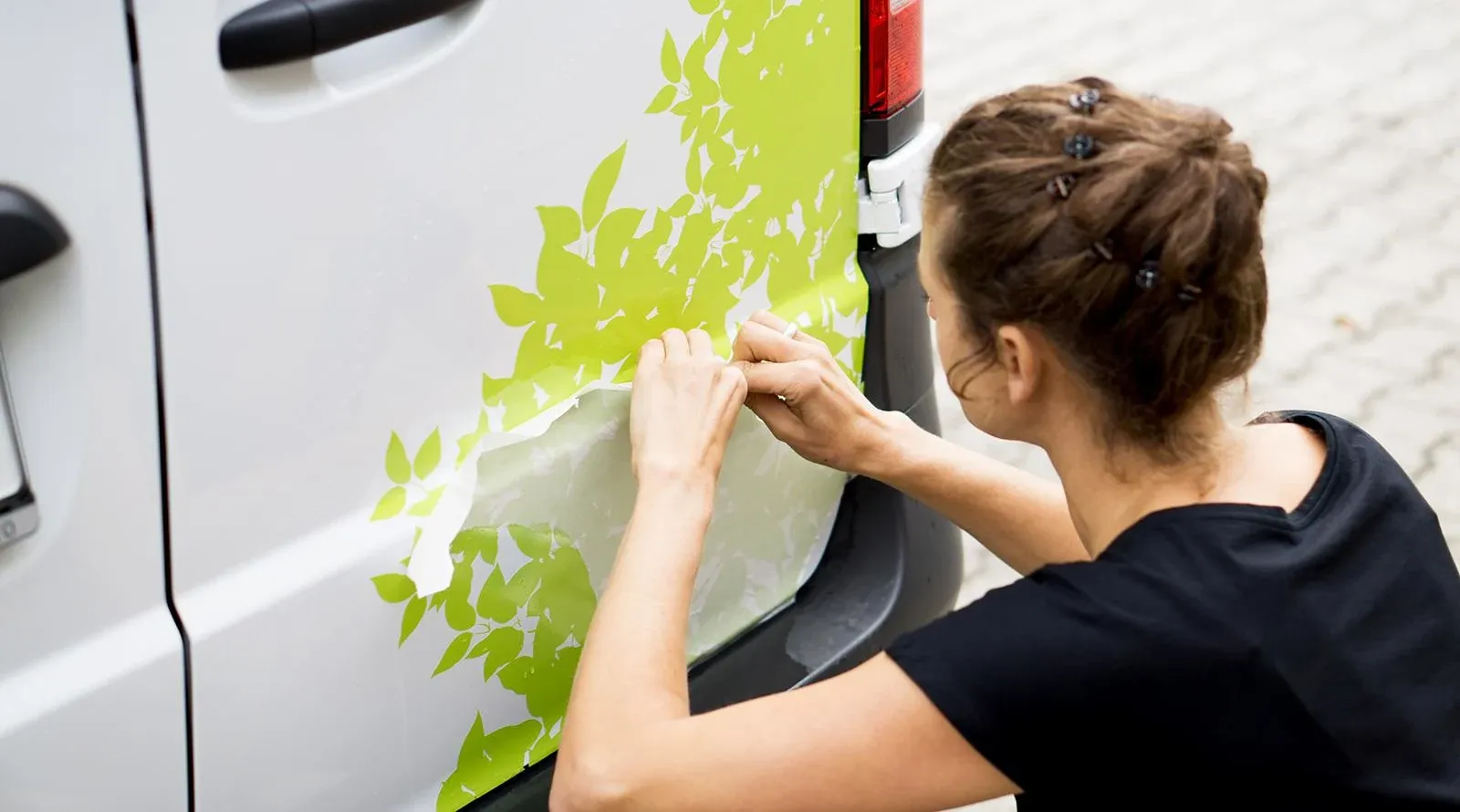
A van wrap is a large-format vinyl graphic applied directly over your vehicle's exterior paint. Think of it as a heavy-duty, professionally installed sticker rather than paint itself, durable enough to survive years of weather and road grime while advertising your business the entire time it's parked, idling, or driving.
Unlike a billboard you rent by the month or an ad campaign you pay for by the click, a wrap is a one-time investment that keeps generating impressions for as long as the vehicle stays on the road, whether it's sitting in a driveway on a service call or stuck in rush hour traffic in front of dozens of other drivers.
The Four Wrap Formats Worth Knowing
Not every HVAC business needs a full van wrap. The right format depends on your budget, vehicle, brand, and how much visibility you want. Here are the main options to consider.
Full wraps
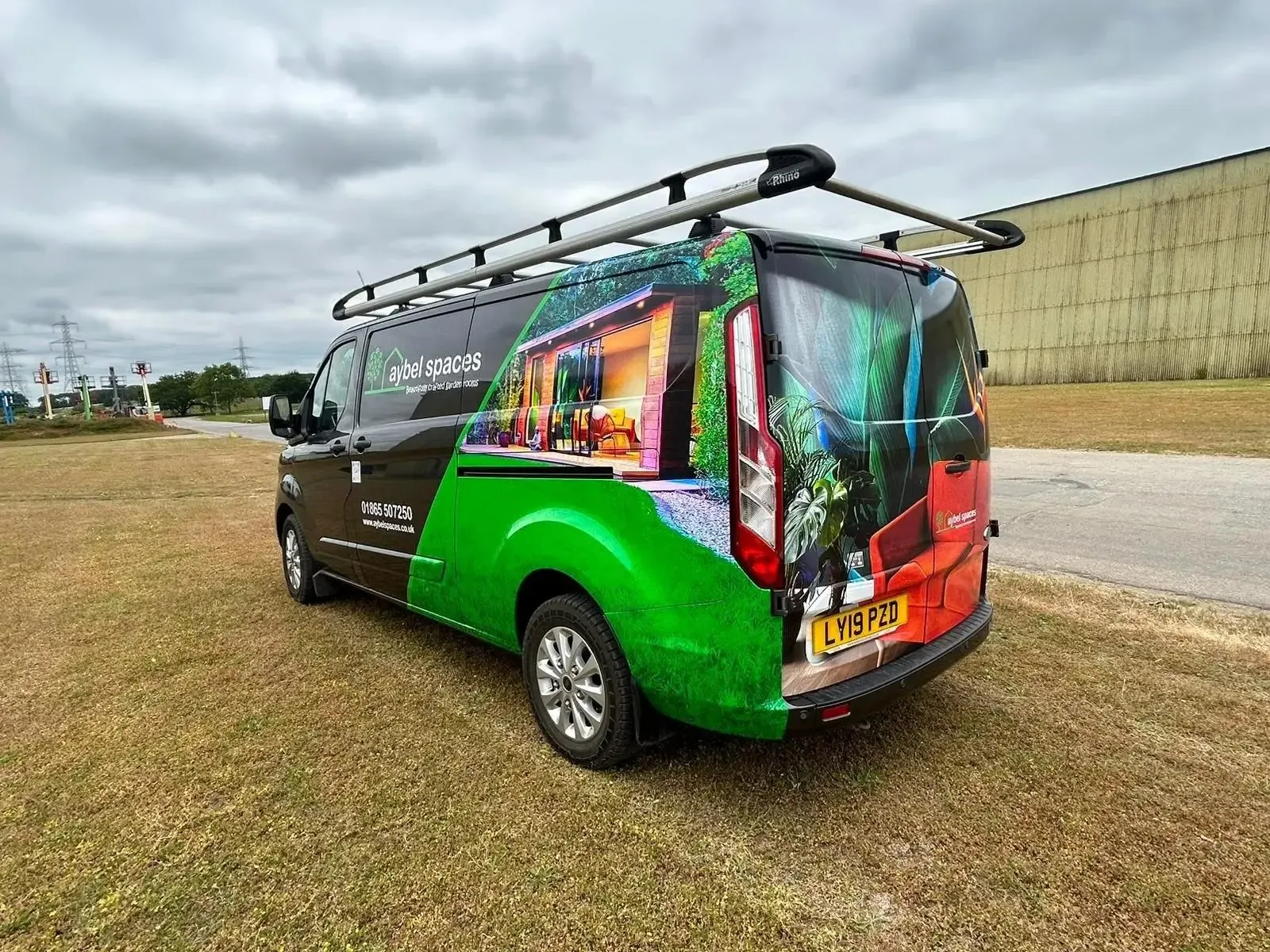
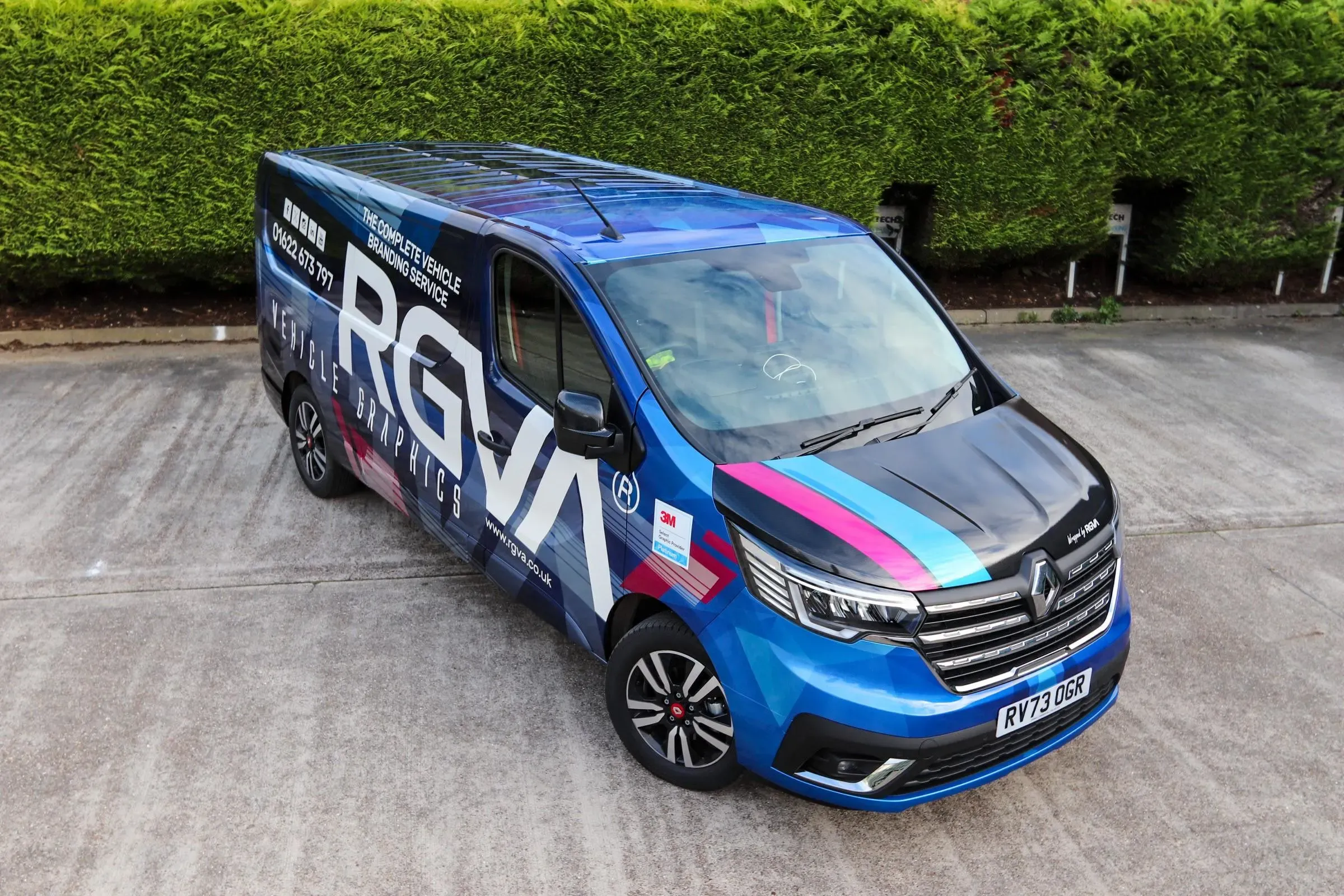
Full wraps cover most of the vehicle's visible painted surfaces, including the sides, rear, front, and other areas depending on the installer. This gives you the most space for your logo, service information, graphics, phone number, and brand colors. Full wraps work especially well for businesses that want their vans to look like moving billboards and create a consistent appearance across a fleet.
Three-quarter wraps
Three-quarter wraps cover most of the sides and rear while leaving some areas, such as the roof or hood, uncovered. They can create almost the same visual impact as a full wrap while using less material. This can be a practical choice for HVAC companies that want strong branding without paying for complete coverage.
Half wraps
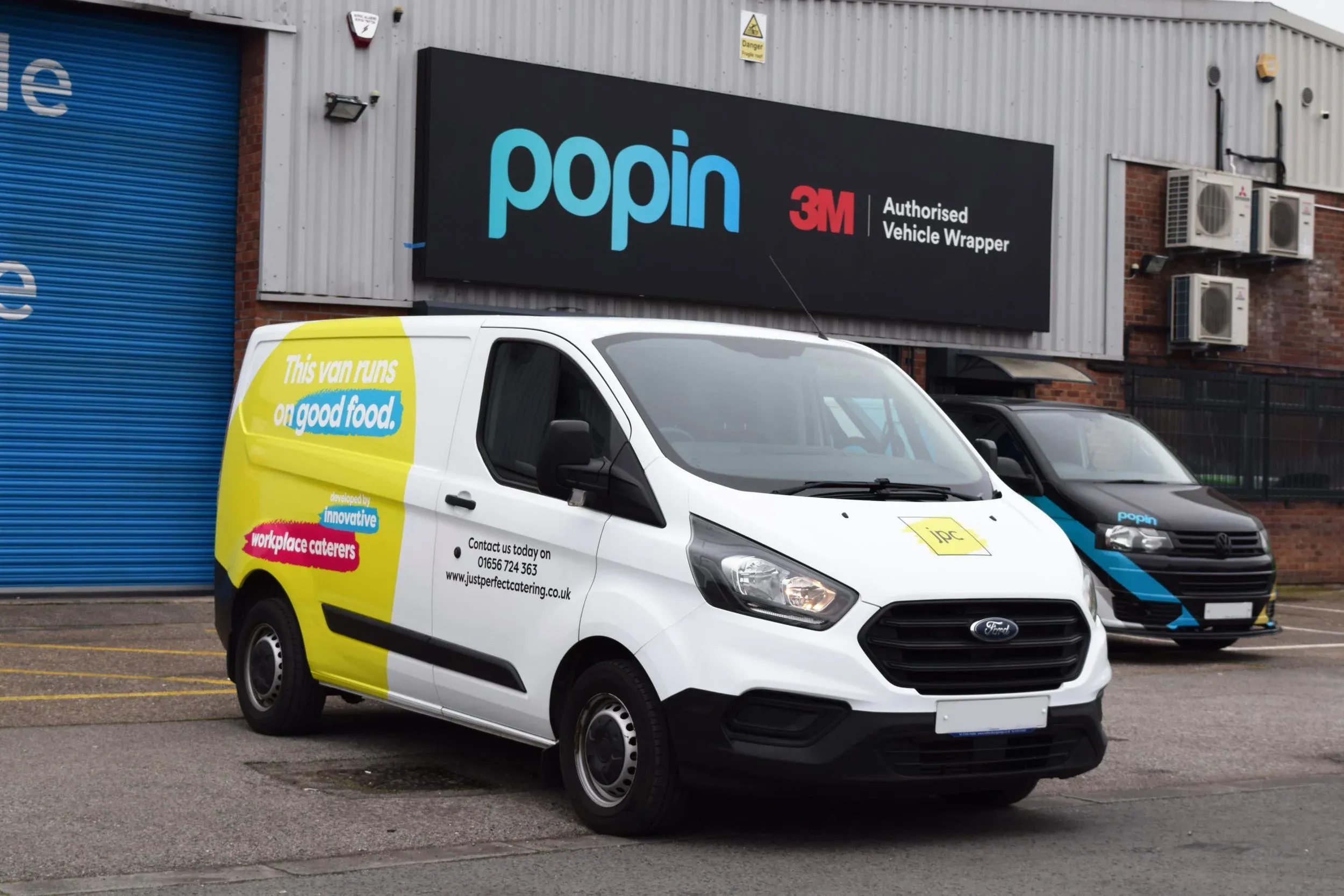
Half wraps usually focus on the lower or rear sections of the van while leaving part of the original paint visible. They work well when your van already has a suitable base color, such as white, that can become part of the design. A good half wrap should look intentional rather than like a full wrap that was stopped halfway through.
Partial wraps
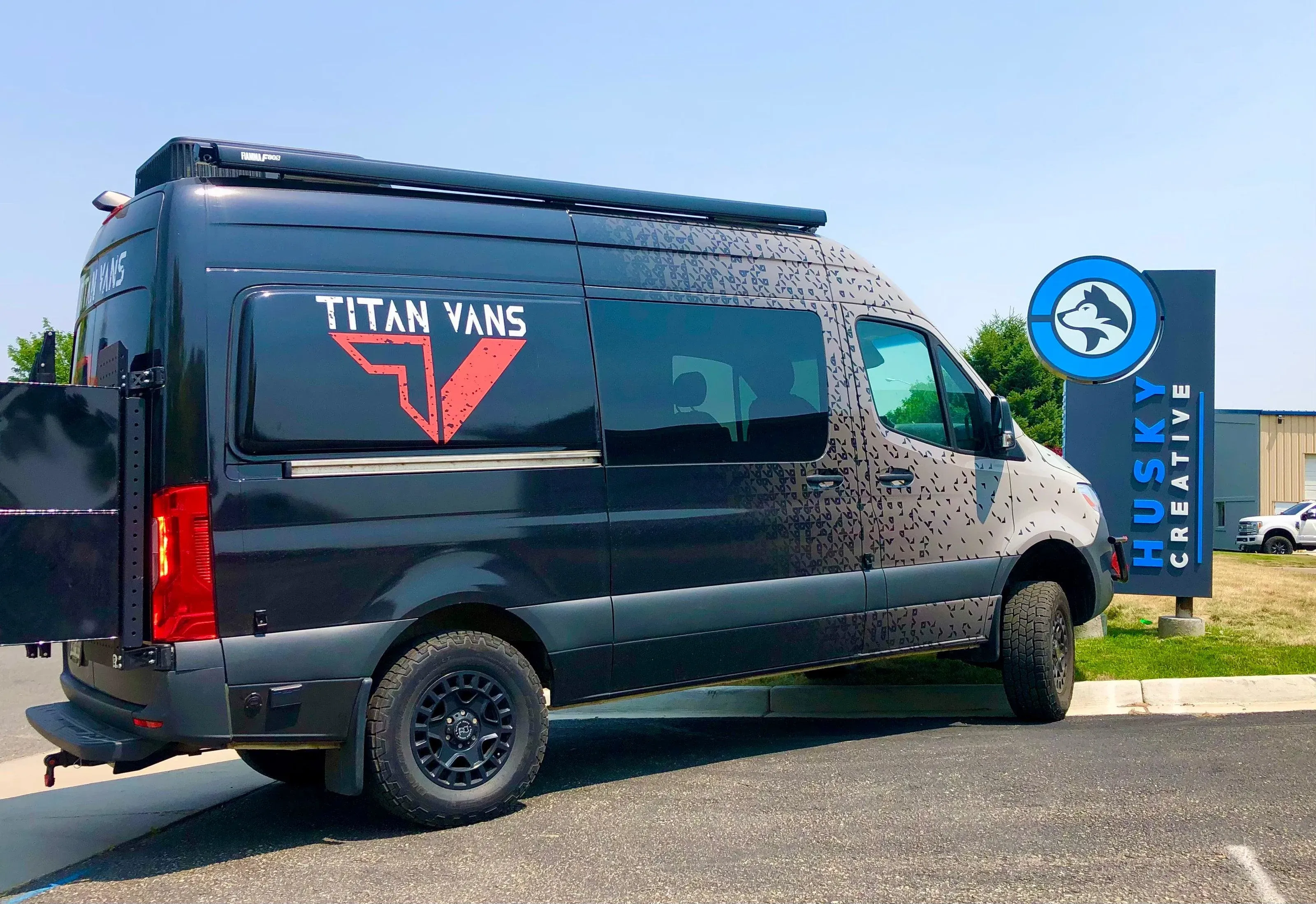
Partial wraps cover specific sections of the vehicle, such as the side panels, rear doors, or sliding doors. They offer a good balance between visibility and cost. A designer can use the van's original paint as part of the layout, which can make a partial wrap look much more complete than its coverage suggests.
Decals
Decals use individual graphics, logos, service icons, or other smaller elements placed directly on the vehicle. You can use decals on their own or combine them with a partial wrap. They're useful for businesses that mainly need their name, logo, phone number, website, or key services displayed clearly.
Vinyl lettering
Vinyl lettering is the simplest option and focuses mainly on text. You can display your company name, phone number, website, service area, license information, or a short list of services. It costs less than larger wrap formats and works well for backup vehicles, newer businesses, or contractors working with a smaller marketing budget.
Magnetic signs
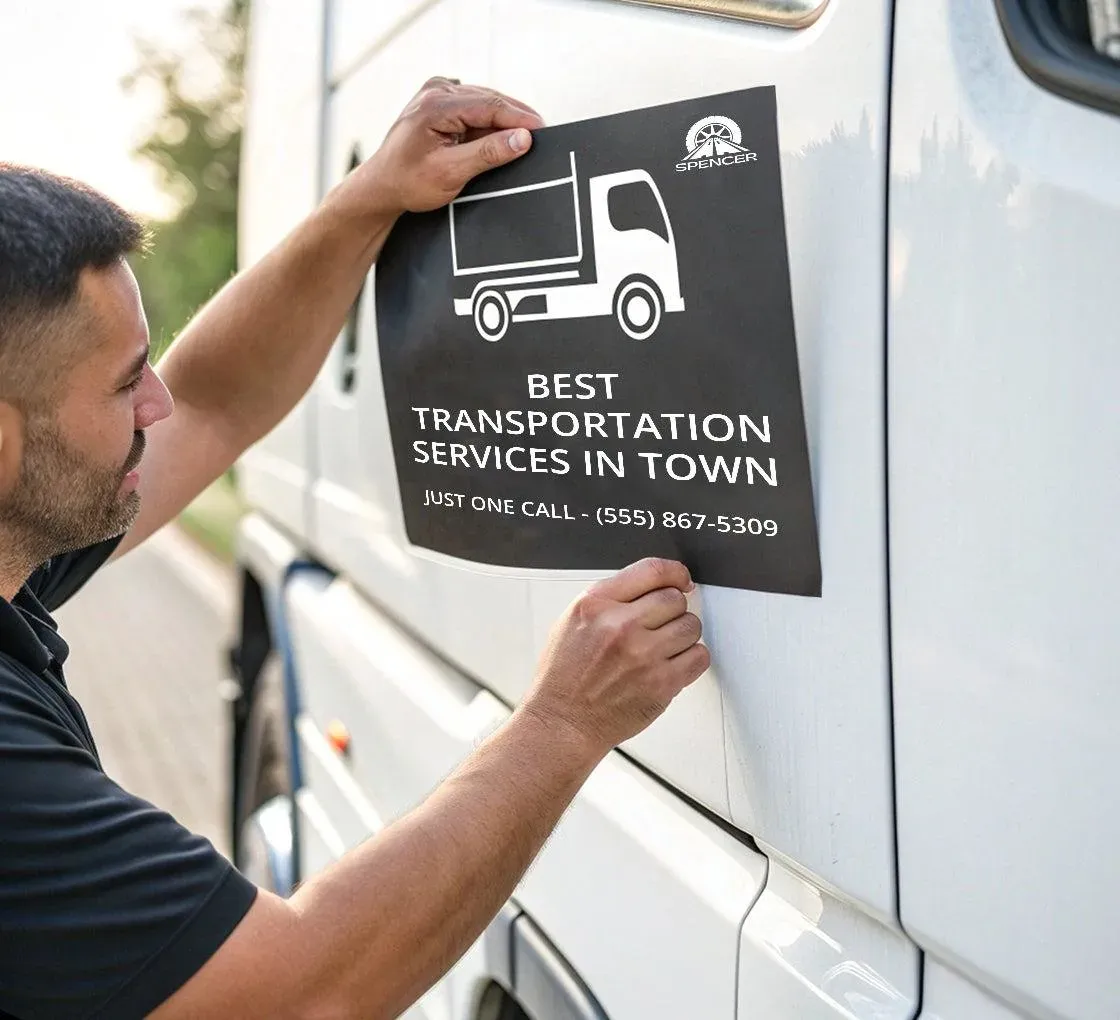
Magnetic signs are another option for businesses that need temporary or removable branding. They can be useful for vehicles that are shared between different businesses or used for both personal and work purposes. However, they generally create less visual impact than professionally installed vinyl graphics.
The important thing is to choose based on how you want the van to work for your business. A full wrap makes sense when maximum visibility is the goal. A partial wrap can deliver strong branding at a lower cost. Decals and lettering work well when you mainly need clear identification and contact information.
How the Process Actually Works
Getting a wrap made starts with a designer, either building from your existing brand assets or developing something new around your direction. Once you sign off on the design, it gets printed onto vinyl sheeting.
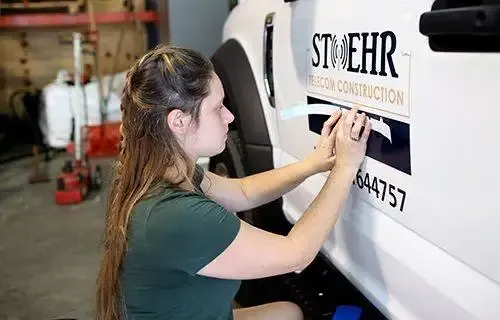
Installation itself is more involved than most owners expect. The vehicle surface has to be thoroughly cleaned and prepped first, since any trapped dust or debris will show up as a visible bump under the finished wrap. The vinyl is then applied section by section and carefully smoothed to eliminate air bubbles, a process that typically takes several hours of careful, patient work and is usually completed within a single day for a standard van.
Why This Belongs in Your Marketing Budget
If you're weighing whether a wrap is actually worth it against other marketing spend, here's the case for it, broken down by what it actually delivers.
It Puts Your Brand Directly in Front of Local Customers
An eye-catching wrap functions as a rolling local ad, and people genuinely notice vehicles that stand out, far more than they notice a static billboard they've driven past a hundred times. A bold design paired with a memorable tagline gets remembered by exactly the kind of person who might need service soon.
You can also be deliberate about where that visibility lands. Parking or routing service calls through a specific commercial district puts your brand directly in front of small business owners if that's the segment you're targeting, in a way that a broad digital ad campaign can't replicate at the same cost.
It Reinforces a Consistent, Professional Brand
Uniform branding across every vehicle in your fleet, same logo, same colors, same tone, builds a stronger, more immediate impression than a mismatched collection of trucks ever could. A customer who sees the same clean design on three different vans over a few months starts to register your business as established and reliable before they've even called. If your underlying brand identity still feels unsettled, it's worth nailing that down before committing wrap budget to it, and a look at HVAC company naming approaches is a reasonable place to start if the name itself needs work first.
It's Genuinely Cost-Effective Over Time
A typical wrap runs somewhere between $1,500 and $5,000 depending on vehicle size and wrap type. That's a real upfront number, but it buys years of advertising with no recurring cost, unlike a digital ad campaign that stops generating impressions the moment you stop paying for it. Even a modest return, three or four additional jobs a year that can be traced back to the wrap, adds up to solid value measured against the vehicle's full lifespan on the road.
It Builds Trust Before the First Conversation
A sharp, professional-looking wrap signals reliability before a customer has spoken to anyone at your company. People genuinely associate visual polish with competence, fairly or not, and a clean wrap gets you halfway to that impression before your technician ever knocks on the door. Extending that same design language to local sponsorships, a youth sports team, a community event, reinforces the same professional identity everywhere your name shows up.
Designing a Wrap That Actually Gets Remembered
A wrap only works if the design does its job. These are the practices that separate an effective wrap from an expensive one nobody notices.
Prioritize Clarity Over Cleverness
The design needs to communicate instantly, since most people will only see it for a second or two, whether it's driving past or glimpsed while changing lanes. Logo, phone number, and core message should all be readable from a real distance, not just up close in a parking lot.
That doesn't mean playing it safe. Picture your van parked directly next to a competitor's. Yours needs to be the one a passerby actually remembers an hour later.
Choose Colors That Actually Stand Out Locally
High contrast matters more than a subtle, tasteful palette. Light text against a dark background, or the reverse, reads far more easily at speed than two similar tones competing with each other.
It's also worth thinking about your actual service area's visual backdrop. A wrap heavy on green tends to disappear against a wooded, rural route, while gray can blend into a typical downtown streetscape. Choose contrast that works against what your specific customers actually see around them every day, not just what looks good on a screen during the design phase.
Give People a Reason to Actually Call
A wrap without a clear call-to-action is just decoration. Skip the passive approach of listing a phone number and hoping someone remembers it. Use an active phrase instead, "Call Today," "Book Online At," something that prompts action rather than just providing information. Placement matters too: the rear and side panels tend to get the most real-world visibility, since that's what people actually see in traffic or while the van's parked.
Keep Branding Identical Across Every Touchpoint
The same colors, logo, and tone need to show up consistently everywhere, vans, business cards, your website, social media content, so a customer builds one coherent impression of your business no matter where they first encounter it. A wrap that looks nothing like your website quietly undercuts the trust both are supposed to be building.
Resist the Urge to Add Everything
Clutter is the single most common design failure. Trying to list every service you offer, along with three phone numbers and a full paragraph of text, overwhelms rather than informs. Stick to the essentials a passerby actually needs to remember and act on. And if photos are part of the design, make sure they're genuinely high-resolution, since a pixelated image undermines the professional image the wrap is supposed to build faster than almost any other mistake on this list.
Keeping a Wrap Looking Sharp for the Long Haul
A wrap is only an asset while it looks good, and a faded, peeling wrap does the opposite of what it's supposed to do. A few habits worth building into your fleet maintenance routine:
Hand wash where possible. Automatic car washes with abrasive brushes can wear down vinyl edges over time faster than a gentler hand wash or touchless wash would.
Address peeling edges immediately. A small lifted corner left unaddressed tends to spread, especially once dirt or moisture gets underneath it. Catching it early is a five-minute fix instead of a full re-application.
Park out of direct sun when practical. UV exposure is the main driver of color fading over time. It's not always avoidable for a working vehicle, but minimizing unnecessary sun exposure during downtime extends the wrap's usable life.
Budget for a realistic lifespan. Most quality wraps hold up well for three to five years with reasonable care, after which fading and wear typically justify a refresh rather than a full redesign from scratch.
Choosing the Right Installer
Not every sign shop or wrap installer delivers the same quality, and a poorly installed wrap fails faster regardless of how good the underlying design is. A few things worth checking before you commit:
Ask to see examples of their past work in person, not just photos, since lighting and angles in a portfolio photo can hide a sloppy installation.
Confirm they use quality, name-brand vinyl rather than a cheaper generic material that fades or cracks faster.
Ask about their warranty on both materials and installation, a reputable installer stands behind their work for at least a couple of years.
Get a clear timeline upfront, since a rushed installation is one of the more common causes of early bubbling or peeling.
Wrapping a Full Fleet: What Changes at Scale
If you're moving beyond a single van to wrapping an entire fleet, a few additional considerations come into play. Ordering wraps for multiple vehicles at once typically brings the per-unit cost down, so it's worth planning fleet-wide rather than wrapping one van, waiting, then doing the next.
Consistency becomes more important at scale too, since a fleet with even slightly different logo placements or color variations between vehicles looks less professional than a single wrap ever would in isolation. Working with one installer across the whole fleet, using one finalized design file, helps avoid that drift.
Measuring Whether Your Wrap Is Actually Working
A wrap does its job the moment someone remembers your name and picks up the phone, often days or weeks after actually seeing it, sometimes on a weekend evening when your office is closed and the moment could easily be lost.
Tracking where leads actually originate matters here. Knowing which calls trace back to the van wrap versus a Google search or a referral is what tells you whether the investment is genuinely paying off, rather than just assuming it is. A solid HVAC CRM is the right place to tag and track that lead source consistently, so you're making that call with real data instead of a guess at the end of the year.
But tracking a lead only matters if that lead actually gets answered. CloseCrew's Crew is an AI receptionist built for HVAC contractors, answering every call 24/7, whether it's a Tuesday morning or a Saturday night, so the customer who finally calls after seeing your van three times this week doesn't hit voicemail and move on to the next name they remember instead. Larry qualifies the call, books the job straight into your calendar, and logs a full transcript, so if a customer mentions seeing your van on the road, that detail is captured and easy to tie directly back to your marketing spend.
24/7 call answering: never send an HVAC lead to voicemail, day or night.
Smart appointment booking: checks real availability and confirms bookings without back-and-forth.
Lead qualification: captures the issue and urgency so your techs arrive prepared.
CRM & calendar sync: jobs flow automatically into whatever scheduling software you're already running.
Call recordings & transcripts: see exactly what drove a customer to call, van wrap included.
Custom scripts per trade: built for HVAC emergencies, maintenance, and estimates.
Over to You
A thoughtfully designed, well-maintained fleet wrap keeps generating genuinely qualified local leads for years after the initial investment, with no ongoing cost beyond keeping the vehicle clean and on the road. Every time one of your vans is parked at a job site or driving through town, it's putting your name in front of exactly the local customers you're trying to reach.
Pairing that visibility with a genuinely effective HVAC sales process and a phone that never goes unanswered is what actually turns those daily impressions into booked revenue instead of just quiet brand awareness.
Want to see how CloseCrew makes sure every lead your marketing generates, van wraps included, actually gets answered? Book a demo or see pricing to get started.
Frequently asked questions
How long does a van wrap actually last?
Most quality wraps hold up for three to five years with reasonable care, though direct sun exposure and washing habits both affect that timeline meaningfully.
Will a wrap damage the paint underneath?
No, properly installed wraps actually protect the original paint from UV exposure and minor road debris, and removal typically leaves the paint underneath in better condition than paint that's been exposed the whole time.
Is a full wrap worth the extra cost over a partial one?
It depends on how much of your marketing budget is going toward vehicle branding versus other channels. A full wrap delivers more visibility, but a well-designed partial wrap or set of decals can still perform well at a lower cost, especially for a business running several vehicles.
Can I design a wrap myself to save money?
It's possible, but a professional designer familiar with vehicle wraps understands things like how a design wraps around door handles, mirrors, and curves, details that are easy to get wrong without experience and expensive to fix after printing.
Related tools
Run the numbers before you update your price book or field software.
Free HVAC Templates
Invoices, estimates, maintenance agreements, and flat-rate pricing sheets for heating and cooling contractors.
Automating HVAC processes creates a more efficient, scalable business. This guide covers 7 key areas to automate including timesheets, marketing, dispatching, and billing, plus the 8th automation that makes all the others profitable.
Most HVAC companies struggle with advertising because their focus is on service delivery. This guide covers 15 proven tips that generate leads and drive profitability, from website optimization and Google Ads to referral programs and the strategy that makes all 15 tips actually convert into booked revenue.
Never miss an HVAC service call again. Let Larry, your AI receptionist, book jobs while your crew is in the field.
We will run your numbers on the call and tell you if the maths does not work for a shop your size. That happens, and it is a cheaper conversation than finding out three months in.