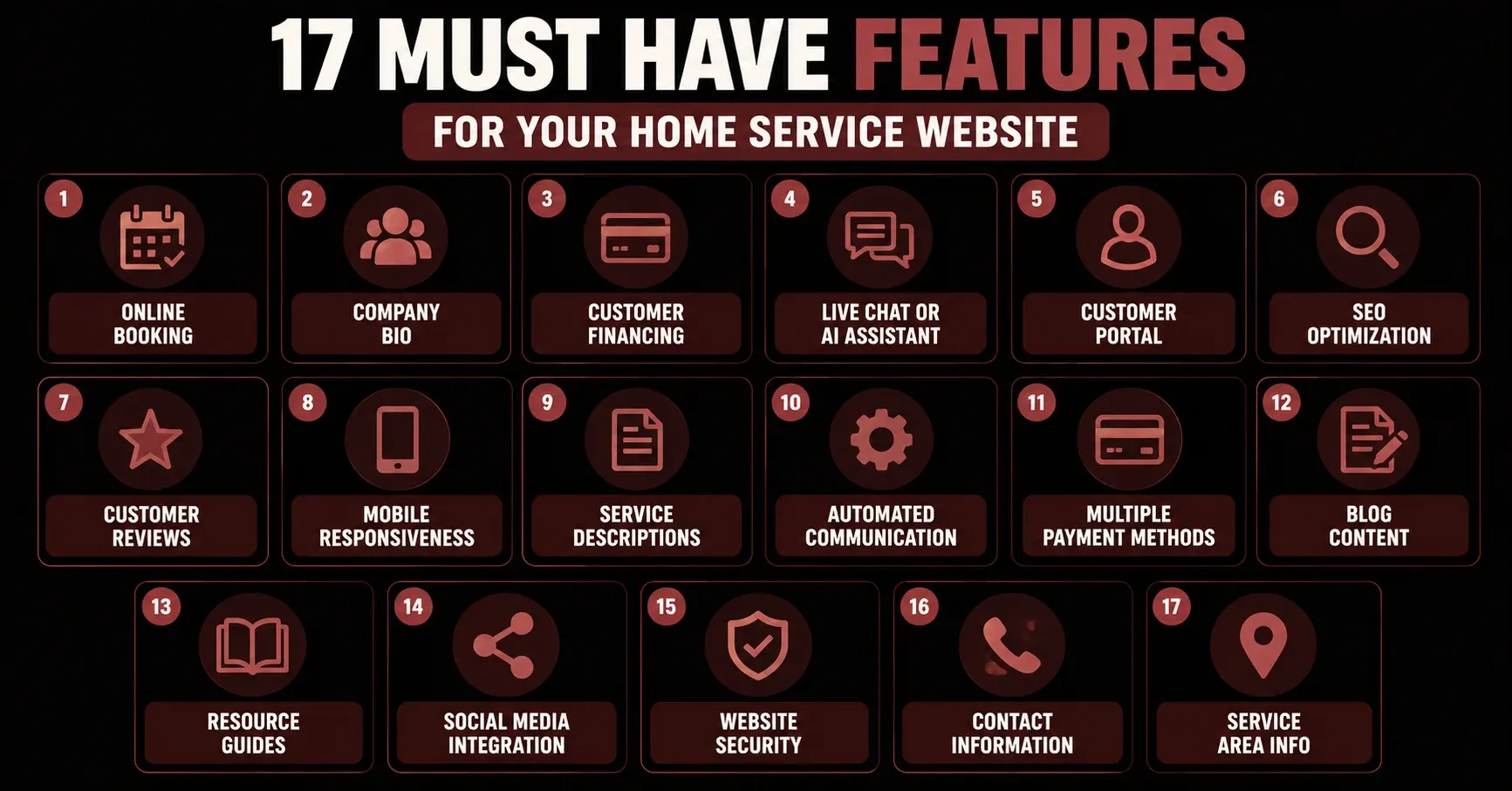
Before diving into specific features, four core principles matter most. Every design decision should support these foundations.
Principle | What It Means | Why It Matters |
User-friendly navigation | Visitors find what they need in seconds | Confused visitors leave within 10 seconds |
Visual appeal | Clean design with consistent branding | First impressions happen in under 3 seconds |
Complete information | Contact details, services, and pricing visible | Missing info sends customers to competitors |
Lead generation | Clear paths from browsing to booking | Websites without CTAs waste their traffic |
User-Friendly Design
A beautiful website means nothing if visitors cannot navigate it. Customers want answers fast when they have a leaking pipe. They will not scroll through cluttered pages looking for your phone number.
Keep menus simple with clear labels on every page. Limit your main navigation to five or six items maximum. Place your most important information above the fold consistently.
Mobile users make up over 60% of all website traffic today. If your site loads slowly on a phone, visitors leave immediately. Test your website on multiple devices before you launch it.
Visual Appeal and Branding
Your website should look like your trucks and uniforms. Consistent colors, logos, and fonts build recognition across all touchpoints. Customers notice when branding feels professional and cohesive throughout.
Avoid cluttered layouts with too many competing elements on screen. White space makes content easier to read and scan quickly. A clean design signals professionalism to every visitor who arrives.
High-quality photos of your team and work build trust instantly. Stock photos feel generic and disconnect visitors from your business. Real images of real jobs create an authentic first impression.
Every page should display your phone number and service area clearly. Visitors should never have to hunt for basic contact information. Put it in the header and footer of every single page.
List your hours of operation prominently on your website. Customers need to know when they can reach you for service. If you offer after-hours emergency service, highlight that fact boldly.
Your service area matters just as much as your services list. Customers want to confirm you work in their neighborhood fast. A simple service area page with a map works perfectly for this.
Turning Visitors into Leads
Every page on your site should guide visitors toward one action. That action is usually booking a service or requesting a quote. Without clear direction, visitors browse and leave without converting.
Strong calls to action belong on every page of your website. Use buttons with action words like "Book Now" or "Get a Quote." Place them where visitors naturally pause while reading your content.
Your website works best when paired with fast response systems. Even the best website loses leads when calls go unanswered. CloseCrew solves this by making sure every inquiry gets a response.
Your website drives traffic but CloseCrew captures the leads that follow. The platform connects your online presence to real booked jobs seamlessly. Here is how the system works together for your business.
Website Action | What Happens with CloseCrew |
Visitor calls your number | Crew answers instantly, qualifies the issue, books the job |
Customer submits a form | Platform sends automated confirmation and follow-up messages |
Client books online | Schedule updates in real time across your entire team |
Customer needs after-hours help | Crew handles the call and books the next available slot |
Visitor asks a question | AI provides instant answers and captures lead information |
Arctic Air grew revenue by 30% in one year after implementing CloseCrew. Premier Heating tripled their leads with Crew answering every call. These results start with a strong website and finish with smart automation.