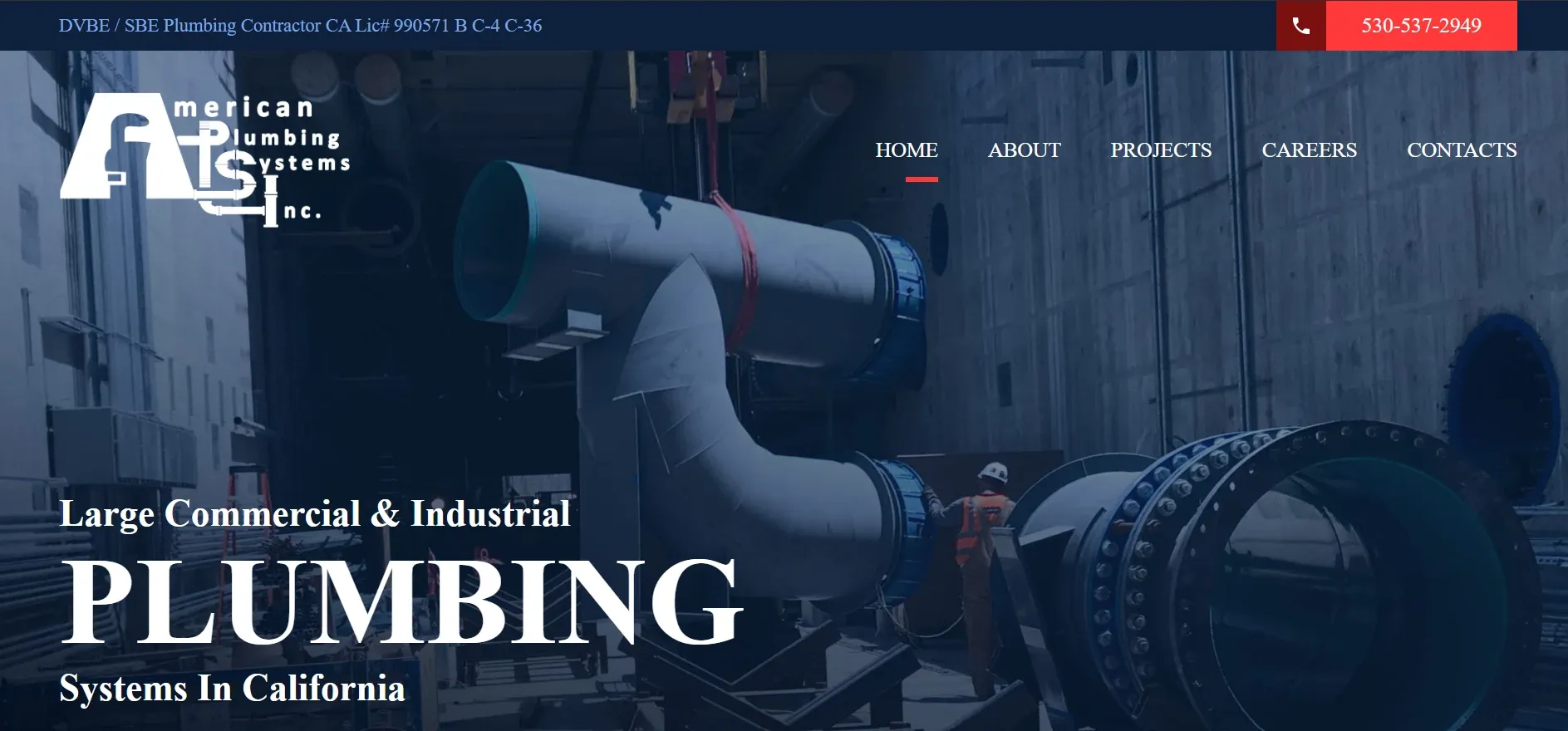
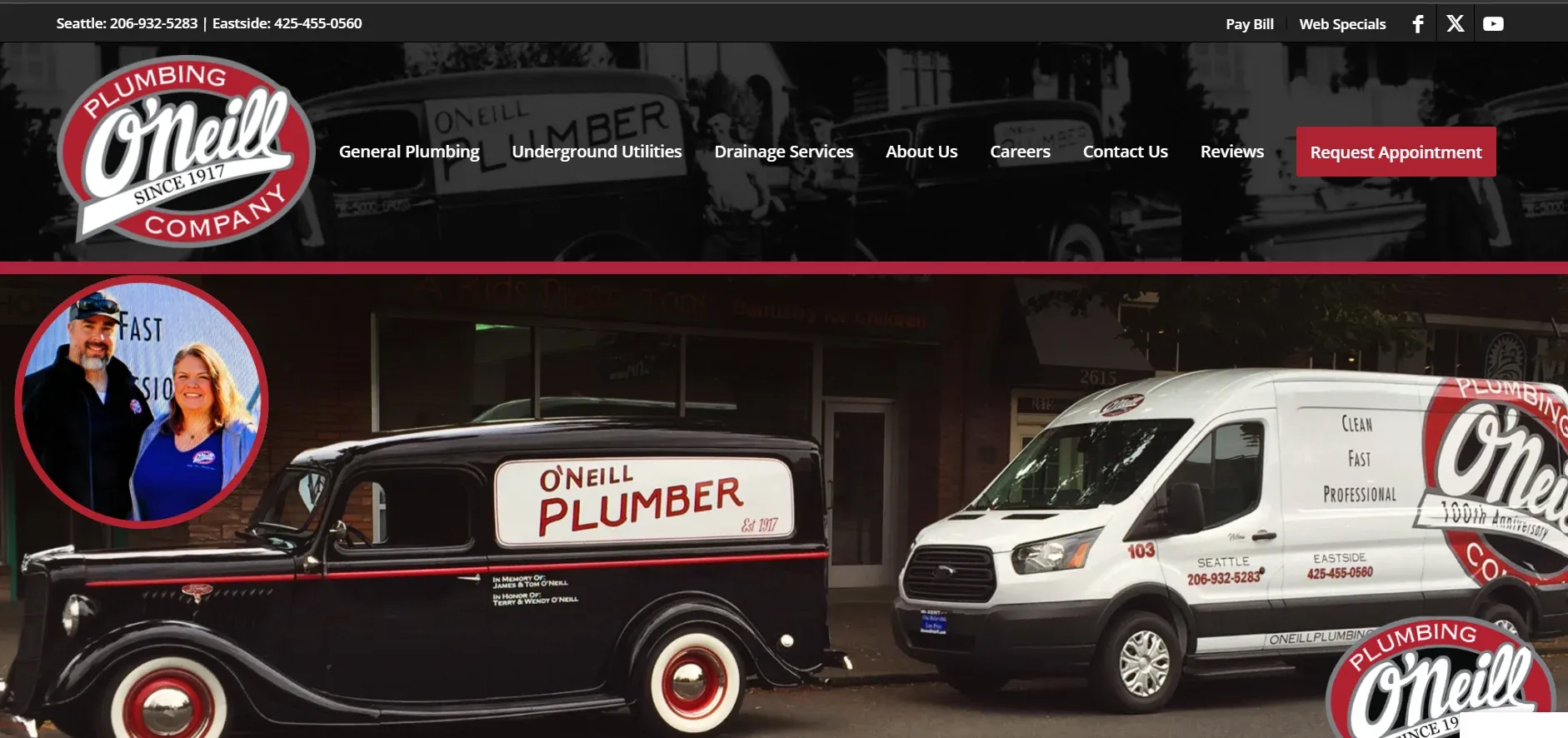
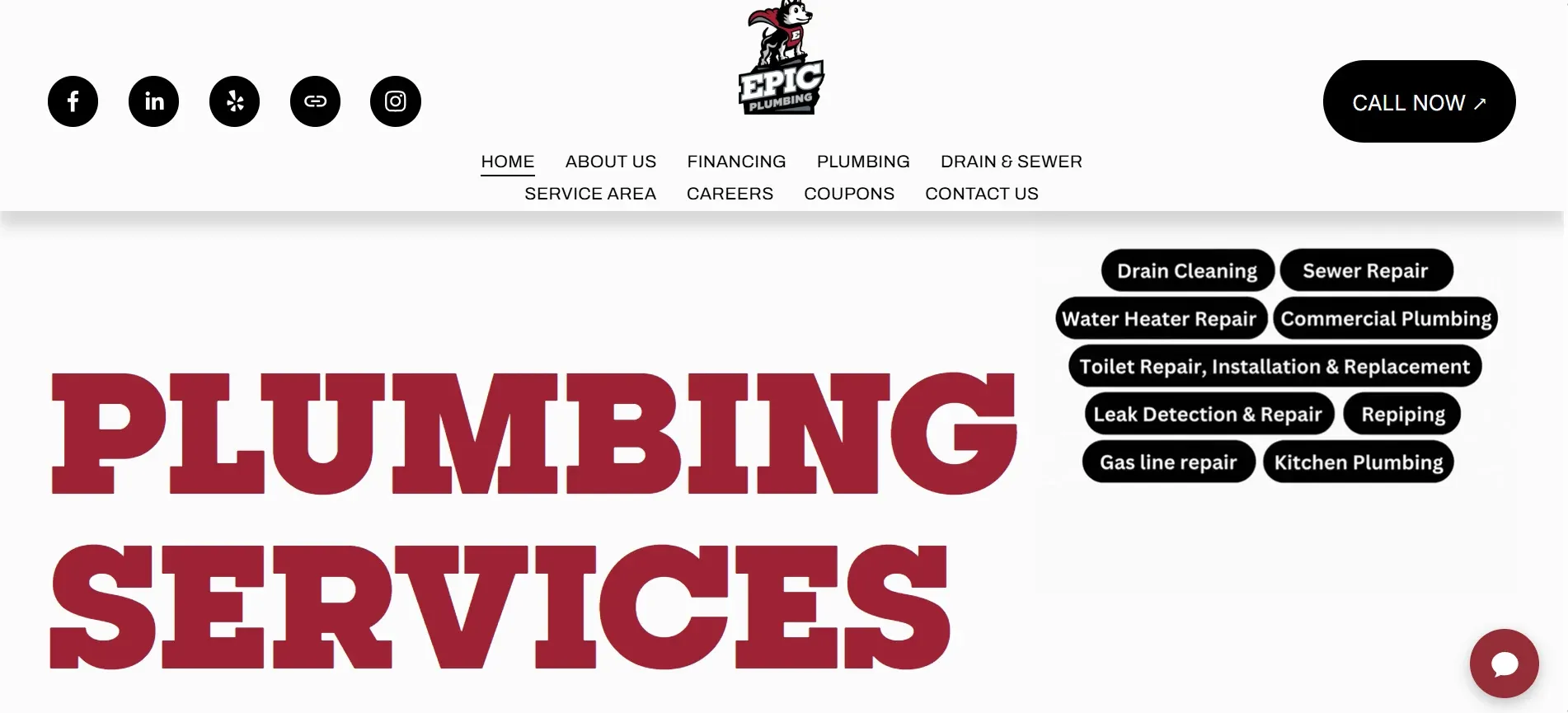
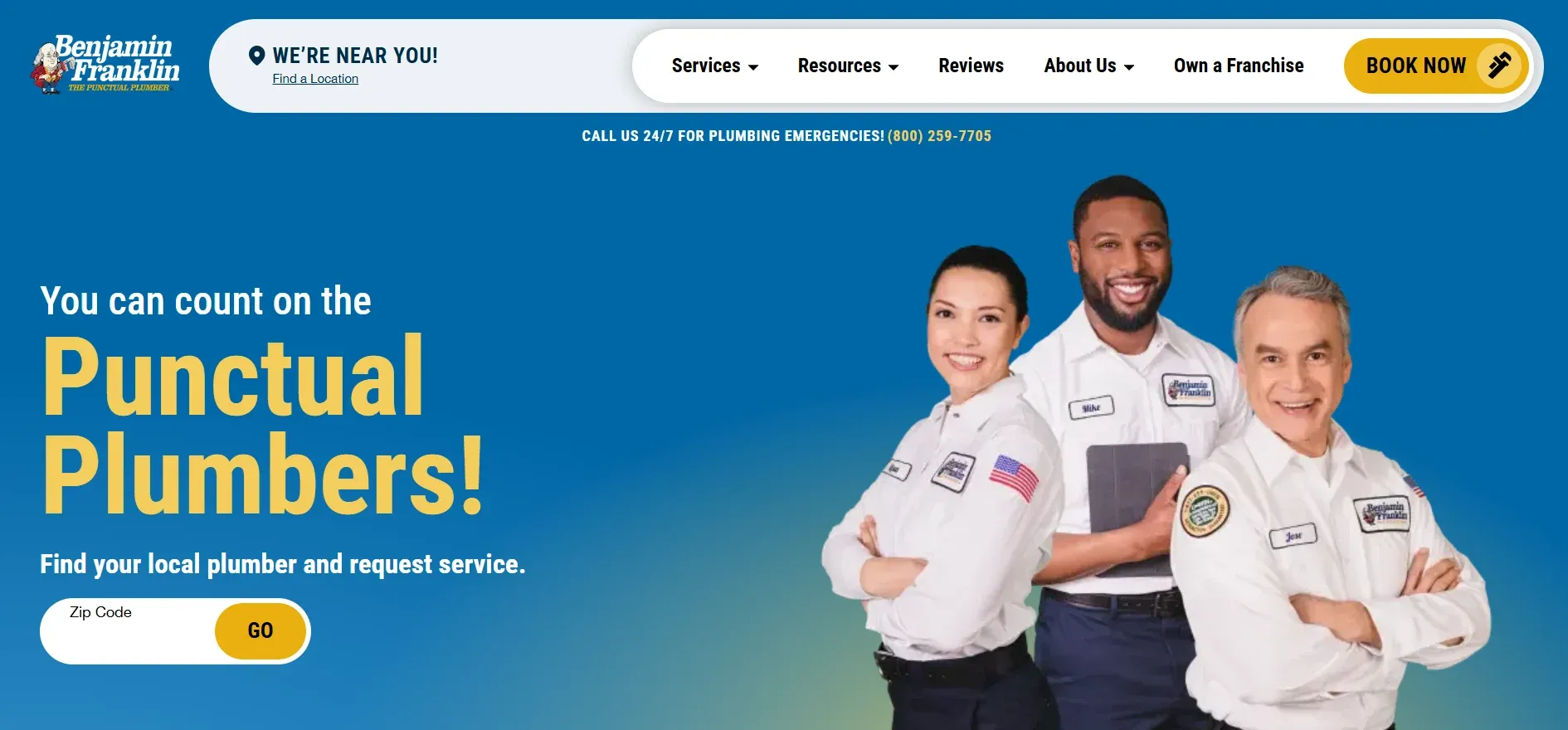
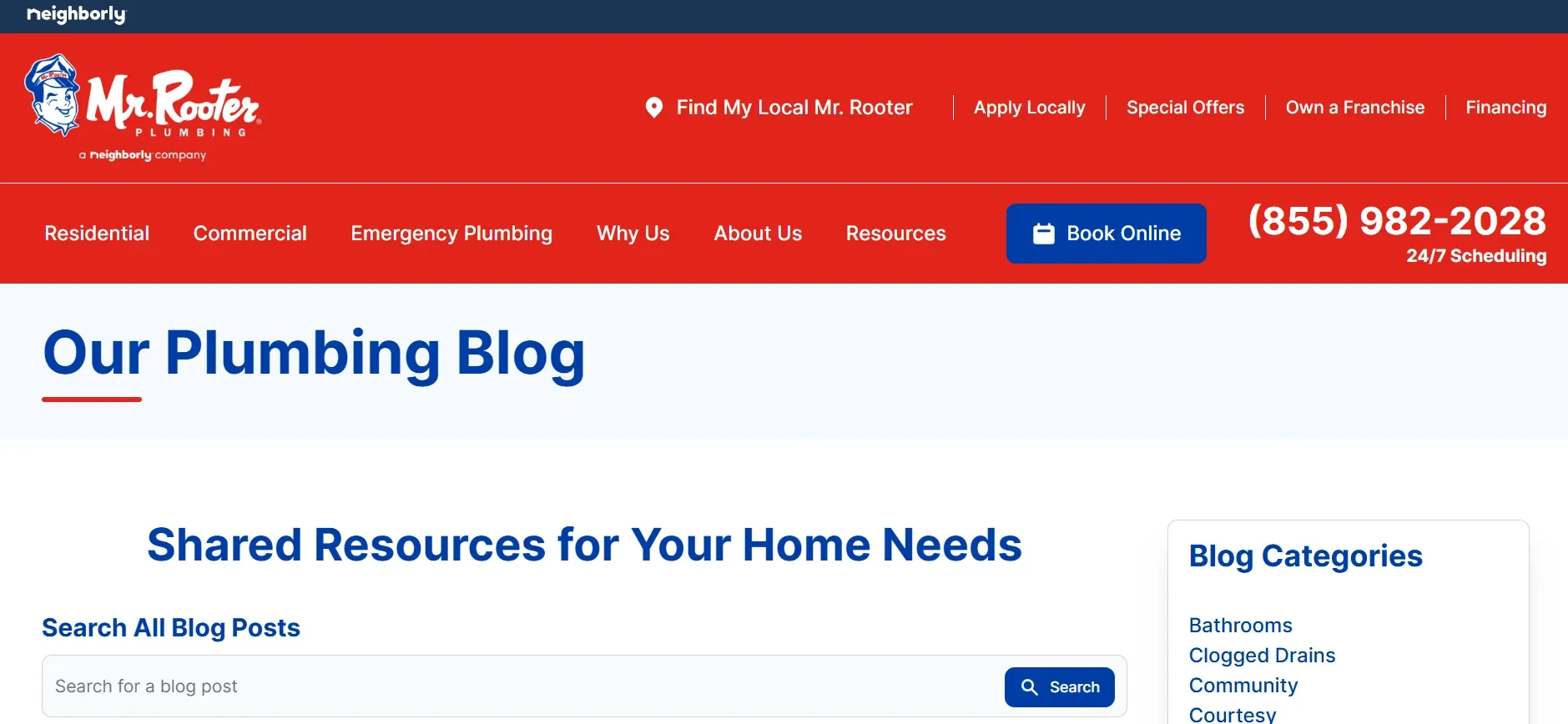
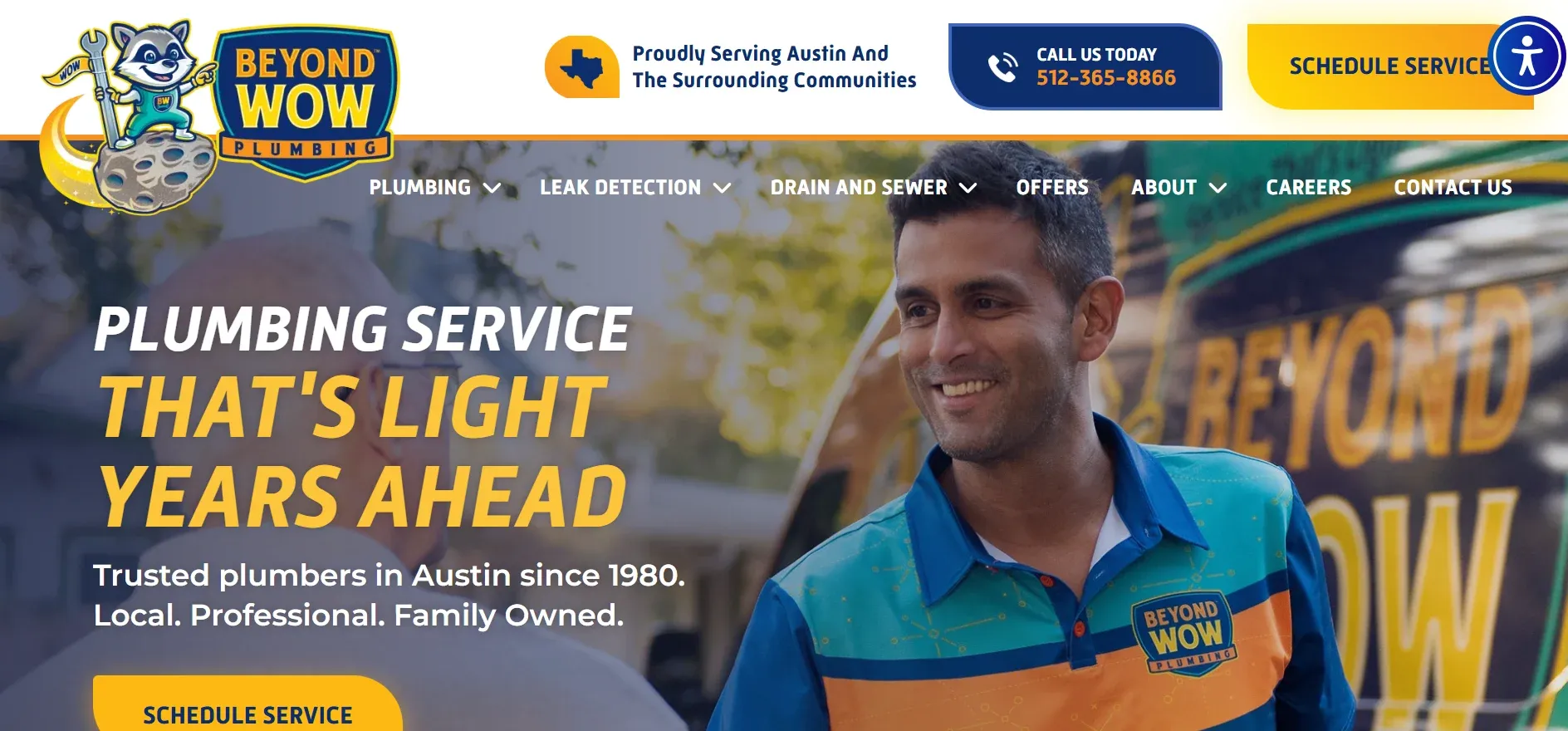
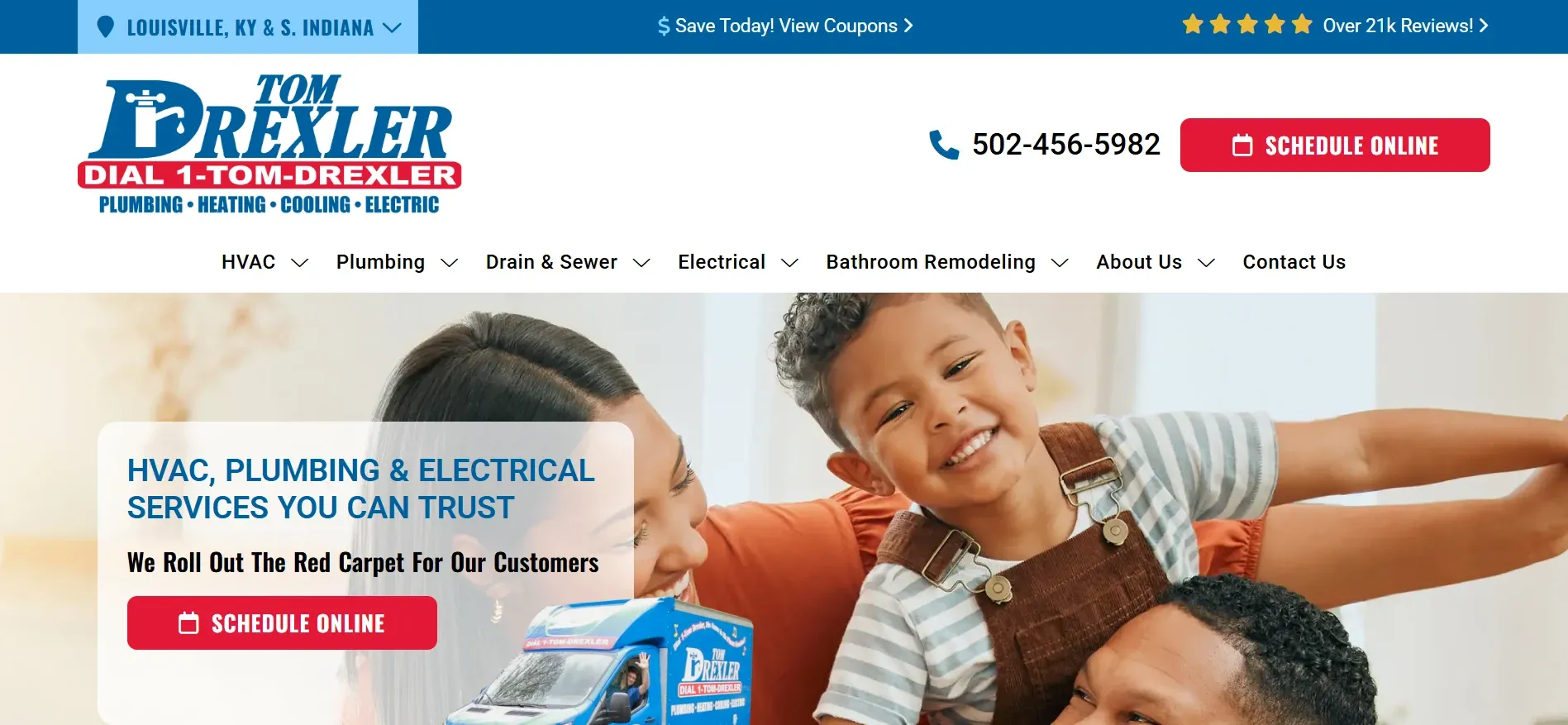
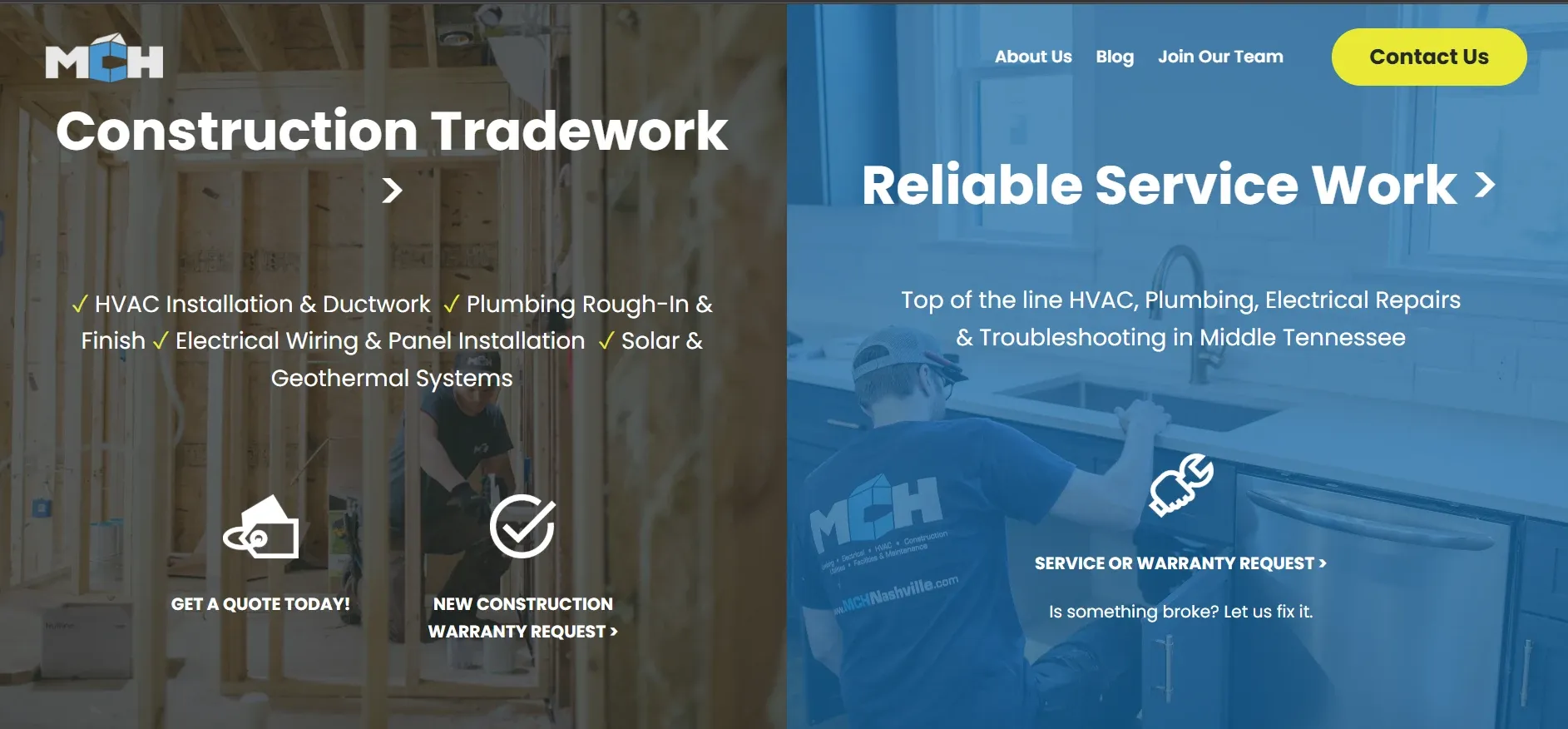
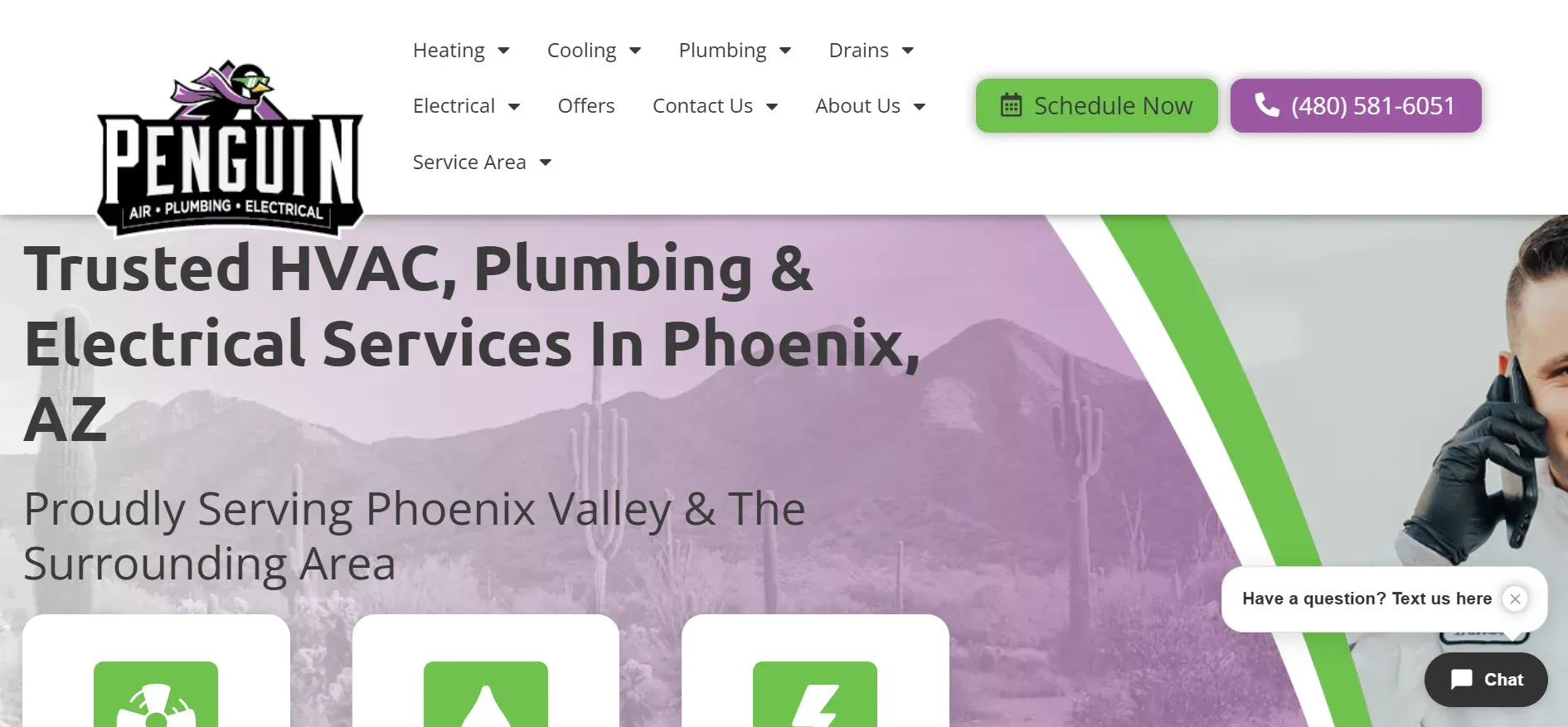
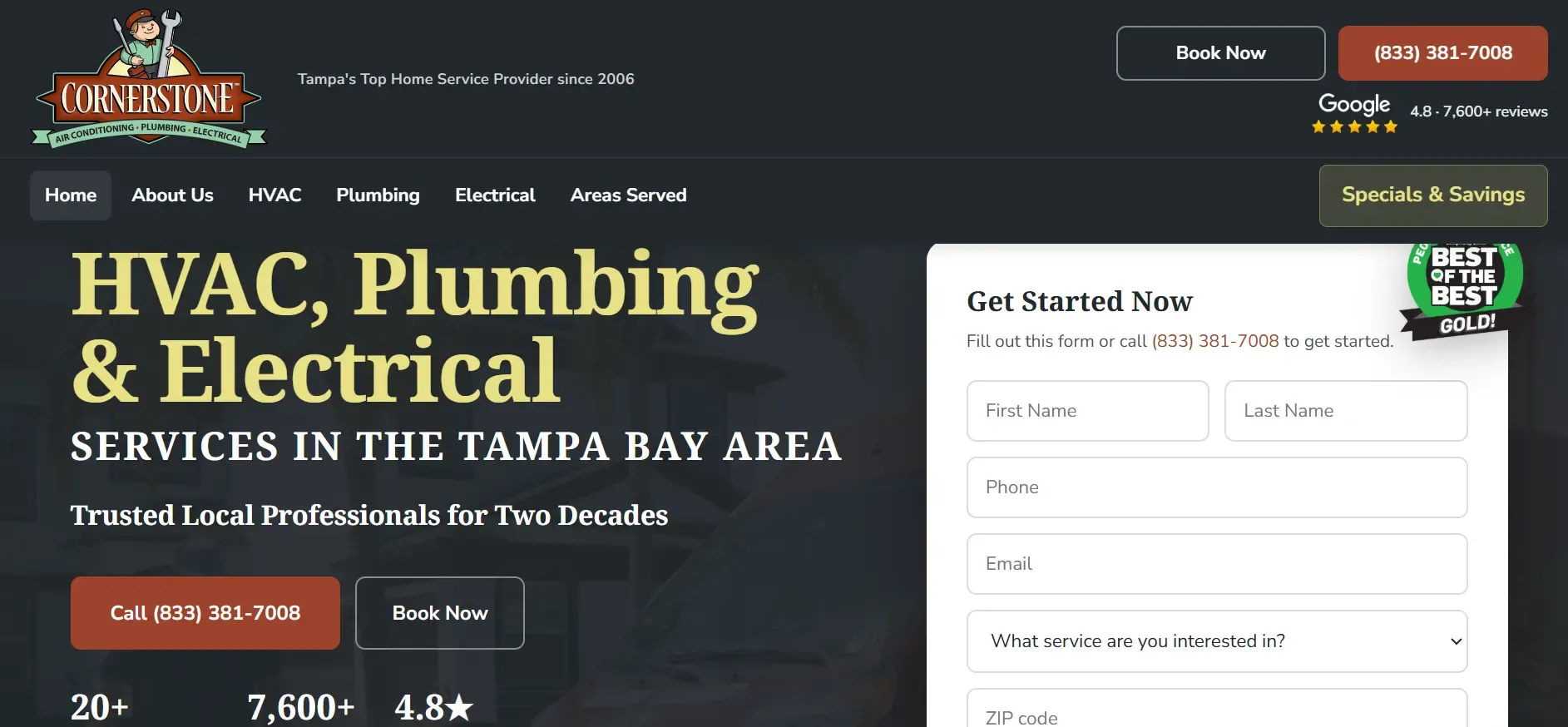
Great plumbing websites share core features. These features help you get found and get booked fast.
Element | Why It Matters | Impact on Leads |
|---|
Clear contact info and CTAs | Visitors find you in seconds | High |
Service area pages | Ranks in local search results | High |
About page | Builds trust and credibility | Medium |
Reviews and testimonials | Provides social proof | High |
Professional visuals | Shows quality of work | Medium |
Compelling copywriting | Moves visitors to take action | High |
Blog or resource section | Drives organic search traffic | Medium |
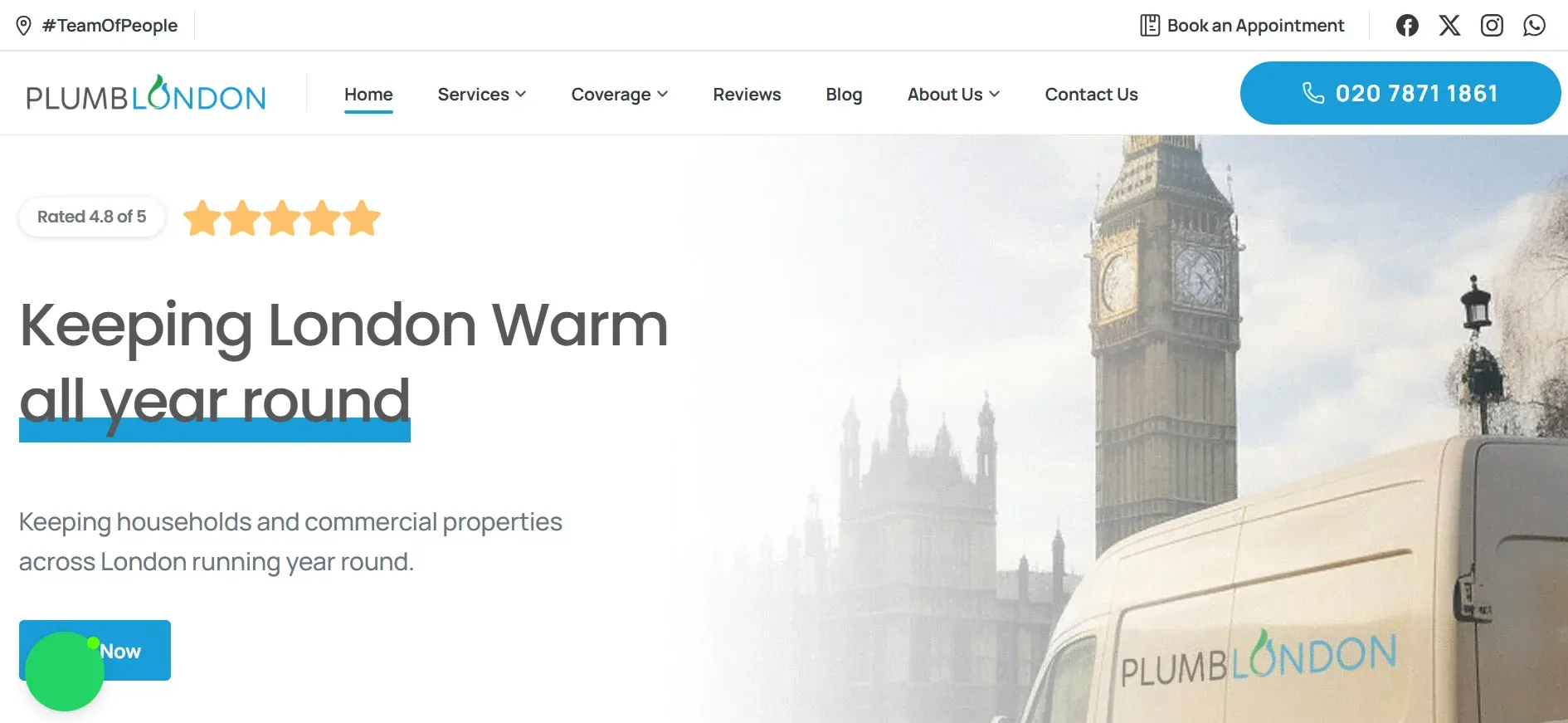
Your phone number belongs in the header of every page. Hours of operation should sit right beside it. Visitors should never scroll to find how to reach you.
Use clear calls to action on every page. Buttons like "Call Now" and "Book Online" drive conversions. Place them above the fold and after every service description.
Online booking forms capture leads around the clock. A visitor at 11 PM wants to book, not leave a voicemail. Give them that option on your site directly.
Crew, CloseCrew's AI Employee, takes this further than any booking form. Crew answers the phone call your website generates. It qualifies the plumbing issue and books the appointment live.
Service area pages
Dedicated service area pages boost local search rankings significantly. Create one page for each city or neighborhood you serve.
Use location-specific keywords naturally in the content. Phrases like "drain cleaning in Austin" help Google match searches. Each page should include local testimonials and project photos.
Service area pages also show customers you work nearby. A homeowner in Dallas wants a Dallas plumber specifically. A dedicated page tells them you are their local expert.
Plumbing contractors looking to improve local visibility should study proven strategies. Our plumbing SEO tips guide covers local search in depth.
About page
Your About page puts a face to your business name. Share your story, your team, and your credentials clearly.
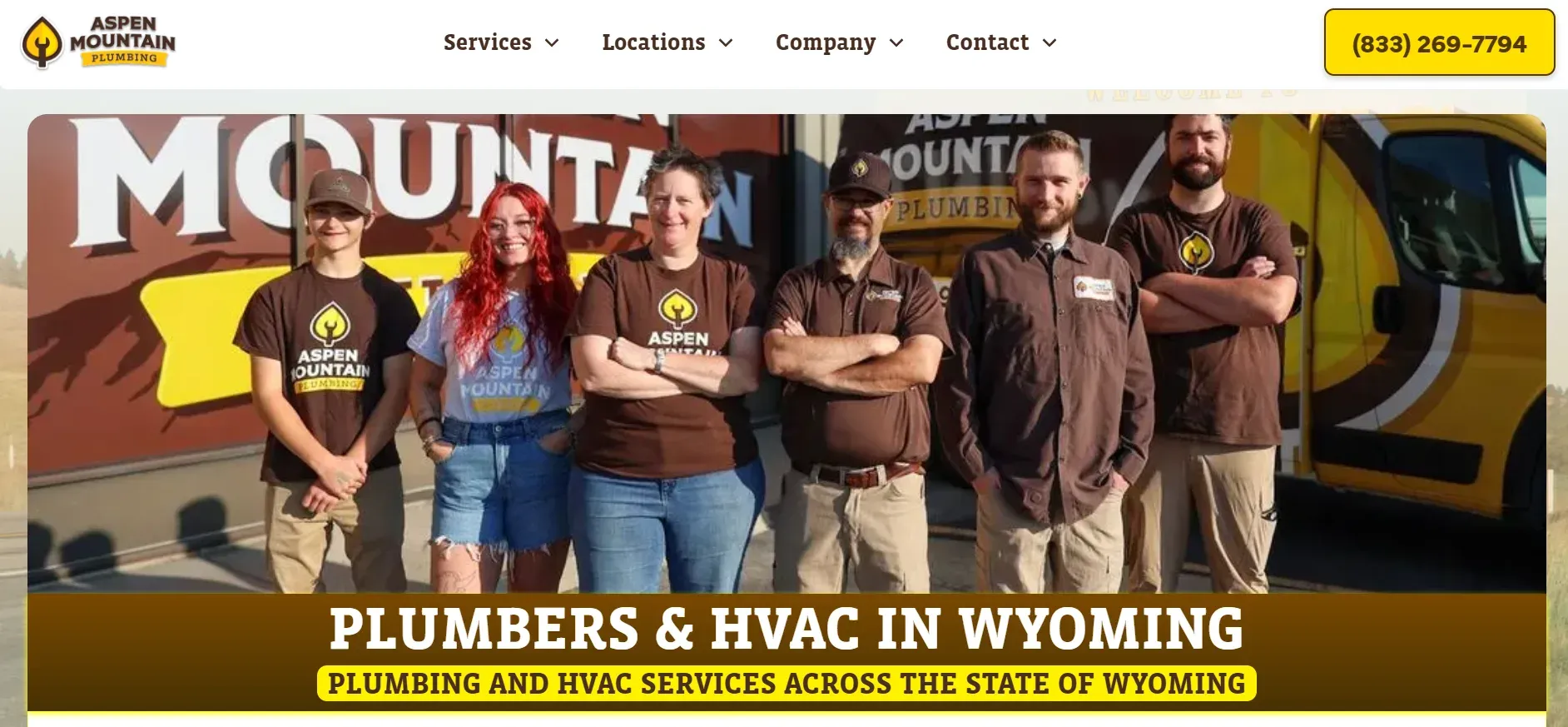
Include real team photos in uniform or on the job. Highlight licenses, certifications, and insurance coverage prominently. List years of experience and any specializations you offer.
Google values Experience, Expertise, Authoritativeness, and Trustworthiness. A strong About page signals all four of those qualities. It also helps customers feel confident hiring you.
Reviews and testimonials
Customer reviews are the strongest trust signal online. Display them on your homepage and every service page.
Use star ratings and short quotes from real customers. Embed video testimonials for even stronger credibility on site. Before-and-after project photos add visual proof of quality.
The more reviews visible on your site, the more leads convert. New visitors see social proof before they ever call you.
Professional visuals
Skip generic stock photos entirely on your plumbing site. Use real images of your team, trucks, and completed work.
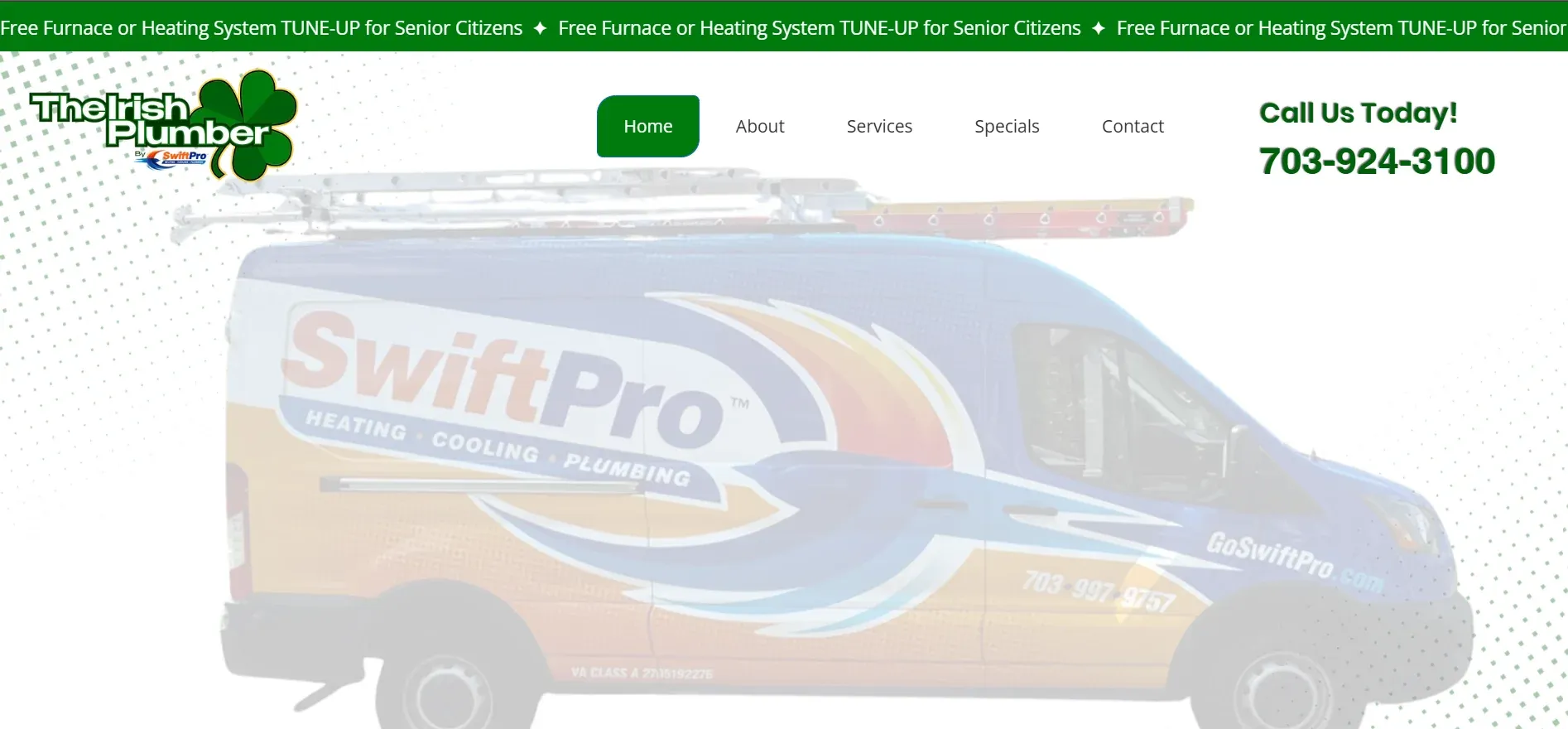
Before-and-after photos of pipe replacements showcase your quality. Photos of uniformed techs build professionalism and trust instantly. Branded truck images reinforce your company identity visually.
Keep all visuals consistent with your brand colors throughout. A polished look signals a polished plumbing operation to visitors.
Branding extends beyond your website to every customer touchpoint. Our guide on plumber business card ideas covers offline branding tips.
Compelling copywriting
Design alone will not convert visitors into booked jobs. Your words must move customers to take action quickly.
Over 60% of website visitors skim content rather than read. Keep paragraphs short and use clear headings throughout the page. Highlight key benefits at a quick glance for busy readers.
Write in a conversational tone that addresses customer needs. Reliability, speed, and fair pricing matter most to homeowners. Your copy should emphasize those values on every page.
Blog or resource section
Blog content is one of the most reliable SEO strategies. It helps you rank for questions homeowners search every day.
Write about common plumbing issues and seasonal maintenance tips. Cover topics like tankless versus traditional water heaters for comparison. Each post should link to your booking page naturally.
Knowing what to include is only half the equation. How you design the site determines whether visitors stay or leave.
Design Element | Best Practice | Common Mistake |
|---|
Load speed | Under 3 seconds on mobile | Uncompressed images slow pages down |
Layout | Clean with white space | Cluttered pages overwhelm visitors |
Branding | Consistent colors and fonts | Mismatched styles look unprofessional |
Mobile | Responsive on all screen sizes | Desktop-only design loses 60% of traffic |
SEO | Local keywords in titles and metas | Missing meta descriptions hurt rankings |
Accessibility | ADA-compliant fonts and contrast | Small text and low contrast exclude users |
Fast load times. A slow website drives potential customers to competitors instantly. Compress images, use reliable hosting, and keep code clean. Every second of load time costs you conversions on mobile.
Clean layout. Avoid clutter and outdated design elements throughout the site. Use white space to guide the eye to key information. Your phone number and booking button should stand out immediately.
Consistent branding. Keep your logo, colors, and fonts uniform across pages. Consistent branding builds recognition and trust with every visit. It also makes your site look professional and established.
Mobile responsiveness. Over 60% of plumbing searches happen on mobile phones. Forms, buttons, and menus must work perfectly on small screens. Test everything on a phone before launching any page.
SEO foundations. Optimize page titles with local keywords for every page. Use meta descriptions that include your city and service types. Schema markup helps Google display your business details prominently.
Accessibility. Clear fonts, strong color contrast, and simple navigation matter. Following ADA guidelines ensures all users can navigate your site. Accessible sites also tend to rank better in search results.
Both paths can produce a professional plumbing website that converts. Your budget, timeline, and technical comfort determine the right choice.
Factor | DIY Website Builder | Professional Web Designer |
|---|
Upfront cost | Free to $450 | $2,000 to $10,000 or more |
Monthly cost | $15 to $150 | $50 to $300 for maintenance |
Timeline | 1 to 3 days | 4 to 12 weeks |
Customization | Limited templates | Fully custom design |
SEO setup | Basic, self-managed | Professional optimization |
Best for | Solo plumbers on tight budgets | Growing multi-location companies |
Ongoing edits | You handle them yourself | May require designer involvement |
DIY website builders
Platforms like Wix, Squarespace, and WordPress offer drag-and-drop simplicity. Upfront costs range from free to $450 for setup. Monthly hosting runs $15 to $150 depending on your plan.
Works best for: Solo plumbers or new businesses on tight budgets. You get a professional site you can update yourself anytime.
Watch out for: Limited customization as your business grows over time. You handle SEO, analytics, and performance on your own. Advanced features may require paid add-ons or plugins later.
Professional web designers
A designer builds a custom site tailored to your plumbing brand. Expect to invest $2,000 to $10,000 or more for quality. The investment includes polished visuals, lead forms, and SEO optimization.
Works best for: Growing plumbing companies with multiple service areas and needs. The custom approach pays for itself through higher conversion rates.
Watch out for: Higher upfront costs and longer build timelines than DIY. Future content edits may require the designer's involvement and fees. Choose a designer who gives you backend access to your site.
A beautiful website means nothing if customers cannot find it. SEO puts your site in front of homeowners searching for plumbers.
Target local keywords. Use phrases like "emergency plumber in Denver" naturally. Add these keywords to service pages, titles, and blog posts. Google matches searchers with pages that use their exact phrasing.
Optimize your Google Business Profile. Claim it, complete it, and keep it updated with current info. Consistent name, address, and phone across all listings matter. Reviews on your Google profile boost local map rankings significantly.
Build service area pages. Create a dedicated page for each city you serve directly. Location-specific content ranks for location-specific searches every time. Link these pages to your main services page for structure.
Use internal linking. Connect blog posts to service pages throughout your site naturally. Internal links help visitors and search engines navigate your content. They also spread ranking authority across your most important pages.
Add schema markup. Structured data helps Google understand your plumbing business details. It can display ratings, hours, and service types in results. These rich results stand out and earn more clicks from searchers.
Publish blog content regularly. Write about common plumbing questions homeowners search for online. Seasonal maintenance tips and how-to guides attract local traffic. Each post is another page Google can rank for your area.
Even great plumbers lose leads with a poor website experience. These mistakes cost you jobs every single day.
Mistake | Why It Hurts | The Fix |
|---|
Hidden contact info | Visitors leave within 2 seconds | Put phone and booking button on every page |
Stock photos everywhere | Kills trust and looks generic | Use real team and project photos instead |
No clear calls to action | Interested visitors leave without booking | Add CTA buttons after every section |
Slow loading speed | Each second drops conversion rates by 7% | Compress images and minimize plugins |
No analytics tracking | You cannot measure or improve results | Connect Google Analytics from day one |
Ignoring mobile users | 60% of plumbing searches are on phones | Test every page on a mobile device first |
Hidden contact info. If visitors cannot reach you in two seconds, they leave. Your phone number and booking button belong on every page. Never bury contact info in a footer-only placement on your site.
Stock photos everywhere. Generic images tell visitors you did not invest in branding. Real photos of your team and work build trust instantly. Authenticity converts better than any stock photo library ever will.
No clear calls to action. Every page needs a "Book Now" or "Call Us" button. Visitors who finish reading need a next step immediately. Without clear CTAs, interested visitors leave without converting at all.
Slow loading speed. Compress images and limit plugins to keep pages fast. Every second of delay drops your conversion rate measurably. Mobile users on cellular data abandon slow sites even faster.
No analytics tracking. Without tracking, you cannot measure what your website delivers. Connect Google Analytics to monitor traffic and conversion rates. Data shows you which pages work and which ones need improvement.
Ignoring mobile users. Over half of plumbing searches come from mobile devices. A site that looks great on desktop but breaks on mobile loses leads. Test every form, button, and page on a phone before launching.
Every missed call from your website is lost revenue you cannot recover. Use our missed call calculator to see the impact.
A great website attracts visitors to your plumbing business consistently. But visitors only become revenue when someone answers their call fast.
Crew, CloseCrew's AI Employee, answers every call your website generates. It picks up within seconds, day or night, every day. It qualifies the plumbing issue and collects customer details automatically. It books the appointment and sends confirmation texts instantly.
Here is how CloseCrew works with your plumbing website step by step. A homeowner finds your site through Google at 9 PM on a Saturday. They click "Call Now" and Crew answers within three rings. Crew asks about the plumbing issue and collects the address and details. It checks your schedule and books the first available appointment slot. The homeowner gets a text confirmation with the tech's name and arrival time.
Without CloseCrew, that 9 PM call goes to voicemail and the lead is gone. The homeowner calls the next plumber on Google instead of waiting.
Real results from CloseCrew customers:
Customer | Result | Timeframe |
|---|
Arctic Air | 30% more revenue | One year |
Air Texas | $20K after-hours job booked | Single night via AI answering |
Premier Heating | Response time cut from 12 min to 1 min | After switching to CloseCrew |
Premier Heating | 3x more leads converted | After switching to CloseCrew |
Air Design | 13 extra appointments booked | 30 days |
41% of jobs booked through CloseCrew come in after hours. That is exactly when your website traffic peaks for emergencies. A beautiful website paired with missed calls wastes your marketing spend.
CloseCrew connects your website to your full business operation. Online bookings flow into scheduling, dispatching, and invoicing seamlessly. Estimates convert to invoices with one tap from the field. Payments collect digitally before the tech leaves the job site.
Your website brings the visitors and CloseCrew closes the jobs.
Your website should be your hardest-working marketing asset every day. A great design attracts visitors and builds trust with homeowners. But only fast response turns those visitors into booked jobs.
CloseCrew gives you Crew, a full AI employee from day one. Every call gets answered, qualified, and booked automatically. No setup complexity and no missed leads ever.
Pair your plumbing website with the platform that closes jobs.