11 Essential Garage Door Repair Tools for Every Technician (2026)
Every garage door technician needs the right tools for safety and speed. This guide covers 11 essential tools with prices, buying options, and the software that connects your field work to booked jobs and revenue growth.
Every garage door tech who values safety knows: the right tools boost performance. The right equipment turns complex jobs into smooth operations. It builds customer trust.
Without the right gear, simple tasks drag. They create injury risks. They disappoint customers.
This guide covers the 11 essential tools every garage door repair technician needs in 2026. From ladders and winding bars to power tools and software.
A well-built ladder helps you safely reach tracks, torsion springs, and openers. Essential for inspecting brackets and installing ceiling-mounted units.
Fiberglass ladders offer electrical safety and durability. Multi-position models adjust to uneven garage floors. Choose the right height to stay balanced. Never overstretch. Non-slip feet and a solid load rating prevent falls.
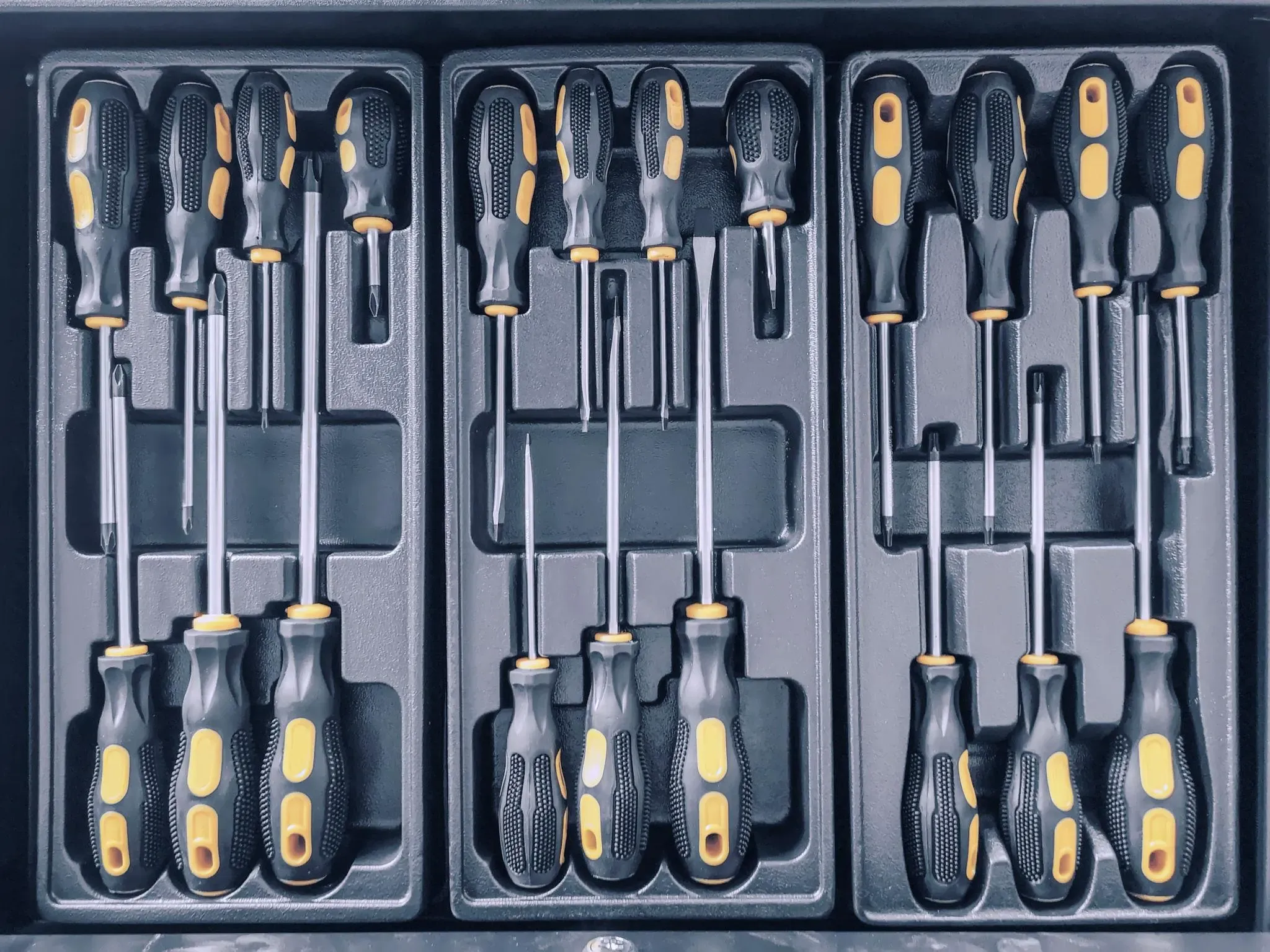
A complete set supports most repair tasks. Tightening sensor brackets. Removing opener covers. Adjusting wall mounts.
Precision drivers handle small control boards. Full-size models tackle hinge plates. Magnetic tips hold screws during overhead work. Ergonomic handles reduce fatigue on repetitive tasks. Insulated shafts protect against electrical contact.
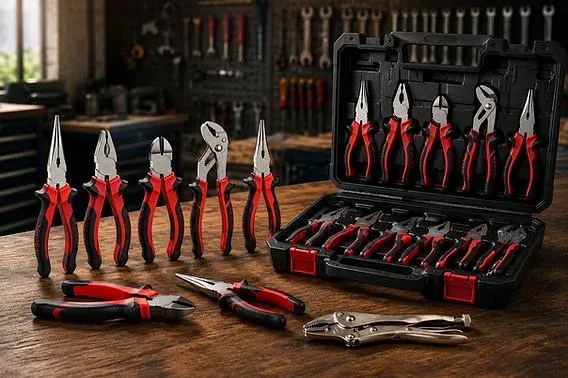
Pliers handle gripping, twisting, and cutting during spring replacements and track adjustments.
Needle-nose pliers reach clips in tight areas. Lineman pliers twist cables and cut wires cleanly. Locking pliers hold components during torquing. Precision-ground jaws provide control without slipping. Chrome finish prevents corrosion from dust and moisture.
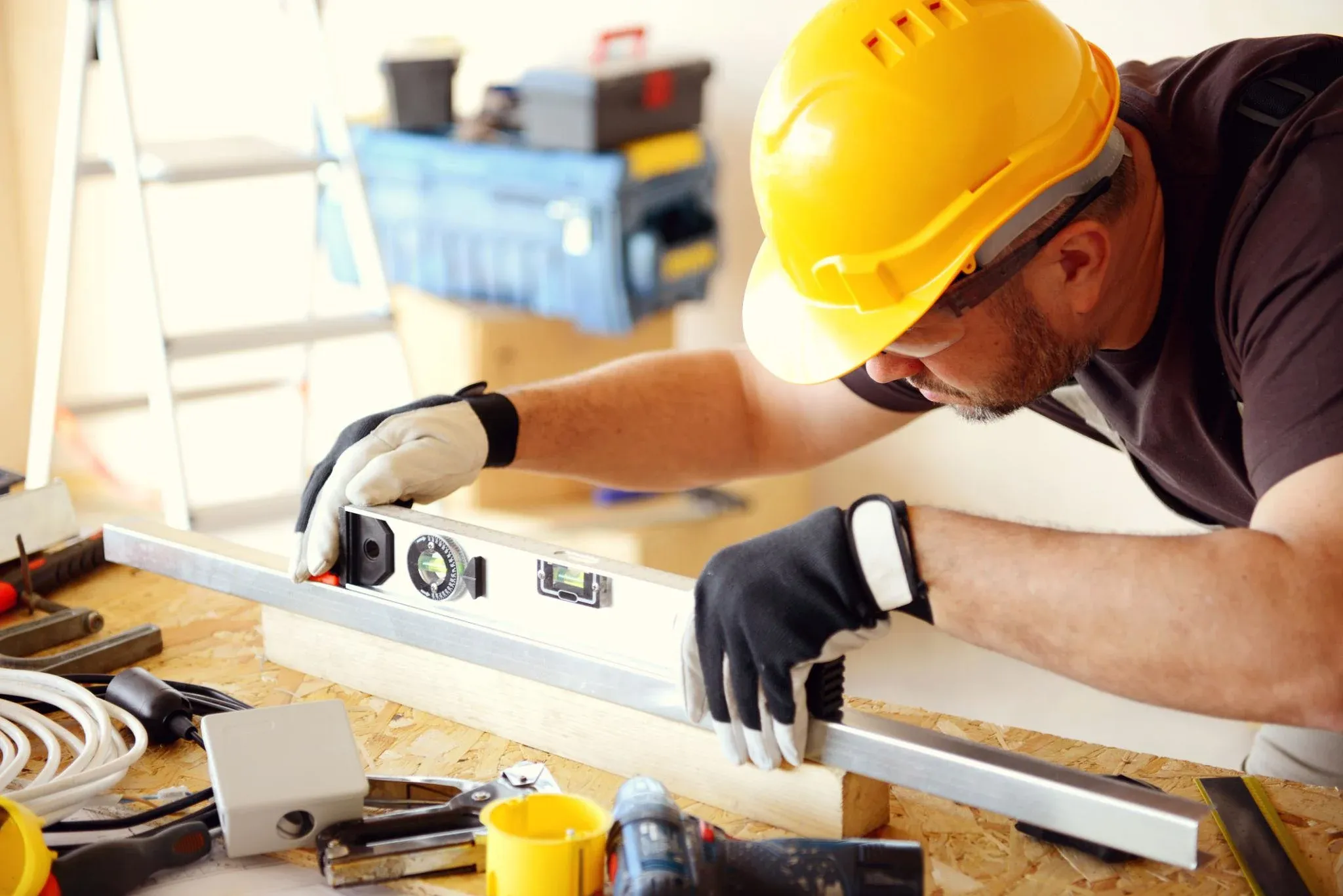
Accurate measurements guarantee balanced doors and smooth track alignment. A 25-foot tape checks door width, spring length, and opener placement. Locking mechanisms prevent retraction during solo work.
Pair the tape with a 24 or 48-inch level. Magnetic levels cling to metal surfaces. That frees your hands for adjustments.
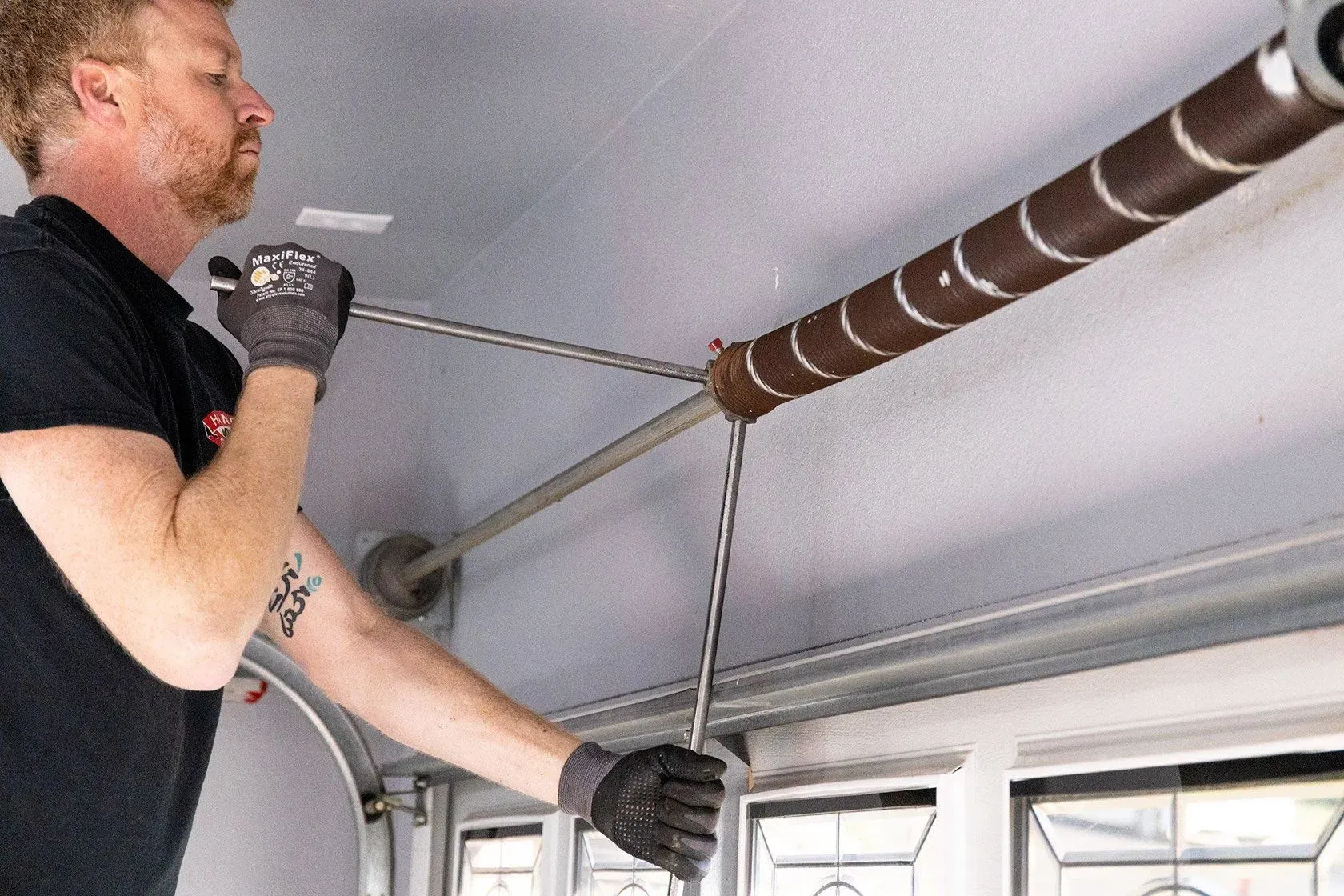
Winding bars safely control torsion spring tension. Each bar fits into the spring's winding cone. They give you leverage to add or release pressure in controlled increments.
Always use proper winding bars. Never improvised tools. Safety depends on it. Non-slip grips increase control when balancing tension on both sides of the shaft.
Every tool on this list keeps your tech productive in the field. But field productivity only matters if the job gets booked first. A homeowner with a broken garage door spring calls at 8 PM. Your office is closed. The call goes to voicemail. They call the next company. That company answers. That company gets the $400 spring job. Plus the $1,200 opener upgrade your tech would have upsold.
Your tools were ready. Your tech was available the next morning. But nobody answered the phone.
Larry, CloseCrew's AI Employee, answers every call 24/7. He qualifies the garage door issue. Books the appointment. Sends a confirmation text. Your tech shows up prepared. Tools ready. Job booked.
8. Hammer and pry bar
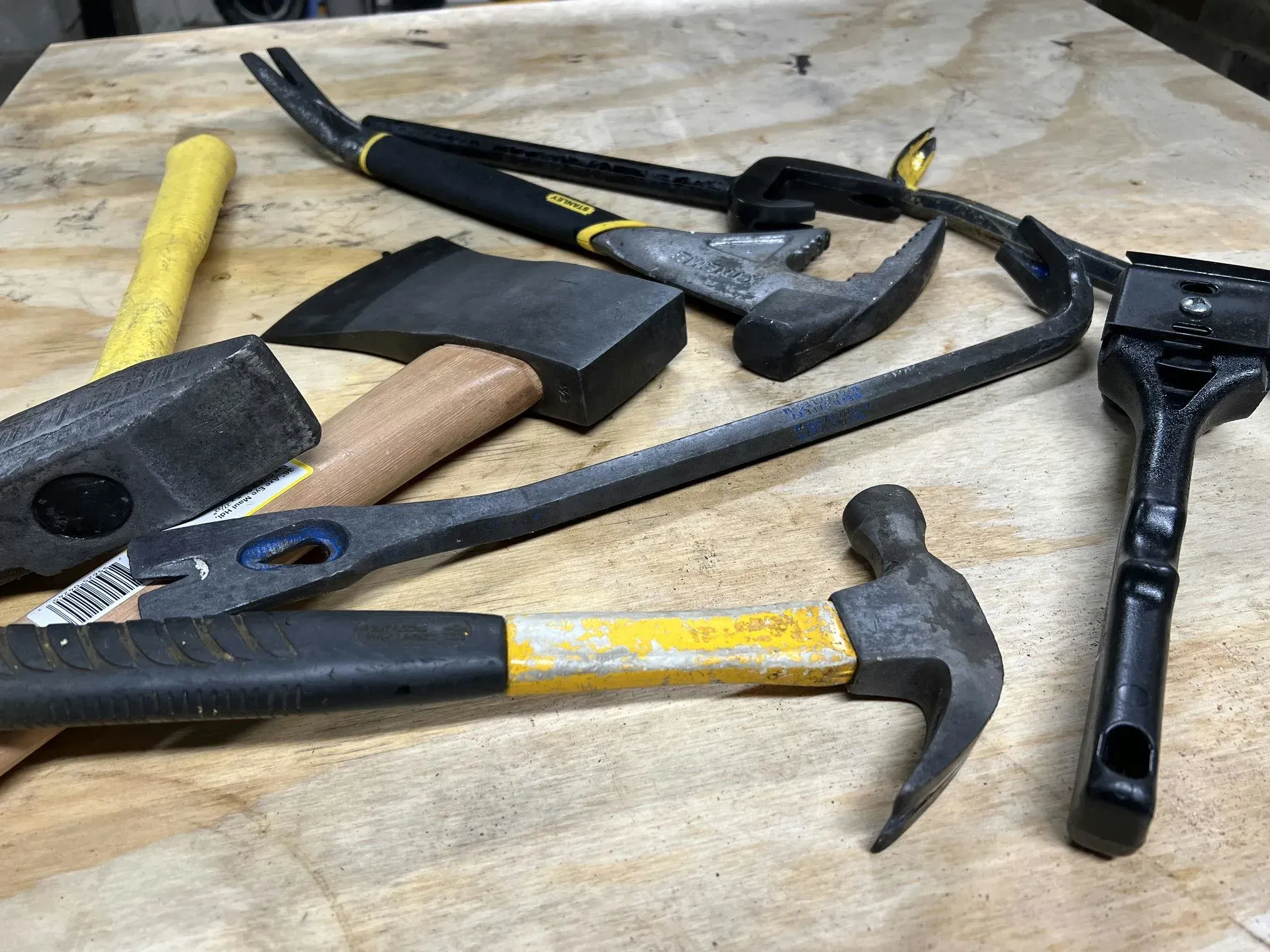
A hammer and pry bar make alignment corrections quick and precise. Use the hammer to drive lag screws, tap tracks into alignment, or seat panels.
The pry bar lifts panels, adjusts track spacing, and removes stubborn nails. Curved ends provide maximum leverage with minimal surface damage.
PPE keeps you safe from sharp edges, heavy panels, and flying debris.
Cut-resistant gloves protect hands during spring adjustments. Safety glasses block metal fragments. Steel-toe boots absorb impact from dropped tools or panels. Hard hats prevent injuries in low-clearance garages. Hearing protection reduces fatigue during extended drilling.
Cuts metal tracks, trims fasteners, and removes rust or paint. Compact body improves control during detailed work. Use the right wheel for clean results.
Every thriving garage door company needs more than physical tools. You need software that connects office, field, and customers.
Why software matters as much as wrenches
A tech with perfect tools but no scheduling system wastes hours on the phone. A tech with no mobile access to customer history arrives unprepared. A tech who handwrites estimates loses jobs to competitors with polished digital proposals.
Software doesn't replace your wrenches. It makes them more profitable.
Smart scheduling and dispatch
CloseCrew displays each tech's real-time location and task status. Dispatchers make quick adjustments when priorities shift. The scheduling assistant assigns the right installer based on distance, skill, and availability.
Every work order, timeline, and progress update lives in one place. Consistent coordination between office and field means faster response times.
Mobile tools for field techs
CloseCrew's mobile app turns every tech's phone into a full workstation. Access job histories, photos, and part details before arriving. Prepare and finish the job in one visit.
Integrated pricebook lets techs share exact pricing with customers. Generate quotes and close deals in the field. No calling the office for pricing.
Automated payroll and metrics
Work time, travel, and vendor stops recorded automatically. Timesheet data flows into payroll. Precise pay calculations without admin overhead.
Performance tracking shows technician productivity. Job completion rates. Revenue trends. Detailed reports highlight what's working and where to improve.
Inventory and billing
Live visibility into parts stored in warehouses and trucks. Automated purchase orders maintain stock levels. Alerts prevent shortages before they affect jobs.
Invoices generate from real-time labor and materials data. Sync with QuickBooks or your accounting tools. Every transaction recorded instantly.
Customer experience
CloseCrew shares tech profiles and live tracking with customers. They see accurate arrival times. Automated reminders reduce missed appointments. Post-service messages encourage reviews and collect payments via text.
Good tools protect your techs. Good software protects their time, efficiency, and your revenue.
But the foundation of it all is answering the phone. A homeowner with a garage door off the track at 9 PM isn't browsing. They're calling. Right now. And they'll hire whoever answers first.
78% of customers hire the first responder. Larry answers every call. He qualifies the issue. He books the tech. He confirms by text. The job that would have gone to voicemail becomes revenue on your schedule.
Arctic Air saw 30% more revenue in one year. Premier Heating converted 3x more leads with response under 1 minute. Air Design added 13 extra appointments in 30 days.
Your tools do the repair. Larry gets the customer to your door.
Complete tool cost breakdown
Tool
Price Range
Priority
Ladder
$100-$300
Essential
Screwdriver set
$15-$80
Essential
Plier set
$70-$150
Essential
Tape measure and level
$15-$160
Essential
Socket and ratchet set
$80-$300
Essential
Wrench set
$80-$150
Essential
Winding bars
$10-$50
Essential
Hammer and pry bar
$10-$60
Essential
PPE set
$100-$300
Essential
Power tools (3 core)
$360-$1,000
Essential
Service software
Custom
High ROI
Total (tools only)
$840-$2,550
Your toolkit is ready. Is your phone?
Every tool on this list prepares your tech for the job. But the job only happens if someone books it. The best-equipped tech in the industry can't help a customer who reached voicemail.
CloseCrew ensures every call becomes a booked job. Larry answers 24/7. Your tools do the work. Larry fills the calendar.
Frequently asked questions
How do I choose the right ladder for garage door repairs?
A 6 to 8-foot fiberglass stepladder fits most residential garages. Extension ladders work for commercial installations. Look for adjustable feet for stability. Check for OSHA-rated safety labels.
What gloves work best for garage door repair?
Cut-resistant gloves with reinforced palms. Leather or synthetic hybrid construction. They protect against sharp springs, cables, and edges. Breathable fabrics prevent sweating during long sessions.
What's the best way to store garage door tools?
Labeled tool chest, wall-mounted pegboard, or rolling toolbox. Separate power tools, hand tools, and safety equipment. Store in a dry area to prevent corrosion.
Can I use household tools for garage door repairs?
No. Household tools lack the strength and precision for professional repairs. Winding bars and torsion spring tools require specialized equipment. Technician-grade gear prevents injuries and improves reliability.
How do I maintain my garage door tools?
Wipe tools with a dry or lightly oiled cloth after each job. Use mild soap for deeper cleaning. Dry thoroughly. Apply light machine oil to metal parts. Store in protective cases.
Related tools
Run the numbers before you update your price book or field software.
Free Electrical Templates
Invoices, estimates, and flat-rate pricing sheets for electrical contractors.
The right electrical calculator helps electricians work faster, reduce calculation errors, and improve job-site accuracy. Here are 9 of the best online, app, and physical calculators for electricians.
Electrical businesses relying on manual dispatching lose revenue to scheduling gaps and missed calls. This guide covers 7 dispatch apps with features, pricing, and the tool that fills your dispatch board while the others organize it.
Never miss a Electrical service call again. Let Larry, your AI receptionist, book jobs while your crew is in the field.
We will run your numbers on the call and tell you if the maths does not work for a shop your size. That happens, and it is a cheaper conversation than finding out three months in.